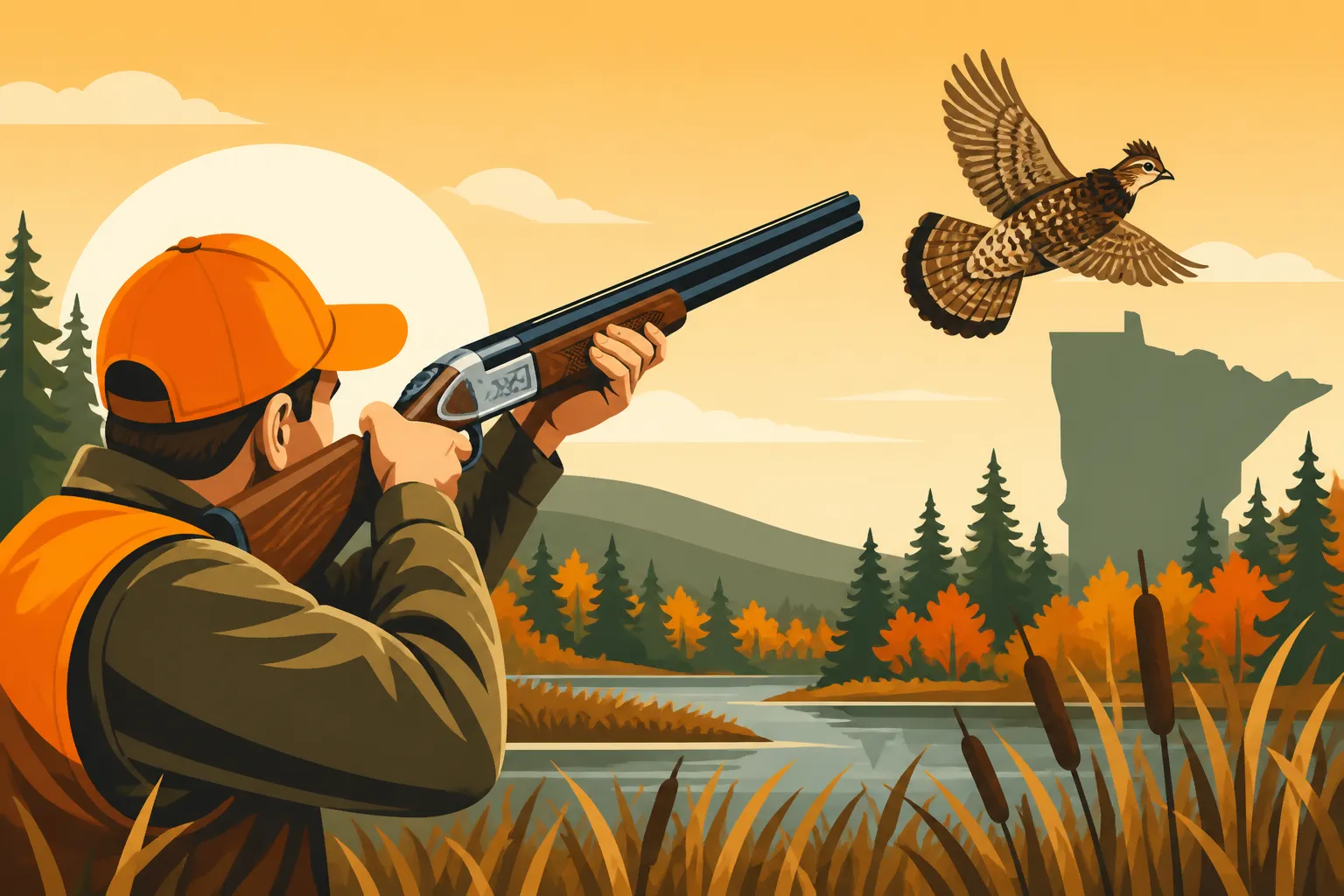
20 Gauge Doubles for Popple Cover
Navigating the thick, tangled stands of young aspen and birch often referred to as "popple cover" in Minnesota can be an absolute challenge for grouse hunters. The dense undergrowth, fast-flushing birds, and split-second shot opportunities demand a shotgun that's quick to shoulder, easy to swing, and delivers a reliable pattern in close quarters. This guide is all about why a 20 gauge double-barrel shotgun is often the unsung hero for tackling this specific, exhilarating style of upland hunting. We'll delve into the advantages this classic firearm offers, discuss the features that truly matter, and help you understand how to make the most of it in Minnesota's grouse woods.
Why a 20 Gauge Double for Minnesota Popple?
When you’re busting brush in prime grouse country, every ounce and every inch matters. The cover can be so thick that a grouse explodes from under your feet, giving you mere fractions of a second to react before it ducks behind a tree. This isn't long-range shooting; it's an intimate, fast-paced dance with the king of game birds, and your equipment needs to be up to the task.
The Advantage of Gauge and Weight
Let's be real, lugging a heavy 12 gauge through miles of dense popple, over downed logs, and through alder thickets is a workout. A 20 gauge, by its very nature, is a lighter firearm. This reduction in weight translates directly into less fatigue over a long day of hunting. Think about the difference after three or four hours of walking – your arms aren't burning, and your shoulders aren't screaming. That extra energy means you stay more alert and ready for those sudden flushes.
Beyond just the carrying weight, the lighter overall mass of a 20 gauge also impacts its perceived heft when you’re swinging it through the brush. It feels more agile, more responsive. When a grouse rockets out, you need to bring the gun to your shoulder, acquire the target, and swing with the bird almost instinctively. A heavier gun can feel sluggish, often resulting in shots taken behind the bird. The 20 gauge allows for that swift, fluid movement necessary to connect with a fast-disappearing target in a chaotic environment. Plus, with modern ammunition, the 20 gauge delivers more than enough stopping power for a ruffed grouse, making the "bigger is better" argument for a 12 gauge largely unnecessary for this specific pursuit.
Double Barrels for Instant Options
This is where the double-barrel truly shines over its single-barrel pump or semi-auto counterparts, especially for those challenging close-quarters flushes in popple. With a double, you have two independent barrels, each with its own choke. This means you can set up one barrel for an extremely open pattern, perfect for those birds that erupt at spitting distance, and the second barrel with a tighter choke for those grouse that manage to put a little distance between you and them.
Imagine a scenario: you’re slowly picking your way through a stand of dogwood and young aspen, your senses on high alert. Suddenly, a grouse bursts from a tangle of branches a mere 15 yards in front of you. You snap the gun up, and the first shot, fired from an improved cylinder choke, spreads quickly to cover the fleeing bird. Maybe you connect, maybe you miss, but either way, the bird keeps flying, putting on speed. Now, with just a slight shift of your finger, you can immediately fire the second barrel, which is choked modified, providing a denser pattern for that slightly longer follow-up shot. There's no racking a pump, no waiting for a gas-operated semi-auto to cycle, just two distinct options at your fingertips, instantly. This ability to have a tight and open pattern simultaneously is a game-changer when every fraction of a second counts.
Nimble Handling in Tight Spaces
Double-barrel shotguns, particularly those designed for upland hunting, tend to have shorter barrels and a more balanced feel. While a longer barrel might be desirable for target shooting or waterfowl over open water, it becomes a hindrance in the woods. Try maneuvering a 30-inch barrel through dense saplings, and you'll quickly understand the frustration. Shorter barrels, typically in the 26- to 28-inch range for a 20 gauge double, drastically improve maneuverability.
This isn't just about not getting snagged on branches. It’s about the overall balance and "pointability" of the gun. A well-balanced double will feel like an extension of your body, allowing you to quickly acquire a target and swing smoothly, even with trees and brush obscuring your vision. The gun's center of gravity is often closer to the shooter, making it feel lighter and less unwieldy. This nimble handling is precisely what you need when a grouse explodes and you have to make a quick, instinctive shot through a small window in the cover.
Essential Features for Popple Cover Success
Choosing the right 20 gauge double goes beyond just picking any gun. Certain features make a significant difference in how effectively you can hunt ruffed grouse in Minnesota’s thick woods.
Choke Combinations for Close Flushes
As mentioned, the beauty of a double is the ability to have two different chokes ready to go. For grouse in popple cover, you're almost always dealing with close-range shots. Most birds are flushed within 25-30 yards, often much closer. This means you want chokes that open up quickly to provide a broad, forgiving pattern.
My personal preference, and a very common setup for dedicated grouse hunters, is an Improved Cylinder (IC) in the first barrel and a Modified (MOD) in the second. The IC choke provides a wide pattern that's ideal for those explosive, close-range flushes, giving you a better chance of hitting a rapidly moving target that appears out of nowhere. If the bird manages to slip through the first pattern or presents a slightly longer shot, the MOD choke in the second barrel offers a denser pattern for increased effectiveness. Some hunters even opt for Cylinder or Skeet chokes in the first barrel for extreme close-in work, especially if they hunt with a dog that holds birds very tight. Understanding how your chosen Choke Choice for Fast Flushes impacts your shot pattern is crucial.
Barrel Length and Balance
While longer barrels can be advantageous in other hunting scenarios, for walking thick cover, a shorter barrel is generally better. For a 20 gauge double, a barrel length between 26 and 28 inches strikes an excellent balance. This length is short enough to navigate dense tangles without snagging excessively, yet long enough to provide a smooth swing and consistent patterns. Anything much longer, say 30 inches, and you'll find yourself constantly bumping branches and struggling to pivot quickly. Anything significantly shorter, like 24 inches, might be incredibly fast, but could make your swing too whippy and less controlled, potentially leading to inaccurate shots.
The balance of the gun is equally important. A shotgun that is too muzzle-heavy will feel slow to shoulder and swing. One that is too butt-heavy might feel fast but can be difficult to control. A well-balanced gun, where the weight is distributed evenly or slightly forward of the receiver, will feel natural in your hands and promote fluid, instinctive shooting. When you're constantly raising and lowering your gun over rough terrain, a balanced firearm significantly reduces perceived effort.
Stock Fit and Recoil Management
Many hunters overlook the importance of proper stock fit, but it's paramount for consistent shooting and comfort, especially when you might be taking several quick shots in a day. A shotgun that fits you properly will come to your shoulder naturally, with your eye aligning perfectly down the rib. This means less conscious effort to aim, allowing for faster target acquisition. If your stock is too long or too short, or if the comb height is off, you'll be fighting the gun, leading to misses and discomfort.
While a 20 gauge has less recoil than a 12 gauge, repeated shooting can still take its toll if the gun doesn't fit well or isn't designed with some recoil absorption in mind. A good recoil pad can make a surprising difference, especially on a lighter gun. Reduced felt recoil means you stay more comfortable and can focus on the bird rather than anticipating the kick, leading to better follow-up shots. Barrel Length for Walking Thick Cover and proper fit go hand-in-hand for effective grouse hunting.
Ammunition Choices for Ruffed Grouse
Selecting the right ammunition is just as important as choosing the right shotgun. For ruffed grouse, you’re looking for a balance of pattern density and sufficient energy without being overkill.
Shot Size and Payload
For ruffed grouse, especially in thick cover where shots are close, smaller shot sizes are generally preferred. Number 7.5 or 8 lead shot are excellent choices. These smaller pellets create a denser pattern, increasing the likelihood of putting enough shot on a fast-moving, relatively small target. You don't need large pellets to take down a grouse; their relatively delicate bone structure means smaller shot delivers more than enough energy for a clean kill. In fact, larger shot sizes can sometimes create too sparse a pattern at close range, leaving gaps a bird could fly through.
A standard 20 gauge load for grouse will typically have a 7/8 oz or 1 oz payload. This provides a good number of pellets for a dense pattern. Some hunters might even opt for lighter loads (e.g., 3/4 oz) for even less recoil, though 7/8 oz is often considered the sweet spot for a balance of pattern and comfort. Remember to pattern your chosen ammunition with your specific chokes to see how it performs at typical grouse ranges. Understanding Shot Size for Grouse and Woodcock is key to filling your vest.
Shell Length and Velocity
Most 20 gauge ammunition for upland hunting comes in a 2.75-inch shell length, which is perfectly adequate for grouse. Magnum loads or longer 3-inch shells are typically unnecessary and often introduce more recoil than required for a ruffed grouse, potentially slowing down your follow-up shot. Focus on standard velocity loads. Extremely high-velocity loads can sometimes distort patterns at close range and offer no practical advantage for grouse. Consistency and pattern quality are far more important than raw speed.
When planning your hunts, especially scouting new areas, a tool like GoHunt can be quite helpful. While primarily known for big game, some of its mapping features and public land overlays can certainly assist in locating potential grouse cover before the season.
Over-and-Under vs. Side-by-Side: Which Double is For You?
When it comes to double-barrel shotguns, the main choice usually comes down to over-and-under (O/U) or side-by-side (SxS). Both are excellent choices for grouse hunting, but they offer different ergonomics and aesthetics.
Over-and-Under Shotguns
O/U shotguns are very popular and often feel more familiar to shooters accustomed to single-barrel guns because the sight picture is similar. The barrels are stacked vertically, making it feel like you're still looking down a single barrel. This can make aiming feel more intuitive for some. O/Us typically have a narrower profile than side-by-sides, which can be an advantage when trying to squeeze through incredibly dense brush without snagging. They tend to have less felt recoil due to their weight distribution and the way the recoil is directed straight back into the shoulder. Many modern O/Us feature selective triggers, allowing you to choose which barrel fires first, which is a nice feature if you want to experiment with different choke sequences. If you're looking for general purpose upland firearms that excel in many situations, an O/U is often a top contender. When researching different models, a platform like GoHunt can be invaluable for comparing specifications and user reviews, helping you narrow down your choices for a versatile O/U.
Side-by-Side Shotguns
The side-by-side, or "sxs," is often considered the classic grouse gun. Its wider profile might seem like a disadvantage in thick cover, but many hunters find that the two barrels side-by-side give them a slightly wider field of view, which can be beneficial for quickly acquiring a bird that flushes to the side. The traditional side-by-side also has a distinct balance and feel, often being lighter overall than comparable O/Us, contributing to its nimble handling. For many, there's also a romantic appeal to carrying a traditional side-by-side in the grouse woods, a nod to generations of upland hunters before them. They often point very quickly due to their balance, making them superb for snap shooting. However, the wider profile does mean you might need to be a touch more mindful of snagging branches. Ultimately, the choice between O/U and SxS is largely personal preference, driven by how each gun feels and points for you. Both styles are proven performers in Minnesota's popple.
Here's a quick comparison to help visualize the differences:
| Feature | Over-and-Under (O/U) | Side-by-Side (SxS) |
|---|---|---|
| Barrel Arrangement | Vertical, one above the other | Horizontal, side by side |
| Sight Picture | Narrow, similar to a single-barrel gun | Wider, can feel more open |
| Feel in Hand | Often more weight forward, straighter recoil | Typically lighter and quicker to point, classic feel |
| Profile in Brush | Narrower, less prone to snagging on branches | Wider, can be more prone to snagging |
| Popularity | Very popular, versatile for various shooting sports | Classic upland gun, often favored for tradition |
| Pointability | Smooth, controlled swing | Fast, instinctive pointing |
Preparing for Your Popple Hunt
Having the right shotgun is only part of the equation for a successful grouse hunt. You also need to consider your overall gear and approach to the woods.
Gear for the Grouse Woods
Beyond your shotgun, a good upland vest is essential. It needs to comfortably carry shells, water, and most importantly, your birds. Many vests also have game bags that can expand, and some include hydration pouches. When looking for the best gear for long days of walking through heavy cover, resources like GoHunt often have detailed reviews and gear guides, even if they focus on different species, the principles of durable, functional outdoor equipment remain the same.
Your clothing should be tough enough to withstand briars and thorns, yet breathable for active walking. Good brush pants are a lifesaver, as are sturdy, comfortable boots that offer ankle support and waterproofing for damp conditions. Don't forget a blaze orange hat or vest – safety is paramount, especially when hunting in areas that might see other hunters. Upland Vests With Water Capacity and Boots for Walking Minnesota Popple Cuts are critical for comfort and safety.
Tactics in Popple Cover
Hunting grouse in popple cover is often about slow, methodical walking. You're not trying to outrun the birds; you're trying to walk them up. Pause frequently, listen, and watch for any subtle movements. Grouse will often sit tight, relying on their camouflage, until you're nearly on top of them. When they flush, it's usually loud and fast, so be ready. If you're Flushing Grouse Without a Dog, knowing when and where to pause can make a huge difference in your success rate.
Focus on edges – where different cover types meet, along old logging trails, or near water sources. These are often prime areas for grouse. Pay attention to stands of aspen and birch that are between 10 and 20 years old; this age class typically provides the best cover and food sources for grouse. Why Popple Cuts Grow Grouse explains more about this habitat preference. Knowing the Minnesota Ruffed Grouse Numbers Today can also inform your expectations for the season.
The 20 gauge double-barrel shotgun is a superb choice for Minnesota’s popple cover, offering a winning combination of light weight, quick handling, and versatile choke options. It's a classic for a reason, perfectly suited to the fast-paced, close-quarters action of grouse hunting. With the right gun, proper ammunition, and a good understanding of the habitat, you'll be well-equipped to enjoy the thrill of pursuing ruffed grouse in the Northwoods.
Disclaimer
This article is for general informational purposes only and does not constitute professional advice. Laws, prices and regulations vary by location and change over time. Consult a qualified professional for guidance on your specific situation.