Upland Vests With Water Capacity
There's nothing quite like a long walk through a Minnesota aspen cut, the anticipation of a rooster flushing from a cattail slough, or the quiet rustle of leaves as you push through an alder run for woodcock. But as any upland hunter knows, these rewarding treks can quickly turn into a struggle if you and your faithful hunting companion aren't properly hydrated. This guide is all about helping you understand why an upland vest with ample water capacity is a game-changer, and what to look for when choosing one that keeps both you and your dog performing your best.
Why Water Capacity in an Upland Vest Is Non-Negotiable
Hunting upland birds in Minnesota is a demanding sport. You're covering ground, often through thick cover, up and down hills, and across varied terrain. The physical exertion, combined with fluctuating weather conditions, makes hydration not just important, but absolutely critical for both you and your dog.
The Realities of a Minnesota Upland Hunt
Think about a typical day chasing grouse in the vast forests of northern Minnesota. You might be walking for hours through dense popple cuts, your heart pounding, your muscles burning. Or perhaps you're out on the prairie, Pheasant Hunting Minnesota Farmland, under a crisp autumn sun that can still surprisingly warm you up, even in late season. These aren't casual strolls. They're intense, focused efforts that burn calories and, more importantly, deplete your body's water reserves at an alarming rate. Even on a cool, overcast day, you're breathing hard, sweating, and constantly working. Dehydration can creep up on you, leading to fatigue, cramps, and a significant drop in focus and performance. When you're trying to quickly shoulder your shotgun for a flushing bird, that last thing you need is a muscle seizing up or your vision blurring from fatigue.
Hydration for You and Your Dog
Let's be honest, your dog is often working twice as hard as you are. They're constantly on the move, nose to the ground, quartering ahead, busting through cover, and marking birds. A dog's body temperature rises much faster than a human's, and they rely heavily on panting to cool down. This vigorous activity, especially in warm or even moderately cool conditions, means they need a continuous supply of fresh water. Neglecting your dog's hydration can lead to serious health issues, from heat exhaustion to heat stroke, which can be fatal. I've seen good dogs slow down significantly on a long day, not because they're out of gas, but simply because they're parched. It's our responsibility as hunters and dog owners to ensure they have access to water whenever they need it. A good hydration system in your vest means you're always ready to offer a drink without breaking stride or fumbling for a separate bottle.
Beyond the Water Bottle: The Limitations of Traditional Gear
For years, many of us just clipped a single water bottle to our belt or tucked it into a small pouch. And for a short, easy hunt, that might be fine. But when you’re committing to a full day afield, especially in areas with no natural water sources, a single 16 or 20-ounce bottle simply won't cut it for two active beings. You'll either run out, ration too strictly, or find yourself carrying multiple clunky bottles that bounce and shift. Traditional vests often prioritize game bags and shell loops, leaving water an afterthought. This means improvised solutions that are rarely comfortable or efficient. You end up with uneven weight distribution, bottles that snag on brush, or water that's difficult to access quickly when you need it most. Having a dedicated, integrated system in your vest solves these problems, letting you focus on the hunt, not on juggling your hydration.
Key Features to Look For in a Water-Carrying Upland Vest
When you’re investing in an upland vest specifically designed for hydration, you'll find a variety of features aimed at keeping you and your dog watered. Knowing what to prioritize will ensure you get a vest that truly performs in the field.
Integrated Hydration Systems Bladders
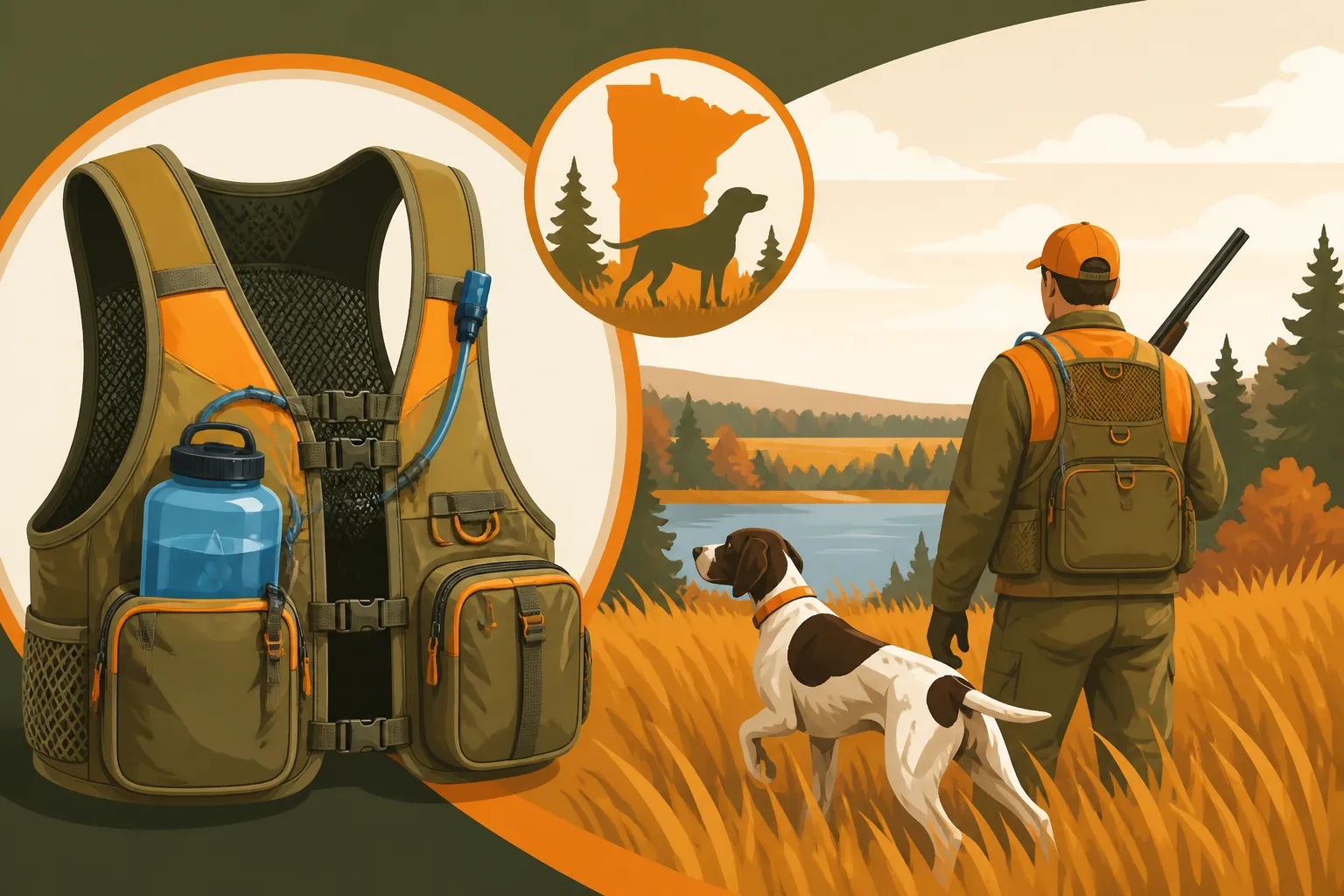
Many modern upland vests incorporate a dedicated pocket for a hydration bladder, often ranging from 1 to 3 liters in capacity. This is my preferred method for personal hydration. A bladder, typically made of durable plastic or TPU, sits flat against your back, distributing weight evenly. It comes with a long drinking tube that usually clips to a shoulder strap, allowing you to sip water hands-free throughout the day. This constant, easy access encourages regular hydration, which is far more effective than gulping down water only when you feel parched. When you're carefully negotiating a thick stand of tag alders in search of Woodcock Hunting Minnesota Alder Runs, you don't want to stop and dig for a bottle. The downside? Bladders can be a bit trickier to clean and dry completely, and if you get a puncture, you're out of luck. Brands often include quick-disconnect fittings on their bladders, making them easier to remove for filling and cleaning, which is a huge plus. Some even have insulated tubes to prevent water from freezing in cold weather or getting too warm in the sun.
Dedicated Water Bottle Pockets
While bladders are great for personal hydration, many vests also feature dedicated pockets for water bottles, which are often ideal for carrying water for your dog. Look for pockets that are easily accessible, preferably without having to take off your vest. Side pockets or those on the lower back are common. Crucially, they should be deep enough and have some form of retention (like an elastic band or strap) to prevent bottles from bouncing out when you're jumping over a log or running to a point. The material inside these pockets should be durable to withstand repeated insertion and removal of bottles. Some vests even include foldable, collapsible water bowls that fit neatly into these pockets, making it incredibly convenient to give your dog a drink on the fly. This system also offers flexibility: you can carry a larger bottle for your dog and a separate one for yourself, or even use one pocket for an insulated thermos of coffee on a chilly morning, like when you're preparing for Muzzleloader Tactics in December Cold.
Material, Fit, and Durability
An upland vest is going to take a beating. It’s going to get dragged through thorns, rubbed against tree bark, and subjected to all sorts of weather. So, the materials used are paramount. Look for rugged fabrics like Cordura nylon or heavy-duty canvas that resist abrasion and tears. Ripstop features are a bonus. The vest should also have a good fit – adjustable straps at the shoulders and waist are essential for customizing it to your body type and layering. A well-fitting vest distributes weight effectively, prevents chafing, and won't restrict your movement when swinging a shotgun. Don't underestimate the importance of ventilation either. Mesh panels on the back and sides can make a huge difference in comfort on warmer days. Finally, check the stitching, zippers, and buckles. High-quality hardware and reinforced stress points indicate a vest built to last. Many reputable gear companies understand the demands of serious upland hunting and construct their vests accordingly.
Choosing the Right Capacity for Your Hunting Style
Deciding how much water capacity you actually need often depends on a few key variables. There’s no one-size-fits-all answer, but understanding your typical hunting scenarios will guide you to the best choice.
Factors Influencing Your Water Needs
Several things will dictate how much water you need to carry. First, the weather. A hot, humid September afternoon hunting Pheasant Hunting Minnesota Farmland will demand far more water than a crisp, cool November morning. Even on cooler days, if you’re exerting yourself significantly, you’ll still need to hydrate regularly. Second, the duration and intensity of your hunt. Are you planning a quick two-hour jaunt, or an all-day epic that covers ten miles of ground? The longer and more strenuous the hunt, the more water you’ll need for yourself and your dog. Third, your dog's size and activity level. A smaller, less active dog will naturally require less water than a large, high-energy pointer that never stops moving. Consider your dog's breed and how hard they typically run. If you're using a mapping tool like GoHunt to scout a new public land tract or plan a long route through a state forest, you can get a good idea of the distance you'll cover and how remote the area is from potential water sources. This pre-hunt intel is invaluable for determining your hydration needs.
Different Vest Types and Their Capacities
Upland vests with water capacity generally fall into a few categories:
- Traditional Game Vests with Added Bottle Pockets: These are usually minimalist, focusing on a large game bag and shell loops. Some newer models integrate external pockets large enough for 1-2 water bottles (typically 20-32 oz each). They offer good ventilation but less structured support for heavy water loads. Best for shorter hunts or areas with frequent water access.
- Full-Pack Vests (Vest-Packs): These combine the features of a traditional vest with a small backpack, offering much more storage, including dedicated sleeves for hydration bladders (1.5-3 liters) and multiple external bottle pockets. They provide excellent support for heavier loads but can be warmer and bulkier. Ideal for all-day hunts, remote areas, or when carrying extra gear like first-aid kits or dog supplies. Many feature robust designs for hunters pushing deep into areas like those you might scout on GoHunt.
- Minimalist Hydration Packs: Some hunters opt for a dedicated hydration backpack (like those used for running or cycling) and wear a very light game belt over it. This maximizes water capacity and personal hydration, but the game-carrying capacity is reduced, and it might not have specialized features like shell loops. This setup is more common for training runs with dogs than actual hunting.
Here's a quick comparison of common vest types and their hydration options:
| Vest Type | Typical Water Capacity (Liters) | Primary Hydration Method | Pros | Cons |
|---|---|---|---|---|
| Traditional Game Vest | 0.5 – 1.5 | External Bottle Pockets | Lightweight, breathable, easy access to game bag | Limited capacity, less stable for heavy bottles, uneven weight |
| Full-Pack Vest (Vest-Pack) | 2.0 – 4.0 | Integrated Bladder & Bottles | High capacity, even weight distribution, more storage for gear | Can be bulkier, warmer, sometimes less immediate game bag access |
| Minimalist Hydration Pack | 2.0 – 3.0 | Integrated Bladder | Maximized personal hydration, very lightweight | Limited game/gear storage, requires separate game belt/pouch |
Balancing Water with Other Gear
It’s easy to focus solely on water, but remember your vest needs to carry other essentials too. Shells, a first-aid kit, a compass or GPS, dog treats, an E-Collar Use on Public Ground remote, maybe even a small snack for yourself. When choosing your vest, consider the total weight. Water is heavy (1 liter = 2.2 pounds), so a full 3-liter bladder and two 1-liter bottles means you're carrying over 10 pounds of water alone. Make sure the vest's harness system is robust enough to handle this weight comfortably without sagging or causing hot spots. A well-designed vest will distribute this load evenly across your shoulders and hips, preventing fatigue and making those long walks much more enjoyable. Think about the overall ergonomics; can you still quickly access your shotgun shells or retrieve a downed bird from the game bag with a full hydration system?
Practical Tips for Using and Maintaining Your Hydration Vest
Getting the right vest is only half the battle. Proper use and maintenance will ensure your hydration system lasts for many seasons and performs reliably when you need it most.
Pre-Hunt Prep and Field Use
Before every hunt, especially those long ones planned with the help of apps like GoHunt, inspect your hydration system. If using a bladder, make sure there are no leaks by filling it with water and giving it a gentle squeeze. Check all hose connections and bite valves. For bottle pockets, ensure they're empty and ready for your chosen bottles. A smart trick for cold weather hunting is to fill your bladder with warm (not hot) water; it will take longer to freeze, especially if you also insulate the hose. In the field, make it a habit to sip regularly from your bladder. Don't wait until you're thirsty – by then, you're already starting to dehydrate. For your dog, offer water frequently, especially after a long retrieve or a strenuous push through thick cover. A collapsible bowl makes this easy and hygienic. Just stop for a minute, pour some water, and let them drink their fill. Remember, even if you’re targeting birds in relatively open country, having that water on hand is crucial.
Cleaning and Storage
This is where many hunters fall short, and it's perhaps the most important aspect of bladder-based hydration systems. Neglecting to clean your bladder and hose can lead to mold and mildew, making your water taste awful and potentially making you sick. After every use, empty any remaining water. For bladders, rinse thoroughly with warm water, then use a specialized cleaning kit (usually a brush for the hose and a larger brush for the bladder itself) with a mild soap or even a denture cleaning tablet. Hang the bladder upside down to dry completely, ensuring air circulates inside. Many bladders have a drying hanger or arms that keep the interior surfaces from sticking together. Store it with the cap off to prevent moisture buildup. For water bottles, a good rinse and air dry is usually sufficient. Keeping your system clean ensures fresh-ttasting water and prevents any health hazards.
Troubleshooting Common Issues
Even with the best gear, sometimes issues arise. If your hydration bladder isn't flowing, check the bite valve first – sometimes it gets crimped or clogged. A quick squeeze or adjustment often fixes it. If the water still isn't flowing, the hose might be kinked or, in freezing conditions, the bite valve or hose could be frozen. In extreme cold, try tucking the bite valve under your armpit or inside your jacket for a few minutes to warm it up. Leaks are less common with quality gear but can happen. Always check the cap connection on the bladder – make sure it’s screwed on tightly and straight. If a bladder develops a small puncture, some brands offer patch kits, or you might have to replace the bladder itself. For bottle pockets, if a bottle keeps falling out, consider adding a piece of elastic shock cord to the opening for extra retention. Being prepared to troubleshoot these minor issues means you won't be caught without water when you're miles into the wilderness, perhaps scouting a new Grouse Hunting Minnesota Aspen Cover or Finding Ground Others Walk Past.
Disclaimer
This article is for general informational purposes only and does not constitute professional advice. Laws, prices and regulations vary by location and change over time. Consult a qualified professional for guidance on your specific situation.