Ground Blind Anchoring in Wind
There’s nothing quite as disheartening as getting to your carefully placed ground blind, often after a pre-dawn hike, only to find it ripped, torn, or completely flipped over by a rogue Minnesota wind. We've all been there, staring at a crumpled mess, wondering how the day's hunt could possibly proceed. This guide is all about equipping you with the knowledge and tools to ensure your ground blind stays right where you put it, no matter what blustery conditions the Land of 10,000 Lakes throws your way.
Understanding Minnesota's Windy Temperament
Minnesota's weather can be notoriously fickle, and the wind is often the most unpredictable element. From the wide-open prairie fields of the southwest to the sprawling big woods up north, and even the river bottoms in the southeast, every region has its own wind dynamics. Ignoring these forces can turn your comfortable blind into a kite, ruining not just your hunt, but potentially your investment.
The Dynamics of Minnesota Wind and Terrain
Think about hunting the edge of a vast cornfield in western Minnesota. There’s practically nothing to slow down a sustained 20 mph wind, let alone gusts that can double that. Your blind is a big sail, catching every bit of that force. Compare that to a blind tucked deep in a cedar swamp in the central part of the state. While the wind might be less direct, swirling currents and micro-gusts can still find their way in, working at seams and weak anchor points. Then you have the rolling hills and bluff country of southeastern Minnesota, where wind can funnel through valleys and over ridge tops with surprising intensity. The terrain often dictates not just if it's windy, but how that wind will affect your setup. Understanding this variability is the first step in effective anchoring.
When you're Hunting Minnesota Farmland Deer, you're often dealing with expansive, flat landscapes that offer little to no natural windbreak. A ground blind set near a standing cornfield in such an area can become a major casualty if not secured properly. Conversely, a blind in the heavily wooded areas for Hunting the Minnesota Rut in Early November might feel protected, but a strong frontal system can still whip through the canopy, creating a violent shaking effect on your blind.
Common Ground Blind Failures Due to Wind
We've all heard the stories, or perhaps lived them ourselves: the blind that got shredded, the one that ended up in the ditch a quarter-mile away, or the one with a collapsed frame. These aren't just minor inconveniences; they can completely derail a hunting trip, especially if you're traveling a long distance or have limited time. The most common failures stem from underestimating the wind. Flapping fabric wears quickly, zipper failures are common, and eventually, the structural poles can bend or snap. Imagine spending hours Brushing In a Blind on a Field Edge to make it perfectly disappear, only to have it look like a crumpled tent after a squall blows through overnight. It's frustrating, expensive, and completely avoidable with proper anchoring.
Another issue is the noise. Even if your blind stays upright, a poorly anchored blind that flaps and crinkles in every gust of wind is a giant red flag to any deer in the vicinity. You'll be hearing it constantly, distracting you from the hunt, and the deer will be hearing it too, putting them on high alert. The goal isn't just to keep it from blowing away, but to keep it quiet and stable.
Essential Anchoring Techniques and Gear
Securing your ground blind against Minnesota's wind isn't rocket science, but it does require attention to detail and the right tools. Forget those flimsy tent stakes that come with most blinds – they're barely adequate for a calm summer day, let alone a blustery autumn in deer country.
Upgrading Your Stakes and Anchors
The stakes that come with most ground blinds are usually lightweight, thin wire or plastic pegs designed for minimal resistance. For Minnesota conditions, you need something far more robust.
- Heavy-Duty Steel Stakes: These are a significant upgrade. Look for stout, thick steel stakes, often with a large head or a loop, that can be hammered deep into the ground. They offer far more holding power than standard stakes.
- Rebar: Short sections of rebar (12-18 inches) with one end sharpened can be driven into the ground with a mallet. They're incredibly strong and resist bending. Just be careful not to create a trip hazard around your blind.
- T-Posts: For semi-permanent setups or areas with notoriously soft ground, small T-posts (the kind used for fencing) can be driven in at each corner and the blind's guylines secured to them. These are serious anchors and will hold through almost anything.
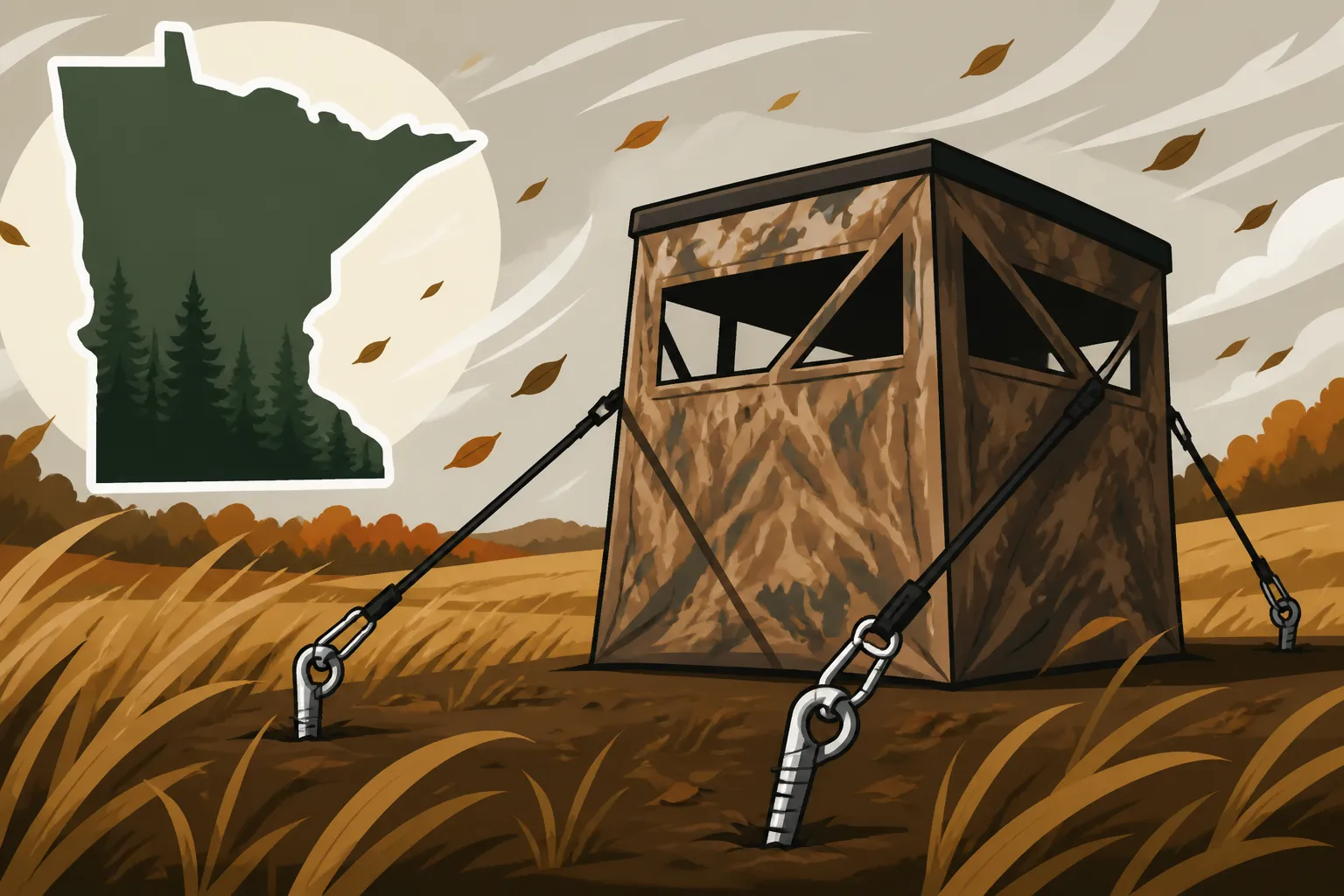
- Auger-Style Anchors: Similar to dog tie-out stakes, these corkscrew into the ground, offering excellent holding power, especially in softer soils. They require a bit more effort to install and remove but are very effective.
| Anchor Type | Pros | Cons | Best Use Case |
|---|---|---|---|
| Standard Tent Stakes | Lightweight, included with blind | Very poor holding power, bend easily | Emergency, light breeze, never primary |
| Heavy-Duty Steel Stakes | Good holding power, relatively easy to install | Can be difficult in rocky/frozen ground | Most common ground blind setup, moderate wind |
| Rebar (12-18 inch sections) | Excellent holding power, very durable | Heavy, can be a trip hazard, difficult removal | High wind areas, semi-permanent setups |
| Auger-Style Anchors | Superior holding in soft/sandy soil | Slower to install/remove, can twist in hard ground | Open fields, sandy areas, long-term placement |
| Small T-Posts | Maximum holding power, almost impossible to pull out | Heavy, very difficult to install/remove in hard ground, highly visible | Extremely windy locations, long-term seasonal blinds |
Utilizing Guylines and Tie-Downs
Most quality ground blinds come with attachment points for guylines – those cords that extend from the blind to stakes in the ground. Too many hunters neglect these, but they are absolutely critical for stability, especially in windy conditions.
- Strategic Placement: Use all available guyline points. These are usually on the corners and sometimes mid-panel. Angle your guylines outward at about a 45-degree angle from the blind for maximum stability.
- Tension is Key: The guylines should be taut, but not so tight that they distort the blind's frame. Their purpose is to distribute the wind load and prevent the fabric from flapping.
- Rope Quality: Use strong, weather-resistant rope. Paracord or similar synthetic ropes are ideal. Avoid thin, cheap string that can fray or snap.
- Natural Anchors: When available, use natural features. Tie a guyline to a stout tree branch, a large log, or a heavy rock. This is especially useful if the ground is too rocky or frozen for stakes. Always inspect the natural anchor for stability before relying on it.
A helpful tip is to use reflective cordage for your guylines, especially if you're setting up in the dark or need to find your blind during pre-dawn walks. This prevents tripping and makes adjustments easier. If you're planning a trip into the woods where you might be Scouting Minnesota Public Land Before Season, marking these guyline locations on your mapping app like GoHunt can be useful for easy setup and tear down.
Adding Internal Weight and Structure
Beyond external anchoring, consider beefing up the internal stability of your blind. This isn't always necessary for every situation, but for blinds that will be left out for extended periods or in extremely exposed areas, it can be a game-changer.
- Sandbags or Water Jugs: Placing sandbags or filled water jugs in each corner of the blind, against the interior walls, adds significant weight to the base. This helps resist lifting and shifting. Even a few gallons of water can make a big difference.
- Bungee Cords: Use bungee cords to secure the blind's frame to itself, or to secure a corner of the blind to an internal sandbag. This minimizes the frame's ability to flex or collapse under pressure.
- Bracing: In extreme cases, you can use small, lightweight sticks or poles to brace the interior of the blind, especially if you anticipate heavy snow loads or exceptionally high winds. This creates a more rigid structure, though it can limit internal space.
Remember, the goal is to create a secure, stable, and quiet hunting environment. A blind that's anchored firmly won't flap, rustle, or creak, which means you're less likely to spook wary whitetails.
Situational Strategies for Different Terrain
Minnesota's diverse landscapes demand a tailored approach to ground blind anchoring. What works perfectly in a marsh might fail miserably on a windswept hill. Always assess your specific hunting location before deploying your blind.
Open Fields and Prairies (Western/Southern Minnesota)
These are the most challenging environments for ground blinds due to relentless, unobstructed wind. If you're Pheasant Hunting Minnesota Farmland or trying to get close to deer in an agricultural setting, your blind is often the only thing breaking the wind.
- Deep Anchoring: This is where rebar, T-posts, or auger-style anchors truly shine. You need to get your anchors deep, often 12-18 inches into the soil.
- All Guylines Engaged: Utilize every single guyline attachment point your blind offers, and consider adding more if possible with repair kits.
- Reinforce Corners: The corners are the most vulnerable points. Double-stake them if you can, or use two different types of anchors side-by-side.
- Natural Windbreaks (If Any): If there's even a slight ditch, a brush line, or a few scattered trees, position your blind to take advantage of them as much as possible. Even a small reduction in wind speed makes a difference. If you're really desperate, you might even consider creating a temporary windbreak using hay bales or other natural materials, though this needs to be done well in advance to avoid spooking game.
Timber and Big Woods (Northern/Central Minnesota)
While the trees offer some protection, don't be fooled. Wind can still swirl, gust, and funnel through openings, especially if your blind is near a logging road or a clear-cut edge. For Reading a Ridge for Northern Minnesota Deer or setting up in dense cover, you might feel secure, but storms can still wreak havoc.
- Tree Tie-Offs: The best anchors here are often the trees themselves. Use heavy-duty straps or ropes to secure the blind directly to nearby tree trunks. This provides an incredibly stable anchor. Just make sure the trees are healthy and won't fall over in a storm!
- Stumps and Logs: Old stumps, downed logs, or large root balls can serve as excellent natural anchor points for guylines.
- Rocky/Frozen Ground Considerations: The northern woods often mean rocky or frozen ground, making traditional stakes difficult. Carry a stout hammer or small pickaxe for stake installation, or prioritize tree/log tie-offs. If the ground is too hard, you may need to use heavier internal weights instead.
- Camouflage for Security: While not directly anchoring, brushing in your blind well not only hides it but also helps break up the wind's direct force. When you're Setting Up on a Clear-Cut Edge, the blind's profile is very exposed, so adding branches and natural cover helps reduce the impact of wind.
Marsh and River Bottoms (Southeast/Central Minnesota)
Wetlands present their own challenges. Soft, muddy ground often means stakes pull out easily, but nearby vegetation can provide alternative anchoring. If you're Hunting Minnesota Cattail Sloughs for Deer or setting up in river bottom areas, you need a different strategy.
- Longer Stakes: In soft, muddy ground, longer stakes (24 inches or more) will provide more bite and resist pulling out.
- Auger-Style Anchors: These are fantastic in mucky conditions, as their corkscrew design provides a strong hold where traditional stakes might fail.
- Cattail/Brush Anchors: If the ground is too soft, you can create "deadman" anchors by tying ropes to bundles of cattails, thick brush, or logs, and then burying them shallowly in the mud. The resistance of the buried object provides the hold.
- Woven Blinds: Some hunters will weave local vegetation directly into the blind's exterior to break up its profile and add a bit of weight and wind resistance. This is more about camouflage but offers a minor benefit for stability.
In all these scenarios, having a multi-pronged approach – using stakes, guylines, and natural tie-offs – is always the best defense against Minnesota's unpredictable winds.
Pre-Season Prep and Troubleshooting
The key to a successful ground blind setup isn't just knowing how to anchor it, but doing it right before the season, and being prepared to handle issues when they arise. A little foresight goes a long way.
Scouting for Wind and Blind Placement
Don't wait until opening morning to decide where to put your blind. Use the pre-season to scout your chosen area thoroughly. This isn't just about deer sign; it's also about understanding the local wind patterns.
- Topographic Maps and Apps: Utilize mapping tools like the GoHunt app or the Minnesota Recreation Compass App to study elevation changes, tree lines, and open areas. These can give you a strong indication of where wind might funnel or be blocked. Look for natural depressions, thick cover, or the leeward side of hills that might offer some shelter.
- Observing Prevailing Winds: Pay attention to the prevailing wind direction during different times of the year, and especially for the specific season you'll be hunting. In Minnesota, fall often brings cold fronts from the north or west.
- Walk the Ground: Nothing beats boots on the ground. Walk your potential blind sites. Feel the wind, look at the vegetation. Are there areas that consistently feel calmer? Are there pinch points where wind intensifies? Consider where you’ll be Hunting Pressure on Minnesota Public Land and how that might also influence your blind placement relative to prevailing winds and deer movement.
- Concealment and Access: Position your blind not just for wind, but also for concealment and an uncompromised entry and exit route. A blind that's perfectly anchored but spooks every deer because of your approach isn't much help. Think about Entry Routes Through a Cattail Slough or using terrain features to your advantage.
Maintenance and Emergency Repairs
Even the best-anchored blind can suffer wear and tear, especially if left out for weeks or months. Regular checks are crucial.
- Pre-Season Check: Before you even set your blind out, give it a thorough inspection. Look for frayed guyline loops, weak stitching, bent poles, or small tears in the fabric. Repair these before they become major problems.
- In-Season Checks: If your blind is left out, check on it periodically, especially after severe weather. Re-tension guylines, re-drive stakes that might have loosened, and clear any debris.
- Emergency Repair Kit: Carry a small repair kit with you during the season. This should include:
- Extra heavy-duty stakes or rebar
- Strong rope or paracord
- Duct tape (the hunter's best friend!)
- Zip ties
- A small mallet or hammer
- Fabric repair patches and glue
Imagine you're out Hunting the Peak Rut in Early November, and a sudden cold front brings high winds and snow. Having the right tools on hand to quickly re-anchor a flapping corner or patch a small tear can save your hunt and prevent further damage to your blind. Being prepared for anything Minnesota's weather throws at you is part of being a successful and resilient hunter.
By taking the time to understand wind dynamics, investing in proper anchoring gear, applying situational strategies, and maintaining your equipment, you can ensure your ground blind remains a steadfast sanctuary from the elements, rather than a frustrating casualty of a Minnesota gust.
Disclaimer
This article is for general informational purposes only and does not constitute professional advice. Laws, prices and regulations vary by location and change over time. Consult a qualified professional for guidance on your specific situation.