Deer Drives on Minnesota Public Land
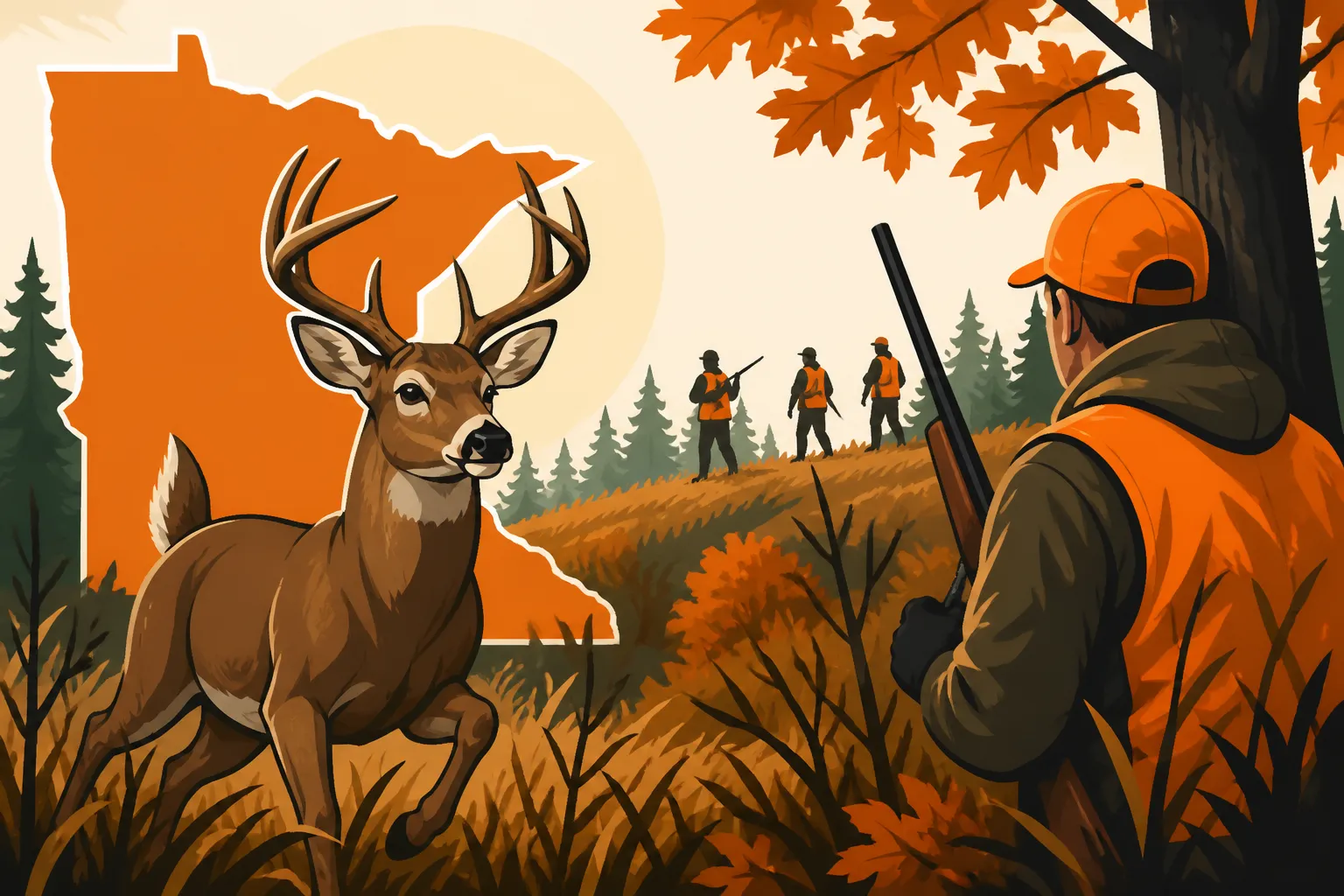
Oh, the deer drive. For many of us who cut our teeth hunting Minnesota's public lands, it's a tactic as ingrained as autumn itself. But let's be honest, organizing and executing an effective deer drive, especially on ground that sees a lot of pressure, can feel like trying to herd cats with a kazoo. It's often chaotic, sometimes fruitless, and occasionally downright dangerous if not planned properly. This guide isn't about promoting reckless pushes; it's about diving deep into how to make deer drives a safe, strategic, and genuinely successful part of your public land hunting arsenal, helping you put venison in the freezer when other methods fall short.
Understanding the "Why" Behind Public Land Deer Drives
Hunting Minnesota's public land is a unique challenge. Unlike private parcels where deer might be less accustomed to human intrusion, public ground whitetails are often wise to hunter movements from the moment archery season opens. When those crisp November winds blow and the firearm season kicks off, deer drives can become a crucial tool, not just a last resort.
When Deer Drives Become Necessary
You know the scenario: you've sat on stand for hours, maybe even days, without seeing much more than a squirrel. The wind is wrong for your prime stand location, or perhaps you've bumped a buck heading to his bedding area and know he's holed up somewhere nearby. This is often when the idea of a deer drive starts to sound mighty appealing. It’s not just about pushing deer aimlessly; it's about actively relocating them from dense cover or known bedding areas to places where hunters are strategically positioned. This strategy is particularly effective when deer have been educated by early season pressure and are hunkered down, refusing to move during daylight hours. When the woods are quiet and still, a well-executed drive can be the only way to get deer on their feet and moving, especially if you're trying to fill an antlerless lottery tag in Minnesota or are focused on breaking up a group of mature does.
The Psychology of Pressured Whitetails
Deer on public land are incredibly attuned to pressure. They learn quickly, often within the first few days of the firearm season, to avoid open areas during shooting hours and to seek out the nastiest, thickest cover they can find. These are the places where they feel safe: dense cattail sloughs, impenetrable cedar swamps, tangled clear-cuts, or just the deepest, darkest pockets of big woods. When they're bedded down and feel secure, they're not going to move unless forced. A drive exploits this psychology by disrupting their sense of security, prompting them to move out of their perceived safe zones. Understanding how they'll react—often heading to the next patch of thick cover or following a well-worn escape route—is key to setting up an effective drive. They're not just running in random directions; they're attempting to evade danger along familiar paths, which is where your standers need to be.
Advantages and Disadvantages of Drives
Let's be realistic: deer drives aren't a silver bullet, but they do offer distinct advantages on Minnesota public land. For one, they can be incredibly efficient for covering large swaths of dense cover that would be impossible to still-hunt effectively. They also allow a group of hunters to work together, sharing the effort and increasing the overall chances of success, which can be a real boon for a hunting camp. The camaraderie alone can be a huge advantage.
However, there are significant disadvantages. First and foremost is safety; with multiple hunters moving and shooting, clear communication and strict adherence to safety protocols are paramount. Drives can also be disruptive, potentially pushing deer entirely off a public parcel if not managed correctly. There's also the effort involved; being a driver or a stander can be physically demanding, especially in tough terrain or deep snow. Finally, if not well-planned, drives can simply push deer from one thicket to another without ever presenting a shot, leading to frustration and wasted effort. It's a high-reward, high-risk strategy that demands careful consideration.
Scouting and Planning Your Drive on Public Ground
The difference between a haphazard walk through the woods and a successful deer drive often comes down to meticulous scouting and planning. You can't just show up and wing it, especially on unfamiliar public ground. Deer drives on Minnesota public land require a thorough understanding of the terrain, deer behavior, and the movements of your hunting party.
Identifying Ideal Terrain and Escape Routes
The most productive deer drives start long before opening day with extensive scouting. You're looking for terrain features that naturally funnel deer or concentrate them in specific areas. This includes points, ridges, swamps, thickets, clear-cuts, and even variations in timber types. Deer, being creatures of habit, will often use the path of least resistance or the thickest cover as an escape route. Your goal is to identify these primary travel corridors. Are there saddles in a ridge system where deer cross? Is there a narrow pinch point between a swamp and a field? What about a thick aspen regeneration area adjacent to mature hardwoods? These are all potential areas to either push deer from or position standers on. For a detailed look at how to approach pre-season scouting, consider checking out our guide on Scouting Minnesota Public Land Before Season. Don't just look for sign; think about how deer would move through the landscape when pressured.
Using Mapping Tools for Public Land Assessment
In today's hunting world, digital mapping tools are absolutely indispensable for planning public land deer drives. Services like GoHunt, along with the Minnesota DNR's Recreation Compass, allow you to visualize terrain, property lines, and habitat features from your couch. You can identify potential bedding areas (often the thickest, nastiest cover), likely travel routes (creek bottoms, ridge lines, fence rows), and safe stander locations.
Before you even step foot in the woods, spend hours poring over aerial photos. Look for subtle changes in elevation, timber breaks, and water features. Mark potential entry and exit points for your drive, as well as safe positions for standers that offer clear lines of sight without risking anyone's safety. GoHunt's detailed satellite imagery and property line overlays are fantastic for understanding exactly where you can and cannot go on public land, and how private parcels might influence deer movement off public ground. Using the Minnesota Recreation Compass App can also help you identify specific WMA boundaries and access points, which are critical for precise planning.
Determining the Number of Drivers and Standers
The size of your hunting party directly impacts the type and scale of drive you can execute. For a small group, say Deer Drives With Three or Four Hunters, you might focus on smaller pockets of cover or linear features. With more hunters, you can effectively cover larger blocks of timber or wider swaths of swamp. As a general rule, you need enough drivers to create a consistent, slow push through the cover, and enough standers to cover the most likely escape routes safely.
- Drivers: Their role is to keep deer moving, not to necessarily see deer themselves. They need to maintain a consistent line and pace. For every 100-200 yards of dense cover width, you might need one driver.
- Standers: These are your shooters. They need to be positioned strategically, often along escape routes or funnels, with a good vantage point and a safe backdrop. You'll need enough standers to cover all anticipated exit points without overlapping fields of fire. The number of standers is often dictated by the terrain and the deer's likely escape paths. Too few standers, and deer will slip through; too many, and you risk compromising safety. A good rule of thumb is to place standers at intervals where they can see but not shoot towards another stander, ensuring clear shooting lanes.
| Role | Primary Goal | Key Responsibilities | Ideal Traits |
|---|---|---|---|
| Driver | Move deer out of cover towards standers | Maintain line and consistent pace, make noise (if desired), observe deer direction | Physically fit, good sense of direction, patient, disciplined |
| Stander | Harvest deer moving out of cover | Remain silent and still, identify shooting lanes, prioritize safety, observe deer movement | Patient, excellent judgment, good shot placement, calm under pressure |
Executing the Drive: Strategy and Communication
Once you've scouted your area and determined your team, the real work begins: the execution. This is where strategy, discipline, and clear communication become critical. A well-executed drive feels less like a random walk and more like a choreographed dance, with each member knowing their role and staying connected.
Driver Tactics: Pushing and Moving Deer
The drivers are the engine of the deer drive. Their primary goal isn't to shoot a deer (though opportunities can arise), but to effectively push deer from their bedding areas towards the waiting standers. The most crucial aspect of driving is maintaining a consistent line and pace. Drivers should walk shoulder-to-shoulder, or at least within eyesight and earshot of each other, moving slowly and deliberately through the cover.
Noise can be a factor. Sometimes a quiet push is best, letting deer think they're sneaking away, while other times a more vocal push, with drivers shouting or beating brush, is needed to get stubborn deer moving. This depends heavily on the cover and how pressured the deer are. In extremely thick, nasty cover like a cedar swamp, more noise might be necessary. In more open timber, a quieter approach might nudge deer along naturally. Drivers should constantly scan for deer attempting to circle back or slip through gaps in the line, and relay this information to the rest of the team. Remember, a driver's success is measured by the deer they put in front of the standers, not necessarily the deer they see themselves.
Stander Placement and Safety Zones
Stander placement is arguably the most critical component for both success and safety. Standers must be positioned where they have clear shooting lanes into the likely escape routes, but absolutely no chance of shooting toward another hunter. This means identifying natural funnels: creek crossings, narrow strips of timber between open fields, points of a swamp, or ridges that act as deer highways. Often, setting up on a clear-cut edge or where a logging trail meets a dense bedding area can be extremely effective.
It's vital to establish clearly defined safety zones before the drive begins. Each stander needs to know their exact field of fire and what lies beyond it. Using a map to mark everyone's position and planned shooting lanes is a smart move. Elevated positions, like a treestand, can offer a better vantage point and safer shooting angles, but a well-brushed-in ground blind on Minnesota public land can also be highly effective, especially in dense areas where deer might pop out close. Always ensure a solid backstop behind your target, whether it's a hillside, a thick patch of timber, or simply clear sky in a direction away from any other hunter or public road.
Effective Communication During a Drive
Communication is the glue that holds a successful deer drive together. Without it, you risk not only inefficiency but also serious safety issues. Before the drive starts, establish clear signals for "deer spotted," "stopping," and "all clear." Two-way radios are invaluable for this, allowing real-time updates without shouting across the woods, which can alert deer too soon or cause confusion. Consider using two-way radios on a deer drive, especially when hunting larger public parcels.
Drivers should communicate their progress and any deer they see breaking or circling. Standers should announce deer sightings, the direction of travel, and any shot opportunities. This ensures everyone is aware of what's happening. A common mistake is to assume everyone knows what you're thinking. Over-communicate, especially regarding safety. Before any shots are fired, confirm the target is safe to engage and that no other hunters are in the line of fire. After a shot, communicate clearly that a shot has been taken, allowing others to adjust their focus and prepare for deer that might be pushed their way by the sound.
Safety First: Minimizing Risks on Public Land
Let's face it, hunting is inherently risky, and deer drives, especially on crowded public land, amplify those risks. There’s nothing more important than ensuring every hunter comes home safely. This isn't just about following the rules; it's about fostering a culture of hyper-vigilance and responsibility within your hunting party.
Blaze Orange Requirements and Visibility
In Minnesota, blaze orange isn't just a recommendation; it's the law for good reason. For deer drives, where hunters are moving and shots can be taken in dynamic situations, high visibility is absolutely paramount. During the firearm deer season, hunters must wear blaze orange or blaze pink on the visible portion of their cap and outer clothing above the waist, meeting specific square inch requirements. Our guide on How Much Blaze Orange Minnesota Requires goes into detail on the exact measurements, but the takeaway is simple: wear as much as you can.
Ensure that drivers are visible to each other and to standers, and that standers are visible to drivers. This might mean adding extra vests or hats, especially if someone is wearing camouflage clothing underneath. The goal is to make every hunter unmistakable as a human, not a deer. Before a drive, do a quick visual check of everyone in your party to ensure they meet the blaze orange requirements and are clearly visible.
Establishing Clear Shooting Lanes and Backstops
This point cannot be stressed enough. Every stander must have a clear understanding of their shooting lane and, more importantly, a safe backstop. This means looking beyond the deer itself and considering what lies behind it. Are there other hunters? A road? A cabin? Public land often borders private property, and you need to be aware of those boundaries. Using mapping apps like GoHunt is excellent for confirming property lines and identifying potential hazards.
Before the drive starts, standers should take the time to physically walk their assigned area, identify landmarks, and visually confirm safe shooting zones. Mark your boundaries with flagging tape if needed, especially in dense cover. Never take a shot if you're not 100% certain of your target and what's beyond it. If a deer runs into an unsafe area, let it go. No deer is worth risking a human life or injuring someone's property. Discuss these scenarios beforehand: what to do if a deer approaches from an unexpected angle, or if it runs towards a road.
Public Perception and Hunter Ethics
Hunting on public land means you're often sharing the woods with other users: hikers, dog walkers, birdwatchers, or even other hunters who aren't part of your drive. Your actions reflect not just on your group, but on all hunters. Loud, disorganized, or seemingly reckless drives can create negative perceptions.
- Respect other users: If you encounter other people, be courteous. A friendly wave and a brief explanation of what you're doing (a deer drive for safety) can go a long way.
- Leave no trace: Pack out everything you pack in, and more.
- Noise considerations: While some noise might be necessary for drivers, avoid excessive yelling or disruptive behavior that detracts from others' enjoyment of the outdoors.
- Game recovery: Make every effort to recover any deer you shoot. Not only is it ethical, but leaving an unrecovered animal on public land reflects poorly on the hunting community. A well-planned drive includes a strategy for Tracking a Deer in Fresh Minnesota Snow or other conditions.
- Adhere to all regulations: This goes without saying, but ensure all members of your party are properly licensed, understand permit area rules, and are aware of all Minnesota deer seasons and permit areas.
By prioritizing safety and demonstrating ethical behavior, you not only protect yourselves but also contribute positively to the future of public land hunting in Minnesota.
Adapting Drives to Different Minnesota Public Land Types
Minnesota's public lands are incredibly diverse, from vast northern forests to mixed farmland and wetland complexes. A deer drive strategy that works perfectly in one area might be a complete flop in another. Understanding the unique characteristics of each habitat type is crucial for designing an effective and safe drive.
Drives in Northern Minnesota Big Woods
The "Big Woods" of northern Minnesota — think Superior National Forest, Chippewa National Forest, or vast State Forests like Paul Bunyan or Savanna State Forest — presents a unique challenge for deer drives. The sheer scale and density of this timber can be daunting. Here, deer drives with three or four hunters might focus on smaller, isolated patches of thick cover, such as cedar swamps, recent clear-cuts, or dense aspen regeneration.
- Focus on Funnels: In the Big Woods, deer often stick to specific travel corridors. Look for ridge lines that extend into swamps, narrow strips of high ground, or creek bottoms. When you're scouting, paying close attention to Reading a Ridge for Northern Minnesota Deer can really help pinpoint those key areas.
- Slow and Deliberate: A fast, noisy push often results in deer circling back through drivers or simply slipping out undetected. A slow, methodical walk through thick cover, with drivers pausing and listening, is usually more effective.
- Utilize Terrain: Use hills or changes in elevation to your advantage. Drivers pushing downhill often move deer more easily than pushing uphill. Standers can be positioned on the opposite side of a valley or along a cross-ridge to intercept deer moving over.
- Compass and GPS: In these vast woods, it's incredibly easy to get disoriented. Every driver should carry a reliable compass or GPS unit, and understand how to use it. Pre-mapping everyone's route on an app like GoHunt is essential for maintaining alignment.
Driving Cattail Sloughs and Wetland Edges
Cattail sloughs and other wetland complexes are notorious deer havens, especially after the initial hunting pressure hits. Deer will often bed deep in these seemingly impenetrable areas, feeling completely safe. Driving these areas effectively requires a different approach.
- Pinch Points: Look for narrow sections of a slough or where a slough bottlenecks between higher ground. These create natural "pinch points" that deer will have to pass through.
- Edge Work: Often, the most productive stander positions are along the edges of the slough, especially where it transitions to timber or a field. Deer pushed from the center will typically try to skirt the edges to find escape cover.
- Waders and Patience: Drivers might need waders, especially if the water is shallow enough to walk through. A slow, steady push is vital, as deer will often try to sneak out ahead of the drivers. Understanding Entry Routes Through a Cattail Slough is crucial for effective stander placement.
- Noise and Water: The rustling of cattails and the splashing in water can be used to your advantage by drivers to keep deer moving. However, too much chaotic noise can cause deer to break prematurely.
Farmland Pockets and Woodlots
In Minnesota's farmland zones, public hunting opportunities often come in the form of small, isolated woodlots, shelterbelts, or strips of timber along drainages. These smaller parcels require precise, often quick, drives.
- Small Groups, Quick Drives: These areas are often best handled with smaller groups and faster drives. The goal is to get deer moving before they feel completely trapped and try to bust out in an unpredictable direction.
- Surround and Funnel: If possible, try to nearly surround the woodlot with standers, leaving one or two narrow escape routes where drivers will push deer. Deer in these small pockets are very aware of human presence.
- Utilize Crop Fields: Deer often stage or bed in standing cornfields or move between woodlots and cut fields. Drivers can push from the woodlot towards a cut field where standers are positioned in a layout blind or natural cover. Our guide on Hunting a Standing Cornfield in Farm Country offers insights into deer behavior in these environments.
- Private Land Considerations: Be extremely mindful of private land boundaries. These public pockets are often surrounded by private property, so know exactly where your shots are directed and ensure no private property is compromised. Always confirm your county's specific ordinances, especially in the thirteen remaining shotgun-only counties, as this influences weapon choice for both drivers and standers.
Post-Drive Considerations and Next Steps
The drive doesn't end when the shooting stops. There's a whole host of critical steps that follow, from recovery to field dressing and, perhaps most importantly, learning from the experience to make your next drive even better. This is where the true value of a well-executed hunt becomes apparent.
Tracking and Recovery After the Shot
Hitting a deer doesn't guarantee a clean kill, especially in the thick cover often targeted by drives. Even a well-placed shot can result in a deer running a significant distance. This is why thorough tracking is paramount. If a deer is hit, everyone should mark the last spot where it was seen and the approximate direction of travel. Give the deer some time if the shot wasn't immediately fatal – 30 minutes for a good lung shot, several hours for a gut shot.
When you begin tracking, move slowly and deliberately. Look for blood, broken branches, disturbed leaves, or tracks. Often, you'll find the deer in the thickest cover nearby, especially if it's wounded. If blood trailing becomes difficult, slow down, call in a tracking dog (where legal), or grid search the area. Remember, the effort put into finding a deer is just as important as the shot itself. Our resource on Blood Trailing After Dark in Minnesota offers crucial advice for those challenging recoveries. Leaving a downed animal unrecovered is not only unethical but a waste of a valuable resource.
Field Dressing and Meat Care
Once recovered, proper field dressing is essential, especially if temperatures are still mild. Getting the internal organs out quickly helps cool the meat, preventing spoilage and ensuring good flavor. For guides on how to handle your deer, check out Field Dressing a Deer in Cold Weather or even Butchering a Deer at Camp for tips on how to process the animal efficiently.
If you're deep in public land, consider the logistics of extraction. Do you have a deer sled for snow, or a deer cart for easier dragging on trails? If you're far from a vehicle, you might need to quarter the deer for easier packing, especially if you're alone or your group is small. Proper game bags are crucial for keeping meat clean and protected from insects or debris during transport. Registering a Minnesota deer online is often the easiest method, but be aware of the Minnesota deer registration deadline.
Learning from Each Drive and Adapting
Every deer drive, regardless of its outcome, offers a valuable learning opportunity. Did the deer go where you expected? Were the standers in the right places? Was the drive too fast or too slow? Debrief with your hunting party afterward. Discuss what worked, what didn't, and why.
Take notes on your maps. Mark where deer were seen, where they crossed, and where shots were taken. This information is invaluable for future hunts on the same public land. Deer behavior, especially on public ground, is constantly evolving due to pressure. What worked last year might not work this year. Our article on Hunting Pressure on Minnesota Public Land highlights just how quickly deer adapt to human activity. By analyzing each drive, you can refine your strategies, scout more effectively, and improve your chances of success on future public land adventures. Sometimes, the best strategy is simply finding ground others walk past, or recognizing that the same old spots might be too pressured.
Disclaimer
The information provided in this guide is for informational purposes only and does not constitute professional advice. Always adhere to all local, state, and federal hunting regulations and safety guidelines. Hunting involves inherent risks, and it is the responsibility of each individual hunter to ensure their own safety and the safety of others.