Land O’Lakes State Forest Access
Trying to find a piece of public hunting land in Minnesota that truly feels wild and offers a real challenge can sometimes feel like you're searching for a needle in a haystack of maps and regulations. Many of us yearn for those vast, unbroken tracts where you can truly get away from the crowds. This guide is here to unravel the mysteries of accessing and hunting Land O'Lakes State Forest, providing you with the insights you need to confidently explore this expansive and often overlooked gem in northern Minnesota.
Understanding Land O'Lakes State Forest and Its Terrain
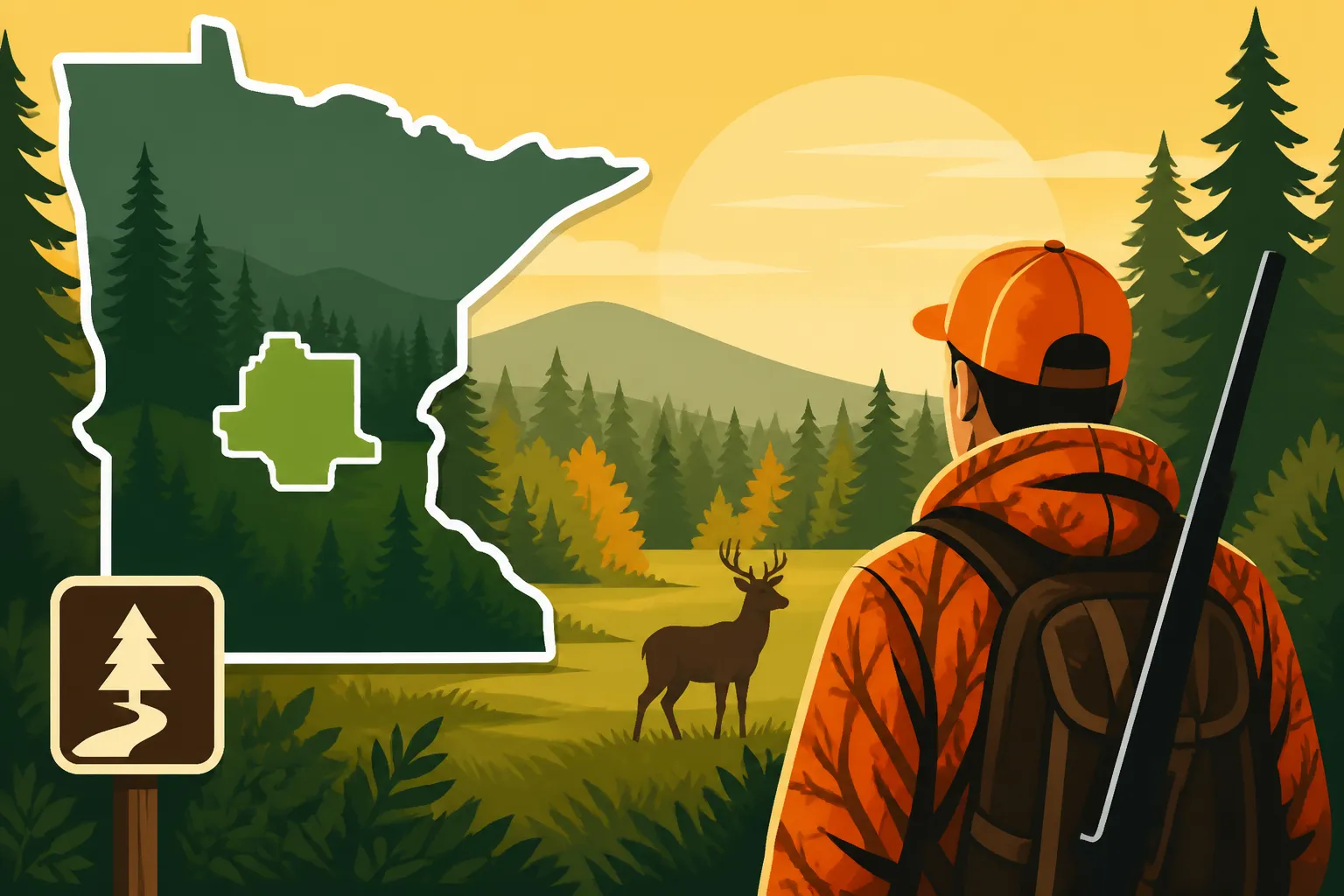
The Land O'Lakes State Forest isn't just another patch of public land; it's a significant wilderness experience tucked away in parts of Cass, Itasca, and Beltrami counties. For many hunters, it represents the quintessential "big woods" hunting that Minnesota is famous for, offering a stark contrast to the more open farmland or heavily managed suburban parcels. It’s an area where getting turned around is a real possibility if you’re not prepared, and where a successful hunt is often as much about navigation and endurance as it is about finding game.
Location and Landscape
Imagine a sprawling mosaic of towering pines, dense aspen stands, tangled alder thickets, and deep, dark spruce swamps, all interspersed with countless small lakes, ponds, and winding creeks. That's the heart of Land O'Lakes State Forest. It’s rugged, undulating terrain, carved by ancient glaciers, with subtle ridges and depressions that can dictate animal movement and make a significant difference to your hunting strategy. This isn't flat, easy walking ground. You'll find yourself pushing through thick brush, skirting boggy areas, and climbing gentle rises, all while trying to stay oriented. The sheer size of this forest – thousands upon thousands of acres – means that even on busy weekends, you can often find solitude if you're willing to put in the effort to walk a little further. It’s a place where the landscape itself becomes part of the hunt, demanding respect and careful planning.
Primary Game Species
When you venture into Land O'Lakes State Forest, you're stepping into prime habitat for several iconic Minnesota game species. The most sought-after, without a doubt, is the white-tailed deer. While the deer densities might not be as high as in some of the agricultural areas to the south, the forest offers the potential for older, wiser bucks that have survived multiple hunting seasons in dense cover. These deer are often pressured and know how to use the vastness and the thickets to their advantage, making for a truly rewarding pursuit. If you're keen on chasing these elusive animals, you'll want to dive into resources like White-Tailed Deer Across Minnesota to get a broader understanding of the statewide population.
Beyond deer, Land O'Lakes is a fantastic destination for upland bird hunters. Ruffed grouse thrive in the successional forest, particularly in the younger aspen cuts and areas with a mix of cover types. You'll find yourself listening for their characteristic drumming in the spring and hoping for a thunderous flush in the fall. Woodcock also inhabit the wetter, brushier areas, especially along alder runs and creek bottoms, providing another exciting challenge. For an in-depth look at these feathered forest dwellers, check out Ruffed Grouse and Woodcock in Minnesota. And let's not forget about black bears; this northern forest is prime bear country. While bear hunting requires a special permit and dedicated effort, the opportunity is certainly there for those interested in a different kind of big game pursuit. Occasionally, you might even stumble upon some prime waterfowl spots in hidden potholes or marshy lake edges, adding another dimension to this diverse hunting area.
Navigating Access Points and Interior Roads
The sheer scale of Land O'Lakes State Forest can be intimidating when you first look at a map. It’s not like pulling off a highway into a small wildlife management area. Accessing the interior often means relying on a network of forest roads, some well-maintained, others barely more than two-track trails. Knowing how to approach these roads and what to expect is crucial for a successful hunt.
Main Entrances and Forest Roads
The forest is crisscrossed by a mix of county roads and state forest roads. You'll often find primary access points off state highways like Highway 34 or Highway 46, which act as main arteries leading into the larger sections of the forest. From these paved or well-graveled roads, a spiderweb of smaller, often unpaved forest roads branches out. Some of these are maintained by the Department of Natural Resources (DNR) or the counties, meaning they're generally passable with a truck or SUV, especially in dry conditions. Others can quickly degrade into rough, rocky, or muddy tracks, sometimes requiring a high-clearance vehicle or even four-wheel drive, particularly after heavy rains or during spring thaw. It’s not uncommon to encounter downed trees across less-used tracks, requiring a chainsaw or a significant detour.
Before you head out, I always recommend checking local conditions. You can often find updates from the local DNR office or even by looking at recent satellite imagery. This is where modern mapping applications really shine. Using something like onX Hunt, you can zoom in and see the condition of roads, identify gates (some roads might be seasonally gated or permanently closed to vehicles), and plan your approach long before you ever leave home. It's a game-changer for understanding what you're up against and making the most of your time in the field.
ATV and Foot Traffic Considerations
For many hunters, especially those exploring the deeper reaches of Land O'Lakes, an ATV or UTV becomes an invaluable tool. These machines can navigate many of the rougher forest roads and designated trails that would be impassable or incredibly time-consuming on foot. However, it's absolutely vital to understand and respect the regulations regarding ATV use. Not all trails are open to ATVs, and going off-trail can lead to fines and habitat damage. Always stick to designated routes, which are usually marked on maps and with signage in the field. For comprehensive information, you should review ATV Rules on Minnesota Forest Roads. Remember, the goal is sustainable access, not destructive joyriding.
Even with an ATV, foot travel is ultimately how you’ll get to where the game lives. The vast majority of prime hunting spots in Land O'Lakes are away from any road or trail. Parking your vehicle or ATV and hiking in is often the key to finding undisturbed animals. This means embracing the quiet walk through the woods, learning to read the terrain, and being prepared for extended periods away from your vehicle. Don't underestimate how quickly a mile or two can become a significant trek when you're navigating dense cover or dragging out an animal.
Reading Maps and Digital Tools
In a forest as vast and complex as Land O'Lakes, good navigation isn't a luxury; it's a necessity. Relying solely on your memory or a vague sense of direction is a recipe for getting lost, especially when the weather turns or the light fades. Your primary tool should be a detailed map. While paper maps are still excellent backups (and don't run out of battery!), digital mapping applications have revolutionized how we interact with public land.
This is where services like onX Hunt or GoHunt truly earn their keep. These apps overlay public and private land boundaries, forest road networks, topographic lines, and satellite imagery directly onto your phone or GPS device. You can mark waypoints for your vehicle, a promising looking clear-cut, or a stand location, and then navigate back to it with confidence. Being able to see property lines clearly is invaluable, ensuring you don't inadvertently trespass onto private parcels that might be interspersed within the state forest boundaries. Furthermore, these tools often show different habitat types, which can guide your scouting and hunting efforts, helping you pinpoint areas of younger aspen for grouse or mature oaks for deer. Always download offline maps before heading into remote areas, as cell service can be spotty or non-existent deep within the forest. A reliable GPS unit, separate from your phone, is also a wise investment as a secondary navigation tool.
| Access Type | Vehicle Needed | Typical Reach | Best For | Considerations |
|---|---|---|---|---|
| Paved/Gravel Roads | Standard car/truck | Perimeter access, main entry | Easy access, scouting, quick trips | Often higher pressure, less solitude. |
| Forest Roads | Truck, SUV, high-clearance | Deeper into the forest | Getting closer to core hunting areas | Condition varies greatly, can be rough/muddy. |
| ATV/UTV Trails | ATV/UTV | Interior regions, specific zones | Reaching remote spots faster, less walking | Must follow designated trails, seasonal closures. |
| Foot Traffic | Your own two feet! | Anywhere you can walk | True solitude, finding unpressured game | Physically demanding, requires navigation skills. |
Hunting Strategies Within Land O'Lakes State Forest
Hunting Land O'Lakes State Forest isn't just about showing up; it's about understanding the specific challenges and opportunities this northern landscape presents. The tactics you might use in agricultural zones won't always translate here, and adapting to the "big woods" mentality is key.
Deer Hunting Tactics
Deer hunting in Land O'Lakes is often a game of patience, persistence, and strategic movement. Forget about glassing vast fields; here, visibility is often measured in yards, not hundreds of yards. Therefore, still-hunting or slow-walking through the timber becomes a highly effective strategy. Move slowly, pause frequently, and use your binoculars to pick apart the dense cover. Look for subtle changes in elevation, natural funnels created by swamps or ridges, and areas of diverse vegetation. Deer here are masters of using cover, so learning to read the nuances of the forest floor, like old logging roads, game trails, and rubs, is crucial. You can find more insights on this approach by reading Still-Hunting Minnesota Big Woods.
Pay close attention to clear-cuts. These areas, particularly those 5-15 years old, provide critical browse and thick cover for deer. They can be incredibly challenging to navigate, but they're often where mature bucks will bed during daylight hours. Finding the edges of these cuts, or trails leading into and out of them, can be golden. Furthermore, leveraging mapping tools like onX Hunt to identify different forest stand types and ages can give you a significant advantage in locating these prime bedding and feeding areas. Don't forget to scout for Reading Aerial Photos for Big Woods Deer to get a bird's-eye view of potential travel corridors and bedding areas. Understanding how deer move through such a vast, unbroken forest is paramount to success.
Grouse and Woodcock Opportunities
For upland bird hunters, Land O'Lakes State Forest is a paradise. The cyclical nature of aspen regeneration creates ideal habitat for ruffed grouse. Look for aspen stands that are roughly 10-25 years old—these 'popple' cuts offer the perfect mix of dense overhead cover and open understory for grouse to thrive. Walking old logging trails or fire breaks through these areas, or even just busting through the thick stuff, will often put birds in the air. Patience and a good pair of walking boots are your best friends here. You can dig deeper into this topic with Grouse Hunting Minnesota Aspen Cover.
Woodcock, often overlooked, provide another exciting wing-shooting opportunity. These migratory birds prefer moist, young, regenerating forests, particularly alder runs along creeks and wet depressions. Listen for their distinctive 'peent' calls in the spring, and in the fall, look for their splashy droppings and bore holes in soft ground. They're often found in the same general areas as grouse, just in slightly wetter microhabitats. Knowing when they migrate through can be key; more information can be found in Woodcock Hunting Minnesota Alder Runs. A good bird dog can dramatically increase your success and enjoyment when chasing these elusive forest birds.
Bear Hunting Considerations
While deer and grouse are the main attractions for many, Land O'Lakes State Forest is also prime black bear habitat. Bear hunting in Minnesota often involves either baiting or using hounds, both of which are common practices in the northern forest zones. If you're considering bear hunting, prepare for a rigorous experience. Bear hunting requires significant scouting, specific permits, and an understanding of bear behavior in dense wilderness. Bait sites, for instance, need to be established well in advance of the season and maintained diligently. It’s a labor-intensive pursuit but one that offers a unique big game challenge. To learn more about this specific style of hunting, check out Bear Hunting With Bait and Hounds in Minnesota. Always remember that bear populations in these large forest tracts are healthy, but bears are incredibly intelligent and elusive creatures, making them a formidable quarry.
Planning Your Trip and Staying Safe
Hunting in a remote forest like Land O'Lakes is an incredible experience, but it comes with responsibilities. Proper planning and a strong focus on safety are non-negotiable, especially when you might be miles from the nearest paved road or reliable cell signal.
Essential Gear for Remote Hunting
When you're venturing deep into Land O'Lakes State Forest, your gear list needs to be more robust than for a hunt on a local farm. Navigation tools are paramount: carry a fully charged GPS unit with fresh batteries, along with a paper map and compass as a backup. Download offline maps for your digital apps like GoHunt before you lose service. A reliable headlamp with spare batteries is critical, as walking out after dark can be disorienting and dangerous.
Layers of appropriate clothing are also key, as northern Minnesota weather can change rapidly. Think wool or synthetics that wick moisture, insulated outer layers, and quality rain gear. Your boots should be waterproof, comfortable, and offer excellent support for uneven terrain. Carry a whistle, fire starter, a small first-aid kit, and enough water and snacks for longer than you anticipate being out. A communication device, such as a satellite messenger, can be a literal lifesaver if you're hunting alone or in areas without cell service. For a detailed look at what to pack for a day afield, consult Packs for a Day on Public Land. And for those inevitable bumps and scrapes, having a well-stocked First Aid Kits for Remote Northwoods Ground can make all the difference.
Respecting Regulations and Other Users
Minnesota has clear hunting regulations designed to ensure safety and sustainability. Before you head out, make sure your Minnesota Hunting Licenses and What They Cost are up-to-date and easily accessible. Understand the specific season dates and bag limits for the species you're pursuing within the correct permit area that covers Land O'Lakes.
Blaze orange is not just a suggestion; it's a legal requirement during most firearm seasons, and it's a smart idea for visibility even during archery seasons when other hunters might be present. Be sure to check Minnesota Blaze Orange Requirements to ensure you're in compliance.
Beyond regulations, remember that you're sharing the forest. Other hunters, hikers, ATV riders, and even horseback riders use these lands. Be respectful, yield to others, and make your presence known, especially when moving through dense cover. This cooperative spirit helps ensure everyone has a positive and safe experience on our public lands. Always pack out everything you pack in, and leave no trace of your visit. Our public lands are a shared resource, and it’s up to all of us to ensure they remain pristine and productive for generations to come.
Disclaimer
This article is for general informational purposes only and does not constitute professional advice. Laws, prices and regulations vary by location and change over time. Consult a qualified professional for guidance on your specific situation.