Snow and Forest Road Access Up North
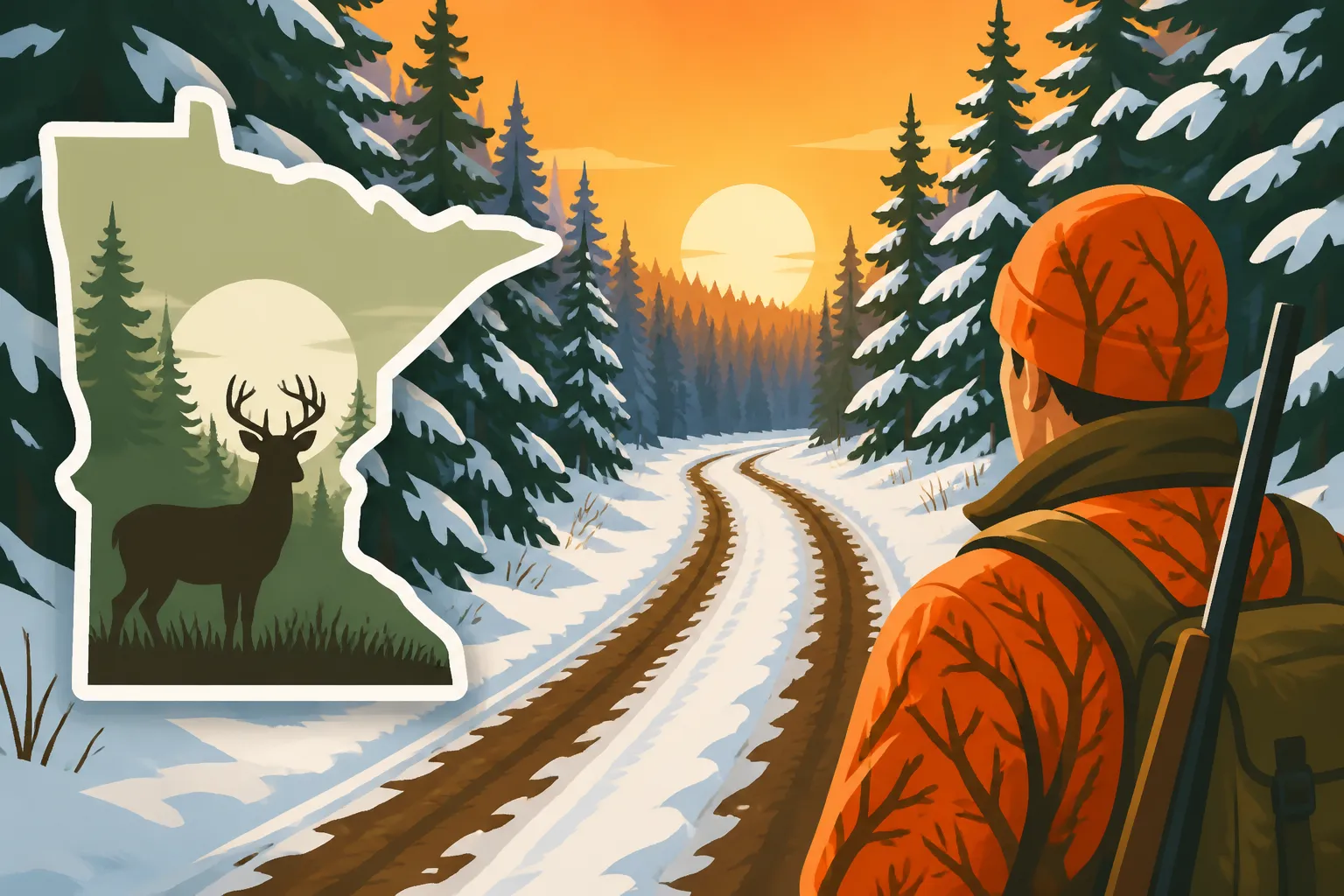
There's nothing quite like the crisp air and quiet solitude of hunting in Minnesota's northern forests as the snow begins to fall or already blankets the landscape. But that beautiful white stuff, while painting a picturesque scene, can quickly turn your carefully planned hunting trip into a frustrating ordeal if you're not prepared for how it impacts forest road access. Many hunters find themselves staring down a snow-drifted trail or a seasonally gated road, wondering how they'll ever get to their favorite hunting spot. This guide is here to walk you through navigating those challenges, ensuring you can still reach those remote areas and make the most of your late-season hunts.
Understanding Minnesota's Northern Forest Road Network
Minnesota's vast northern landscape is a mosaic of public lands, primarily managed by the state, counties, and federal government. Each entity has its own approach to maintaining roads, especially when winter hits. Knowing who manages the land you're heading into is your first step in predicting what kind of access you'll have once the snow starts piling up.
The Complex Web: State, National, and County Forests
When you're planning a trip "up north" for deer, grouse, or even late-season bear scouting, you're likely entering one of three major categories of public land. First, we have the Minnesota State Forests, managed by the Department of Natural Resources (DNR). These forests, like the Pillsbury or Paul Bunyan State Forests, often have a mix of well-maintained main roads and a spiderweb of smaller, often unplowed, logging trails and two-tracks. Access here can be fantastic early in the season, but those smaller trails quickly become impassable with even a modest snowfall.
Then there are the vast federal holdings, most notably the Superior National Forest and the Chippewa National Forest. These national forests have their own network of Forest Service roads. Some are paved or graveled and are maintained year-round, while many others are designated as seasonal or low-maintenance. These are the roads that might only see a grader once a year, if that, and can easily disappear under a foot of snow. Lastly, don't forget the individual counties, especially in the north, manage large tracts of county forest land. Their road departments might prioritize main county routes, meaning the smaller logging roads within their forest lands are often the last to be plowed, if at all. Understanding this hierarchy is key to interpreting what you see on a map.
Seasonal Closures and Gated Access: What to Expect
One of the biggest heartbreaks for a hunter pushing into late season is finding a gate across their favorite forest road. This isn't uncommon, especially on smaller, less-traveled routes. Many state, national, and county forest roads have official seasonal closures. These closures are often implemented to protect road integrity during spring thaw, but they can remain in effect through the winter months, especially for roads that aren't critical for timber operations or recreational access like snowmobiling. A road that was wide open in October might be securely gated in November, even if there's only a dusting of snow.
Beyond official closures, some gates are put in place by timber companies working in the area, or even by private landowners whose property abuts public land and use a segment of the public road for their own access. You might also encounter "abandoned" roads, which may not be officially gated but are clearly no longer maintained, with thick brush growing up and trees across them. These distinctions are critical. An official seasonal closure means no motorized access, period. A temporary timber gate might allow foot traffic or other non-motorized access. Always respect signage and gates. Attempting to bypass a gate, even if it looks like you could, is a quick way to earn a hefty fine and a black mark against hunters as a whole. Always check local forest office websites or call them for the most up-to-date information on specific road closures, especially for your target hunting areas.
The Impact of Snow on Hunter Access
Snow isn't just a pretty backdrop; it's a dynamic force that can dramatically alter your ability to get to and from your hunting spots. Its impact varies wildly depending on its depth, consistency, and when it falls during the season.
Early Snowfalls: Opportunities and Obstacles
An early snowfall in Minnesota, say in late October or early November, can be a mixed bag. On one hand, it's a deer hunter's dream: fresh tracks lay out the story of deer movement, making it easier to pinpoint active trails, feeding areas, and bedding sites. A light, fluffy snow might even make walking quieter, a huge advantage for still-hunting. Still-Hunting Minnesota Big Woods becomes much more effective when the leaves are quieted by snow. On the other hand, even a few inches of wet, heavy snow can turn a graded dirt road into a muddy, rutted mess that quickly freezes solid, creating treacherous conditions.
If you're hunting during Hunting the Rut in Late October or Hunting the Peak Rut in Early November, an early snow can clarify buck movement like nothing else. But if that snow comes with an unexpected cold snap, it can also freeze mud puddles solid, creating uneven, teeth-rattling tracks for your vehicle. A vehicle that handles mild mud just fine might get high-centered on frozen ruts or lose traction on a sudden icy incline. It's a delicate balance; you want enough snow for tracking, but not so much that you can't get your truck or ATV within reasonable walking distance of your stand.
Deep Winter: When the Roads Disappear
Once Minnesota's deep winter truly sets in, usually by mid-December, and successive snowfalls accumulate, forest road access becomes a whole new ballgame. Many of those smaller, unplowed logging roads simply disappear under a foot or more of snow. What looked like a passable two-track on your map in October now looks like a pristine snowmobile trail – and it very well might be. In some areas, once the snow reaches a certain depth, designated snowmobile trails are actively groomed, and motorized vehicles like trucks and ATVs are explicitly prohibited to protect the trail surface and prevent conflicts.
Hunting during Muzzleloader Tactics in December Cold or Late-Season Antlerless Hunting in Minnesota can mean significantly longer walks or relying on alternative modes of transportation like snowmobiles or snowshoes. If you're venturing deep into northern regions, especially when Hunting Deer in Deep Northern Minnesota Snow, you might find that the only way to access remote areas is by parking at a main road and walking in, potentially for miles. This dramatically increases the physical demands of the hunt, from simply getting to your stand to the arduous task of dragging a deer back to your vehicle. Always factor in these extra miles and effort when planning a deep winter hunt.
Vehicle Considerations and Winter Preparedness
Your vehicle choice and how you prepare it are paramount when tackling snow-covered forest roads. A reliable 4×4 truck or SUV with good ground clearance is almost a necessity for most northern Minnesota hunting in the late season. However, even a capable 4×4 can get stuck. Good, aggressive all-terrain or winter tires are non-negotiable. Chains can be a lifesaver for steep, icy climbs or punching through deep drifts on a critical section of road.
Beyond traction, consider a winch for self-recovery, a shovel, traction boards, and a tow strap. Even if you're alone, a winch can get you out of a sticky situation, and a tow strap can help a fellow hunter (or be used to pull your own rig out if you've got a good anchor point). Don't forget a full tank of gas, extra fuel if you're going remote, and a jump starter pack. Cold weather drains batteries, and getting stranded miles down a snowy forest road is a serious emergency. Always tell someone your travel plans and expected return time. This is especially true when traveling solo.
Essential Tools for Winter Access and Navigation
In the winter wilderness, good tools aren't just convenient; they're vital for safety, efficiency, and success. Modern technology has given us incredible advantages, but never underestimate the value of traditional methods.
Mapping Apps and GPS for Off-Grid Travel
Navigating forest roads, especially when they're obscured by snow, relies heavily on accurate mapping. Digital mapping apps, like onX Hunt and GoHunt, have revolutionized how hunters approach public land. These apps offer incredibly detailed base maps, property lines, and often include overlays for different types of public land (state forest, national forest, WMA). Crucially, many of these apps allow you to download maps for offline use, which is absolutely essential since cell service is often nonexistent in remote northern Minnesota.
Before you leave home, spend time on your chosen app, zooming in on your target area. Look for designated roads, winter closures (if indicated), and potential access points. Plot your route, mark potential parking spots, and identify alternative routes in case your primary access is blocked. With onX Hunt, for example, you can often see topography layers that show ridges and valleys, helping you anticipate where snow might drift deeper or where icy patches might form. GoHunt also provides excellent mapping features, allowing you to mark waypoints for gates, downed trees, or critical turns that might be hard to spot in heavy snow. These tools can save you hours of frustration and keep you from getting lost, especially when trying to discern a snow-covered logging trail from untouched woods. For broader reconnaissance, the Scouting With the Minnesota Recreation Compass App can also be very helpful.
Physical Maps and Compass: The Analog Backup
While digital tools are powerful, they are not infallible. Batteries die, screens crack, and signals can drop. This is why a physical map and compass remain indispensable. Carry detailed paper maps of your hunting area – preferably topographical maps that show elevation changes, which can reveal subtle draws or ridges that might offer easier travel in snow. Learn how to read your map and orient yourself with a compass. It's a skill that takes practice, but it's one you absolutely need if your electronic devices fail you deep in the woods.
Think of it as your ultimate redundancy plan. Even if you rely heavily on your GPS or smartphone, having a paper map stored in a waterproof bag and knowing how to use it can literally be a lifesaver. Before you head out, trace your planned route on the paper map, noting key features, turns, and distances. This process helps commit the area to memory and gives you a tangible reference if you get disoriented. A compass doesn't need batteries, doesn't care about signal strength, and will always point north.
| Road Type | Typical Winter Access | Vehicle Recommendation |
|---|---|---|
| Major Forest Roads | Often plowed, generally maintained | 4×4 Truck/SUV, sometimes 2WD |
| Minor Forest Roads | Intermittently plowed, snow accumulates | 4×4 Truck/SUV, good tires |
| Logging/Two-Tracks | Rarely plowed, quickly impassable with snow, gated | 4×4 Truck/SUV (early season), ATV/Snowmobile (deep snow) |
| Designated Snowmobile Trails | Actively groomed, no trucks/ATVs allowed (after snowfall) | Snowmobile, snowshoes, cross-country skis |
| Abandoned Trails | Unmaintained, always difficult, often impassable | Snowshoes, strong will |
Safety, Regulations, and Etiquette on Snow-Covered Forest Roads
When venturing into Minnesota's northern reaches in winter, safety takes on heightened importance. The cold, isolation, and unpredictable conditions demand respect and careful planning. You're not just dealing with the elements; you're also sharing the land with other users.
Understanding Public Land Rules in Winter
The rules for using public land don't necessarily change just because there's snow on the ground, but their interpretation and practical application certainly do. For example, ATV Rules on Minnesota Forest Roads are generally consistent, but a trail designated for ATV use might transition into a designated snowmobile trail once sufficient snow accumulates, thereby prohibiting ATV use. It's critical to know the specific regulations for your target land management unit (State Forest, National Forest, WMA) and to pay attention to seasonal signage.
When it comes to camping, Camping Rules on Minnesota State Forest Land are often quite flexible, but winter camping presents its own challenges. You might be able to drive further in early season, but come deep winter, you might be packing your gear in on a sled or snowmobile. Always ensure you understand where you can legally park your vehicle, especially if you're leaving it overnight. Blocking a maintained snowmobile trail or a plowing route can lead to fines and your vehicle being towed. Be aware of private in-holdings within public land, and always respect "No Trespassing" signs. Even if a private road appears to lead to public hunting ground, you must have permission to cross private property.
Emergency Protocols and Communication
Getting stuck, lost, or injured in a remote, snowy environment is a serious situation. Your cell phone is often unreliable up north, so never count on it for emergencies. Carry a satellite communication device (like a Garmin inReach or a Zoleo) that allows for two-way texting and SOS capabilities, even without cell service. A basic first aid kit, especially one designed for trauma and severe cold, is non-negotiable. Always pack extra warm clothing layers – a breakdown or getting stuck means you'll be exposed to the elements for an extended period. First Aid Kits for Remote Northwoods Ground can literally save a life.
It's also essential to carry plenty of water and high-energy snacks. You'll be expending more energy trudging through snow. A small stove and a pot for melting snow can be crucial for hydration if you're stranded. Beyond gear, your personal plan is vital. Tell someone exactly where you're going, your planned route, and when you expect to be back. Give them instructions on what to do if they don't hear from you. Having a detailed plan can significantly speed up rescue efforts if you run into trouble. Always travel with a trusted partner if possible, especially when venturing far off the beaten path in winter.
When you're out there, remember you're not the only one using these lands. Snowmobilers, cross-country skiers, and even other hunters are often sharing the same trails and roads. Slow down, be courteous, and yield the right-of-way. Keeping these principles in mind ensures everyone can enjoy Minnesota's beautiful winter wilderness safely and respectfully.
Disclaimer
This article is for general informational purposes only and does not constitute professional advice. Laws, prices and regulations vary by location and change over time. Consult a qualified professional for guidance on your specific situation.