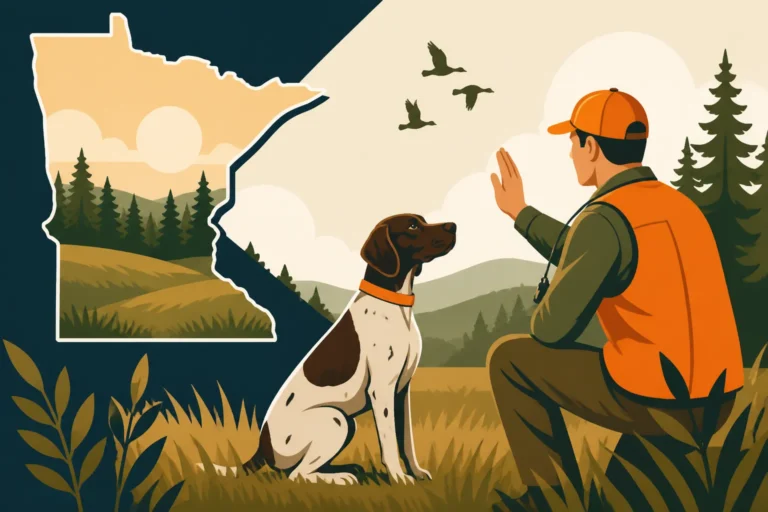
Minnesota Walk-In Access Land
Finding quality hunting land in Minnesota, especially if you don't own property or have family land, can feel like an impossible puzzle. Many of us know the frustration of driving by prime habitat, seeing "No Trespassing" signs, and wondering where to even begin. This comprehensive guide will pull back the curtain on Minnesota's Walk-In Access (WIA) program, showing you how these hidden gems of public hunting ground can unlock new opportunities for your next adventure.
Understanding Minnesota's Walk-In Access Program
For years, hunters in Minnesota faced a growing challenge: shrinking access to quality hunting land. While our state boasts an impressive amount of public land overall, much of it is in the northern forests, leaving large swaths of prime agricultural and transition zones with limited options for the everyday hunter. That's where the Walk-In Access program stepped in, offering a vital bridge between private landowners and eager hunters.
What is WIA and How Does It Work?
At its heart, the Walk-In Access program is a voluntary agreement between private landowners and the Minnesota Department of Natural Resources (DNR). Landowners receive an annual payment in exchange for allowing public hunting access on designated portions of their property. It's a win-win: landowners get compensation for opening their land, and hunters gain new, often productive, ground without the hassle of seeking individual permission. These parcels are typically agricultural lands, fields, or natural areas that provide excellent habitat for various game species, particularly pheasants, deer, and turkeys. The beauty of WIA is its simplicity – once you find a marked parcel, you can generally walk right in and hunt during legal seasons, following the specific rules for that parcel. It’s designed to cut through the red tape and open doors, literally, for those who don't have private connections.
The beauty of the program is that it focuses on areas where public hunting land is often scarce. Think about those sprawling farm fields, pockets of CRP, or even river bottom timber in regions like western and southern Minnesota. These are areas historically dominated by private ownership, making them challenging to access without landowner permission. WIA aims to address this imbalance, offering hunters more diverse landscapes to explore.
The Genesis of the WIA Program
The Walk-In Access program didn't just appear overnight; it was born out of a recognized need. Conservation groups, sportsmen's organizations, and the DNR saw the increasing pressure on existing public lands and the desire among hunters for more options, especially in the state's prime agricultural zones. Modeled after successful programs in other states, Minnesota officially launched its WIA program to expand public hunting opportunities, particularly for small game like pheasants, but also for deer and turkey. It recognized that relying solely on state-owned land wasn't enough to meet demand, and that a partnership with private landowners could be a powerful tool for conservation and access.
The initial rollout was a pilot project, starting in key pheasant habitat areas where dense cover and food sources attracted birds but access was limited. The success of these early efforts quickly demonstrated the value of the program, leading to its expansion into more counties and different habitat types. This incremental growth has allowed the DNR to refine its approach, working closely with landowners to ensure that the program benefits both the hunting public and the private property owners. It’s a testament to cooperative conservation efforts, showing what can be achieved when different stakeholders come together for a common goal.
The Hunter's Agreement and Responsibilities
When you step onto a WIA parcel, you're implicitly agreeing to a set of rules and responsibilities that are crucial for the program's success and continuation. First and foremost, WIA land is for walk-in access only. This means no ATVs, no cars, no driving on the property unless explicitly stated otherwise (which is rare). You'll be hiking to your hunting spots, so good boots and a comfortable pack are essential. Respect for the land is paramount: stay on marked trails or within the designated hunting areas, do not damage crops or fences, and always practice leave-no-trace ethics. Picking up your spent shell casings, packing out all trash, and being mindful of your presence helps ensure landowners remain willing participants.
Another critical responsibility is to be acutely aware of property boundaries. WIA parcels are often adjacent to private land that is not part of the program. Trespassing, even accidentally, can jeopardize the entire WIA agreement for that landowner and give all hunters a bad name. Always know where you are, and if in doubt, err on the side of caution. Remember, you are a guest on someone else's land, and your actions reflect on the entire hunting community. By upholding these responsibilities, you help maintain a positive relationship between hunters and landowners, which is vital for the long-term viability and growth of the WIA program. For more on safe and ethical hunting, be sure to check out Minnesota Hunter Safety Requirements.
Finding and Identifying WIA Parcels
One of the biggest hurdles for new hunters, or even seasoned veterans in unfamiliar territory, is simply knowing where to go. The WIA program has made significant strides in making its lands discoverable, but it still requires a bit of effort on your part to pinpoint the best spots. Gone are the days of aimless driving; now, with a few clicks and some field reconnaissance, you can precisely plan your next hunt.
Utilizing Online Mapping Tools and Resources
The Minnesota DNR provides an excellent online interactive map specifically for Walk-In Access parcels. This map is your first and best resource. It shows the boundaries of all WIA land, often overlaid on aerial imagery, allowing you to scout from your couch. You can zoom in, identify access points, locate potential cover, and even get a feel for the surrounding landscape. The map often includes details like the type of habitat (e.g., CRP, wetland, woods) and the primary game species anticipated. Spend time with this tool before you head out. Look for pinch points, cover adjacent to food sources, or areas that might naturally funnel game.
Beyond the official DNR map, investing in a high-quality mapping app like onX Hunt or GoHunt can be a game-changer. These apps typically integrate public land data, including WIA parcels, with detailed topographical maps, satellite imagery, and even private land ownership information. This allows you to quickly differentiate WIA land from adjacent private properties, helping you avoid accidental trespass. Many also offer features to mark waypoints, track your movement, and download maps for offline use, which is invaluable in areas with spotty cell service. I often use these apps to mark potential parking spots and plan my entry and exit routes, making sure I’m being as unobtrusive as possible to the landowner. This digital scouting can save you countless hours of driving around and can significantly increase your chances of finding unpressured game. For broader public land options, don't forget to consult Public Hunting Land in Minnesota.
Recognizing WIA Signage in the Field
When you arrive at what you believe is a WIA parcel, the first thing you'll notice (or should notice) are the distinctive signs. Minnesota WIA parcels are clearly marked with large, bright yellow signs that typically say "Walk-In Access" or "WIA Hunting." These signs are usually posted at common access points, along property lines, and at regular intervals around the perimeter. They are unmistakable. Never assume a property is WIA unless you see these official signs. If you don't see them, it's private land, and you'll need to seek explicit permission from the landowner before stepping foot on it.
These signs are more than just an indicator of access; they are a critical legal notice. They tell you that you are on designated public hunting land and remind you of the program's rules, such as "Foot Traffic Only." Pay attention to where these signs begin and end, especially along roadsides or where the WIA land abuts other private properties. Sometimes, only a portion of a larger farm parcel is enrolled in WIA, meaning the boundaries can be intricate. The in-field signage combined with your mapping app should provide definitive clarity on where you can legally hunt. Ignoring or defacing these signs is not only illegal but also undermines the very essence of the WIA program, potentially leading landowners to withdraw their participation.
Planning Your Approach to WIA Land
Once you've identified a WIA parcel online and confirmed its presence in the field, the next step is planning your approach. Since WIA is "walk-in," you'll need to consider parking. Look for roadside pull-offs, designated parking areas (sometimes marked by the DNR), or safe spots that don't block farm implements or residential driveways. Always be mindful of being a good neighbor to the landowner and adjacent residents. A poorly parked vehicle can quickly cause irritation and reflect poorly on hunters.
After parking, think about your entry. Are there fence lines to navigate? Ditches to cross? Remember, foot traffic only. Consider wind direction, the location of prime cover, and how to get into position without spooking game already on the property. Sometimes, the easiest access point visible from the road might not be the best tactical approach for hunting. Use your mapping app to find alternative entry routes that put you in a better position or allow you to access less-pressured corners of the parcel. For instance, if hunting pheasants, you might want to quarter into the wind from a downwind edge, pushing birds towards the center or a known escape cover. Understanding the nuances of "Reading Aerial Photos for Big Woods Deer" can also apply to these smaller, often fragmented WIA parcels by helping you identify micro-features that attract game.
Types of Habitat and Game on WIA Land
Minnesota's WIA program is incredibly diverse, reflecting the varied landscapes of the state. While many initially associate WIA with pheasant hunting in the prairie zones, these parcels offer much more. From open fields to dense wetlands and even scattered woodlands, WIA lands can surprise you with the opportunities they present for a range of species.
Farmland Edges and Pheasant Country
A significant portion of WIA land is located in Minnesota's agricultural heartland, particularly in the western and southern counties. Here, you'll find parcels primarily consisting of crop stubble, Conservation Reserve Program (CRP) grass, or other dense cover along field edges. These areas are absolutely prime for pheasant hunting. Imagine long strips of switchgrass bordering a harvested cornfield, or a block of dense cattails next to a soybean stubble. This is classic pheasant habitat, providing food, cover, and roosting spots. Pheasant Hunting Minnesota Grassland delves deeper into these tactics.
Hunting these properties often involves walking parallel to field edges, working through thick grass, or strategically pushing cover. The parcels might be smaller or linear compared to large Wildlife Management Areas, requiring more precise hunting strategies and perhaps more careful consideration of where birds might flush or run. Because these lands are often surrounded by active farms, you might also encounter resident deer or even wild turkeys using these edges for travel and bedding. These transitions from crop fields to dense cover are often overlooked by hunters focusing solely on larger tracts, making them fantastic spots for a quick afternoon hunt.
Marsh and Wetland Habitat for Waterfowl
Beyond the agricultural fields, many WIA parcels also encompass vital marsh, wetland, and pothole habitats. These can be goldmines for waterfowl hunters, especially during the migration. Think about those small, often overlooked potholes surrounded by cattails or wet meadows that might hold wood ducks, teal, or mallards. These are the kinds of spots that can offer incredibly productive hunting, especially during the early seasons, precisely because they are often too small or too remote for heavy pressure. Hunting Minnesota Waterfowl on Lakes and Potholes offers more insight into these environments.
Access to these wetland WIA parcels can sometimes be challenging, requiring waders and a willingness to push through thick cover, but the reward can be significant. It's not uncommon to jump-shoot ducks from a small slough on a WIA tract that's surrounded by private farmland. Before you hunt, it’s always wise to scout these areas for active bird usage, looking for flight paths, feeding sign, or birds resting on the water. Remember that water levels can vary significantly, impacting accessibility and habitat quality from year to year.
Wooded Patches and Deer Opportunities
While WIA is widely known for pheasant and waterfowl hunting, many parcels also include significant wooded components, offering fantastic deer and even turkey hunting opportunities. These wooded areas might be shelterbelts, river bottom timber, small woodlots, or even pockets of mature trees on otherwise open land. These are crucial travel corridors and bedding areas for whitetails, especially when they connect larger blocks of cover or provide access to food sources. For hunters willing to put in the effort, these smaller, often linear wooded WIA tracts can be incredibly productive.
I've personally found success still-hunting small WIA woodlots for deer, especially during the archery season or the firearm opener when deer are moving. These areas can act as natural funnels or sanctuaries, attracting deer that are pressured from surrounding private land. Pay attention to rub lines, scrapes, and bedding areas. Turkeys also utilize these wooded patches extensively, especially if they are adjacent to crop fields, offering both spring and fall hunting opportunities. It's often about finding those hidden gems of cover that provide security in an otherwise open landscape. For more on tactics in these environments, check out Hunting Minnesota Farmland Deer.
Rules and Regulations Specific to WIA
While WIA land opens up incredible opportunities, it's not a free-for-all. Like all public hunting grounds, there are specific rules and regulations that govern its use. Understanding and adhering to these rules is crucial, not just for legal compliance, but for ensuring the continued success of the program and maintaining good relationships with the participating landowners.
Permitted Activities and Restrictions
The primary permitted activity on Minnesota WIA land is hunting, and sometimes fishing where applicable. However, the designation "Walk-In Access" means exactly that: access is limited to foot traffic only. You cannot drive vehicles, ATVs, UTVs, or even bicycles onto WIA parcels unless there's an extremely rare, specific exception noted. This is a fundamental rule designed to minimize disturbance to crops and the property itself, and to maintain the hunting experience. Horseback riding is also generally prohibited. Other activities like trapping, camping, target shooting, or shed hunting are typically not allowed unless expressly permitted. It’s important to always read any additional signage at the specific WIA parcel you intend to hunt, as some landowners might have specific requests or restrictions beyond the general program rules.
One critical restriction is related to baiting. Minnesota has strict rules regarding baiting, especially in CWD (Chronic Wasting Disease) zones. While WIA lands themselves are not automatically "baiting-free zones" in the way some WMAs might be, you are still subject to all statewide and specific permit area baiting regulations. Always check the current regulations for the deer permit area your WIA land falls within. The key takeaway here is that WIA lands are primarily for hunting, and any activity outside of that should be assumed prohibited unless clear signage or regulations state otherwise.
Vehicle Access and Parking
As reiterated, vehicle access on WIA land is strictly prohibited. This includes parking. You must park your vehicle completely off the WIA parcel. This means finding legal parking on an adjacent road shoulder, in a designated public parking area, or with permission on a nearby private tract. When parking on roadsides, always ensure your vehicle is fully off the paved or graded surface, not obstructing traffic, and not blocking any field access points for farm equipment. Farmers need constant access to their fields, and a blocked gate or access lane can cause significant frustration and jeopardize the WIA agreement.
A common scenario is that the WIA parcel will have a small, mowed parking area or pull-off specifically marked by the DNR. If these exist, use them. If not, look for wide, safe shoulders where your vehicle can be entirely out of the way. Never park in private driveways or block access to private fields, even if they appear unused. Being thoughtful about your parking demonstrates respect for the landowner and local community, which is essential for the positive perception and continuation of the WIA program.
Treestand and Ground Blind Regulations
For deer and turkey hunters, the use of treestands and ground blinds is a common tactic. On Minnesota WIA lands, portable treestands and ground blinds are generally allowed, but with some crucial stipulations. You typically cannot build permanent stands or blinds, nor can you leave stands or blinds unattended for extended periods. Most regulations state that stands and blinds must be removed daily or within a certain timeframe (e.g., within 24 hours of the end of legal hunting hours for that day). You also cannot damage trees by using screw-in steps or certain types of fasteners that harm the bark. Always use non-damaging methods for hanging stands or attaching blinds.
The "portable" aspect is key. This means easy-to-set-up and take-down stands or pop-up ground blinds. Leaving permanent structures on WIA land is considered abandonment and can result in their removal and disposal by the DNR. This rule prevents clutter and ensures the land remains accessible and natural for all users. Before setting up, always ensure your choice of stand or blind meets these portable requirements and does not cause any permanent alteration to the property. Considering your access, a lightweight portable stand or a comfortable saddle setup might be ideal for these walk-in-only areas.
Maximizing Your Success on WIA Parcels
Hunting WIA land isn't just about showing up; it's about being strategic. These parcels, while valuable, often differ from larger public land tracts in terms of size, shape, and surrounding land use. Success here often comes down to smart scouting, understanding pressure, and being a good neighbor.
Effective Scouting Strategies
Scouting is paramount for success on WIA land. Since you can't drive on these properties, much of your initial scouting will happen from the road and through mapping applications. Use the DNR's WIA map and your onX Hunt or GoHunt app to identify cover, transitions, and potential game funnels. Look for where a field of CRP grass meets a timber edge, or where a cattail slough bottlenecks into a narrow strip of woods. These are natural congregation points for game. When you arrive, walk the perimeter, looking for deer tracks, rubs, scrapes, or fresh turkey sign. If hunting pheasants, identify dense thermal cover like cattails or thick brush that birds will gravitate towards.
Don't be afraid to walk into the parcel on your scouting trips (during daylight hours and outside of hunting seasons, of course). While you can't take a vehicle, you can certainly walk in to check out the lay of the land, find old trails, or locate specific trees for a stand placement. Pay attention to how the parcel connects to surrounding habitat—where do deer enter and exit? Where do pheasants roost or feed? This ground-truthing after your digital scouting is critical to forming a solid hunting plan. Scouting Minnesota Public Land Before Season provides excellent guidance that applies perfectly to WIA parcels.
Hunting Pressure and Timing
Like all accessible hunting land, WIA parcels can experience hunting pressure, especially on opening weekends or during peak seasons. However, because many WIA tracts are smaller, less visible, or require a walk-in effort, they can sometimes hold less pressure than massive WMAs. Your timing can make a huge difference. Hunting a WIA parcel on a weekday versus a weekend might significantly reduce the number of other hunters you encounter. Early morning or late afternoon can also be less crowded.
If you find a WIA parcel is getting hit hard, consider looking for those less obvious access points or deeper sections that other hunters might overlook. A longer walk-in might deter some, leaving better opportunities for those willing to put in the effort. Sometimes, the most pressured spots are simply those easiest to access from the road. By venturing a bit further, or hunting during less popular times, you can often find unpressured game. Understanding Hunting Pressure on Minnesota Public Land is vital for any public land hunter, and WIA is no exception.
Respecting Adjacent Private Land
This point cannot be stressed enough: WIA parcels are typically surrounded by active private farms or residences. Your responsibility to respect adjacent private land is paramount. Always know where the WIA boundary ends and private land begins. Use your mapping app religiously to stay within bounds. Never trespass onto private property, even to retrieve a downed animal without explicit prior permission. If an animal runs onto private land, you must contact the landowner for permission to retrieve it. Showing up unannounced can lead to negative encounters and erode trust, potentially causing landowners to opt out of the WIA program.
Be mindful of noise, particularly if you are close to residences. Avoid shining lights into homes or making excessive noise early in the morning or late at night. Close all gates you open, don't litter, and leave the property exactly as you found it, if not better. By being a respectful and responsible hunter, you contribute positively to the WIA program and help foster good relationships between the hunting community and private landowners, which is truly the backbone of the program's success. This ethos extends to understanding Do You Need Written Permission in Minnesota? for any situation where you're close to private land.
Comparing WIA to Other Public Land Options
Minnesota offers a fantastic array of public hunting land, each with its own characteristics, advantages, and challenges. Understanding how Walk-In Access (WIA) parcels fit into this broader landscape can help you choose the best type of land for your specific hunting goals. It’s not about one being better than the other, but rather knowing which tool to use for which job.
WIA vs. WMAs and State Forests
Wildlife Management Areas (WMAs) and State Forests are the traditional backbone of public hunting in Minnesota. WMAs are typically large, contiguous tracts of land specifically acquired and managed by the DNR for wildlife habitat and public recreation. They often feature diverse habitats, extensive road systems (though some areas may be closed to vehicles), and are designed for sustained hunting pressure. State Forests, similarly, are vast tracts of timberland managed for multiple uses, including hunting, logging, and recreation, often with an extensive network of forest roads.
WIA parcels, in contrast, are generally smaller, often fragmented, and are always on leased private land. While WMAs and State Forests are permanent public holdings, WIA access is temporary, renewed annually. WIA lands are also almost exclusively walk-in access only, whereas many WMAs and State Forests allow vehicle access on designated roads. The key difference lies in their location: WIA often provides hunting opportunities in agricultural areas where WMAs and State Forests are scarce, effectively filling in "access gaps" on the map. You can learn more about these other options in Minnesota Wildlife Management Areas and Minnesota State Forest Hunting.
Advantages and Disadvantages of WIA
Advantages:
- Location: Often provides access in prime agricultural regions, particularly strong for pheasants, part of Pheasant Hunting Minnesota Farmland, and good for deer and turkey where public land is otherwise limited.
- Less Pressure (Potentially): Due to their smaller size and walk-in-only nature, some WIA parcels can receive less hunting pressure than larger, more accessible WMAs, especially mid-week.
- Diverse Habitats: Can offer unique habitat types (e.g., active crop fields, specific CRP mixes) not always found on state-owned public lands.
- Simplicity: No need to apply for special permits for WIA; if it's marked, you can typically hunt during the legal season.
Disadvantages:
- Temporary Access: Landowner agreements are renewed annually; a parcel available this year might not be next year.
- Smaller Size: Many parcels are smaller, which can limit the types of hunting strategies possible (e.g., extensive deer drives are difficult).
- Walk-In Only: Requires more physical effort and limits the gear you can easily bring in.
- Boundary Awareness: Critical to be hyper-aware of private land boundaries, which can be complex.
- Limited Activities: Generally restricted to hunting, with other recreational uses often prohibited.
Here's a quick comparison table:
| Feature | Walk-In Access (WIA) | Wildlife Management Areas (WMAs) | State Forests |
|---|---|---|---|
| Land Ownership | Leased Private Land (Temporary) | State-Owned Public Land (Permanent) | State-Owned Public Land (Permanent) |
| Primary Access | Foot traffic only | Often vehicle accessible on designated roads | Often vehicle accessible on designated roads |
| Typical Location | Agricultural regions, transition zones | Diverse across the state, often larger blocks | Primarily forested regions, northern MN |
| Average Size | Smaller, often fragmented (tens to hundreds of acres) | Larger, contiguous (hundreds to thousands of acres) | Very large (thousands to tens of thousands of acres) |
| Common Game | Pheasant, Deer, Turkey, Waterfowl | Deer, Turkey, Waterfowl, Grouse, Small Game | Deer, Grouse, Bear, Small Game |
| Management Focus | Public access via private land lease | Habitat management, public recreation | Timber production, recreation, wildlife |
| Activities | Primarily hunting | Hunting, fishing, hiking, trapping, camping | Hunting, fishing, hiking, camping, logging |
| Boundary Clarity | Requires careful attention (often irregular) | Generally well-marked, easier to discern | Often well-marked, but vast |
Integrating WIA into Your Overall Hunting Strategy
WIA should be a valuable component of any Minnesota hunter's strategy, especially if you hunt in the southern and western parts of the state. Don't rely solely on WIA, but integrate it with your knowledge of WMAs, State Forests, and even private land permission. For example, if you're planning a pheasant hunt in a county known for birds, look for WIA parcels that complement larger tracts of public land or private lands where you have permission. You might spend a morning on a WMA and then hit a smaller WIA parcel in the afternoon that's surrounded by good food sources.
For deer hunters, WIA can offer fantastic "plan B" spots or fill-in areas, especially during bow season or the firearm rut. A small, wooded WIA parcel might hold a mature buck pressured from surrounding private land. During a typical deer season, you might find yourself in Hunting the Minnesota Rut in Early November on a WMA, but then use a WIA parcel for a quick evening sit. By diversifying your hunting locations and understanding the unique benefits of WIA, you expand your opportunities and increase your chances of success across various game species and seasons. It's about having more arrows in your quiver, so to speak.
The Future of Minnesota's WIA Program
The Walk-In Access program has been a significant success story for Minnesota hunters, but like all conservation initiatives, it’s constantly evolving. Understanding its trajectory, including funding, landowner participation, and hunter feedback, helps ensure its continued viability and growth for generations to come.
Funding and Expansion Efforts
The WIA program relies on dedicated funding, primarily through various conservation initiatives, license fees, and federal grants. These funds are used to pay landowners for access and to cover the administrative costs of managing the program. Continuous support from hunters through license purchases and active involvement in conservation organizations is vital for its financial health. Without consistent funding, the DNR's ability to enroll new parcels and maintain existing agreements would be severely hampered.
There's a constant effort to expand the WIA footprint, particularly in regions of the state where public access remains limited. This isn't just about adding more acres, but also about diversifying the types of habitat offered and strategically placing parcels to connect existing public lands or create new hunting opportunities in underserved areas. As land use changes and development continues, securing additional WIA parcels becomes even more critical to safeguard hunting access for the future. The program's expansion is often directly tied to its demonstrated success and the collective voice of the hunting community.
Landowner Participation and Incentives
The heart of the WIA program beats with the willingness of private landowners to open their property. Landowner participation isn't just about the financial incentive; it's often also driven by a desire to contribute to conservation, manage wildlife populations, or simply be a good neighbor. The DNR works closely with landowners, offering annual payments, liability protection, and often assistance with habitat management on the enrolled lands. Building and maintaining these relationships is crucial.
Challenges can arise, such as concerns about hunter behavior, liability perceptions, or changes in land management. The DNR continuously assesses the program to address landowner concerns and make participation as appealing and seamless as possible. Clear communication, respectful hunter conduct, and positive interactions are all incentives for landowners to continue their involvement. When hunters treat WIA land with respect, it sends a powerful message back to the landowner that their contribution is valued and protected. Ultimately, the future of the program rests on this foundational partnership.
Hunter Feedback and Program Evolution
Hunter feedback is an invaluable component of the WIA program's evolution. Your experiences, both positive and negative, help the DNR understand what's working well and what areas need improvement. Whether it's reporting issues with signage, suggesting new areas for enrollment, or simply sharing a successful hunt, your voice matters. Many DNR regions have specific contact information for WIA coordinators, or you can provide feedback through general DNR channels.
The program isn't static; it adapts based on wildlife populations, habitat availability, hunting pressure, and, importantly, the needs and experiences of both landowners and hunters. Perhaps a certain type of habitat is under-represented, or a particular region needs more access. Your observations contribute to these ongoing adjustments. By being engaged and providing constructive feedback, you play a direct role in shaping the future of Walk-In Access, helping it remain a robust and growing resource for Minnesota hunters. So, take advantage of this incredible program, but also be an advocate for its continued success.
Disclaimer
This article is for general informational purposes only and does not constitute professional advice. Laws, prices and regulations vary by location and change over time. Consult a qualified professional for guidance on your specific situation.