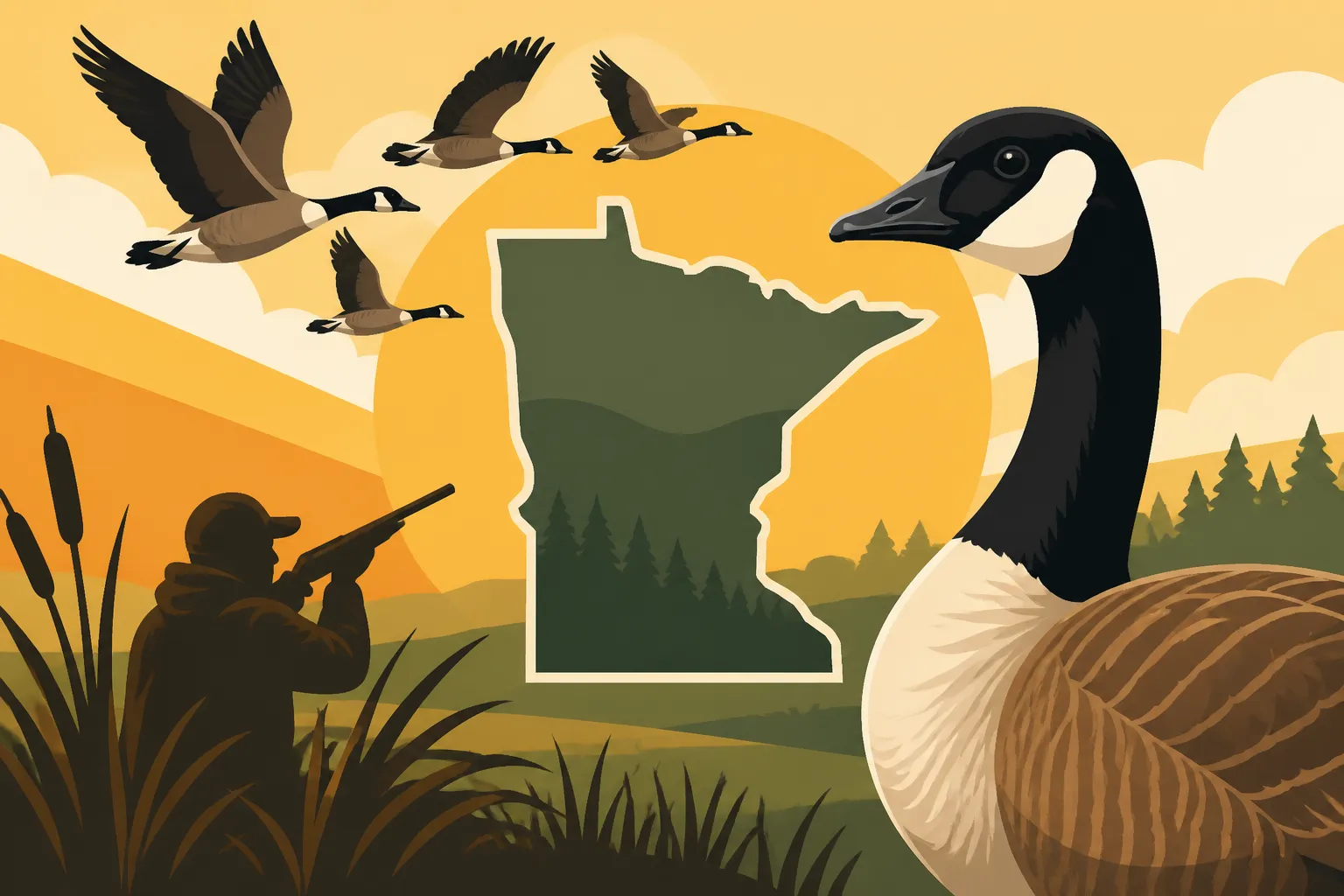
Minnesota Canada Goose Population
For many Minnesota hunters, the sight and sound of Canada geese are an undeniable part of the landscape. They're everywhere, from urban parks to sprawling farm fields, and this widespread presence often leads to questions about their true numbers, how they're managed, and what it all means for hunters eager to pursue them. This guide aims to pull back the curtain on Minnesota's Canada goose population, exploring its history, current status, and the strategies that keep these adaptable birds thriving while offering excellent hunting opportunities.
The Resurgence and Dynamics of Minnesota's Canada Goose Population
It's easy to take Canada geese for granted today, with their distinctive V-formations cutting across the sky and their honks echoing across lakes. But their story in Minnesota is one of remarkable recovery and adaptation, leading to the robust populations we see across the state today. Understanding this history and the current dynamics is key to appreciating both the conservation success and the management challenges they present.
Historical Context and Modern Comeback
Believe it or not, Canada geese were once a relatively scarce sight across much of Minnesota, particularly the giant subspecies. Overhunting and habitat loss in the late 19th and early 20th centuries significantly reduced their numbers, pushing them to the brink in many areas. It was a classic conservation challenge, and dedicated efforts were needed to bring them back.
Starting in the 1930s and extending into the 1970s, focused restoration programs were implemented. These efforts often involved releasing pen-raised geese into suitable habitats, protecting nesting sites, and managing hunting pressure. The birds proved incredibly adaptable, quickly establishing breeding populations in areas where they hadn't been seen in generations. The result? A massive comeback, perhaps even beyond what early conservationists envisioned. Today, we have two main groups of geese in Minnesota: the migratory flocks that pass through on their journeys along the Mississippi Flyway, and the thriving "resident" geese that live, nest, and raise their young right here in the state, often in close proximity to human development.
Population Estimates and Trends
Monitoring a bird as widespread and mobile as the Canada goose is a complex task. The Minnesota Department of Natural Resources (DNR) works with federal agencies to conduct a variety of surveys to estimate their numbers. These include breeding pair surveys conducted in spring, where biologists count nesting pairs from the air or ground, providing an index of the reproductive potential for the year. Additionally, banding efforts, where individual geese are marked with leg bands, help track survival rates, migration patterns, and harvest rates.
What these surveys consistently show is that Minnesota's Canada goose population, particularly the resident segment, is incredibly healthy and, in many areas, stable or even increasing. While migratory numbers fluctuate based on conditions in their northern breeding grounds, our homegrown flocks have truly taken root. These robust numbers allow for generous hunting seasons and bag limits, which are vital tools in managing the population. Hunters often leverage platforms like GoHunt, which can sometimes provide historical harvest data or insights into population trends, to better understand where to focus their efforts. Keeping an eye on these trends helps hunters prepare for the season and understand the reasoning behind specific regulations.
Factors Contributing to High Goose Numbers
Several factors have converged to create an ideal environment for Canada geese in Minnesota. One of the most significant is their incredible adaptability to human-altered landscapes. While they are equally at home in remote wilderness, they have a particular fondness for suburban and agricultural areas. Golf courses, city parks with ponds, corporate campuses, and agricultural fields offer everything a goose could want: abundant, manicured grass for grazing, open water for safety from predators, and minimal disturbance during nesting season.
Furthermore, these human-dominated environments often have reduced predation pressure compared to wilder areas. Coyotes and foxes might still pose a threat, but the overall lack of large predators, combined with protective instincts of parent geese, allows for high gosling survival rates. The availability of year-round food sources in many agricultural regions and even urban areas means geese don't have to expend as much energy foraging, contributing to their overall health and reproductive success. It's a testament to their resilience, but it also means active management, including hunting, is essential to prevent localized overpopulation issues.
Management Strategies and Their Impact on Hunters
With such a successful and adaptable species, active management is absolutely crucial. The goal isn't just to provide hunting opportunities, but to balance the needs of the geese with the concerns of landowners, farmers, and even urban residents who sometimes view large goose flocks as a nuisance. Hunting plays a significant, often underappreciated, role in this delicate balance.
Hunting Seasons and Zones as Management Tools
The DNR employs a variety of hunting seasons and designated zones across Minnesota, all designed with specific management goals in mind. Perhaps the most targeted season is the early September goose season, often referred to as the "early goose" or "resident goose" season. The primary purpose of this period is to increase the harvest of Minnesota's resident Canada geese before the main migratory flocks arrive. These local birds are often less wary and more patterned, making them more susceptible to hunting pressure. By specifically targeting them, the DNR aims to mitigate agricultural damage, reduce nuisance complaints in urban/suburban areas, and limit the potential for disease transmission in dense, localized populations.
Beyond the early season, Minnesota has regular waterfowl seasons, with zones (like the West, Central, and Southeast Zones) that dictate specific opening and closing dates and bag limits. The Metropolitan Canada Goose Zone is another example of a targeted management approach, allowing for extended seasons and higher bag limits in and around the Twin Cities to address the significant resident goose populations there. The flexibility in these seasons and bag limits directly reflects population data and is a powerful tool for controlling numbers and distributing hunting pressure. You can dive deeper into these specifics by checking out Minnesota Goose Zones and Seasons.
The Role of Hunter Harvest in Population Control
It cannot be overstated: hunting is the most effective and economically viable method for managing widespread Canada goose populations. While other methods like hazing, egg oiling, or relocation exist, they are often labor-intensive, costly, and limited in scale, primarily used for nuisance control in sensitive urban settings. Hunter harvest, on the other hand, provides broad-scale population control across vast landscapes.
Every goose taken by a hunter contributes directly to population management, reducing the overall number of birds, which in turn helps alleviate pressure on agricultural crops, minimizes potential conflicts with human activities, and lessens the risk of disease outbreaks that can spread rapidly in dense concentrations. Hunters also contribute vital data through registration processes and voluntary surveys, providing information on harvest numbers, locations, and species composition. This data is critical for biologists to make informed decisions about future seasons and bag limits. In essence, hunters are active partners in wildlife management, directly contributing to the health and sustainability of the goose population.
Non-Hunting Management Efforts
While hunting is the primary tool, it’s not the only one in the management toolbox. In specific, often urban or suburban, situations where hunting is not feasible or desired, non-lethal methods are sometimes employed. These can include hazing techniques, where various methods (like trained dogs, loud noises, or pyrotechnics) are used to scare geese away from problem areas such as airports, golf courses, or parks. Egg addling (oiling eggs to prevent hatching) is another common practice, particularly in areas with high nesting densities. This prevents new goslings from adding to the resident population without directly harming adult birds.
Relocation of nuisance geese is also an option, though it's typically a last resort and often only moves the problem elsewhere. The reality is that these non-hunting methods are typically very localized, resource-intensive, and often require repeated efforts to be effective. They simply cannot provide the broad-scale, efficient population management that regulated hunter harvest does. For the most part, these other techniques are complements, not substitutes, for a robust hunting program.
Hunting Considerations and Tactics for Minnesota Geese
Successfully hunting Canada geese in Minnesota requires more than just a shotgun; it demands an understanding of their behavior, an eye for scouting, and the right tactics for the conditions. Knowing whether you're dealing with local birds or migrating flocks can significantly impact your approach.
Identifying Different Goose Populations
One of the first lessons a goose hunter learns is that not all Canada geese behave the same way. Minnesota hunters will encounter both resident (local breeding) geese and migratory geese throughout the fall and winter. Resident geese, having lived in the area year-round, often develop predictable patterns. They might feed in the same fields daily, roost on familiar bodies of water, and be generally less wary of human activity – at least initially. Their flight patterns are often localized, moving between specific feeding and roosting sites.
Migratory geese, on the other hand, are birds that have flown down from their northern breeding grounds. They are often more alert, have traveled long distances, and respond differently to decoys and calls. Their movements are influenced by weather fronts, larger migration corridors, and food availability along their journey. Identifying whether a flock is resident or migratory can sometimes be as simple as observing their overall flight direction (are they heading north/south in a concerted migration, or just moving between local spots?) or by the timing of the season. Early September is almost exclusively resident birds, while late October and November see a mix, with increasingly more migratory birds.
Key Hunting Strategies for Success
No matter the population, scouting is paramount for goose hunting success. This means spending time observing geese to identify their preferred feeding fields, roosting areas, and flight paths. Look for fresh droppings, disturbed stubble, and tracks. Once you've found where they want to be, you can begin to plan your setup.
For resident geese, which are often less pressured, a modest spread of full-body or shell decoys in a feeding pattern can be effective. Calling can be less aggressive, focusing on contented clucks and murmurs rather than loud, insistent honking, as these birds are often already comfortable. Concealment is still key; a well-brushed layout blind or natural cover is essential. During the early season, you'll often find these birds on cut hayfields, golf courses (with permission, of course!), or smaller grain fields.
When migratory geese arrive, they tend to be warier. A larger spread of high-quality decoys, including motion decoys, can be beneficial to draw their attention from afar. Calling needs to be more persuasive and varied, mimicking a large, active flock. Layout blinds are almost a necessity in open farm fields, and perfect concealment is non-negotiable. You’ll find these birds focusing heavily on large cut cornfields, soybean fields, and other prime agricultural food sources. Layout Blind Hunting Minnesota Farm Fields delves deeper into these specific tactics.
Gear and Regulations Specific to Goose Hunting
To successfully hunt Canada geese in Minnesota, you’ll need the right gear and a solid understanding of the regulations. First and foremost, a shotgun capable of handling larger shot sizes is a must. Many hunters opt for 12-gauge shotguns, with 3-inch or 3.5-inch shells loaded with non-toxic shot. Remember, lead shot is prohibited for all waterfowl hunting, so you'll need steel, bismuth, or other approved non-toxic alternatives. Choke tubes like modified or improved modified are popular choices to provide a dense pattern at typical goose hunting ranges.
Beyond the firearm, essential gear includes goose calls (both short-reed and flute calls), a good spread of decoys (shells, full-bodies, or even silhouettes), and appropriate camouflage or a layout blind for concealment. Warm, waterproof clothing is critical for sitting in often damp, cold fields, and waders might be necessary for retrieving birds from waterlogged areas. Remember, all waterfowl hunters in Minnesota are required to have a valid Minnesota hunting license, a small game license, a federal duck stamp, and be HIP (Harvest Information Program) certified. You can find detailed information on these requirements by looking into Minnesota Federal Duck Stamp Requirement and Minnesota HIP Certification for Bird Hunters. Always double-check the current year's regulations for bag limits, shooting hours, and zone specifics, as these can change annually based on population assessments.
Here’s a quick comparison of common tactics for different goose seasons:
| Feature | Early September (Resident Geese) | Regular Season (Mixed & Migratory Geese) |
|---|---|---|
| Primary Target | Local, breeding populations | Migratory birds, mixed with residents |
| Goose Behavior | Less wary, patterned to local areas | Warier, influenced by migration patterns |
| Scouting | Identify local feeding/roosting routines | Focus on major agricultural fields, staging areas |
| Decoy Spread | Smaller, realistic feeding spreads often sufficient | Larger, diverse spreads, possibly with motion |
| Calling Style | Contented clucks, murmurs, light honking | More aggressive, varied, mimicking large flock |
| Concealment | Natural cover, well-brushed blinds | Paramount, layout blinds in open fields |
| Typical Habitat | Cut hay, pastures, urban green spaces (with permission), smaller grain fields | Large cut corn/soybean fields, big water |
| Bag Limits | Often more liberal | Generally lower, subject to annual changes |
Challenges and Future Outlook
While Minnesota's Canada goose population is robust, it's not without its challenges. Managing such a successful species requires constant attention, balancing various interests, and adapting to environmental shifts.
Balancing Conservation and Nuisance Control
The sheer success of the Canada goose comeback presents a unique challenge: how do you manage a species that is both a conservation triumph and, in many areas, a significant nuisance? For farmers, large flocks can cause extensive crop damage, wiping out sections of fields or fouling valuable forage. For airport managers, geese pose a serious safety hazard due to bird strikes. In urban parks and golf courses, their droppings can accumulate, creating unsanitary conditions and impacting recreation.
The balancing act involves maintaining a healthy, sustainable population while minimizing these negative impacts. Hunting is a critical part of this equation, as it provides both recreational opportunity and a practical, widespread means of population control. The DNR consistently monitors these dynamics, adjusting seasons and limits to address problem areas while still ensuring the long-term health of the resource. It's a testament to good wildlife management that we can both celebrate a healthy goose population and address the challenges it brings.
Environmental Factors and Disease
Like all wildlife populations, Canada geese are influenced by environmental factors. Severe droughts can impact nesting success if wetlands dry up, while unusually harsh winters can affect survival rates, though geese are generally quite hardy. Changes in agricultural practices, such as different crop rotations or harvest timing, can also shift their feeding patterns and preferred habitats.
Disease is another significant concern, especially with dense concentrations of birds. Avian influenza, for example, is a real threat that can spread rapidly through waterfowl populations. While geese themselves might be less susceptible to widespread die-offs compared to some other species, they can act as carriers, potentially impacting other bird populations or even domestic poultry. Monitoring these environmental and disease factors is an ongoing effort that influences management decisions, including surveillance efforts and advice to hunters on safe handling practices. For more information on how such diseases are monitored, check out Avian Influenza in Minnesota Birds.
Hunter Participation and Public Perception
The future of Canada goose management, and indeed all wildlife management, relies heavily on continued hunter participation and a positive public perception of hunting. A declining number of hunters could reduce the effectiveness of population control through harvest, putting more pressure on other, less efficient management methods. Therefore, recruiting new hunters and retaining current ones is a vital component of long-term wildlife conservation.
Public perception also plays a crucial role. Educating the non-hunting public about the ecological and management necessity of hunting, as well as the ethical principles that guide hunters, is essential. When people understand that hunting is a tool for conservation and not just recreation, it fosters broader support for these programs. As Minnesota's Canada goose population continues to thrive, hunters will remain indispensable partners in ensuring their sustainable future, providing both a valuable natural resource and a thrilling outdoor experience.
Disclaimer
This article is for general informational purposes only and does not constitute professional advice. Laws, prices and regulations vary by location and change over time. Consult a qualified professional for guidance on your specific situation.