Duck Migration Timing Through Minnesota
For many Minnesota duck hunters, the arrival of autumn brings a unique blend of excitement and frustration. You scout your local potholes and sloughs, hoping for that perfect flight of birds, only to find them gone one week and a whole new species showing up the next. Understanding the intricate dance of duck migration through Minnesota isn't just about dates on a calendar; it's about reading the landscape, the weather, and the subtle cues that tell you when to be in the blind. This guide is designed to help you decode those patterns, so you can be where the ducks want to be, when they want to be there.
Understanding the Factors Influencing Duck Migration
Duck migration isn't a static event, a simple flip of a switch on a specific date. It's a complex, dynamic process driven by a symphony of environmental cues. For us hunters in Minnesota, really grasping these underlying factors is key to predicting when the next push of birds might arrive or when our local ducks might decide it's time to head south. It's about thinking like a duck, in a way, and appreciating the delicate balance that compels them to move.
Weather Patterns and Cold Fronts
The most immediate and obvious driver of duck migration is weather, specifically cold fronts. When a strong arctic air mass pushes south out of Canada, you can almost set your watch to it – ducks will be on the move. These major frontal systems bring plummeting temperatures, often accompanied by strong north winds that give ducks a tailwind to conserve energy. It's not just the temperature itself, but the change in temperature, the sudden drop, that signals the birds. A mild, lingering fall might mean resident birds hang around much longer than anticipated, while an early hard freeze can send them packing rapidly. Paying attention to long-range forecasts, not just for your immediate area but for the Dakotas and southern Canada, can give you a real edge. A deep dip in temperatures up north often means birds are being pushed our way.
Food Availability and Water Conditions
Beyond the weather, ducks are constantly evaluating their food sources and water availability. Think about it: why stick around if the buffet is closed? Early in the season, ducks are gorging on seeds, grains, and aquatic invertebrates. As temperatures drop, these food sources become less accessible. Submerged vegetation might die off, and insect hatches slow down. Farmers harvesting corn and other crops can create temporary food bonanzas in cut fields, drawing in large numbers of birds until that supply is exhausted or the ground freezes solid. Similarly, water conditions play a huge role. Droughts can dry up crucial potholes and shallow marshes, forcing birds to move even without a hard freeze. Conversely, heavy rains can create new temporary wetlands, offering fresh feeding opportunities that might hold birds for a short while. Scouting Minnesota Public Land Before Season becomes absolutely critical in this regard, allowing you to see which food sources are available and where the water is holding.
Day Length and Biological Clocks
While weather and food are immediate triggers, the underlying, grand orchestrator of migration is day length. As the days shorten after the summer solstice, a duck's internal biological clock, or circannual rhythm, begins to tick louder. This innate drive is what primes them for migration, making them more sensitive to the environmental cues of cold weather and diminishing food. It's why, even during a warm spell in October, you'll still see some ducks pushing south; their bodies are telling them it's time. This biological imperative ensures that even if one year has an unusually mild fall, birds won't just stay put indefinitely. They have a built-in schedule that ensures they don't get caught by surprise when winter inevitably arrives. Many hunters use tools, like those found on GoHunt, to track sunrise and sunset times, which can subtly influence bird activity throughout the day, even if not directly their migratory urges.
Early Season: September Teal and Resident Birds
The early season in Minnesota often feels like a teaser for the main event, a chance to shake off the rust and enjoy warmer weather hunts. But don't let the mild temperatures fool you; understanding these initial migratory movements and the habits of our resident birds is crucial for success.
Early Teal Season and First Migrants
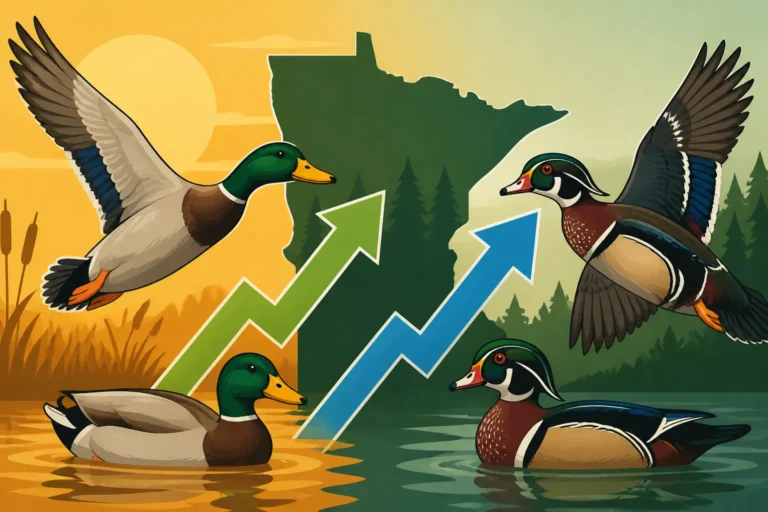
For many, the hunting year kicks off with the special early teal season. These swift, small ducks are the first real wave of migrants to push through Minnesota, often arriving in late August and early September. They're on a fast track south, driven by their unique biological clock and sensitive to even minor cold snaps further north. Bluewings are the most common species during this period, often found in shallow, vegetated potholes and flooded fields. Their presence is a clear sign that migration is officially underway, even if the larger puddle ducks and divers are still comfortably settled further north. Success during this period hinges on targeting those smaller, more ephemeral water bodies that might dry up later in the fall. Minnesota Early Teal Season Dates are a short window, but they offer some of the most exciting, fast-paced shooting of the year.
Resident Geese and Wood Ducks
As the early teal move through, Minnesota's resident waterfowl populations are also on the wing. Local Canada geese, which have spent the summer raising broods, begin to group up, often moving between feeding areas and larger bodies of water. These birds are less influenced by northern cold fronts initially, reacting more to local food availability and hunting pressure. Similarly, wood ducks, arguably one of Minnesota's most beautiful ducks, are abundant in the early season. They prefer wooded swamps, small creeks, and timbered sloughs, feeding heavily on acorns and other mast crops. While not truly "migratory" in the same sense as the teal passing through from further north, their movements are still seasonal. They'll often be found in the same areas until a significant drop in temperature or loss of food pushes them to seek warmer climates, usually before the main wave of big ducks hits.
Local Pond Dynamics and First Cold Fronts
The first actual cold front, even a mild one, often brings the first real change to local pond dynamics. It might not push birds all the way out of Minnesota, but it can trigger significant movement from smaller, shallow water bodies to larger, more secure ones. Ducks that were spread out across countless small wetlands suddenly consolidate. This is when hunting pressure also starts to play a significant role. Birds that were unaccustomed to hunters a week ago are now warier, seeking refuge on larger lakes or private ground. Understanding these local shifts, watching how birds react to pressure and minor weather changes, can tell you a lot about how they'll respond when the heavier migration begins. It’s a good time to review Minnesota Waterfowl Zones and Seasons and ensure you're compliant with all regulations before heading out. Using a tool like GoHunt to study aerial photos of your hunting area can help identify these potential refuge spots and planning your approach.
Mid-Season: Peak Migration and Diverse Species
This is what most Minnesota duck hunters dream of – the arrival of the big push, the "main event" of the migration. The mid-season sees a dramatic increase in both the number and diversity of ducks, as birds from the prairie provinces and further north begin their journey south in earnest.
The Main Event: Mallards, Pintails, and Wigeon
Typically, late September through October marks the heart of the migration. This is when the vast majority of puddle ducks make their appearance. Mallards, of course, are the undisputed kings, arriving in large numbers and often settling into wetlands, sloughs, and grain fields. Pintails, with their elegant profile, can be seen working stubble fields or wide-open shallow water. Gadwall, wigeon, and shovelers also become prominent. These birds are primarily driven by significant cold fronts originating in the Canadian prairies. When Saskatchewan and Manitoba experience their first heavy frosts and ice-ups, Minnesota is usually next in line to see these waves of birds. Timing is everything here, as the peak migration often lasts only a few weeks for any given species, depending on subsequent weather systems. Keeping an eye on reports from states to our north, and utilizing mapping technology from GoHunt to scout new areas, can make a huge difference in hitting that sweet spot.
Northerly Fronts and Duck Movement
During this mid-season period, successive northerly cold fronts become the primary engine of migration. Each significant drop in temperature and accompanying wind pushes more birds down the flyway. It's a continuous, often staggered process. You might see a big push of mallards one week, followed by a new wave of divers the next. Strong northwest winds can create ideal conditions for ducks to cover long distances quickly. Hunters often call these "flight days," and they are some of the most memorable. The birds are focused on their journey, often flying lower and more predictably as they search for new feeding and resting grounds. Identifying these fronts on weather maps and aligning your hunting days with their passage can drastically improve your odds. Many hunters pay close attention to the Minnesota Duck Opener Date, but it's the subsequent fronts that truly define the season's middle period.
Species Diversity and Habitat Shifts
With the peak migration comes an incredible diversity of species. Beyond the puddle ducks, you'll start to see more canvasbacks, redheads, bluebills (scaup), and ring-necked ducks. These are the divers, and they favor larger, deeper bodies of water compared to the puddle ducks. As smaller potholes start to skim over with ice, or food sources become depleted, these diverse species will concentrate on the more resilient, larger lakes and rivers that offer deeper water and more stable food sources. This shift in species also means a shift in hunting tactics. You might transition from jump-shooting small sloughs to setting large decoy spreads on big water. Understanding which species prefer which habitat type at different stages of the migration is crucial for success. Minnesota's Prairie Pothole Ducks are abundant early, but by mid-season, the action might shift towards bigger lakes.
Late Season: Diver Ducks and Freezing Waters
As November gives way to December, the Minnesota duck season enters its final, often most challenging, but potentially most rewarding, phase. This is a time when the last pushes of migrating ducks brave the bitter cold, and hunters who are willing to endure the elements can be handsomely rewarded.
Freezing Temperatures and Duck Concentration
The defining characteristic of the late season is the cold. As temperatures consistently dip below freezing, smaller water bodies, shallow marshes, and even the edges of larger lakes begin to lock up with ice. This naturally concentrates the remaining ducks on whatever open water is left. Rivers, deeper lakes, and areas with current (like below dams or river bends) become critical refuges. These areas also hold the last available food sources, such as hardy aquatic vegetation or waste grain in fields adjacent to open water. Identifying these final open water bastions is paramount. It’s a game of diminishing returns on habitat, where ducks become increasingly predictable in their choice of safe havens. This is where Minnesota Waterfowl Hunting on Lakes and Potholes really shifts focus heavily to those deep, resilient water bodies.
Diver Duck Movement and Big Water Hunting
Late season in Minnesota is synonymous with diver ducks. While some puddle ducks, particularly hardy mallards, will try to stick it out as long as there's open water, it's the divers – especially canvasbacks, redheads, and goldeneyes – that often provide the best late-season action. These birds are built for big water and colder temperatures. They'll continue to migrate and utilize the large, open lakes like Mille Lacs, Lake of the Woods, and parts of the Mississippi River until they too freeze over. Hunting these birds often involves specialized tactics, such as large spreads of diver decoys, layout blinds on frozen field edges near open water, or robust boats capable of handling rough, cold water. Diver Ducks on Mille Lacs are a prime example of a late-season target, offering fast-paced shooting for those willing to brave the elements.
Targeting Open Water and Hard-Core Tactics
Hunting late-season ducks requires dedication and a willingness to adapt. This isn't the time for casual hunts on small ponds. You'll be looking for isolated pockets of open water, often surrounded by ice. This could mean breaking ice to get decoys out, using an ice sled to transport gear, or targeting field edges where ducks are flying to feed after roosting on remaining open water. Layout Blind Hunting Minnesota Farm Fields becomes an incredibly effective strategy for those hardy mallards and geese that are still working cut grain. Layering clothing, having reliable waders, and ensuring your boat and motor are cold-weather ready are all essential. It's a challenging but deeply rewarding time to be a duck hunter, as you're truly engaging with the toughest birds and the harshest conditions Minnesota has to offer. The intelligence gathered from tools like GoHunt—identifying overlooked access points to these late-season strongholds, for example—can be the difference between a tough sit and a successful hunt.
Here's a quick overview of Minnesota's duck migration phases:
| Migration Phase | Typical Period | Key Weather Triggers | Primary Species & Focus | Hunting Strategy Notes |
|---|---|---|---|---|
| Early Season | Late Aug – Mid-Sept | Minor cold fronts, shortening days, local conditions | Teal, Wood Ducks, Resident Geese | Shallow marshes, small potholes, timbered sloughs, jump-shooting |
| Mid-Season | Late Sept – Late Oct | Strong Canadian cold fronts, consistent north winds | Mallards, Pintails, Wigeon, Gadwall, first Divers | Potholes, larger marshes, cut grain fields, increasing decoy use |
| Late Season | Late Oct – Freeze-up (Dec) | Hard freezes, widespread ice, persistent cold | Diver Ducks (Cans, Redheads), hard-core Mallards | Large lakes, rivers, open water pockets, layout blinds, specialized gear |
Ultimately, understanding duck migration timing in Minnesota is a continuous learning process. It means staying attuned to the weather, knowing your local habitats, and recognizing that while some patterns are predictable, every season brings its own unique challenges and opportunities. By integrating these observations with modern tools, you can better anticipate the movements of these incredible birds and maximize your time in the blind.
Disclaimer
This article is for general informational purposes only and does not constitute professional advice. Laws, prices and regulations vary by location and change over time. Consult a qualified professional for guidance on your specific situation.