Where Minnesota Woodcock Concentrate
Ah, the timber doodle! What a fascinating, frustrating little bird. You spend hours walking through what looks like perfect cover, only to flush nothing, or worse, one lone bird you barely get a shot at. If you've ever wondered where these migratory marvels really like to hang out in Minnesota, you're in the right place. This guide is all about peeling back the layers to understand the specific habitats and conditions that make a spot a woodcock magnet.
Unpacking the Woodcock's Habitat Needs
The American Woodcock, affectionately known by many names like timberdoodle or bogsucker, isn't your typical upland bird. They're built for a very specific lifestyle, and understanding that is the key to finding where they concentrate in Minnesota. Unlike pheasants that prefer wide-open grasslands or grouse that are tied tightly to aspen, woodcock are connoisseurs of moist, young, and dense cover. They're literally earthworm-eaters with long bills adapted for probing soft soil. If a spot doesn't offer these fundamental elements, you're probably just getting some good exercise without much to show for it.
The Allure of Soft, Moist Soil
At the absolute top of a woodcock's wish list is soft, moist soil. Their primary diet consists almost exclusively of earthworms, which they extract from the ground using their incredibly sensitive, flexible bill. This means they're not going to be in dry, sandy uplands or hard-packed clay fields. Think rich, loamy soil that retains moisture, often found near water sources or in low-lying areas. After a good rain, these spots become even more attractive.
You'll often find them in areas with a high water table, but not necessarily standing water. They're looking for that perfect spongy ground where earthworms thrive close to the surface. It's why they're sometimes called "bogsuckers," a nod to their probing nature in damp environments. If the ground is too hard, they simply can't feed efficiently, and they'll move on. This is a critical factor when you're Finding Woodcock in Alder Runs or along creek beds.
The Importance of Young, Dense Cover
Beyond the soil, woodcock require dense, regenerating woody cover. This isn't your mature, open timber where you can see for 50 yards. We're talking about thickets so dense you feel like you're pushing through a wall of branches. Their ideal cover is typically young deciduous growth, often a mix of alder, willow, dogwood, and young aspen. These species create a canopy that provides overhead protection from aerial predators and keeps the ground shaded and moist.
The ideal height for this cover is often between 5 and 20 feet, forming a dense tangle of stems. This structure allows them to move relatively unimpeded at ground level while still being hidden. Think about the way a grouse uses dense popple, but even thicker and often in wetter soil. This kind of cover is also essential for their roosting and nesting habits. Without this protective blanket, they're vulnerable, and they know it.
Openings for Roosting and Display
While they crave dense cover, woodcock also need nearby openings. These can be small clearings, logging roads, old field edges, or even recent clear-cuts. These openings serve a couple of vital purposes. First, they provide areas for nocturnal roosting. After a day of probing for worms in the dense cover, woodcock often move to more open ground at night, where they can spot predators more easily.
Second, and perhaps most famously, these openings are crucial for their elaborate mating rituals in the spring. Male woodcock perform incredible aerial displays, spiraling skyward and then descending in a musical cascade of chirps and whistles to attract mates. These "singing grounds" are typically small, open clearings adjacent to their preferred dense cover. Knowing this pattern can help you understand their broader habitat preferences, even if you're Minnesota Woodcock Season Dates falls in the fall.
Prime Woodcock Concentrations in Minnesota
Minnesota, with its diverse landscapes ranging from the expansive Northwoods to agricultural plains, offers various pockets where woodcock can thrive. However, not all areas are created equal. You'll find the highest concentrations where the specific habitat needs we just discussed come together most consistently.
The Northwoods: A Woodcock Haven
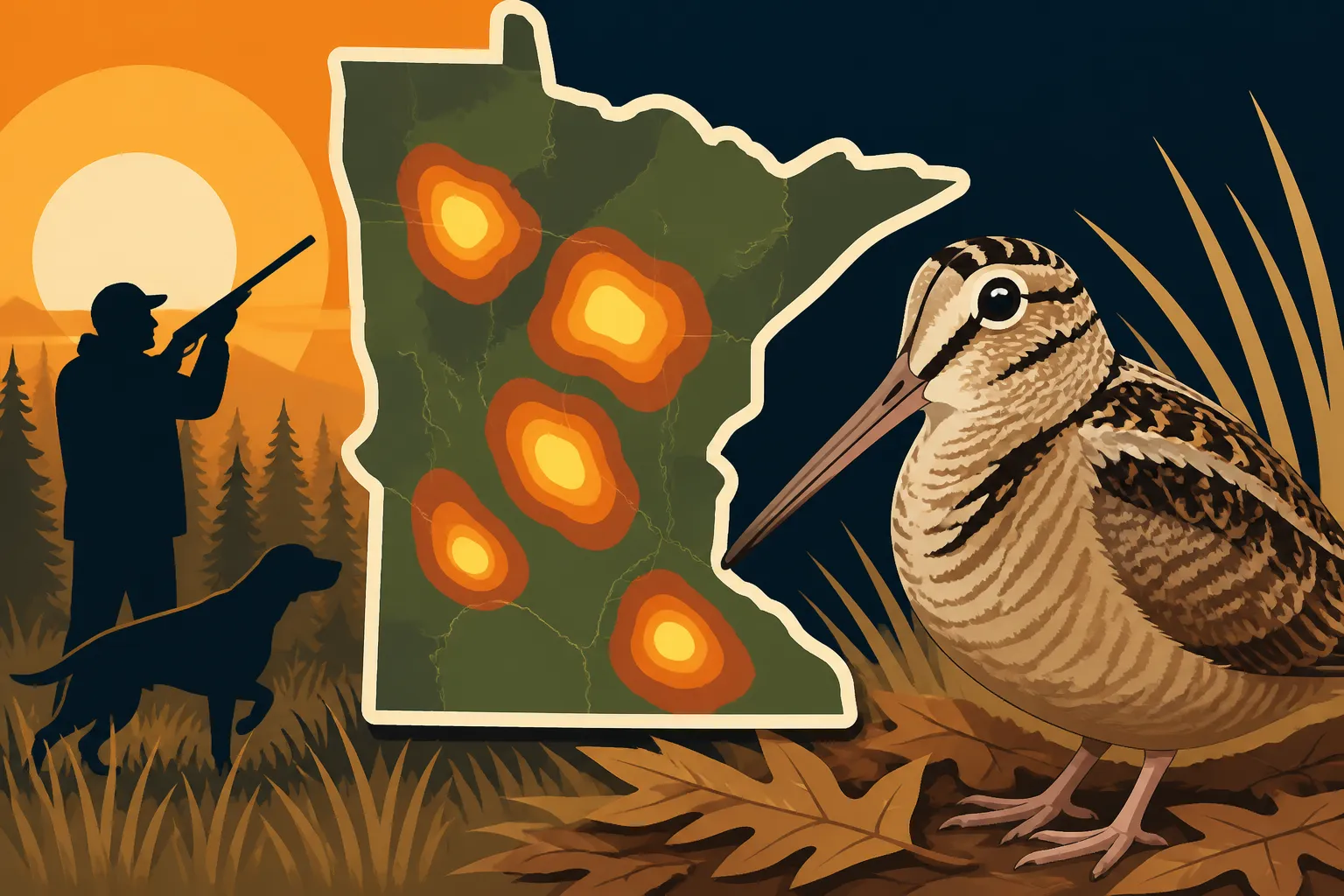
Without a doubt, Minnesota's Northwoods, particularly the central and northeastern regions, are generally considered the prime territory for woodcock. Areas stretching from Pine and Carlton Counties up through Aitkin, St. Louis, Lake, and Cook Counties, and westward into Beltrami and Hubbard, hold significant populations. This vast expanse of forest is characterized by abundant wetlands, numerous rivers and creeks, and extensive aspen and alder regeneration.
Logging activity in these state and national forests creates a continuous cycle of young growth, providing that crucial dense cover. When you're scouting here, look for areas that have been clear-cut within the last 5-15 years. These regenerating stands, especially those near lowland areas or river drainages, become woodcock magnets. Grouse Hunting Minnesota Aspen Cover often leads you to similar habitat, making it an excellent dual-species hunt.
River Bottoms and Creek Drainages
Even outside the deep Northwoods, river bottoms and the floodplains of smaller creeks and drainages can be fantastic woodcock habitat. The Minnesota River Valley, the Rum River, Snake River, and tributaries feeding into the Mississippi can offer excellent opportunities. These areas naturally have rich, moist soil and often feature dense stands of willow and alder along their banks.
The key here is the consistent moisture and the annual flooding that can deposit rich silt, creating ideal conditions for earthworms. These linear strips of cover act like highways for migrating woodcock, providing both food and shelter. Even in more agricultural regions, these riparian corridors can be overlooked gems. Scouting with a good mapping app like one from GoHunt can help you identify these sinuous lines of dense vegetation against a backdrop of fields.
Managed Public Lands and WMAs
Many of Minnesota's Wildlife Management Areas (WMAs) and State Forests are managed with species like woodcock and grouse in mind. Forest management practices, including prescribed burns and timber harvests, are designed to create diverse habitat age classes. These efforts ensure a mosaic of young, regenerating forests critical for woodcock.
Areas like the Carlos Avery WMA, particularly its lowland sections, and many of the smaller WMAs scattered across the central and northern parts of the state can hold good numbers. It pays to check the management plans for specific public land tracts or to simply walk areas recently marked for timber sales. The brushy edges and moist depressions within these managed areas are exactly what you're looking for. Don't forget to review the Minnesota Grouse and Woodcock Seasons before heading out.
Reading the Landscape: Signs and Seasonal Movements
Finding woodcock isn't just about knowing the general areas; it's about learning to read the subtle clues they leave behind and understanding their migratory patterns. These birds are master camouflagers, and if you're not paying attention to the ground and the timing, you'll walk right past them.
Identifying Woodcock Sign on the Ground
The most obvious sign of woodcock presence is their distinct "probe holes." These are small, round holes in the moist soil, about the diameter of a pencil or slightly larger, where they've inserted their bill to extract earthworms. Finding a concentration of these holes is a strong indicator you're in a productive feeding area. You might also notice their unique droppings, often described as "splashes" or "chalk," which are whitish-gray with a dark center, found on leaves or sparse ground cover.
Another sign, though less obvious, is the presence of their "roosting areas." These are often slightly more open spots adjacent to dense cover where they spend the night. You might find a higher concentration of splashes here, but the probe holes will be more scattered. Learning to identify these signs is like solving a puzzle, and it’s a skill that vastly improves your chances of success. A keen eye, combined with a mapping tool like GoHunt, can help you zero in on potential hot spots.
Migration Timing and Local Movements
Woodcock are migratory birds, and their presence in Minnesota is seasonal. They typically begin arriving in Minnesota in late March and early April for breeding, and then begin their southward migration in the fall. The peak of the fall migration, often referred to as "the flight," usually occurs from late September through mid-October, though it can extend into early November depending on weather conditions. This is often the best time for hunting, as local birds are joined by migrants moving through. Understanding Timing the Minnesota Woodcock Flight is absolutely essential for planning your hunts.
| Aspect | Ideal Woodcock Conditions | Less Favorable Conditions |
|---|---|---|
| Soil Type | Moist, soft, rich loam, high earthworm population | Dry, hard-packed clay, sandy, rocky, low earthworm count |
| Vegetation Height | 5-20 feet | Over 25 feet (mature timber), under 3 feet (sparse grass) |
| Vegetation Density | Extremely dense, interwoven stems (alder, willow, young aspen, dogwood) | Open woods, clear understory, monoculture crops |
| Water Proximity | Near creeks, rivers, swamps, high water table | Arid uplands, areas far from water sources |
| Openings | Small clearings, logging roads, field edges nearby | Vast, unbroken forest or wide-open fields |
| Seasonal Presence | Fall migration (late Sept – early Nov) is prime | Deep winter (frozen ground), very early spring (before thaw) |
Local movements are also important. Woodcock are most active during dawn and dusk, when they feed heavily. During the day, they typically rest in dense cover. On warm, overcast days, they might be more active throughout the day. Conversely, on bright, sunny days, they tend to burrow deeper into cover. Knowing these patterns helps you predict when and where you'll encounter them. When you are Hunting Grouse and Woodcock Together, you might find the woodcock in the lower, wetter parts of the cover, while grouse are higher on the ridge.
Utilizing Technology for Scouting
In today's hunting world, technology can be a huge asset in pinpointing where woodcock concentrate. Satellite imagery and topographic maps available through apps like GoHunt allow you to identify key habitat features from your couch. Look for distinct changes in vegetation, often indicating young forest stands or alder thickets. The tell-tale "green fuzz" of regenerating clear-cuts on a topo map is a prime indicator.
Focus on areas where these dense, young stands are adjacent to creek bottoms, wetland edges, or lowland areas. Look for logging roads or old farm fields that could serve as singing grounds or nocturnal roosting spots. A good mapping app will also show you property boundaries, helping you determine if a promising spot is on public land or if you need to seek permission. Reading Aerial Photos for Big Woods Deer can also apply to woodcock, as you're looking for similar dense cover. This kind of pre-hunt scouting can save you countless hours of walking unproductive ground, ensuring you concentrate your efforts where the woodcock truly concentrate.
Disclaimer
This article is for general informational purposes only and does not constitute professional advice. Laws, prices and regulations vary by location and change over time. Consult a qualified professional for guidance on your specific situation.