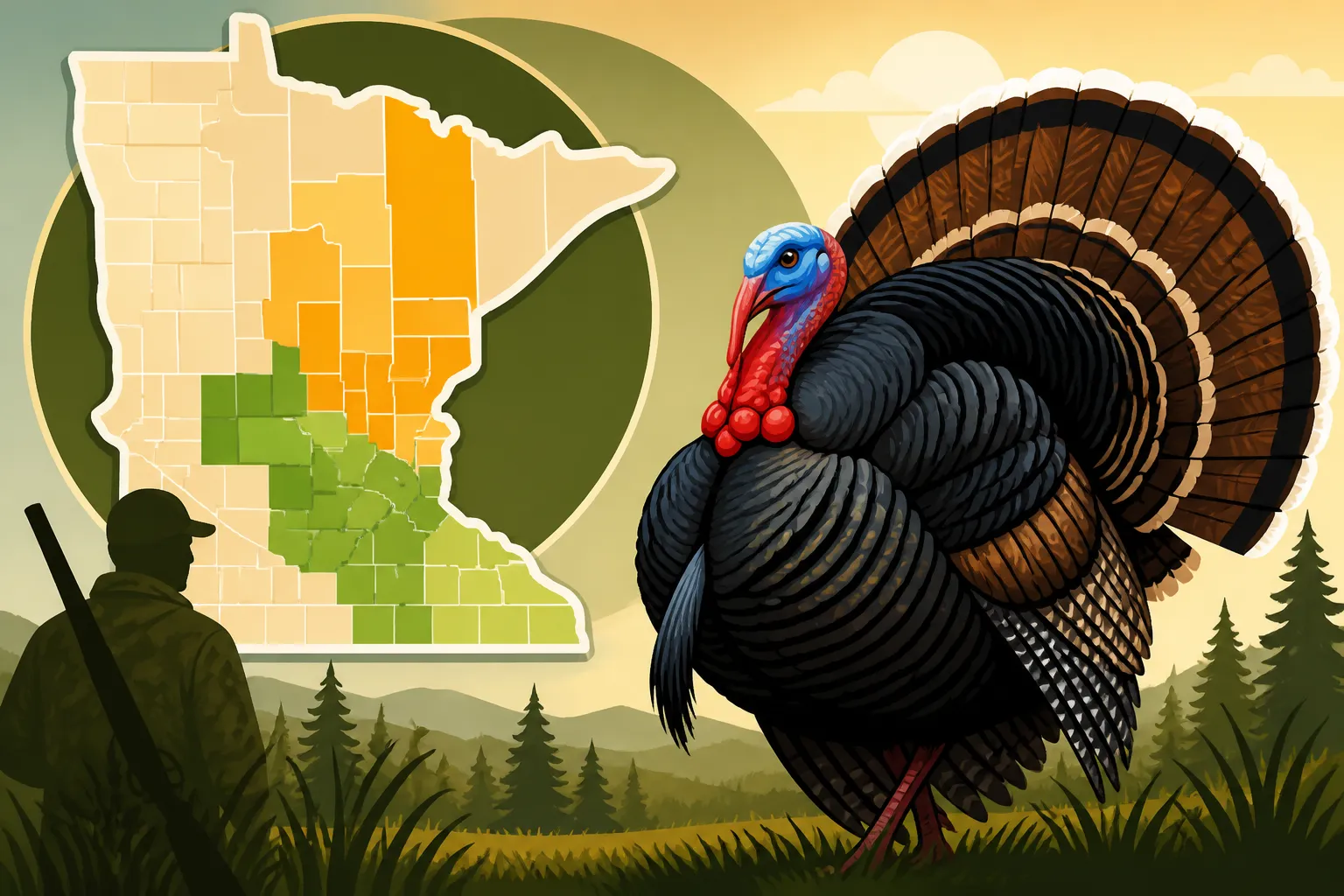
Best Minnesota Counties for Turkeys
Finding that sweet spot for turkey hunting in Minnesota can feel a bit like searching for a needle in a haystack, especially if you're used to states where gobblers are practically tripping over each other. It’s not always obvious where the highest concentrations of birds are, or how to even get access to them. This guide is here to cut through the guesswork, helping you pinpoint the best Minnesota counties where you'll have a real shot at hearing that thunderous spring gobble and putting a bird in the vest.
Understanding Minnesota's Turkey Comeback and Distribution
It's easy to forget that wild turkeys weren't always a thriving game species across much of Minnesota. For a long time, hearing a gobble was a rare treat reserved for a few isolated pockets, or simply a dream for many hunters. But thanks to dedicated restoration efforts, these incredible birds have made a remarkable comeback, establishing strong populations in many areas. This isn't just a feel-good story; it profoundly impacts where you'll find the best hunting opportunities today.
The Phenomenal Restoration Story
The journey of wild turkeys in Minnesota is truly a testament to conservation success. Historically, they were native to the state's southeastern hardwoods but were extirpated by the early 1900s due to habitat loss and unregulated hunting. Fast forward several decades, and the Minnesota Department of Natural Resources (DNR), along with groups like the National Wild Turkey Federation (NWTF), began reintroduction efforts, primarily using wild-trapped birds from other states. These birds were tough, adaptable, and genetically robust, allowing them to not just survive but flourish in their new homes.
Over the years, these initial releases blossomed, and turkeys began expanding their range naturally, supplemented by additional trap-and-transfer projects within the state. They followed river corridors, sought out pockets of mature hardwoods, and adapted to agricultural landscapes. Today, How Turkeys Were Restored to Minnesota is a story of how perseverance and sound wildlife management can bring a species back from the brink, creating new hunting traditions for generations.
Habitat Preferences Across the State
Turkeys aren't just everywhere; they have specific real estate preferences. They thrive in areas that offer a mosaic of mature hardwood forests, particularly those with plenty of oaks for acorns, interspersed with agricultural fields for food, and good roosting trees, often large evergreens or mature hardwoods along river bottoms. They need good escape cover and areas where they can dust, strut, and nest relatively undisturbed.
In Minnesota, this often means the rugged bluff country of the southeast, where deep valleys provide shelter and expansive hardwood ridges offer abundant food. As you move north and west, birds have adapted to more agricultural-dominated landscapes, utilizing woodlots, shelterbelts, and river corridors. Even in parts of the central and northern state, where historically turkeys were less common, pockets of suitable habitat have allowed populations to take hold. Understanding these habitat preferences is key to predicting Minnesota Turkey Population Trends and, more importantly, where you should focus your efforts.
Top-Tier Counties for Consistent Turkey Action
When we talk about the best counties for turkeys in Minnesota, we're really looking at a combination of high bird densities, good habitat, and often, reasonable access. While turkeys can pop up almost anywhere these days, some areas consistently produce more opportunities and bigger birds.
Southeast Minnesota: The Original Stronghold
The southeastern bluff country remains the undisputed king of Minnesota turkey hunting. This region, characterized by its dramatic limestone bluffs, deep river valleys, and extensive hardwood forests, offers the ideal mix of food, cover, and terrain that turkeys adore. Counties like Houston, Fillmore, Winona, and Olmsted consistently rank high for turkey harvest and population density.
- Houston County: Nestled in the extreme southeast corner, Houston County is often considered the epicenter of Minnesota turkey hunting. It boasts vast tracts of public land, including portions of the Richard J. Dorer Memorial Hardwood Forest and numerous WMAs. The steep terrain can be physically demanding, but it limits hunting pressure in some areas and creates ideal natural funnels and roosting sites. The mix of oak ridges, agricultural fields in the valley bottoms, and diverse cover provides everything a turkey needs. It’s common to hear multiple birds gobbling from different ridges on a spring morning here, making for an exciting, albeit challenging, hunt.
- Fillmore County: Just west of Houston, Fillmore County offers similar exceptional habitat with a slightly more agricultural feel in places, though still dominated by rolling hills and hardwoods. It too has significant public access. Hunters here often focus on river bottom roosts and then try to intercept birds as they move onto fields or up the ridges to feed. This area provides excellent opportunities for both Roost Hunting Minnesota Gobblers and setting up on traditional strut zones.
- Winona County: Situated along the Mississippi River, Winona County presents a unique blend of steep blufflands, river bottoms, and agricultural fields. Turkeys here utilize the large river bottom trees for roosting and feed in cornfields or along the edges of the bluffs. Public land can be found in various WMA units and sections of the state forest, offering diverse hunting scenarios. The landscape offers fantastic challenges and rewards for hunters willing to put in the legwork.
East Central and Central Minnesota: Expanding Opportunities
While the southeast gets most of the glory, turkeys have spread remarkably into central and east-central Minnesota, offering excellent hunting closer to the Twin Cities metro area for many. These areas tend to have more fragmented habitat but still hold impressive numbers of birds.
- Goodhue County: South of the Twin Cities, Goodhue County bridges the gap between the traditional southeast and the more central regions. It features rolling hills, pockets of mature hardwoods, and extensive agricultural lands. Turkeys have truly taken hold here, offering fantastic hunting. Access can be a mix of public lands and private land opportunities, making scouting crucial. You'll find birds using woodlots adjacent to cornfields, making Turkey Tactics for Farmland Field Edges particularly effective here.
- Sherburne County: Home to portions of the Sherburne National Wildlife Refuge and state forests, Sherburne County offers a blend of hardwoods, pines, and marshy areas. While the habitat is different from the bluff country, turkeys have adapted well, especially along river corridors. It's a great option for hunters looking for opportunities closer to the metro, often with decent public access, though pressure can be higher on opening weekends.
- Wright County: Just west of the metro, Wright County has seen a significant increase in turkey numbers. While public land is less abundant than in other top-tier counties, dedicated hunters who secure private land access can find excellent opportunities. Turkeys here are masters of using small woodlots, creek bottoms, and field edges, making stealth and smart calling vital. This area is a prime example of how turkeys have adapted to more human-dominated landscapes.
Factors That Make a County Prime for Turkeys
Beyond just naming counties, it's important to understand why certain areas are consistently better for turkey hunting. Knowing these factors can help you scout new areas or even improve your success in counties you already hunt. It’s not just about seeing a turkey; it’s about understanding their world.
Diverse and Abundant Habitat
The number one factor for a thriving turkey population is habitat. Turkeys need a variety of features within their home range to meet all their needs throughout the year. Think of it like a turkey's grocery store, bedroom, and playground all rolled into one.
- Mature Hardwood Forests: Acorns are a crucial food source, especially in fall and winter. Older oak, hickory, and beech stands provide this bounty. These mature trees also offer excellent roosting opportunities, providing tall, sturdy limbs for birds to escape predators at night. Without ample mature hardwoods, a turkey population will struggle.
- Agricultural Lands: Corn, soybeans, and other crops provide high-energy food, particularly in late fall and winter when natural forage is scarce. Turkeys will spend a lot of time in and around these fields, especially during spring to feed on insects and display. The interfaces between forests and fields are often hotspots for gobblers strutting.
- Openings and Clearings: Turkeys need clear areas for strutting, dusting, and brood-rearing. Logging roads, small clear-cuts, food plots, and natural meadows provide these vital spaces. Hens will often nest in tall grasses or brushy areas adjacent to these openings.
- Water Sources: While turkeys can get water from dew and food, reliable water sources like creeks, ponds, and river bottoms are always a plus.
Public Land Access and Hunter Distribution
Even with perfect habitat, if you can’t get on the land, you can’t hunt the birds. Minnesota offers a solid amount of public hunting land, but it's not evenly distributed. Counties with extensive state forests, Wildlife Management Areas (WMAs), or federal lands often provide more consistent hunting opportunities simply due to the sheer acreage available to the public.
However, public land comes with its own challenges, namely hunting pressure. The best counties with abundant public land, like Houston, can draw significant crowds, especially during early Minnesota Spring Turkey Zones and Periods. Understanding how to find overlooked corners or Finding Ground Others Walk Past becomes critical. Using tools like the DNR's Using the Recreation Compass Map Tool or mapping applications like GoHunt can help you identify public parcels and pinpoint potential access points, allowing you to plan your approach to avoid the crowds.
History of Successful Reintroduction and Management
The long-term success of turkey populations in a given county often traces back to the initial reintroduction efforts and ongoing management. Counties that had early, successful reintroductions into prime habitat, and have since maintained sound land management practices (like timber stand improvement or prescribed burning to enhance habitat), typically boast robust and resilient turkey populations. This historical perspective, combined with present-day observations, helps to explain why some counties have stronger, more consistent turkey numbers than others. The DNR's turkey population monitoring efforts, like brood surveys and harvest data, also contribute to understanding where the birds are doing best.
Navigating Public Land and Access Challenges
Even in the "best" counties, putting a tag on a turkey still requires effort, strategy, and often, a bit of luck. The real world of hunting is rarely as simple as stepping out the door and seeing a gobbler. Public land, while a blessing, also brings its own set of considerations.
Scouting for Success
Regardless of the county, pre-season scouting is your best friend. Don't wait until opening morning to figure out where the birds are. Turkeys are creatures of habit, especially in spring. They'll roost in specific areas, use particular strut zones, and follow predictable travel routes between roosts, feeding areas, and breeding grounds.
- Aerial Maps and Topography: Start by poring over aerial maps, looking for the tell-tale signs of good turkey habitat: large blocks of mature timber, especially along river bottoms or on ridge tops, adjacent to open fields or clearings. Identify potential roosting areas by looking for mature trees along water or on high ground. Note topography—steep ridges and valleys often funnel movement and amplify sound, making it easier to pinpoint gobblers. Mapping tools can be invaluable here, helping you understand the lay of the land before you even lace up your boots.
- Boots on the Ground: Once you have some potential spots identified on the map, it's time to hit the woods. Look for physical signs: tracks in muddy spots or along field edges, droppings (larger and looser for gobblers, smaller and tighter for hens), strut marks (drag marks from wingtips in soft soil), dusting bowls, and shed feathers. Listen for distant gobbling in the early morning or late evening from potential roosts. Even finding old feathers under a big oak can tell you that birds are using the area.
- Understanding Pressure: On public land, you're not the only one with this idea. Pay attention to parking areas, well-worn trails, and signs of other hunters. Sometimes, moving a little further off the beaten path, or tackling more difficult terrain, can get you away from the crowds and into unpressured birds. This is where Run-and-Gun Turkey Tactics on Public Land can really shine, allowing you to cover ground quickly and adapt to what the birds (and other hunters) are doing.
Securing Private Land Permission
While Minnesota has great public land, don't overlook the immense potential of private land, especially in agricultural counties where public access might be more limited. Farmers and landowners often welcome respectful hunters who ask permission in advance.
- Be Respectful and Prepared: When approaching a landowner, be polite, well-dressed, and have a clear, concise request. Bring a map of their property (you can often print these from county GIS websites or mapping apps) and point out the specific area you'd like to hunt. Offer to share your contact information and respect their property as if it were your own. Building these relationships can open doors to incredible hunting opportunities for years to come.
- Offer a Hand: Sometimes, simply offering to help with a chore, like fixing a fence or cleaning up a field, can be the key to gaining access. It shows you're not just there to take, but to contribute to the relationship. Many of Minnesota's best turkey hunters have found their honey holes through good old-fashioned networking and building trust with landowners.
Adapting to Local Conditions
Every county, every woodlot, and every flock of turkeys is a little different. What works perfectly in the steep bluff country of Houston might not be as effective in the flatter, more fragmented woodlots of Wright County. Be prepared to adapt your calling, setup, and hunting style.
For example, in dense, hilly terrain, calling might need to be louder to cut through the timber, and you might need to use locator calls more frequently to pinpoint birds. In open farmland, soft, subtle calls might be more effective, and a good decoy spread can be a game-changer. Setting Up Against a Big Oak works in many places, but sometimes a small natural blind in a fencerow is all you need. Always observe the birds' behavior and adjust your tactics accordingly. Remember, hunter safety is paramount, so always be aware of your surroundings and other hunters, especially on busy public lands.
| County | Primary Habitat Type | Public Land Access | Perceived Turkey Density | Notes |
|---|---|---|---|---|
| Houston | Hardwood Bluff Country, River | Excellent | High | Classic MN turkey hunting, challenging terrain, high bird numbers. |
| Fillmore | Rolling Hardwoods, Ag Fields | Good | High | Great habitat, good access, solid populations. |
| Winona | Blufflands, River Bottoms | Good | High | Diverse terrain, river bottom roosts, scenic hunting. |
| Goodhue | Rolling Hills, Ag Fields | Moderate | Medium-High | Strong populations, good mix of private/public, closer to metro. |
| Sherburne | Mixed Woods, Wetland Edges | Moderate | Medium | National Refuge access, unique habitat, can be pressured. |
| Wright | Woodlots, Ag Fields | Limited | Medium | Strong birds on private land, good for resourceful hunters. |
This article is for general informational purposes only and does not constitute professional advice. Laws, prices and regulations vary by location and change over time. Consult a qualified professional for guidance on your specific situation.