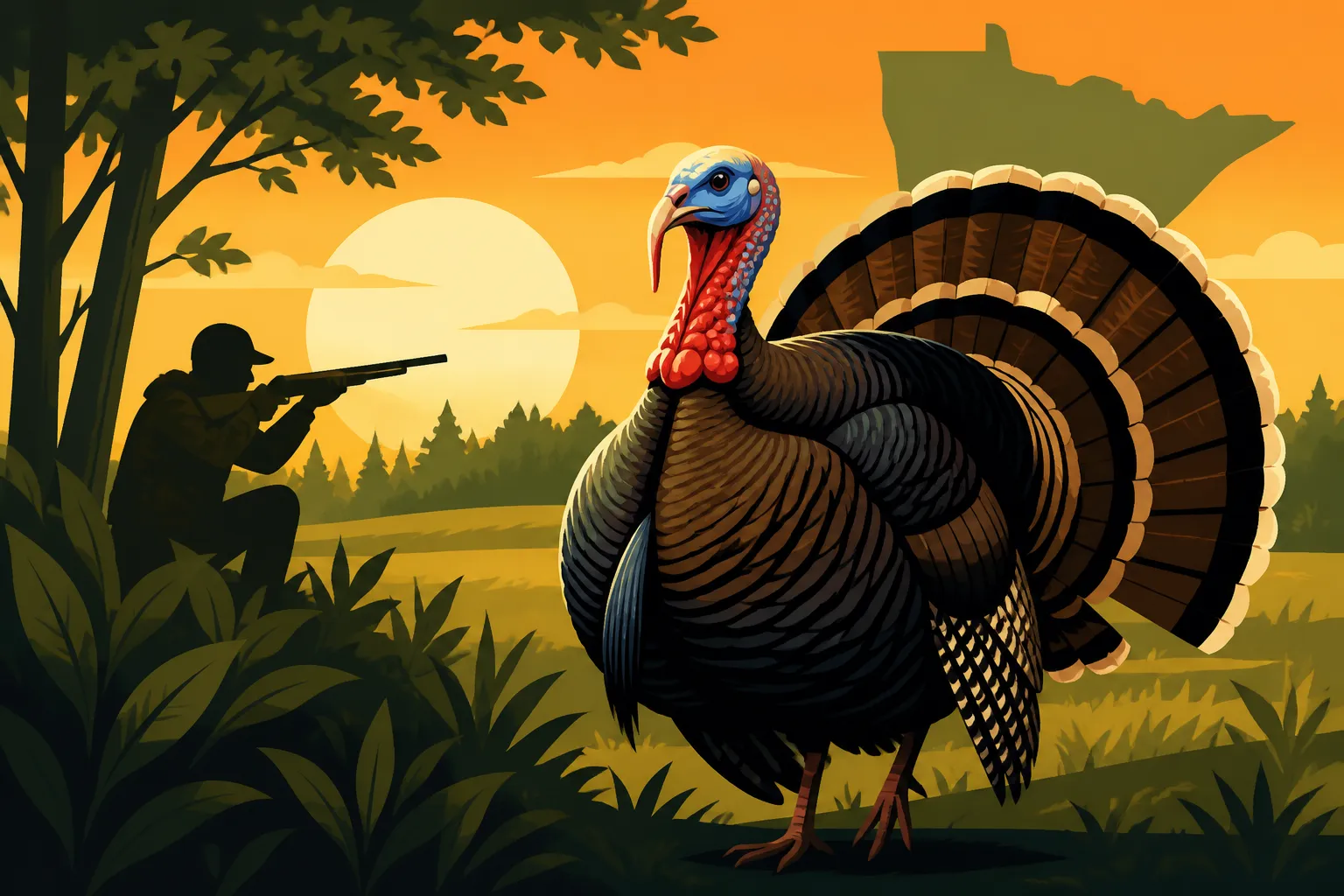
Wild Turkeys in Minnesota
For many years, the idea of hunting a wild turkey in Minnesota felt like a pipe dream for most hunters, a distant fantasy confined to southern states. We heard stories, saw the shows, but in our neck of the woods, consistent wild turkey populations seemed as elusive as a phantom buck. But oh, how times have changed! This guide is here to walk you through the incredible resurgence of wild turkeys in the North Star State, offering a deep dive into their behavior, habitat, and the very best strategies to put a gobbler in your vest, no matter which corner of Minnesota you call home.
A Minnesota Success Story: How Turkeys Came Back
It's truly remarkable to consider how far wild turkeys have come in Minnesota. Not all that long ago, the notion of chasing a strutting gobbler through our oak ridges or across our farm fields was pure fantasy. Our landscape, while diverse, simply didn't hold the consistent, widespread turkey populations found in states further south. Their story here is one of incredible resilience and dedicated conservation work, transforming them from a rarity to a widespread, cherished game animal.
Historical Absence and Early Restoration Efforts
For centuries, wild turkeys were, for all intents and purposes, absent from Minnesota. Historical records suggest they may have existed in very small numbers in the southeastern corner, primarily in the hardwood river bottoms along the Mississippi, but even that presence was fleeting and heavily impacted by early European settlement, habitat loss, and unregulated hunting. By the late 1800s and early 1900s, it was widely accepted that wild turkeys were extirpated from the state. The idea of them making a comeback seemed daunting, if not impossible.
The initial steps toward restoration were tentative. Attempts in the mid-20th century to reintroduce turkeys using pen-raised birds failed miserably, as these birds lacked the survival instincts of their wild counterparts. This proved a crucial lesson: only truly wild, trap-and-transfer birds had a chance. The real breakthrough came in the late 1960s and early 1970s, when the Minnesota Department of Natural Resources (DNR), in partnership with organizations like the National Wild Turkey Federation (NWTF), began sourcing wild turkeys from other states, particularly Missouri. These birds were tough, adaptable, and knew how to survive in a challenging environment.
These early releases were primarily focused on the rugged, timbered bluff country of southeastern Minnesota, an area that closely mirrored the prime turkey habitat of their ancestral homes. This region, with its steep, wooded river valleys and agricultural fringes, provided essential food sources, roosting trees, and escape cover. The commitment to these initial efforts, often involving long hours of trapping and careful relocation, laid the groundwork for the explosion that was to follow. It was a slow, deliberate process, but one that demonstrated the tenacity of these birds and the foresight of the conservationists involved.
The Boom: Modern Restoration and Expansion
Once the wild turkeys took hold in the southeast, their natural adaptability and impressive breeding success took over. From those initial pockets in the bluff country, populations began to expand, spreading into adjacent suitable habitats. The trap-and-transfer program became even more critical, but this time, the turkeys were sourced from Minnesota's booming southeastern population and moved to other parts of the state. This intra-state transfer accelerated their expansion dramatically.
Areas like the Minnesota River Valley, the hardwood forests surrounding the Twin Cities metro, and even some central and western Minnesota farmland regions saw new flocks established. These new populations weren't just surviving; they were thriving. Hunters and landowners reported more sightings, and the distinct gobble of a wild turkey became a more common sound each spring. This organic spread, coupled with continued strategic releases, painted a picture of one of the most successful wildlife restoration stories in North America.
The success wasn't just about the birds themselves; it was also about the evolving landscape. Minnesota's agricultural practices, while intensive, often left pockets of timber, brush, and river bottom land that provided critical refuge. Additionally, the increasing awareness and conservation efforts among private landowners played a huge role. They recognized the value of these birds and often undertook habitat improvement projects, further supporting the growing populations. If you're looking to track specific trends, studying the data on Minnesota Turkey Population Trends can offer valuable insights into this remarkable expansion.
Current Population Status and Trends
Today, Minnesota boasts a robust and healthy wild turkey population, with birds found in all but the extreme northern reaches of the state. While the highest densities still reside in the southeastern bluff country, birds have successfully colonized many counties where they were unheard of just a few decades ago. We're talking about huntable populations stretching from the Iowa border all the way up to areas like Park Rapids and beyond.
The Minnesota DNR regularly conducts surveys, including poult-to-hen ratios and harvest statistics, to monitor the health of the flocks. While populations can fluctuate locally due to factors like harsh winters, spring weather during nesting, and localized habitat changes, the statewide trend remains positive. This widespread distribution has opened up incredible hunting opportunities for residents and non-residents alike, solidifying the wild turkey's place as a premier game animal in Minnesota.
It’s truly a testament to cooperative conservation efforts and the incredible resilience of these birds. The ability to chase a gobbler in areas that were once devoid of them is a real gift. For those of us who remember when turkey hunting here was a novelty, the current abundance is nothing short of a miracle. The challenge now lies in managing these populations sustainably and ensuring hunters have the knowledge and access to pursue them responsibly. The expansion means that scouting tools like GoHunt, which can layer public land boundaries and habitat types, become even more crucial for finding new pockets of birds.
Where to Find Minnesota's Wild Turkeys
Knowing that turkeys are in Minnesota is one thing, but knowing where to find them on any given hunt is another entirely. Their distribution, while widespread, isn't uniform. Understanding the various types of habitat they thrive in, from the rugged river valleys to the patchwork of farmlands, will be your biggest advantage in locating these wary birds. Each region presents its own unique challenges and opportunities for the dedicated turkey hunter.
Southeastern Bluff Country Hotbeds
When most Minnesotans think of wild turkeys, their minds immediately go to the southeastern bluff country. And for good reason! This region, characterized by its deep, forested river valleys, steep limestone bluffs, and intermixed agricultural fields, is the undisputed epicenter of Minnesota's turkey population. Counties like Houston, Fillmore, Winona, and Root River Valley Turkey and Deer Ground are legendary for a reason. The habitat here is ideal: mature hardwoods (especially oaks and hickories for acorns), diverse understory for nesting and brooding cover, and abundant agricultural crops providing winter food.
Hunting here often means navigating challenging topography. You'll be climbing steep hillsides, descending into deep ravines, and crossing numerous creeks. But the reward can be immense. The sheer density of birds means more gobbling, more opportunities to locate flocks, and more interaction. Early mornings often find gobblers strutting in fields or gobbling from their roosts high on a bluff, echoing through the valleys. The key here is often to use the terrain to your advantage, slipping silently into position below a roosted bird or setting up on a bench or field edge where birds naturally travel between feeding and roosting areas. Don't be surprised to hear multiple birds gobbling from different directions, creating an exciting, albeit sometimes overwhelming, sensory experience.
Success in this region hinges on extensive scouting to pinpoint roosting sites, strut zones, and travel corridors. Given the popularity, especially on public lands like Whitewater WMA Trout and Deer Country, scouting helps you find pockets that might see less pressure. Remember, these birds see hunters, so silent approaches and smart setups are paramount.
Farmland Fringe and River Bottoms
Beyond the rugged southeast, significant turkey populations can be found thriving in the farmland fringe areas and along major river bottoms throughout the central and southern parts of the state. Think about the corridors created by rivers like the Minnesota River, Cannon River Wilderness Public Ground, and even smaller tributary systems. These areas often feature a mosaic of mature hardwood timber, brushy draws, and agricultural fields (corn, soybeans, small grains). Turkeys here depend heavily on the wooded river bottoms for roosting and security cover, venturing into adjacent fields to feed.
Hunting in these areas can be a bit different from the bluff country. While you might not have the dramatic elevation changes, you'll often contend with more open terrain, which makes concealment crucial. Birds can see you coming from a long way off. Field edges, wood lines, and brushy fence rows become key ambush points. These birds are accustomed to agricultural cycles, so understanding what crops are in, and when fields were harvested, can be vital for locating feeding areas.
Focus on finding the "breaks" in the landscape – where timber meets field, where a small creek creates a brushy corridor, or where a neglected woodlot offers a safe haven. These areas are travel magnets for turkeys. Using a mapping tool like GoHunt to identify these transition zones and isolated timber stands within vast agricultural landscapes can save you countless hours of unproductive walking. These birds often use the same travel routes day after day, making patterns easier to establish once you've done your homework.
The Northern Expansion and Habitat Adapters
Perhaps the most fascinating aspect of Minnesota's turkey story is their northern expansion. While not reaching the densities of the south, wild turkeys have successfully colonized areas as far north as the Brainerd Lakes region, parts of Otter Tail County, and even some pockets in the west-central and east-central parts of the state. These birds are true adapters, making a living in landscapes that, at first glance, might not seem like classic turkey habitat.
Here, turkeys are often found in deciduous forests interspersed with clearings, small agricultural plots, and even areas with some coniferous influence. Oak stands, even smaller ones, become incredibly important for food. They'll utilize aspen cuts, old farmsteads, and the edges of managed forests. Winter survival can be more challenging in these northern zones, so access to reliable food sources (like waste grain in fields, or standing oaks) and thermal cover becomes critical.
Hunting these northern birds can be exceptionally rewarding but also challenging. They might be more spread out, and gobbling can be less consistent compared to their southern counterparts. However, they can also be less pressured, sometimes responding aggressively to calls. Patience, persistence, and covering ground are often key. Focus on finding areas with a mix of hardwoods, especially oaks, and proximity to open areas for feeding. Don't overlook small, isolated woodlots or brushy creek bottoms – these can be overlooked gems that hold a rogue gobbler or a small flock. Identifying Where Minnesota Gobblers Roost in these diverse environments will be a massive advantage.
Understanding Turkey Behavior Through the Seasons
To consistently hunt wild turkeys successfully in Minnesota, you absolutely must become a student of their behavior. These birds are creatures of habit, yet incredibly adaptable, and their routines shift dramatically with the changing seasons. What works in early spring will likely fall flat in the fall, and understanding these nuances is what separates the consistently successful hunter from the one who just gets lucky once in a while.
Pre-Season Scouting and Roosting Habits
The work for a successful turkey hunt begins long before opening day. Pre-season scouting is arguably the most critical component, allowing you to understand the specific dynamics of the birds you'll be pursuing. During late winter and early spring, before the leaves fully pop, turkeys are highly visible and often concentrated. This is your chance to observe their movements, identify preferred feeding areas, and most importantly, pinpoint roosting sites.
Turkeys typically roost in tall, mature trees, often near water sources, on ridge tops, or along bluffs that offer a commanding view of the surrounding landscape. Oaks, cottonwoods, and other large deciduous trees are common choices. They'll fly up to roost an hour or so before dark and fly down around legal shooting light. Listening for fly-up and fly-down cackles, and especially for evening and morning gobbling, can directly lead you to these spots. A pair of good binoculars or a spotting scope can help you visually confirm birds flying to roost.
Knowing where a gobbler spends the night gives you an immense advantage. You can then plan your approach to be within calling distance before they hit the ground, but without alerting them. This often means being set up in the dark, well before sunrise. Consider the exact terrain and vegetation around the roost – where will he likely fly down? Where's the best spot to set up a decoy or a ground blind for concealment? Understanding these intricate details will guide your strategy come hunting day. It's often during this phase that hunters gain knowledge that helps them find good spots for Roost Hunting Minnesota Gobblers.
Spring Rutting Behavior and Gobbler Dynamics
Spring turkey hunting is all about the gobbler's drive to breed. As daylight hours lengthen and temperatures rise, testosterone levels surge, turning otherwise cautious males into boisterous, strutting machines. This is the "rut" for turkeys, and it dictates nearly all their behavior during the spring season. Gobblers will actively seek out hens, displaying their magnificent plumage, gobbling to attract attention, and fighting off rival males.
The peak of this activity usually coincides with the mid- to late-morning hours, though gobbling can occur throughout the day. Early in the spring, gobblers might be "henned up," meaning they're already with a flock of hens and less inclined to respond to a lone hen call. As the season progresses and hens begin to nest, gobblers become more solitary and more receptive to calling, desperately searching for any unbred hens. Understanding this progression is key to adjusting your calling tactics.
Hunters often spend considerable time trying to bring a gobbler to them. Learning to mimic various hen vocalizations – yelps, clucks, purrs, and cutts – is vital. The volume and aggressiveness of your calling should reflect the stage of the season and the bird's mood. A hot gobbler might charge in, while a shy one might need coaxing. Observing how a gobbler reacts to your calls (or to other gobblers) will tell you a lot about his personality and what it might take to seal the deal. This is where a deep dive into Grunt Calls in Mature Minnesota Timber and other vocalizations becomes highly relevant.
Fall Flocking and Feeding Patterns
Fall turkey hunting is a completely different ballgame, demanding a shift in strategy and understanding. The breeding season is long over, and turkeys' primary motivations are food and security. Flocks are often much larger, composed of hens, their poults from the spring, and sometimes bachelor groups of gobblers. These large groups typically focus on foraging for reliable food sources to fatten up for winter.
Key fall food sources include acorns (especially from white and red oaks), waste grain in harvested corn or soybean fields, wild berries, and various seeds and insects found in open areas. Turkeys will often travel significant distances between roosting sites and feeding grounds, establishing daily routines that can be patterned. Locating these food sources and identifying consistent travel corridors becomes paramount.
Unlike spring, calling is often focused on imitating the "assembly call" of a lost bird or breaking up a flock to then call them back together. The traditional fall tactic involves locating a flock, then rushing in to scatter them as widely as possible. Once the birds are dispersed, you set up and use a series of excited hen or kee-kee calls to bring them back. This mimics their natural instinct to regroup after being spooked. Patience is key here, as it can take hours for a scattered flock to regroup, but the payoff can be multiple birds responding simultaneously. This is the heart of Fall Turkey Tactics in Minnesota.
Key Challenges and Frustrations for Minnesota Turkey Hunters
Despite the incredible success story of Minnesota's wild turkeys, hunting them is far from a walk in the park. Any seasoned turkey hunter will tell you that these birds are among the most challenging game animals to pursue. They possess incredible eyesight, keen hearing, and a frustrating ability to vanish into thin air. Minnesota presents its own unique set of frustrations, from dealing with crowded public lands to battling unpredictable weather.
Pressure on Public Land Birds
Hunting turkeys on public land in Minnesota can be a test of patience and perseverance. With the rise in popularity of turkey hunting, many easily accessible public land parcels see significant hunter pressure, especially during the early spring periods. These pressured birds quickly become "call-shy" or "hunter-wary." They've heard every yelp and cutt in the book, seen too many decoys, and are masters at circling hunters or hanging up just out of range.
This means you can't just walk into a popular WMA, set up, and expect a gobbler to come trotting in. You need to be more strategic. This often involves walking farther than others, seeking out overlooked pockets of habitat, or hunting during less popular times (mid-week, later in the season, or during mid-day lulls). Using mapping apps like GoHunt to scout remote corners or difficult-to-access areas can give you an edge. Think about how to approach your setup from an unexpected direction, perhaps by taking an extra long route around a bluff or through a swamp.
Another frustration is dealing with other hunters. Accidental interference, or even outright "cutting" in on a hot bird, can ruin a hunt. It's crucial to be aware of your surroundings, be respectful, and practice good hunting etiquette. Wearing blaze orange when walking in and out (and removing it when setting up to call) is a good safety measure, though not required during most spring turkey seasons unless you're also firearm deer hunting during certain windows. Learning to differentiate between real turkey sounds and hunter calls is also a skill you'll develop over time.
Weather Woes: Rain, Cold, and Late Snow
Minnesota's spring weather is notoriously fickle. You can go from sunny and 60 degrees one day to a blizzard and 20 degrees the next. This unpredictable weather presents significant challenges for turkey hunters. Rain can dampen a gobbler's enthusiasm, making him less vocal and less inclined to leave the roost. It also makes hearing distant gobblers incredibly difficult. Trying to keep your calls and gear dry in a downpour is an added headache.
Cold temperatures, especially those unexpected late-season snowfalls, can put birds into a survival mode, focusing more on food and shelter than breeding. Deep snow can limit their mobility and make it harder for them to find grubs and insects, pushing them towards open fields with waste grain. A severe cold snap can temporarily shut down gobbling activity altogether.
Wind is another major factor. A strong wind makes it almost impossible to hear gobblers and for gobblers to hear your calls. It also makes it harder for you to hear them approaching. In windy conditions, turkeys often seek sheltered areas or stick to the ground, moving quietly. Hunters must adjust by trying to hunt in natural breaks, lower elevations, or in timber that offers some protection from the gusts. Layering clothing, having good rain gear, and understanding how weather impacts bird behavior is critical for success in our varied spring conditions.
Locating Quiet Gobblers and Breaking Up Flocks
One of the most common frustrations is the "quiet gobbler" – a bird you know is there, perhaps even saw him on the roost, but he simply won't gobble. He might be henned up, call-shy, or just naturally more cautious. These birds require immense patience and often a different approach than the textbook "call him in" method. Sometimes, a subtle approach, minimal calling, and relying on visual cues like strutting or dusting areas will be more effective.
In the fall, the frustration shifts to breaking up flocks effectively. If you can't scatter them widely enough, they might regroup too quickly or simply move off without offering a calling opportunity. Sometimes a flock will bust, but the birds only run 50 yards and then start clucking, making it impossible to get set up without them seeing you. This requires careful stealth and an understanding of how to approach birds without them pinpointing your exact location.
Another challenge is getting a gobbler to commit the final few yards. They might "hang up" at 80-100 yards, gobbling their heads off but refusing to come closer. This often means they've spotted something (or not spotted something, like a hen decoy) that makes them wary. This is where strategic decoy placement (especially fakes of multiple hens or a jake) can make all the difference, giving him the confidence to close the distance. Understanding Decoy Placement for Pressured Minnesota Birds is a game-changer for these scenarios.
Minnesota Turkey Hunting Regulations and Seasons
Before you even think about stepping into the woods, it’s absolutely vital to understand Minnesota's turkey hunting regulations. These rules are designed to manage the turkey population sustainably and ensure safe hunting practices. They cover everything from licensing and permit areas to legal methods and season dates, and they can be a bit complex given the different spring periods and fall opportunities.
Spring Lottery and Permit Areas
Minnesota's spring turkey season is divided into multiple time periods, typically A through G (though these can vary slightly year to year), and specific permit areas. This system is designed to spread out hunter pressure and provide quality hunting experiences across the state. In many of the most popular permit areas, especially in the southeastern regions, licenses are allocated via a lottery system. This means you need to apply by a specific deadline, usually in December, for a chance to draw a tag for a particular period and zone.
If you don't draw a tag in the lottery, or if you're hunting in permit areas that don't require a lottery (often less pressured areas or those with more liberal regulations), you can typically purchase an over-the-counter license for later periods. The exact rules for which areas are lottery-only and which are over-the-counter can change, so always consult the current Minnesota DNR hunting regulations manual. It's not uncommon for hunters to apply for an early lottery tag and, if unsuccessful, still plan a hunt for a later period with an over-the-counter license.
The key takeaway here is to plan ahead. Mark those application deadlines on your calendar. Understand the odds in different permit areas if you're aiming for a prime spot. The Minnesota Spring Turkey Zones and Periods document is your go-to resource for all this specific information, outlining the exact dates and boundaries you need to know. Make sure your license is valid for the specific period and zone you intend to hunt.
Fall Season Opportunities and Methods
Minnesota also offers a fall turkey season, which provides a unique hunting experience distinctly different from the spring. Unlike the spring's focus on breeding gobblers, the fall season allows hunters to pursue any wild turkey, regardless of sex or age. This opens up opportunities to target larger flocks of hens and poults, or even bachelor groups of gobblers, with a completely different set of tactics.
The fall season is generally longer and has fewer restrictions on permit areas, often allowing over-the-counter licenses for most open zones. The method often employed in the fall is the "flock bust" strategy, as detailed earlier. This involves intentionally scattering a flock of birds and then using calling to regroup them, hoping to intercept a lost bird. It's a highly interactive and often fast-paced style of hunting that requires quick movements and strategic setups.
Another method in the fall, especially for hunters who prefer a more traditional approach, is to pattern feeding birds. Scouting for consistent food sources like acorn flats or harvested grain fields and then ambushing birds along their travel routes or at the food source itself can be very effective. The lack of gobbling in the fall means more emphasis on visual scouting and patterning, often making a good pair of binoculars invaluable. The regulations for fall can be simpler than spring, but always double-check dates and any specific area restrictions.
License Requirements and Bag Limits
Beyond the specific seasons and permit areas, every turkey hunter in Minnesota needs a valid hunting license. Residents and non-residents have different fees, so ensure you purchase the correct one. Additionally, if you plan to hunt migratory game birds (which turkeys are not, but it's good to be aware), you might need an HIP certification, but this doesn't apply to turkeys.
There's usually a statewide bag limit of one male turkey or turkey with a visible beard per spring season, with specific rules for bonus tags if available. For the fall, the bag limit is often one turkey of either sex. These limits are in place to ensure a healthy, sustainable population. It's crucial to understand that even if you buy multiple licenses for different periods (if available), you can only harvest up to the total statewide bag limit.
Always carry your valid hunting license and any necessary permits while in the field. The DNR employs conservation officers who regularly check compliance, and ignorance of the law is never an excuse. Before every season, even if you're a seasoned hunter, take the time to review the most current Minnesota DNR Hunting and Trapping Regulations Handbook. It's easily accessible online and is your definitive source for all legal requirements. Understanding The Seven Minnesota Turkey Firearm Periods is a good starting point for detailed regulatory information.
Essential Gear for Minnesota Turkey Hunting
Hitting the woods for Minnesota turkeys without the right gear is like trying to ice fish with a butter knife – you might get by, but it’s going to be a struggle. From your shotgun to your calls and even your footwear, having reliable, appropriate gear for our varied terrain and weather will significantly increase your comfort, effectiveness, and ultimately, your chances of success.
Shotgun and Choke Selection for Different Ranges
For most Minnesota turkey hunters, a 12-gauge shotgun remains the most popular choice, offering a potent combination of range and pattern density. However, 20-gauge shotguns have gained significant traction, especially with modern tungsten super shot (TSS) loads, proving to be incredibly effective and lighter to carry. The key is to have a gun you can shoulder comfortably and shoot accurately.
More important than gauge, however, is your choke tube and ammunition selection. Turkeys are tough birds, and a dense, consistent pattern is absolutely critical for clean kills. Most turkey hunters opt for an extra-full or even a super-full constriction choke. These chokes typically deliver tighter patterns at longer ranges, which can be crucial when a gobbler hangs up at 40-50 yards. Always pattern your shotgun with your chosen ammunition before the season. This means shooting at a paper target at various distances (20, 30, 40, and even 50 yards) to see how your gun, choke, and load perform. You want a minimum of 100 pellets in the vitals (head and neck) at your maximum intended range.
While newer straight-wall rifle rules in Minnesota have expanded deer hunting options, shotguns remain king for turkeys. The maximum legal range for a shotgun on turkeys is usually considered to be around 40-50 yards with modern loads, depending on your setup. Some specialized loads and chokes can extend that, but knowing your personal and equipment limitations is essential for ethical hunting. Consider a red dot optic for quick target acquisition in low light or dense cover – it can make a real difference when that gobbler pops up unexpectedly. A shotgun with a shorter barrel (22-24 inches) is often preferred for maneuverability in thick woods.
Calls That Work in Minnesota Woods
Turkey calling is an art form, and having a variety of calls in your vest gives you the versatility to adapt to different scenarios and bird moods. No single call works every time, and what a gobbler responds to one day, he might ignore the next.
- Mouth Diaphragm Calls: These are perhaps the most versatile, allowing for hands-free calling, which is vital when a gobbler is in close range. With practice, you can produce a wide range of vocalizations – yelps, clucks, purrs, cutts, and even gobblers. Carry several different cuts and reed thicknesses to vary your sound.
- Slate or Pot Calls: These calls produce beautiful, realistic hen sounds. They require two hands but can be incredibly effective for clear, crisp yelps and soft purrs. They are particularly good for subtle calling when birds are close. Keep the surface conditioned and clean for consistent sound.
- Box Calls: Easy to use and capable of loud, far-reaching yelps, box calls are excellent for locating distant birds or calling through windy conditions. They're also great for beginners.
- Locator Calls: Owl hoots, crow calls, and even coyote howls don't sound like turkeys, but they often provoke a "shock gobble" from a roosted or tight-lipped tom, revealing his position without alerting him to your presence. These are invaluable for Calling a Minnesota Gobbler Off the Roost.
The key is practice. Spend time learning to make realistic sounds and understand when to use different calls. A lot of turkey hunting success comes down to reading the bird and giving him exactly what he wants to hear at that moment. Don't be afraid to experiment!
Decoy Strategies for Pressured Birds
Turkey decoys can be incredibly effective, providing a visual focal point that draws a gobbler into range. However, on pressured public lands, overly aggressive or unrealistic decoy setups can sometimes spook wary birds. It's about finding the right balance.
- Single Hen Decoy: A lone feeding or breeding hen decoy is a classic and often effective setup. It presents a less threatening visual for a tom, suggesting an available mate. Place it where the gobbler can see it from a distance, but also where it offers him an easy approach without having to circle excessively.
- Hen and Jake Decoy: Adding a jake decoy to your setup can be a game-changer. A jake challenges a dominant gobbler's ego, often infuriating him enough to charge in to chase off the perceived intruder. Position the jake so he appears to be pestering the hen, triggering that territorial instinct.
- Strutter Decoy: A full strutting gobbler decoy is an aggressive play, best used when you know there's a dominant, aggressive tom in the area. These can be irresistible to certain gobblers, but also potentially intimidating to submissive birds. Use caution on public land, as other hunters might mistake it for a real bird.
- Fanning: This ultra-aggressive tactic involves using a real turkey fan (or a fan decoy) to mimic a strutting gobbler, often used to "reap" a gobbler in the open. It requires extreme caution and is best reserved for private land with known turkey activity and clear sightlines, due to safety concerns from other hunters.
Regardless of the type, placement is everything. Set your decoys 15-25 yards from your setup, slightly off to the side of where you expect the gobbler to approach. This gives you a broadside shot as he focuses on the decoy. Remember, safety first: never carry an exposed strutting gobbler decoy on your back. For specific local advice, checking out Decoy Placement for Pressured Minnesota Birds can provide further nuances.
Hunting Strategies for Minnesota's Diverse Terrain
Minnesota's varied landscapes mean that a one-size-fits-all approach to turkey hunting simply won't cut it. From the rolling hardwoods of the "Big Woods" to the open agricultural fields, each environment demands tailored tactics. Understanding how to adapt your strategy to the specific terrain you're hunting is what truly defines a seasoned Minnesota turkey hunter.
Run-and-Gun Tactics in Big Woods
The "Big Woods" country of Minnesota, often found in parts of the central and northern state, presents its own unique set of turkey hunting challenges and opportunities. This typically refers to large tracts of continuous timber, interspersed with clearings, old logging roads, and occasional swamps or smaller fields. Birds here can be more spread out and harder to locate, making traditional sit-and-wait tactics less productive if you're not on a known roost.
This is where the "run-and-gun" method shines. The idea is to cover a lot of ground, stopping frequently to call, listen, and move towards any gobbling you hear. You're actively seeking out a responsive bird rather than passively waiting. Walk logging trails, old two-tracks, or even ridge lines, stopping every few hundred yards to let out a series of loud yelps and cuts, followed by a locator call (like an owl hoot or crow call). Listen intently for a shock gobble or a response.
Once you get a gobble, the real work begins. Your goal is to close the distance quickly and quietly, getting within 100-150 yards of the bird before setting up. Use the terrain for concealment: ridge lines, thick brush, or changes in elevation. Once set, evaluate the situation. Can you see him? Where will he come from? Then, begin your soft calling, trying to coax him in. If he hangs up or moves off, don't be afraid to pick up and try to reposition or move on to find another bird. This active approach is at the heart of Run-and-Gun Turkey Tactics on Public Land.
Setting Up on Farmland Edges
Hunting turkeys along the edges of Minnesota's vast agricultural fields, particularly in the central, western, and southern portions of the state, offers a different dynamic. These birds often use the timbered creek bottoms, woodlots, and tree lines for roosting and security, but spend significant portions of their day feeding in open fields, especially after harvest. This visibility can be both a blessing and a curse.
When hunting farmland, your setup location is critical. Turkeys have excellent eyesight and can spot movement from a long distance in open fields. Ground blinds are incredibly effective here, providing complete concealment and allowing for movement within the blind. Set your blind up well before season, if possible, allowing birds to get used to its presence. Place it along a field edge, at a corner, or in a brushy fence line where birds are known to travel or enter the field.
Decoy placement is also key. Position your decoys where they'll be highly visible to birds in the field, but far enough away from your blind to draw the bird's attention towards them and away from your position. Remember that turkeys will often circle or approach from unexpected angles in open terrain. Calling should be adjusted based on the bird's location. If he's a long way off, loud yelps to get his attention, then softer, more enticing calls as he closes the distance. This is prime territory for using strategies detailed in Turkey Tactics for Farmland Field Edges. Always be aware of property lines and gain permission if hunting on private land.
Dealing with Roosted Birds and Mid-Day Lulls
One of the most exciting aspects of turkey hunting is hearing a gobbler sound off from the roost just before dawn. However, converting that roosted bird into a harvested bird is often one of the biggest challenges. The goal is to get as close as possible without being detected, ideally within 100 yards, and set up before he flies down. Position yourself between the roost and where you think he'll fly down or where the hens are located.
The frustration often comes when a gobbler flies down with a group of hens. He's often less interested in your calls because he already has real hens. In this scenario, patience is paramount. You might need to let the hens lead him away, then try to re-engage him later. Sometimes, aggressively cutting and yelping can challenge the live hens, drawing them (and the gobbler) in. Or, if they move away, repositioning and trying to intercept him later in the day after the hens have gone to nest can be effective.
Mid-day lulls are a common phenomenon in turkey hunting. After the morning's intense gobbling and breeding activity, birds often quiet down, heading to dusting areas, feeding, or just loafing. This doesn't mean the hunting is over; it just means your tactics need to change. Instead of aggressive calling, focus on subtle clucks and purrs, imitating a contented hen. This is a great time to implement "fanning" if you're on safe, private ground, or to reposition to a known travel corridor or water source. It's also an excellent time to cover ground, scouting for fresh sign or trying to locate less-pressured birds. Never give up on the mid-day hunt – a gobbler might just be waiting for the perfect hen to show up!
Post-Harvest Care and Enjoying Your Minnesota Turkey
Congratulations! You've successfully outsmarted a Minnesota gobbler, and now the work really begins. Ethical hunting extends beyond the shot, encompassing proper field dressing, transportation, and preparation of your hard-earned wild game. A little attention to detail in these steps ensures your turkey meat is delicious and safe to eat.
Field Dressing and Transporting Your Bird
Immediately after harvesting your turkey, the priority is to cool the meat down to prevent spoilage, especially on warmer spring days. Unlike deer, turkeys don't require gutting in the field if you're planning to process them soon after. Many hunters prefer to "breast out" the bird in the field, taking only the breast meat, legs, and wings. This significantly reduces weight for the haul out.
To breast out a turkey:
- Lay the bird on its back.
- Make a cut through the skin from the top of the breastbone to the bottom.
- Peel back the skin on both sides, exposing the breast meat.
- Carefully cut along both sides of the breastbone, separating the breast meat from the bone.
- Work your knife along the ribcage to remove the entire breast half. Repeat on the other side.
- You can then remove the legs by severing the joint where they meet the body, and the wings if desired.
If you plan to keep the bird whole for taxidermy or a full roast, you'll need to cool the carcass quickly. Place it in a game bag (cotton or breathable fabric) and get it into a cooler with ice as soon as possible. Avoid piling multiple warm birds on top of each other in a vehicle trunk. For transport, remember that most states, including Minnesota, require proof of sex and species to remain naturally attached to the bird or parts until it reaches your home or a processing facility. This typically means keeping a leg with the spur or the head/beard attached to the breast meat. Always check current regulations regarding this specific requirement.
Wild Turkey Culinary Delights
Wild turkey meat is lean, flavorful, and incredibly versatile. It's nothing like its domestic counterpart, possessing a richer, more robust flavor. The key to cooking wild turkey is to avoid overcooking, which can lead to dry meat.
- Breast Meat: The most prized cut, breast meat is excellent sliced into cutlets, pounded thin for schnitzel, or cut into cubes for stir-fries or stews. Marinating the breast meat for a few hours (or even overnight) can add moisture and flavor, especially if grilling or pan-frying. Try brining it for an hour before cooking to maintain moisture. Many hunters rave about Cooking a Wild Turkey Breast with simple seasonings.
- Legs and Thighs: Often overlooked, the legs and thighs of a wild turkey are packed with flavor but can be tough due to tendons and active muscle use. They are best slow-cooked, braised, or smoked until fork-tender. Think about confit, pulled turkey for sandwiches, or adding to chili. The meat can be pulled off the bone easily after several hours in a slow cooker with broth and seasonings.
- Wings: While there's not a lot of meat on them, turkey wings can be fantastic for making rich stock for soups and gravies. You can also try frying or baking them like chicken wings, though they'll be denser and require longer cooking.
Don't be afraid to experiment with different recipes. Wild turkey stands up well to bold flavors like garlic, rosemary, sage, and paprika. From Thanksgiving-style roasts to spicy tacos, your Minnesota wild turkey can be a star on the dinner table, providing delicious, organic meat that you've earned through skill and perseverance in the field.
Disclaimer
Please note that hunting regulations, seasons, and permit area details can change annually. Always consult the most current Minnesota Department of Natural Resources (DNR) official regulations handbook or website before planning your hunt to ensure compliance with all state laws. The information provided in this guide is for general informational purposes only and should not be considered legal advice.