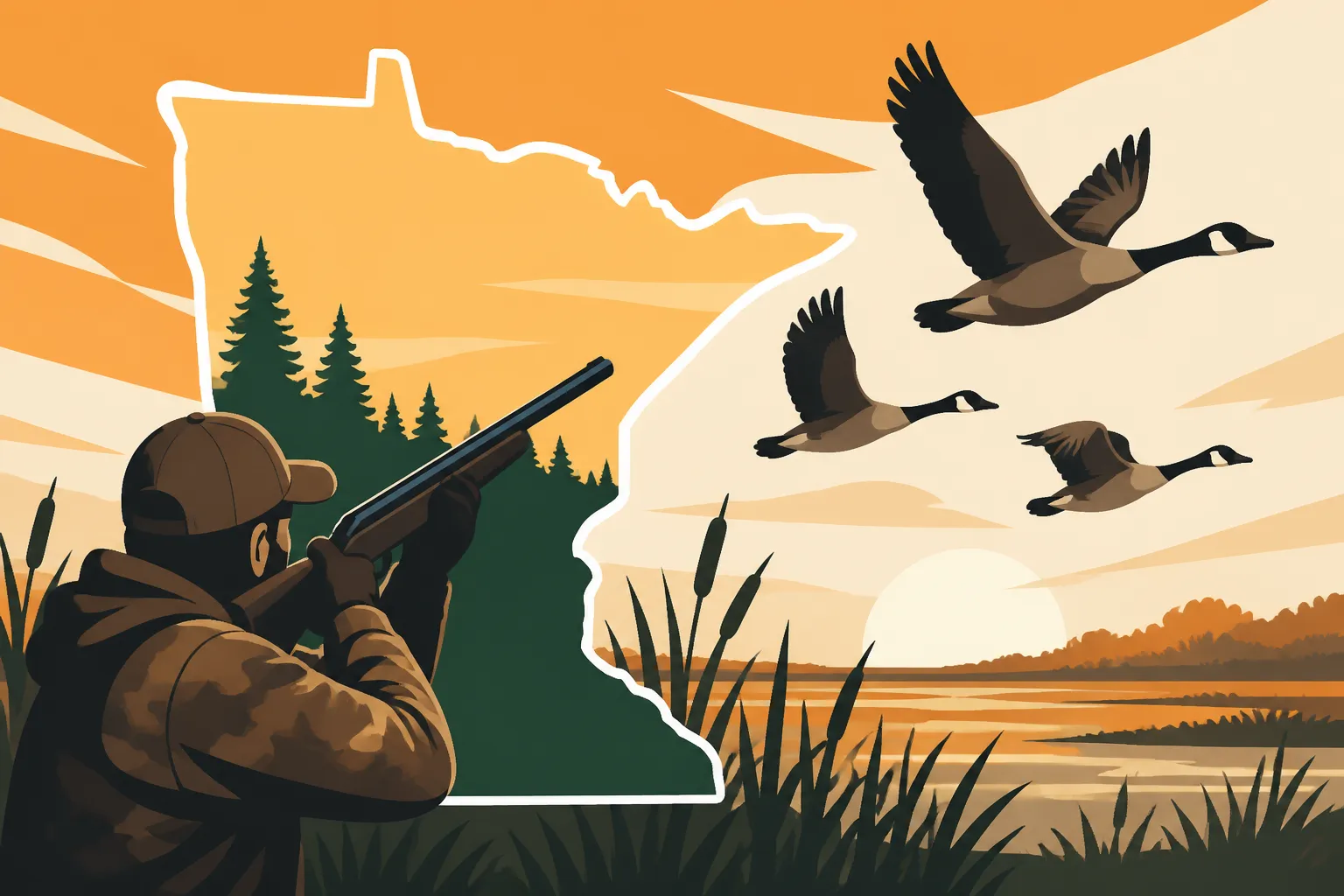
Minnesota Early Goose Season Dates
The anticipation for goose season is real, and for many Minnesota hunters, there's nothing quite like those crisp early September mornings. But let's be honest, trying to keep track of all the different dates, zones, and regulations can feel like trying to herd a flock of geese in a hurricane. It’s a lot to navigate, especially when you just want to get out there and enjoy what our state offers. This comprehensive guide is here to untangle the confusion, laying out Minnesota's early goose season dates, critical requirements, and proven strategies to help you make the most of those first opportunities of the fall.
Understanding Minnesota's Early Goose Season Structure
Minnesota's early goose season isn't just a warm-up act for the main event; it's a strategically designed period that offers fantastic hunting while serving an important wildlife management purpose. It’s a chance to target local, resident Canada geese before the big migrations flood our skies, providing a unique set of challenges and rewards.
The Rationale Behind Early Seasons
You might wonder why we have a separate early season at all. Well, it primarily boils down to managing our robust population of resident Canada geese. These are the birds that breed and raise their young right here in Minnesota, and their numbers have grown significantly over the years. An early season helps to keep these populations in check, especially in areas where they might cause agricultural damage or become a nuisance in urban and suburban environments. It's a win-win: hunters get an exciting opportunity to pursue geese, and wildlife managers can better balance the ecological impact of these large, localized flocks. It's also an excellent way to introduce new hunters to waterfowl, with generally more predictable birds and often milder weather.
Key Dates for the Early Goose Season
For most of Minnesota, the early goose season typically kicks off on September 1st and runs through September 22nd. This three-week window is dedicated specifically to targeting those local Canada geese. It’s a relatively short but incredibly productive period if you do your homework. These dates are carved out to precede the main waterfowl migration, allowing hunters to focus on resident birds without impacting the transient populations passing through our state later in the fall. Always remember that dates can shift slightly year to year based on DNR management decisions, so it's always best to double-check the most current regulations right before the season, perhaps through resources like the DNR's official website or a trusted hunting app like GoHunt.
Distinguishing Early Season from Regular Season
It's really important not to confuse the early goose season with the regular fall waterfowl seasons. While both involve hunting geese, they operate under different sets of rules and are geared towards different bird populations. The early season, as we just covered, is about resident geese and often features a more liberal bag limit to help manage those populations. The regular season, which typically starts later in September or early October, is much broader. It encompasses all geese species (Canada, snow, white-fronted, etc.) and is often broken down into different zones with varying dates and bag limits to align with the migratory patterns of different species passing through Minnesota on the Mississippi Flyway. The methods and strategies you employ might also differ, as early season geese are often less pressured and more focused on local food sources, whereas regular season birds can be warier and tied to major migration corridors. Understanding these distinctions is crucial for staying legal and maximizing your success throughout the fall.
Geographic Zones and Their Impact on Early Goose Hunting
Minnesota is a big state with diverse habitats, and it's no surprise that goose hunting regulations reflect this variety. Different regions face different challenges and opportunities when it comes to managing local goose populations, leading to specific zoning that dictates where and when you can hunt.
Statewide Early Season Zones
The good news is that most of Minnesota falls under a fairly consistent statewide early goose season structure. If you’re hunting outside of the major metropolitan areas, you can generally expect the September 1st to September 22nd dates to apply, along with a standard bag limit. This covers vast swaths of prime hunting ground, from the sprawling farmlands of western Minnesota to the more forested areas up north, and the rolling hills of the central part of the state. These areas might have localized groups of geese, but they typically don’t face the same kind of overpopulation issues seen in denser urban environments. For hunters exploring different parts of the state, knowing these general rules provides a solid starting point for planning.
Metro Canada Goose Zones
Now, here’s where things get a bit more specific. The Twin Cities Metro Canada Goose Zone is a prime example of an area with unique regulations. Because of the sheer number of geese that thrive in our metro parks, golf courses, and retention ponds, this zone often has an extended early season, sometimes running through the entire month of September, and occasionally with even higher daily bag limits. This is a direct response to the need for more intensive management of these localized, often troublesome, populations. If you live near or plan to hunt within the Minneapolis-St. Paul metropolitan area, you absolutely must check the specific DNR regulations for the Metro Zone. Failing to do so could lead to an unfortunate violation, even if you’re following the statewide rules. It's all about balancing human activity with wildlife management in densely populated areas.
Navigating Zone Boundaries
Determining which zone you’re hunting in is paramount. The boundaries of the Metro Canada Goose Zone are clearly defined by the Minnesota Department of Natural Resources (DNR) and usually follow specific county lines or major highways. Don't just guess! An accidental step across a boundary could put you in violation.
Here are some ways to navigate these boundaries:
- DNR Website Maps: The official Minnesota DNR website is your best friend. They provide detailed maps that clearly delineate all hunting zones, including the Metro Canada Goose Zone.
- Hunting Apps: Many modern hunting apps, like GoHunt, offer detailed plat maps and public land overlays that can also show specific hunting zone boundaries. These can be incredibly helpful when you're in the field and need a quick reference. When you’re Scouting With the Minnesota Recreation Compass App or similar tools, pay close attention to the designated zones.
- Local Knowledge: If you’re hunting a new area, talk to local hunters, bait shops, or DNR area offices. They can often provide clarification on specific local quirks or boundaries that might be tricky to discern from a map alone.
Understanding these boundaries is critical for a legal and successful early goose hunt, especially if you plan to hunt areas close to the metro region.
Essential Regulations and Requirements for Early Geese
Beyond knowing the dates and zones, successful and legal early goose hunting in Minnesota hinges on understanding and adhering to a few key regulations. These aren't just arbitrary rules; they're designed to ensure ethical hunting practices, promote safety, and help sustain our waterfowl resources for future generations.
License and Stamp Requirements
Before you even think about setting foot in a field or pushing off in a marsh for early geese, you need to make sure your paperwork is in order. It’s not just a single license; there are a few stamps and certifications you’ll need:
- Minnesota Small Game License: This is your fundamental permit to hunt migratory birds in the state. You can find out more about Minnesota Resident Small Game License Cost on the DNR website.
- Federal Duck Stamp: This is a physical stamp that must be signed across its face and carried with you. It's required for anyone 16 years of age or older to hunt migratory waterfowl. The funds from these stamps go directly to conserving wetland habitats, which benefits all waterfowl species.
- Minnesota Migratory Bird Stamp: Similar to the federal stamp, this state-specific stamp contributes to Minnesota's waterfowl management efforts. While it's generally required for the regular season, you should always verify if it's also needed for the early goose season as regulations can sometimes differ or be updated. Make sure you have your Minnesota Migratory Bird Stamp Cost sorted.
- Harvest Information Program (HIP) Certification: This free certification is vital for all migratory bird hunters. It's how the U.S. Fish and Wildlife Service gathers data on hunter activity and harvest numbers, which is crucial for managing migratory bird populations. You can typically get this when you purchase your license. Don’t forget your Minnesota HIP Certification for Bird Hunters.
You can usually purchase all these licenses and stamps through the Minnesota DNR eLicense system online, at authorized agents, or by phone. Always carry physical proof of your licenses and stamps, or have them readily accessible on your mobile device as allowed by law.
Bag Limits and Possession Limits
The early goose season is often characterized by more generous bag and possession limits compared to the regular season, reflecting the management objective of reducing resident goose populations.
- Daily Bag Limit: For most of Minnesota during the early goose season (September 1-22), the daily bag limit for Canada geese is typically 10 birds. This means you can legally harvest up to ten Canada geese in a single day.
- Possession Limit: The possession limit generally allows you to have up to 30 Canada geese in your possession, whether in your freezer, at your camp, or in transit. This limit applies to all geese taken during the early season.
Self-correction: Always confirm current year's exact limits. The DNR website or current regulations pamphlet is the definitive source.
It's absolutely critical to be aware of these limits. Over-bagging, even by one bird, is a serious violation. Keep a mental (or physical) tally of your birds as you harvest them, especially if you're hunting with a group and splitting the take. These limits are a key component of Minnesota Waterfowl Zones and Seasons.
Legal Shooting Hours and Methods
Just like with any hunting, there are strict rules around when and how you can harvest geese.
- Shooting Hours: During the early goose season, legal shooting hours typically run from 30 minutes before sunrise until sunset. This timing helps ensure fair chase and promotes ethical hunting by limiting opportunities for hunters to take advantage of low light conditions. You can check a sunrise/sunset table for your specific location each day, which is usually available online or through many hunting apps. The DNR also publishes official Minnesota Legal Shooting Hours.
- Legal Methods:
- Non-Toxic Shot: You are required to use non-toxic shot (steel, bismuth, tungsten-alloy, etc.) for all waterfowl hunting in Minnesota, including the early goose season. Lead shot is strictly prohibited for waterfowl. This is for the health of both the birds and the environment.
- Unplugged Shotguns: Shotguns used for migratory bird hunting can hold no more than three shells (one in the chamber, two in the magazine). However, for many early goose seasons, the "plug" requirement (limiting the magazine to two shells) is often removed, allowing hunters to use shotguns with a greater magazine capacity. This is a common feature of early goose seasons but always verify with current regulations. Make sure your shotgun is capable of holding more shells if you plan to take advantage of this.
- Decoys and Calls: Artificial decoys and calls (mouth calls, electronic calls) are generally legal and highly effective tools for goose hunting.
- Motorized Decoys: While allowed for ducks, spinning-wing or other motorized decoys are typically prohibited for goose hunting during the early season. Again, consult the specific DNR regulations.
Following these regulations ensures a safe, legal, and respectful hunting experience for everyone.
Maximizing Your Early Goose Season Success
Early goose season offers some of the most exciting and often fastest-paced waterfowl hunting of the year. With local birds that haven't faced much pressure, smart strategies can lead to some truly memorable hunts. But it's not always as simple as just showing up; a little preparation goes a long way.
Scouting Before the Season
This is, hands down, the most critical step to early season success. Resident geese are creatures of habit, establishing clear feeding and roosting patterns long before the season opens. Your goal is to find those patterns.
- Observe Feeding Areas: Look for geese in cut crop fields (especially corn, peas, or wheat), pastures, and even golf courses or large public parks. Pay attention to specific fields they use consistently. Often, they’ll hit a field hard for a few days until the food source is depleted, then move on.
- Locate Loafing and Roosting Sites: Geese will typically feed in the morning and evening, then move to a loafing area (often a short-cropped grassy area nearby) during midday, and return to a large, open water body (like a lake, a wide river bend, or even a large pond) to roost overnight. Knowing both their feeding and roosting locations allows you to intercept them.
- Utilize Apps and Binoculars: Apps like GoHunt are invaluable for identifying potential private land access or public areas with good habitat. Couple that with a good pair of binoculars or a spotting scope to observe from a distance without disturbing the birds. Remember, you might be looking for early season activity rather than just waiting for the Minnesota Waterfowl Migration Timing.
Successful scouting allows you to set up precisely where the birds want to be, which is half the battle won.
Decoy Spreads and Calling Strategies
Early season geese are often less wary than their late-season counterparts, but that doesn't mean you can skimp on realism or proper technique.
- Realistic Decoy Spreads: You don't necessarily need a massive spread of hundreds of decoys. Often, a spread of two to three dozen quality full-body or shell decoys is more than enough to attract birds that are simply looking for a place to feed or rest. Focus on making the spread look natural, with family groups facing different directions, and leaving a "landing zone" right in front of your blind. Consider using a mix of feeders and sentry decoys.
- Placement is Key: If you're hunting a cut field, place decoys where you've observed geese feeding. If it's windy, set up so birds finish into the wind, coming over your decoys. This strategy is also useful if you are Layout Blind Hunting Minnesota Farm Fields.
- Calling for Local Birds: Early season calling is often less aggressive than what you might use for migrating birds. Focus on subtle clucks, moans, and greetings to sound like a contented flock. Over-calling can spook wary birds. If you're hunting smaller flocks, a single call from a quality goose call like those from Zink or Haydel's can often be more effective than a symphony. Match your calling to the birds' response – if they're coming, don't overdo it.
Field Hunting vs. Water Hunting
Early goose season offers opportunities in both field and water settings, each with its own advantages and challenges.
- Field Hunting: This is often the most common and productive method for early geese, as they spend a lot of time feeding in agricultural fields.
- Pros: Geese are often predictable in their feeding patterns. You can hide effectively in layout blinds or natural cover along field edges.
- Cons: Requires permission on private land, or finding accessible public land with suitable fields. Weather can expose you if cover isn't good. Retrieving downed birds can be tricky in tall stubble.
- Tactics: Set up blinds (layout blinds or panel blinds brushed into the surroundings) in the flight path, downwind of your decoy spread.
- Water Hunting: Geese frequently use lakes, ponds, and river backwaters for loafing and roosting, offering another excellent opportunity.
- Pros: Often less competition on public water access. Decoys can be set up quickly and retrieved by boat.
- Cons: Can be more challenging to conceal yourself. Retrieves on large bodies of water can be difficult without a dog or boat. Waterfowl often raft up in the middle of large lakes, out of range.
- Tactics: Look for smaller potholes, cattail sloughs, or secluded bays on larger lakes. You might even find opportunities Hunting the Mississippi River Backwaters or Minnesota Waterfowl Hunting on Lakes and Potholes. Building a makeshift blind on a point or using a well-camouflaged boat blind can be effective.
Dealing with Pressure and Weather
Even early season birds can get smart quickly if they're pressured, and Minnesota's early fall weather can be surprisingly varied.
- Adapting to Pressure: If your initial honey hole gets hammered, geese will change their patterns. They might start flying later, feeding in different fields, or becoming incredibly shy of decoy spreads.
- Move: Don't be afraid to pull up stakes and find a new spot. Your scouting should have identified several potential locations.
- Downsize Spreads: Sometimes, fewer, ultra-realistic decoys are better for pressured birds.
- Concealment: Ensure your blind is absolutely perfect. Any shine, unnatural outline, or movement will educate pressured birds further.
- Handling Weather: Early September can swing from warm and sunny to chilly and wet.
- Layer Up: Always dress in layers you can shed or add as the day warms up or cools down. A good base layer is essential, even if it feels warm at sunrise.
- Rain Gear: Always pack reliable rain gear. A sudden shower can turn a pleasant morning into a miserable one if you're unprepared.
- Thermals and Wind: Pay attention to wind direction, as geese almost always land into the wind. Also, consider thermals if hunting in hilly terrain, as air currents can affect how geese approach. This is an important consideration in Early Goose Season Tactics in Minnesota.
By staying adaptable and being prepared for whatever early fall throws at you, you can significantly increase your chances of a successful and enjoyable early goose season.
Minnesota Early Goose Season Overview
To help you keep track of the key dates and limits for the early goose season in Minnesota, here's a quick summary. Remember, these are general guidelines, and it's always critical to consult the official Minnesota DNR regulations for the most up-to-date and specific information for your chosen hunting zone.
| Season Type | Start Date | End Date | Daily Bag Limit (Canada Geese) | Possession Limit (Canada Geese) | Notes |
|---|---|---|---|---|---|
| Statewide Early Goose | September 1 | September 22 | 10 | 30 | Most of Minnesota, excluding metro zone. |
| Metro Canada Goose Zone | September 1 | (Typically longer) | 10+ (Check current regulations) | 30+ (Check current regulations) | Special rules for the Twin Cities metro area. Check for extended dates. |
Disclaimer: All dates, bag limits, and regulations are subject to change. This table is provided for informational purposes only. Hunters are responsible for consulting the official Minnesota Department of Natural Resources (DNR) regulations and publications each year before heading afield.
Disclaimer
The information provided in this guide is for general informational purposes only and is not intended to be legal advice. Hunting regulations, seasons, and licensing requirements in Minnesota are subject to change by the Department of Natural Resources (DNR). It is the sole responsibility of every hunter to review and comply with all current federal, state, and local hunting laws and regulations before engaging in any hunting activities. Always refer to the official Minnesota DNR website and current year's hunting regulations for the most accurate and up-to-date information.