Blood Trailing After Dark in Minnesota
There’s almost nothing that sends a colder shiver down a Minnesota hunter’s spine than making what felt like a good shot on a deer as the sun dips below the horizon, only to realize you’re facing the daunting task of blood trailing after dark. The dread of losing an animal, especially one you’ve worked so hard for, is a heavy burden. But with the right mindset, proper gear, and a methodical approach, a successful night recovery is absolutely possible in our diverse Minnesota landscapes. This guide is dedicated to helping you navigate those anxious hours, providing practical strategies and insights to increase your chances of finding your deer.
The Immediate Aftermath and Waiting Game
When that moment arrives, and you've taken a shot close to last light, the adrenaline surge can be overwhelming. It's easy to make rushed decisions, but the first few minutes, even hours, after the shot are often the most critical for a successful recovery, particularly when you know you might be tracking into the dark.
Assessing the Shot and Initial Reaction
The immediate aftermath of the shot is where crucial information is gathered. Try to replay the shot in your mind, not just once, but multiple times. How did the deer react? Did it mule kick, hunch up, or run off like it was untouched? A mule kick often indicates a hindquarter hit, while a hunch or "death run" can point to a gut shot. A deer that bolts with its tail down usually signifies a good vital hit, but if the tail is up, it might be a clean miss or a superficial wound. Listen intently to the sounds of the deer's escape – crashing, then silence, or continued running for a long distance? Note the exact time of the shot; this detail is incredibly important for deciding how long to wait before beginning your search.
Look for any visual cues at the shot site itself. Did you see the deer stumble, fall, or show any immediate signs of a hit? What about the blood, if any, that you can see from your stand or initial approach? The color and consistency of initial blood can tell you a lot. Bright red, foamy blood often indicates a lung hit, while dark red blood with some stomach contents might point to a gut shot. Even if it's minimal, every piece of information helps paint a picture. Resist the urge to immediately jump down and start trailing, as tempting as it is, especially as the light fades.
The Critical Wait: Why Patience is a Virtue and a Necessity
I know, I know. It's getting dark, you're anxious, and every fiber of your being is screaming to go find that deer. But trust me, as a veteran hunter, patience here is truly a virtue – a necessity, even. Rushing in can spook a potentially wounded deer, pushing it further away and making recovery exponentially harder, especially at night. A deer with a non-lethal or gut wound might bed down nearby if undisturbed, allowing the wound to stiffen and the deer to expire or at least become easier to approach. If you push it, that deer might run for miles.
The waiting period varies depending on your assessment of the shot. For a confirmed good lung or heart shot, waiting 30 minutes to an hour might be sufficient, especially if you saw the deer fall within sight. However, for questionable shots – anything that suggests a liver, gut, or muscle hit – you need to wait much longer, typically 4-6 hours, or even overnight. If it's a gut shot, a full 8-12 hours is often recommended, giving the deer time to expire quietly. Cold weather can sometimes help a deer expire faster, but also makes blood congeal quicker, making the trail tougher. If you're confident you hit the vitals, you can often begin your tracking after a shorter wait, but if you have any doubt, extending the wait is always the safer bet. This waiting period is agonizing, but it often makes the difference between recovery and a lost animal. During this time, you can quietly gather your gear and plan your strategy for Blood Trailing After Dark in Minnesota.
Essential Gear for Night Trailing Success
Once the waiting period is over, or you've decided the shot demands immediate action due to environmental factors like impending rain or snow, you need to be prepared. Trailing in the dark isn't something you can do effectively with just your phone's flashlight. Having the right tools makes all the difference.
Lighting Up the Night: Headlamps, Flashlights, and UV Lights
When you're out in the Minnesota woods after sunset, reliable illumination is your absolute top priority. You'll want multiple light sources, not just one. A good, powerful LED headlamp is indispensable; it keeps your hands free for holding your weapon (if you choose to carry it unloaded, for safety), marking the trail, or navigating tough terrain. Look for headlamps with multiple brightness settings and a long battery life. Brands like Petzl or Fenix offer excellent options. I personally like one with a red light setting for minimal disturbance and maintaining night vision if I need to look away from the immediate trail for a moment.
In addition to your headlamp, carry a high-lumen handheld flashlight. This allows you to direct a concentrated beam to pinpoint specific blood drops, scan ahead, or illuminate larger areas more intensely. Streamlight and SureFire are popular choices for their robust construction and brightness. The handheld light is also your backup if your headlamp fails. Finally, consider a UV blood tracking light. While not always a magic bullet, these specialized lights can sometimes make old or sparse blood glow, especially on leaves, grass, or dark soil where it might otherwise be invisible to the naked eye. They work best in completely dark conditions, so turn off your other lights when using them. Always carry extra batteries for all your devices, and test them before heading out.
Mapping and Marking: Tools for Staying Oriented and Documenting
Losing your way in the dark while focused on a blood trail is a real danger, especially in expansive areas like the Chippewa National Forest or the Big Woods. Modern technology has truly revolutionized this aspect of hunting. Before you even step into the woods, having a reliable mapping app like GoHunt can be a game-changer. Mark your stand location, the shot location, and any initial blood finds immediately. This digital breadcrumb trail is invaluable for keeping you oriented and showing you the deer's travel path. You can drop pins for every significant blood find, creating a visual map of the trail. This is a far cry from the old days of just hoping you remembered that bent twig.
Beyond digital tools, physical markers are still incredibly useful. Carry plenty of biodegradable flagging tape or small, brightly colored ribbons. Tie them to branches above each significant blood trail find. This not only marks the last known blood but also helps you visualize the deer's direction of travel and allows you to easily find your way back if you lose the trail. A simple compass, even if you rely on GPS, is a smart backup, especially when trying to maintain a consistent direction of travel across varied terrain. Remember, documenting every step, digitally and physically, dramatically increases your chances of success and prevents you from getting turned around. If you’re ever in an unknown area, take time for Scouting Minnesota Public Land Before Season to familiarize yourself with the terrain.
Communication and Safety: Buddy Systems and Emergency Prep
Hunting in Minnesota, especially alone and after dark, comes with inherent risks. Never go blood trailing alone at night if you can avoid it. A buddy system is crucial for safety and effectiveness. Two or three sets of eyes are always better than one for spotting sign, and having another person can provide moral support during a frustrating search. If you absolutely must go alone, always tell someone exactly where you are going and when you expect to return. Share your GoHunt map pins with them if possible.
Carry a fully charged cell phone. While service can be spotty in remote parts of northern Minnesota, it’s essential for emergencies. A two-way radio can be helpful if you’re with a partner and splitting up to search. Beyond communication, a basic first-aid kit is non-negotiable. Slips, falls, cuts, and scrapes are much more likely when navigating unfamiliar terrain in the dark. Carry a knife, fire starter, and some emergency food and water – the same essentials you’d take if you were Hunting the Boundary Waters Canoe Area. The emotional toll of a difficult trail can be immense, and it’s easy to become disoriented or make poor decisions under pressure. Knowing your physical limits and having a plan for an emergency are vital components of a safe and successful night recovery.
| Gear Category | Essential Items | Purpose |
|---|---|---|
| Illumination | High-Lumen Headlamp (LED) | Hands-free, general navigation, broad illumination |
| Handheld Flashlight (high-lumen, focused beam) | Pinpointing specific drops, scanning distance | |
| UV Blood Tracking Light (optional but helpful) | Highlighting blood on difficult surfaces | |
| Extra Batteries (for all lights) | Crucial backup power | |
| Navigation & Marking | Smartphone with Mapping App (e.g., GoHunt) | GPS tracking, marking finds, aerial photos |
| Physical Compass (backup) | Directional orientation, especially off-grid | |
| Biodegradable Flagging Tape/Ribbons | Marking blood trail, direction of travel | |
| Pen/Paper or Digital Notes | Documenting time, observations, and decisions | |
| Safety & Comfort | Fully Charged Cell Phone | Communication, emergency calls |
| Two-Way Radios (if with a partner) | Team communication, especially out of cell range | |
| Basic First-Aid Kit | Treating minor injuries, essential for remote areas | |
| Water & Snacks | Hydration and energy, essential for long searches | |
| Knife/Multi-tool | General utility, processing deer if found | |
| Blaze Orange Vest/Hat (even at night, for safety) | Visibility to other hunters (if present) |
Strategic Approaches to Trailing in the Dark
Successfully blood trailing after dark isn't just about having the right gear; it's about employing smart strategies that maximize your chances of success while minimizing the risk of losing the trail. The process becomes a meticulous, slow-motion puzzle.
Reading the Sign: Blood, Tracks, and Broken Branches
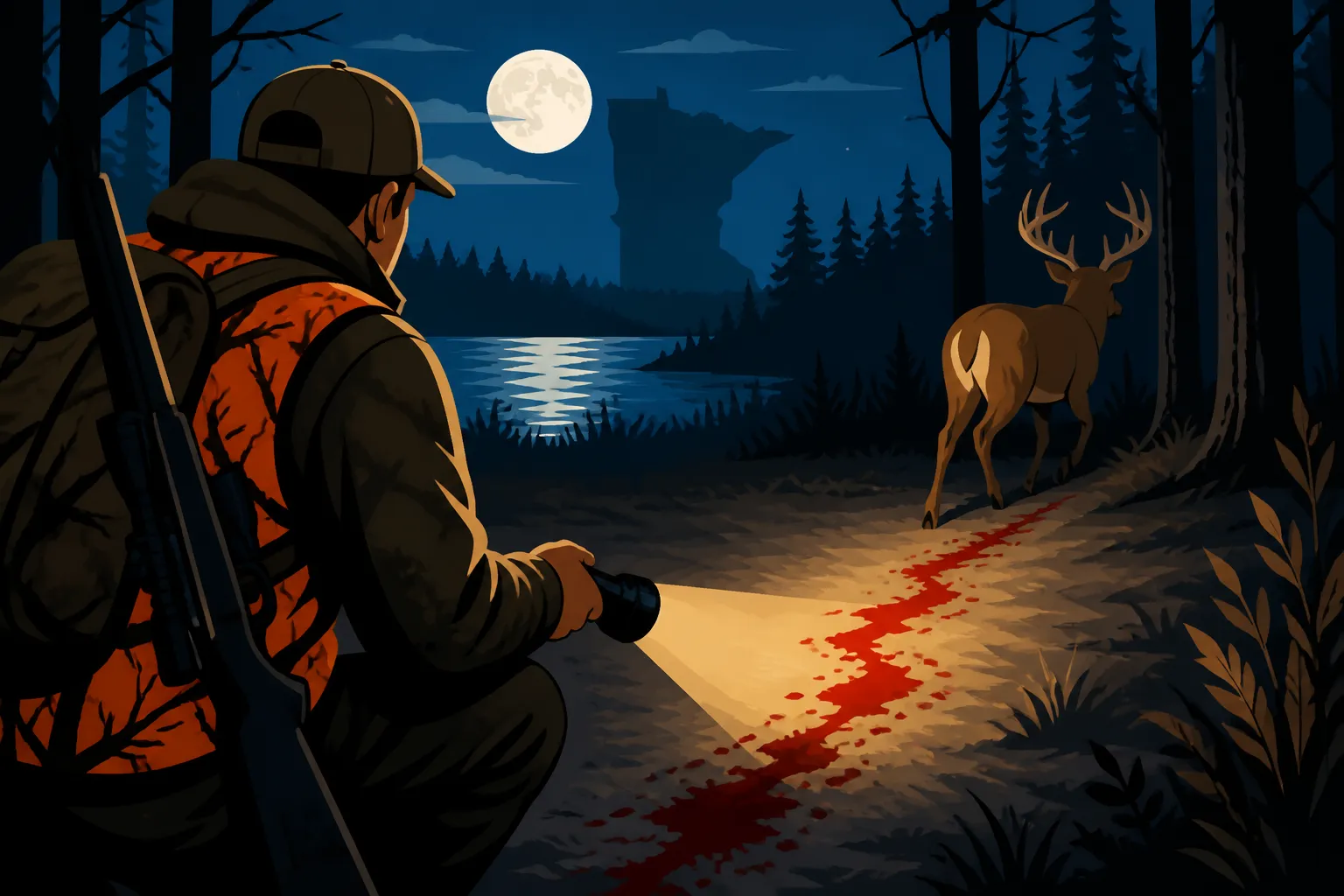
When the sun goes down, blood looks different. Under a bright white LED light, what looked dark red in daylight might appear almost black. Foamy blood from a lung shot will still appear frothy, but the color might be harder to discern. Look for spatter patterns – broad splashes often indicate a running deer, while small, consistent drops might mean a walking deer. Always focus on the direction of the spatter; the larger side of the blood drop points in the direction of travel. When you find a drop, mark it with flagging tape, then systematically sweep your light in the direction you believe the deer traveled, looking for the next drop. This is a slow, painstaking process.
Don't just look for blood. Deer leave other clues. Tracks can be incredibly difficult to see in the dark, but if you're in softer soil or fresh snow, they can be invaluable. Even if you can't see the entire track, look for disturbed leaves, bent grass, or impressions in the mud. Tracking a Deer in Fresh Minnesota Snow becomes a whole different ballgame with a headlamp on. Also, pay attention to "sign of movement" – broken twigs, rubbed leaves, or scuff marks on trees. A deer crashing through thick brush will often leave a path, even if there’s no visible blood. Sometimes, these subtle clues are the only thing you have to go on, especially with a low-volume bleed. Even with the best tools, like your GoHunt app showing you every contour, the uncertainty of a lost trail is gut-wrenching.
Grid Searches and Systematic Patterns
So, you've found a few drops, marked them, and then… nothing. The blood trail vanishes. This is where many hunters panic and start aimlessly wandering. Don't. If you lose the trail, return to the last confirmed spot of blood and mark it clearly. From there, it's time to implement a systematic search pattern. A common and effective method is the "grid search." Imagine a wagon wheel, with the last blood as the hub. Start by walking in a spiral pattern outwards from the last blood, slowly expanding your search area. Alternatively, you and your partner (if you have one) can fan out, walking parallel lines away from the last sign, sweeping the ground with your lights.
Another technique is to form a line and walk slowly, shoulder to shoulder, perpendicular to the deer's suspected direction of travel. This is particularly useful in open areas or when you suspect the deer made a sharp turn. In thick cover, it’s often more effective to have one person stay on the last blood while the other circles ahead in expanding arcs, moving slowly and deliberately. Communication is key here. Shouting "Blood!" when a new sign is found brings everyone back to that spot, and the process starts anew. Remember, patience is your greatest ally. Don't be afraid to take breaks, clear your head, and then return to the last known sign with fresh eyes. This methodical approach is far more productive than frantic, disorganized searching.
When to Call It Quits Temporarily and Resume at Dawn
Sometimes, despite your best efforts, the trail simply disappears, or the sign becomes so sparse that you're barely making progress. This is the hardest decision for any hunter: knowing when to back out and wait for daylight. Pushing a deer with a questionable hit through the night dramatically reduces your chances of recovery. If you’re consistently going more than 50-75 yards without finding any sign, or if the blood suddenly stops, it’s often best to pause. Mark the last confirmed blood spot meticulously with multiple pieces of flagging tape and GPS coordinates on your GoHunt app. Note the time and date.
Returning at dawn offers several advantages. First, the daylight allows you to see subtle clues that are invisible at night – a single drop of blood, a faint track, a disturbed leaf that was overlooked in the darkness. Second, the absence of your presence for several hours can allow the deer to expire quietly if it's mortally wounded. Third, you'll be rested and thinking more clearly, free from the mental exhaustion and fear that often accompanies night trailing. If the weather forecast calls for rain or heavy snow overnight, however, that complicates things significantly. In those situations, you might push a little harder, knowing the weather could wash away the trail. But generally, if the trail is truly lost, don’t hesitate to return the next morning. It's a testament to your ethics as a hunter to prioritize recovery over pushing a potentially non-lethal hit further into unknown territory. When you resume, consider new strategies like following game trails or likely escape routes in the direction the deer was headed, keeping in mind the lessons learned from Finding Sign in Minnesota Big Woods.
Special Considerations for Minnesota's Landscape and Regulations
Minnesota's diverse terrain and specific regulations add unique layers to the challenge of blood trailing after dark. Understanding these nuances is key to a safe and legal recovery.
Navigating Minnesota's Diverse Terrain at Night
Our great state of Minnesota offers a wild mix of hunting environments, and each presents its own set of challenges for night trailing. In the sprawling northern forests, characterized by dense stands of popple, spruce, and thick alder bottoms, visibility is already limited in daylight. At night, it becomes an almost impenetrable maze. A deer can disappear into this cover in seconds, and finding a tiny blood drop among fallen leaves and needles requires extreme concentration. When you're trying to locate Where Big Woods Bucks Bed in Minnesota, it's easy to get turned around even in daylight. In these areas, relying heavily on your GPS via GoHunt and marking every 5-10 yards with flagging tape is non-negotiable. Watch out for hidden obstacles like blowdowns or beaver ponds that can easily lead to a fall in the dark.
Moving south, we hit the transition zones of agricultural land interspersed with woodlots, cattail sloughs, and river bottoms. A deer that runs into a thick cattail slough at night can be incredibly difficult to find. The water can dilute or obscure blood, and the dense vegetation makes physical movement strenuous. This is where Recovering a Deer From a Frozen Slough can become a truly intense undertaking. In open fields, blood can be sparse on dry stubble, but if the ground is soft, tracks might be easier to spot. The bluff country of Southeast Minnesota, with its steep ravines and rocky outcrops, poses serious risks of falls and injuries in the dark. Always consider the terrain you're in and adjust your pace and caution accordingly. Wear sturdy boots with good ankle support, even if it feels like overkill.
Legalities and Ethics of Night Recovery in Minnesota
Navigating the legal and ethical landscape of blood trailing after dark in Minnesota is just as important as the physical act of tracking. First and foremost, understand that in Minnesota, using artificial lights to locate wounded game is generally legal. However, using artificial lights to hunt game (i.e., taking an animal) after legal shooting hours is strictly prohibited. The distinction is crucial. You can use your headlamp and flashlight to follow a blood trail, but your firearm or bow must be unloaded and encased, or at least unstrung for a vertical bow, during this time. Carrying your weapon while actively trailing is typically fine, but it needs to be made clear that your intent is recovery, not shooting.
If the deer crosses onto private land where you do not have permission, the law requires you to obtain permission from the landowner before pursuing the animal. Even if it's 2 AM, it's a critical step. Attempting to recover game without permission can lead to trespassing charges, which nobody wants. Sometimes, a quick phone call to the landowner (if you have their number) can resolve the issue. If not, you might have to wait until morning to contact them. Ethical hunting dictates that every effort should be made to recover wounded game. If you've exhausted all options, including bringing in experienced trackers or a tracking dog (where legal), and the deer is not found, contact your local DNR conservation officer. They can offer guidance, and in some cases, may even assist with the search or provide specific advice based on the situation. Never abandon a deer without making a thorough effort, but also know when you've done all you can do, ethically and legally. Always adhere to Minnesota's Minnesota Blaze Orange Requirements even when trailing, as an added layer of safety in case other hunters are still out.
Disclaimer
Please note that this guide provides general information and strategies for blood trailing after dark in Minnesota. Hunting regulations and best practices can change, and specific situations may require different approaches. Always consult the most current Minnesota Department of Natural Resources (DNR) regulations and guidelines. Your safety and the ethical recovery of game are paramount.