Deer Carts on Forest Roads
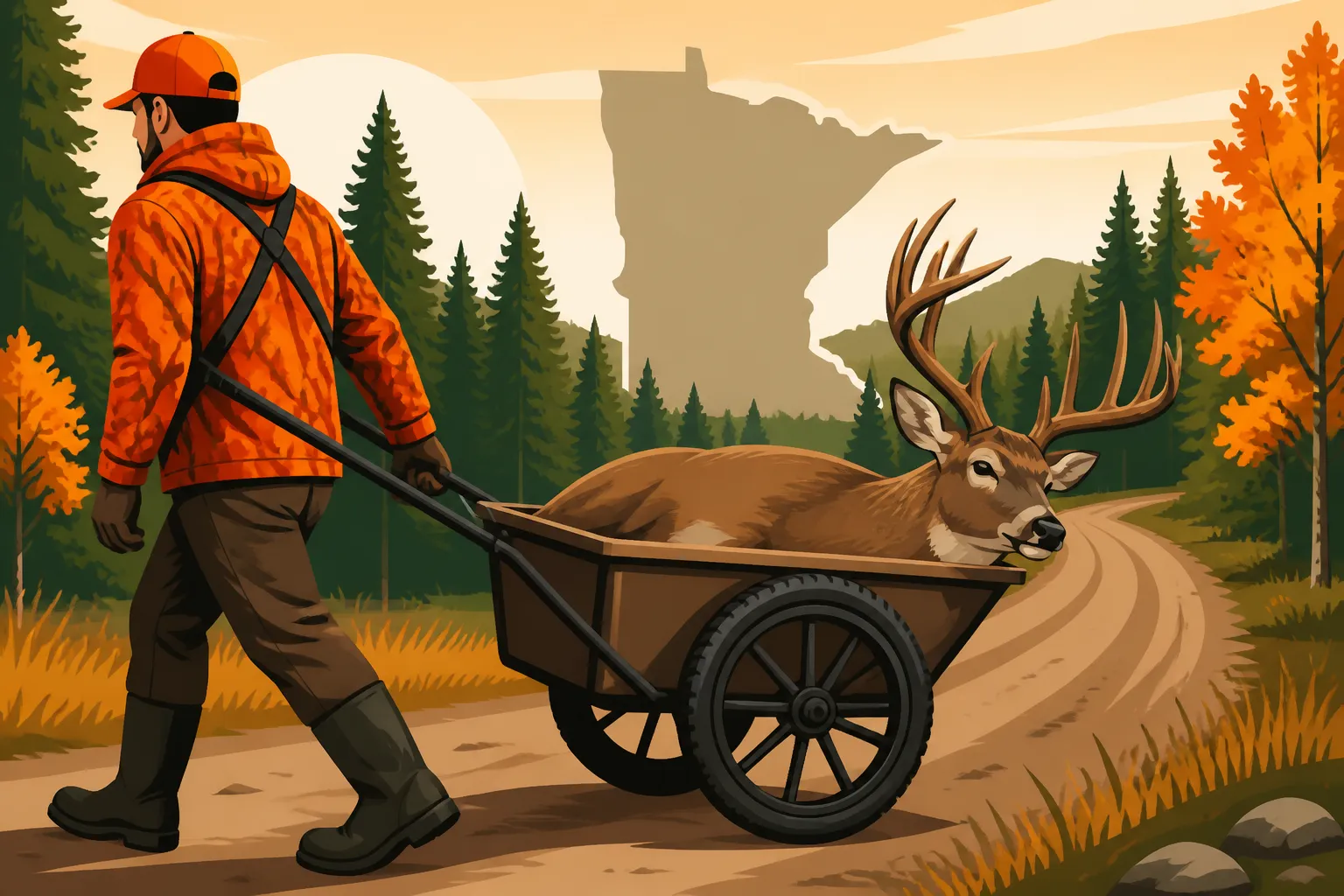
There's nothing quite like the immense satisfaction of a successful hunt, but that euphoria can quickly turn into a grueling slog when you're faced with the daunting task of retrieving a deer from deep within Minnesota's dense woods, especially when that journey involves miles of uneven, rutted forest roads. Many of us have been there, muscles screaming, pack straps digging in, dragging a heavy deer by hand, wishing for a better way. This guide is all about making that post-harvest haul less of a nightmare and more of a manageable operation by understanding how to effectively utilize deer carts on those rugged forest roads.
The Ubiquitous Challenge of Deer Retrieval in Minnesota
Minnesota hunting, especially on public land, often means covering serious ground. We're not always hunting manicured private properties with easy ATV access. More often than not, you're venturing into vast state forests, WMAs, or national forest lands, where vehicle access is restricted and the terrain can be unforgiving. The sheer physical toll of dragging a deer by hand, sometimes for miles, can be a hunt-ending experience in itself, leading to exhaustion, injury, or even lost game if you simply can't get it out before dark or spoilage sets in.
Why Traditional Dragging Fails on Forest Roads
Let's be honest, dragging a deer by its antlers or a rope, especially after the initial excitement wears off, is a miserable affair. When you're in the deep timber, breaking brush, it's tough, but somehow, forest roads can feel even worse. They're not smooth pathways; they're often a mix of loose gravel, deep ruts from utility vehicles, exposed rocks, and muddy sections that seem to swallow your boots. A deer's hide, while durable, creates immense friction against these surfaces. Every rock acts as an anchor, every patch of mud sucks it down.
Imagine trying to drag a 150-pound deer, dead weight, for two miles on a road that looks like it's been through a rock quarry. Your back aches, your shoulders burn, and every time the deer catches on something, you lose precious momentum. This is compounded if you're alone. The friction, the constant starting and stopping, the sheer effort required to navigate around potholes or through dense roadside cover, it all adds up. Plus, there's the very real concern for proper meat care. Dragging through dirt, mud, and leaves can contaminate the hide, which then can transfer to the meat, especially if you've already Field Dressing a Deer in Cold Weather and exposed some of the carcass. Traditional dragging is almost a guaranteed way to make a tough situation worse.
The Unique Demands of Minnesota's Public Land Access
Minnesota's public hunting lands offer incredible opportunities, but they come with their own set of access challenges. Many of our prime deer hunting spots, especially in the northern Best Minnesota Ground for Public Land Deer, are accessed via networks of minimum-maintenance forest roads, old logging trails, or designated vehicle routes that might only allow non-motorized traffic past a certain point. This means your truck or ATV might only get you so far, and the rest is on foot.
You might kill a deer a quarter-mile off a main forest road, which sounds easy enough until you realize that quarter-mile is across a swampy section or up a steep embankment to get to the road itself. Then, once on the road, it might be a three-mile hike back to your parked vehicle. These aren't paved paths; they're typically gravel, two-track dirt paths, or even just cleared lanes through the trees. They can be incredibly wet and soft after a rain, turning into sticky mud traps, or frozen solid and uneven in late season. Plus, you need to be acutely aware of Vehicle Rules on Minnesota Public Land as not all forest roads are open to all types of vehicles. When you're trying to minimize Hunting Pressure on Minnesota Public Land, you often find yourself walking further away from these accessible points, making the retrieval even longer and more arduous. This is where a deer cart truly shines, bridging the gap between where your vehicle must stop and where your deer lies.
Understanding Different Types of Deer Carts for Forest Road Use
So, you're ready to ditch the dragging rope and invest in a deer cart. Smart move! But not all carts are created equal, and what works best depends on your hunting style, the typical terrain you navigate, and how much assistance you usually have on a retrieve. Let's break down the main categories you'll encounter and what each offers for those Minnesota forest roads.
Two-Wheeled Carts: The Workhorses of Deer Retrieval
When most hunters picture a deer cart, they're probably thinking of a two-wheeled model. These are by far the most common, and for good reason. They're designed to act as a dolly for your deer, allowing you to lift one end of the animal and balance the weight over the axle. This significantly reduces the amount of friction and weight you're personally hauling, transferring it to the cart's wheels.
Pros of Two-Wheeled Carts:
- Maneuverability: With only two wheels, they're generally easier to steer through tighter spaces, around trees, and over smaller obstacles you might encounter even on a forest road. They pivot more easily than four-wheeled versions.
- Lighter Weight: Many two-wheeled carts are constructed from aluminum, making them relatively light, which is a huge advantage when you're packing it in or loading it into your truck. This also means less dead weight to pull when the cart is empty.
- Single-Hunter Friendly: While two people make any retrieve easier, a good two-wheeled cart is often manageable by a single hunter, assuming a reasonable-sized deer and moderate terrain. This is crucial for those solo hunts where you're truly on your own.
- Foldable Options: Many popular models are designed to fold flat, making them much easier to store in your garage or transport in the bed of a pickup or even the trunk of a larger car.
Cons of Two-Wheeled Carts:
- Balance is Key: The biggest challenge is balancing the load. If the deer isn't centered correctly, the cart can be awkward to handle, especially on uneven ground, and it can tip over if you hit a rut or rock just wrong.
- Load Limits: While they can handle surprisingly heavy deer, there's a practical limit to how much a single person can effectively balance and pull, especially on a longer haul. Larger bucks might push these limits.
- Less Stable: On very steep side hills or extremely rough sections of road, they are inherently less stable than a four-wheeled cart.
For many Minnesota hunters heading out on state forest roads or old logging trails, a well-built two-wheeled cart is the perfect compromise between portability and pulling power. It's truly a game-changer compared to dragging.
Four-Wheeled Carts: Stability and Heavier Loads
If you often hunt with a partner, frequently take larger deer, or prioritize absolute stability over maximum maneuverability, a four-wheeled deer cart might be your preferred option. These carts function more like small wagons, distributing the weight over four points, offering a much more stable platform.
Pros of Four-Wheeled Carts:
- Superior Stability: This is their standout feature. With four points of contact, they are far less likely to tip, even on rough, uneven forest roads or traversing gentle slopes. This makes them ideal for heavier loads or less-than-perfect terrain.
- Handles Heavier Loads: The increased stability means they can typically carry heavier deer, or even multiple smaller animals, more easily than a two-wheeled cart. If you're hunting an Intensive Permit Area and aiming for multiple deer, this can be a huge benefit.
- Easier for Two Hunters: While one person can pull them, a four-wheeled cart truly shines with two people. One can pull from the front, and another can push or guide from the back, making light work of even the most challenging retrieves.
- Less Balance Required: You don't need to constantly adjust your balance point as much as with a two-wheeled cart, which can reduce fatigue over long distances.
Cons of Four-Wheeled Carts:
- Heavier and Bulkier: Generally, four-wheeled carts are heavier and take up more space, even when folded. This can make them harder to transport in a smaller vehicle or pack into a remote spot.
- Less Maneuverable: The longer wheelbase and wider stance can make them harder to navigate in very tight timber or around sharp turns on narrow forest paths. They don't pivot as easily.
- Can Be More Expensive: Due to more materials and complex construction, they can sometimes come with a higher price tag.
If you find yourself often needing to Dragging a Deer Out of a Slough or from particularly challenging terrain where stability is paramount, and you usually have a hunting buddy along, a robust four-wheeled cart could be a fantastic investment.
Specialized Options: Game Sleds and Powered Carts
Beyond the standard two and four-wheeled carts, there are a couple of specialized options that cater to very specific needs or conditions in Minnesota.
Game Sleds:
While not technically a "cart," game sleds deserve a mention because they are excellent for specific Minnesota conditions, particularly during late season. A sturdy plastic sled can be an absolute lifesaver when there's snow on the ground, making deer retrieval almost effortless compared to dragging. Even in muddy, wet conditions without snow, a sled can provide a low-friction surface that slides over obstacles more easily than dragging directly on the hide. They're lightweight, inexpensive, and can be used in conjunction with a cart if you need to get the deer through dense timber to a forest road first. For more on this, check out Sleds and Drags for Snow Country.
Powered Carts:
For hunters with physical limitations, those who frequently take very large game, or tackle extremely rugged, remote terrain, powered carts are an emerging option. These carts often feature electric motors and all-terrain tires, essentially acting as miniature, walking-speed ATVs for your deer.
Pros of Powered Carts:
- Minimal Physical Effort: They do the heavy lifting (or pulling), making retrieval possible for those who otherwise couldn't manage it.
- Handles Extreme Terrain: Many are designed to navigate incredibly rough ground, steep inclines, and deep mud that would be impossible with a manual cart.
Cons of Powered Carts:
- Cost: They are significantly more expensive than manual carts.
- Weight and Bulk: They are much heavier and often larger, requiring more effort to load and unload from a vehicle.
- Battery Life/Fuel: You need to manage battery life for electric models or fuel for gas models, which adds another layer of complexity.
- Public Land Restrictions: This is a big one for Minnesota. Many public hunting areas have strict rules against motorized vehicles of any kind, or limit them to designated trails. Always check the specific WMA, State Forest, or National Forest rules regarding motorized game retrieval devices before investing. You might be able to use them on private land, but their utility on many public forest roads could be limited by regulation.
Here's a quick comparison of the most common options:
| Feature | Two-Wheeled Cart | Four-Wheeled Cart | Game Sled |
|---|---|---|---|
| Maneuverability | High, good for tight spaces | Moderate, wider turns | High (for specific conditions) |
| Stability | Moderate, requires balance | High, very stable | High (on snow/mud) |
| Load Capacity | Good for single deer, moderate weight | Excellent for large/multiple deer | Variable, depends on size, conditions |
| Terrain Suitability | Forest roads, moderate trails | Forest roads, rougher trails | Snow, mud, soft ground |
| Portability | Often foldable, lighter | Bulkier, heavier | Very light, easy to stack |
| Single Hunter Use | Yes, manageable | Yes, but easier with two | Yes, manageable |
| Best Conditions | General-purpose, variable ground | Heavy loads, uneven ground, two hunters | Snow cover, very muddy conditions |
Key Features to Look For in a Deer Cart for Minnesota Forest Roads
When you're sifting through the options for a deer cart, it's easy to get caught up in flashy marketing. But for the realities of Minnesota's forest roads, you need to focus on practical features that genuinely enhance durability, functionality, and ease of use. This isn't just about moving a deer; it's about investing in a tool that won't fail you miles from your truck.
Wheel Design and Tire Type
The wheels are arguably the most critical component of any deer cart, as they bear the brunt of the load and the abuse of the trail.
- Wheel Diameter: Larger diameter wheels are your best friend on rough forest roads. They roll over obstacles like rocks, roots, and ruts much more easily than small wheels, which tend to get stuck or bounce violently. Think mountain bike wheels versus stroller wheels. Aim for wheels with a diameter of at least 16 inches, but bigger is often better if you can manage the overall cart size.
- Tire Type:
- Pneumatic (Air-Filled) Tires: These are very common and often preferred for their cushioning effect. The air in the tire acts as a shock absorber, making for a smoother ride over bumps and reducing the jarring impact on you. They also provide excellent traction, especially with a good tread pattern, which is crucial for slippery leaves, mud, or loose gravel. The downside? Flats. Always carry a small repair kit or at least be prepared to limp out.
- Solid Rubber/Foam-Filled Tires: Some carts come with solid rubber or foam-filled tires. The huge advantage here is that they'll never go flat. This provides incredible peace of mind when you're deep in the woods. The trade-off is often a slightly harsher ride, as they don't absorb shocks as well as pneumatic tires, and they can sometimes be heavier. However, for the sheer reliability on remote forest roads, many hunters opt for these, especially if they have good ground clearance.
- Tread Pattern: Look for aggressive, knobby treads, similar to what you'd find on an ATV or mountain bike tire. These will grip better on loose surfaces, mud, and wet leaves, preventing the wheels from spinning out when you're pulling uphill or through a soft spot.
Frame Construction and Durability
A cart is only as good as its frame. It needs to withstand the weight of a deer, the stresses of uneven terrain, and the occasional bump against a tree.
- Material:
- Aluminum: Lightweight and corrosion-resistant, aluminum frames are popular for their portability. They're strong enough for most deer, but inspect the welds carefully for quality. A good aluminum frame will have sturdy, clean welds.
- Steel: Heavier than aluminum, but incredibly robust and durable. Steel frames can take more abuse and typically have higher weight capacities. The trade-off is the extra weight you'll be pulling and transporting. If you're looking for something that will last a lifetime and handle the biggest bucks, steel is often the way to go. However, ensure it has a good powder coat or paint finish to prevent rust, especially in Minnesota's wet and snowy conditions.
- Weight Capacity: Check the manufacturer's stated weight capacity. Don't just consider the average size of a deer; think about the absolute largest you might take. A mature Minnesota buck can easily weigh 200+ pounds field dressed. You want a cart that can comfortably handle that, plus any additional gear you might strap on.
- Foldability: Many carts are designed to fold up for easier transport and storage. Look for robust locking mechanisms or pins that securely hold the cart in its open, ready-to-use position. Flimsy folding joints can quickly become a weak point. Ensure that when folded, it's compact enough to fit in your vehicle alongside your other Packs for a Day on Public Land and hunting gear.
Securing Your Trophy: Straps and Load Management
Once you've got your deer on the cart, the last thing you want is for it to shift or fall off, especially when navigating tricky terrain.
- Integrated Straps vs. Tie-Down Points: Some carts come with integrated straps that are permanently attached. These can be convenient, but make sure they are heavy-duty and easy to adjust. More often, carts will have multiple tie-down points (bars, loops, or slots) where you can attach your own ratchet straps or bungee cords. Having good, solid tie-down points is often preferable, as it allows you to use stronger, more reliable straps of your choosing.
- Load Placement and Balance: This applies particularly to two-wheeled carts. The design should facilitate balancing the deer over the axle, with the heaviest part (the chest cavity) centered. Some carts have a slightly offset axle to naturally accommodate this. Practice loading your cart before you actually need it in the field.
- Antler Management: If you're lucky enough to tag a large-racked buck, consider how the antlers will sit on the cart. You don't want them dragging on the ground or catching on roadside brush. A cart with a slightly elevated platform or additional tie-down points at the front can help you secure the antlers in an upright position.
- Ease of Cleaning: After a successful retrieve, your cart will likely be covered in blood, mud, and hair. A simple design with minimal nooks and crannies will make cleanup much easier, which is important for hygiene and maintaining your gear.
Investing in a deer cart with solid wheels, a durable frame, and reliable load-securing options will pay dividends for years, turning a dreaded chore into a manageable part of your Minnesota hunting tradition.
Practical Application: Using Your Deer Cart Effectively on Minnesota Forest Roads
Having the right deer cart is only half the battle. Knowing how to use it effectively, from pre-hunt planning to navigating the challenges of retrieval, is what truly makes a difference. This is where smart tactics and a bit of foresight can save you a lot of sweat and potential heartache.
Pre-Hunt Scouting and Route Planning
Before you even step foot in the woods with your bow or rifle, you should be thinking about extraction. This is especially true when you're targeting areas accessed by forest roads.
- Mapping Apps are Your Friend: Modern mapping applications like GoHunt or onX Layers for Minnesota Land Status are invaluable tools for this. Before opening day, use them to identify potential hunting areas and, crucially, all the forest roads and legal access points.
- Identify Access Points: Pin where you can park your vehicle and where you expect to encounter a forest road if you have to track a deer. Understand the Finding Open Forest Roads for Access rules for your specific hunting area. Some roads might be open to full-size vehicles, others only ATVs, and some might be gated off for foot traffic only. Knowing these limitations beforehand will dictate how far you might need to push your cart.
- Pre-Scout Extraction Routes: If you're still-hunting a ridge or planning a Deer Drives With Three or Four Hunters, visualize the path of least resistance back to a road. Are there deep ditches, thick alder swamps, or major elevation changes between your likely hunting spot and the nearest cart-friendly road? Sometimes, an extra quarter-mile walk initially can save you miles of painful dragging later.
- Note Obstacles: As you Reading Aerial Photos for Big Woods Deer or scout on foot, note any significant obstacles on the forest roads themselves: large washouts, downed trees that might block passage, or particularly muddy sections that could be a nightmare. Knowing these ahead of time can help you plan detours or prepare for extra effort. This foresight is critical, especially when considering How Far to Walk From a Forest Road to get to your prime hunting spot.
Loading and Securing Your Deer
The moment of truth: you've got your deer, you've got your cart. Now, how do you get one onto the other without hurting yourself or damaging your trophy?
- Field Dress First: Always field dress your deer where it falls (or as close as practically possible) before attempting to load it onto the cart. This significantly reduces the weight and makes the animal much easier to handle.
- Utilize Leverage: Don't try to deadlift a deer straight onto the cart. If you're alone, position the cart alongside the deer. Grab the antlers or front legs and pull the deer's chest onto the cart first, using the cart's wheels as a fulcrum. Then, lift the rear of the deer and slide it into position. This "roll and pivot" method is much easier on your back. If you have a partner, one person can lift the front while the other lifts the rear.
- Balance is Key: Once on the cart, center the deer's heaviest mass (usually the chest cavity) directly over the axle(s). For two-wheeled carts, this is critical for ease of pulling and preventing tipping. For four-wheeled carts, good centering still aids in overall stability.
- Secure Tightly: Use heavy-duty ratchet straps, not bungee cords, to cinch the deer securely to the cart frame. Cross the straps to prevent side-to-side shifting. Pay attention to antlers; ensure they are not dragging or getting caught. You want the deer to be an integrated part of the cart, not just sitting on top. A loose deer will make for a miserable, difficult, and potentially dangerous retrieve.
Navigating Challenging Terrain
Even forest roads can be challenging. Mud, ruts, logs, and inclines all present their own unique hurdles.
- Mud and Soft Ground: If you encounter deep mud, try to stay on the highest ground, often the crown of the road. Maintain momentum, but don't try to power through if the wheels are sinking. Sometimes, a short, quick burst of speed can get you through a soft spot, but be prepared to stop and lift/pull if the cart bogs down. If it's truly stuck, you might need to partially unload the deer, pull the cart through, and then reload.
- Over Logs and Rocks: Large obstacles require a gentle but firm approach. Lift the front of the cart to get the wheels over the obstacle, then pull while pushing down on the handles to help the rear clear. If it's a very large log, you might need two people, or even to briefly remove the deer from the cart to get the cart over, then reload.
- Inclines (Uphill): This is where a cart truly earns its keep, but it's still hard work. Lean into the pull, use your leg muscles, and take short, controlled steps. If it's steep, don't be afraid to take breaks. If you have a partner, one can pull while the other pushes from the rear, providing critical leverage.
- Declines (Downhill): Going downhill can be just as tricky, especially with a heavy load. Use the cart's handles to control its descent, almost acting as brakes. Let the cart lead, but don't let it run away from you. Keep a firm grip and watch your footing. If it's steep and loose, consider walking alongside the cart, bracing it from the side.
- Crossing Ditches/Culverts: Often, forest roads will have ditches on either side for drainage. Cross these at the shallowest, most stable point. You may need to lift the cart slightly to clear the wheel from the ditch.
Maintenance and Storage
Your deer cart is an investment, and like any good piece of gear, it needs proper care to last.
- Immediate Cleanup: As soon as you've unloaded your deer, scrape off any large chunks of mud, blood, and hair. A quick rinse with a hose and a brush, especially on the wheels and frame, will prevent caked-on grime.
- Thorough Cleaning: At home, give it a more thorough cleaning. Use a mild soap and water solution to wash away all contaminants. Pay attention to axle areas and moving parts. This is vital not just for longevity, but for preventing the spread of disease.
- Check Tires: If you have pneumatic tires, check the air pressure regularly, especially before each hunt. Inspect for punctures or excessive wear. For solid tires, just ensure they are free of debris.
- Lubrication: If your cart has moving parts like folding mechanisms or wheel axles that are exposed, a light coat of lubricant (like a silicone spray) can prevent rust and keep things moving smoothly.
- Inspect Frame: Periodically check the frame for any signs of stress, cracks, or loose bolts. Tighten anything that feels wobbly. Address small issues before they become big problems.
- Proper Storage: Store your cart in a dry place, out of direct sunlight and weather. Many foldable carts are designed to hang on a garage wall or tuck neatly into a corner, preserving space and protecting it from the elements until your next successful Minnesota hunt.
By following these practical tips, your deer cart will be a reliable partner in the woods for many seasons to come, making those long hauls on Minnesota's forest roads a whole lot easier.
Disclaimer
This article is for general informational purposes only and does not constitute professional advice. Laws, prices and regulations vary by location and change over time. Consult a qualified professional for guidance on your specific situation.