Frame Packs for Boning Out a Deer
We've all been there: you've finally connected with that buck deep in the Minnesota hardwoods, perhaps hours from the nearest road, and now the monumental task of getting it out begins. Dragging a whole deer through thick brush, over downed timber, and across marshy ground can be an exhausting, even impossible, endeavor, especially if you're hunting solo or far from the truck. This guide is here to walk you through the essential role of a frame pack in modern deer hunting, focusing specifically on how these workhorses can make boning out and packing your Minnesota whitetail a manageable, often preferred, method of recovery.
Why a Frame Pack is a Game-Changer for Minnesota Deer Hunters
For generations, the standard deer recovery method involved grabbing the drag rope and pulling. While that still works for deer shot close to a trail or in relatively open terrain, the landscape of Minnesota's public lands, particularly the vast national and state forests, often makes traditional dragging impractical, if not downright unsafe. That's where the strategy of boning out a deer and packing it out on a frame pack truly shines.
The Reality of Remote Deer Recovery
Imagine you're deep in the Superior National Forest, maybe three miles from your vehicle, and you've just dropped a heavy-bodied buck. The terrain is a mix of thick popple regeneration, boggy lowlands, and steep, rocky ridges. Trying to drag that entire animal out would likely take multiple people, multiple hours, and leave you utterly spent, possibly even dehydrated or injured. The sheer physical toll, coupled with the diminishing daylight and potential for freezing temperatures, paints a stark picture of the challenges involved. This isn't a problem unique to the Northwoods; even in certain Minnesota State Forest Hunting areas or remote corners of a Wildlife Management Area, a downed deer can feel like an insurmountable obstacle without the right strategy.
Advantages of Boning Out and Packing
The primary advantage of boning out and packing is significantly reducing the weight and bulk you need to transport. A typical Minnesota whitetail buck can weigh upwards of 150-200 pounds live weight, with a doe often coming in around 100-150 pounds. By boning out the animal, removing the hide, head, and lower legs, you can easily cut that weight by 40-50%, leaving you with just the meat, which is typically the most valuable part. This lighter, more manageable load can then be distributed evenly across a robust frame pack, making it feasible for a single hunter to make one or two trips, or for a small group to efficiently divide the load. It also means less meat spoilage, especially on warmer early season days, as the meat cools faster when separated from the hide. This method also allows for cleaner meat, as you're not dragging the carcass through dirt, leaves, and mud.
When a Frame Pack Becomes Essential
There are specific scenarios where a frame pack isn't just a convenience, but an absolute necessity. If your hunting grounds include areas like the Boundary Waters Canoe Area Wilderness, where motorized transport is heavily restricted, or any region requiring significant canoeing or long hikes, a frame pack is your only realistic option. Consider a hunt where you find a Where Big Woods Bucks Bed in Minnesota, miles from any road. Attempting to drag that deer would be a battle against nature, and often a losing one. Similarly, if you're hunting solo, as many of us do, and you tag a large animal, the frame pack transforms an impossible feat into a difficult but achievable one. It provides the mechanical advantage and weight distribution needed to safely carry heavy, awkward loads of meat over challenging terrain. It also allows you to make an efficient exit, keeping you from overexerting yourself or making questionable decisions born of exhaustion. Many hunters use mapping software like GoHunt to scout these remote locations, knowing full well that if they're successful, a frame pack will be their primary extraction tool.
Choosing the Right Frame Pack for Your Minnesota Hunting Style
Selecting the proper frame pack is crucial for successful meat hauling. This isn't just about carrying capacity; it's about comfort, durability, and how well the pack integrates with the unique demands of hunting in Minnesota's varied environments.
Weight-Bearing Capacity and Frame Design
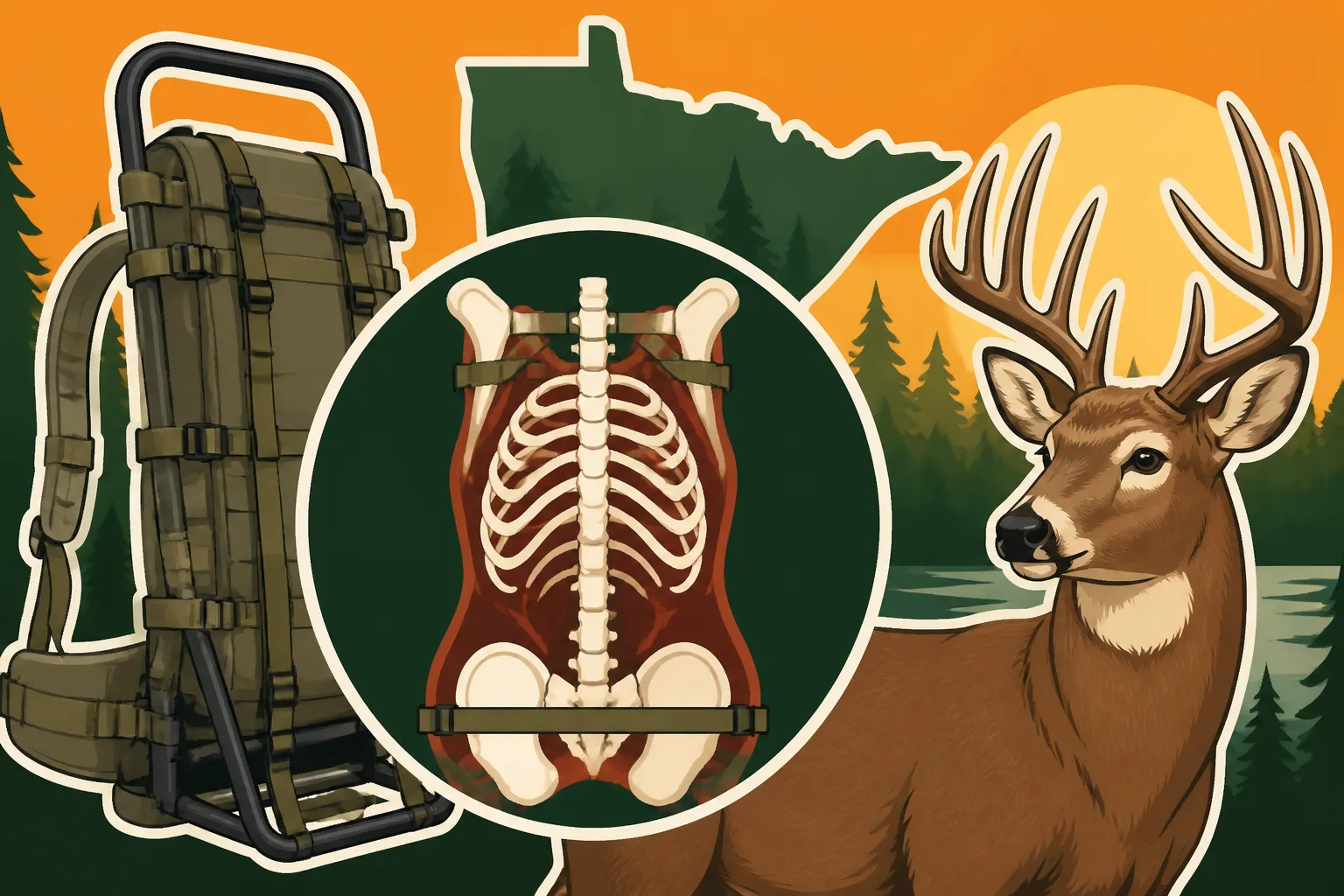
At the heart of any good meat-hauling pack is its frame. You'll generally find two main types: internal frame and external frame. Internal frame packs tend to conform more closely to your body, offering better balance for technical terrain, but they can sometimes struggle with extremely heavy, awkward loads like boned-out deer quarters. External frame packs, on the other hand, are designed specifically for carrying large, heavy, and often odd-shaped loads. They typically feature a rigid aluminum or carbon fiber frame that stands off your back, providing excellent ventilation and a dedicated "load shelf" where you can secure boned-out meat in game bags. For dedicated meat hauling, especially for larger deer or elk, an external frame design or a hybrid system with a robust external load shelf is often preferred. Look for a pack with a strong, yet lightweight, frame and a suspension system that can comfortably transfer 70-100+ pounds to your hips, relieving your shoulders. Brands like Kifaru, Stone Glacier, and Mystery Ranch are highly regarded in the hunting community for their robust frame systems that can handle serious weight.
Material Durability and Weather Resistance
Minnesota weather can be notoriously unpredictable, from warm early season archery days to bone-chilling late-season firearm hunts with freezing rain or heavy snow. Your pack needs to withstand it all. Look for packs constructed from durable, abrasion-resistant materials like Cordura nylon, typically in weights ranging from 500D to 1000D. These materials can take a beating from sharp tree branches, rocks, and the inevitable scrapes and rubs of bushwhacking. Equally important is weather resistance. While few packs are truly waterproof without a rain cover, a durable water repellent (DWR) coating on the fabric and reliable, water-resistant zippers will go a long way in keeping your gear dry. Many packs also feature integrated or optional rain covers, which are highly recommended for protecting your valuable meat and gear from a sudden downpour or wet snow when you're Keeping a Muzzleloader Dry in Lake-Effect Snow during the December hunt.
Accessibility and Compression
When you're boning out a deer, efficiency is key. You need a pack that allows for quick and secure loading of the meat. Look for designs that offer easy access to the main compartment, often with large U-shaped zippers or top-loading options that can be expanded. A dedicated load shelf or compression system is vital for securing the heavy, often irregular shape of boned-out quarters. You want to be able to cinch the meat down tightly to the frame to prevent shifting, which can throw off your balance and quickly lead to fatigue or injury. External lashing points, compression straps, and daisy chains are all valuable features for attaching extra gear or further securing your load. Some packs even come with removable meat bags or compartments designed to keep blood separate from your other gear.
Fit and Comfort
Even the most durable pack is useless if it doesn't fit you properly or causes discomfort under load. A properly fitted pack distributes weight primarily to your hips, leaving your shoulders free to balance and move. Look for packs with adjustable torso lengths, allowing you to fine-tune the fit to your specific body size. The waist belt should be substantial, well-padded, and articulate with your movements, preventing chafing and pressure points. Shoulder straps should also be padded and adjustable, with load lifters to pull the top of the pack closer to your body. Good ventilation on the back panel is a bonus, especially during strenuous hauls in milder weather. Don't underestimate the importance of trying on a pack with weight in it before committing. Load it up with dumbbells or sandbags and walk around to truly test its comfort. This is a crucial step that many hunters overlook, but it makes all the difference when you're carrying a heavy load of venison miles out of the woods. For those looking at options and reviews, resources like GoHunt often have detailed gear guides and user feedback that can help inform your decision on fit and brand.
The Art of Boning Out: Preparing Your Deer for the Pack
Boning out a deer isn't just about butchering; it's a strategic field dressing technique designed to maximize meat recovery while minimizing pack weight. Done correctly, it's efficient, clean, and ensures you get the best possible venison from your Minnesota hunt.
Essential Gear to Pack Into Your Frame Pack
Before you even think about boning out, make sure your pack is properly stocked for the task. Beyond your usual hunting essentials, you'll need a dedicated field dressing kit. This typically includes a sharp, reliable Field Dressing Knives Worth Carrying, a smaller caping knife for finer work, and a Bone Saws Versus the Gutless Method or a strong pair of shears can be useful. Crucially, you'll need several breathable, lightweight game bags to protect the meat from dirt, insects, and bacteria. Don't skimp on these; quality game bags are indispensable for keeping your hard-earned venison clean. Many hunters also carry a small sharpening stone or field sharpener, a pair of latex or nitrile gloves for hygiene, and a small roll of flagging tape to mark your route or the location of the gut pile if you choose to leave it separate. Always remember to pack a reliable headlamp, even if you anticipate being out before dark, because breakdowns often take longer than expected, and Blood Trailing After Dark in Minnesota or boning out in low light is no fun without one.
The Boning Out Process on the Ground
Once your deer is down, the clock starts ticking, especially if temperatures are mild. The goal is to cool the meat quickly and cleanly. Start by positioning the deer on its back or side, whichever is most comfortable for you. The "gutless method" is highly popular for packing out deer, as it completely bypasses the need to open the body cavity, reducing mess and contamination. This method involves skinning one side of the animal, removing the large muscle groups (hams, backstraps, shoulders, tenderloins), then flipping the deer and repeating on the other side. The entire process focuses on separating muscle from bone. For the tenderloins, you'll need to reach inside the cavity, but this is usually a small, contained cut. Remember to leave a patch of hide on the hindquarters if your state requires proof of sex or species (though Minnesota generally only requires registration after the fact). Always work cleanly, placing meat directly into clean game bags as soon as it's removed. If you plan to retrieve the head for taxidermy, you'll need to cape it out or remove it with a saw, but this is typically a separate step from meat recovery. Take your time, work methodically, and prioritize hygiene.
Table: Essential Gear for Boning Out and Packing a Minnesota Deer
| Item | Purpose | Notes |
|---|---|---|
| Frame Pack | Primary carrier for boned-out meat | Choose one with good load shelf and robust suspension. |
| Game Bags | Protect meat from dirt, insects, and bacteria | Breathable, lightweight; at least 4 for quarters, plus smaller bags. |
| Sharp Knife Set | Field dressing, skinning, and boning | Include a fixed-blade and a caping knife; keep them sharp. |
| Field Sharpener | Maintain blade edge during the process | Critical for clean cuts, especially on tough hides. |
| Latex/Nitrile Gloves | Hygiene and protection | Essential for clean work and personal sanitation. |
| Headlamp | Illumination for low-light conditions | Even if you start in daylight, breakdowns can run long. |
| Water & Snacks | Hydration and energy for a strenuous task | Crucial for staying focused and physically capable. |
| First Aid Kit | Handle minor cuts or injuries | Especially important when First Aid Kits for Remote Northwoods Ground. |
| Flagging Tape | Mark your route, gut pile, or cache location | Helps navigate back to your vehicle or a cached load. |
| Plastic Tarp/Sheet | Keep meat off the ground if needed | Small, lightweight sheet can help maintain cleanliness. |
Mastering the Haul: Loading and Carrying Your Minnesota Deer
With your deer expertly boned out and bagged, the final challenge is to load your frame pack correctly and begin the journey back to civilization. This phase requires smart loading, physical endurance, and a methodical approach.
Loading the Frame Pack Properly
The secret to comfortably carrying heavy loads lies in proper weight distribution. For a frame pack, you want the heaviest items—your bagged meat—positioned high and close to your back. Many modern hunting frame packs feature a dedicated "load shelf" between the main pack bag and the frame. This is where your quarters and other large meat chunks go, secured tightly with compression straps. By placing the dense meat here, the weight is transferred directly to the frame and then to your hips, which are far more capable of carrying heavy loads than your shoulders.
Start by placing your largest, heaviest game bags on the load shelf. Arrange them to be as balanced as possible left-to-right. Use the compression straps to cinch them down firmly to the frame, eliminating any wobbling or shifting. Any smaller pieces, such as backstraps or tenderloins, can go inside the main pack bag, again, keeping them high and tight. Your essential gear like water, first aid, and extra layers should be easily accessible, but not at the expense of proper weight distribution. A pack that is loaded poorly, with weight too low or too far from your back, will feel significantly heavier and can cause painful strain on your shoulders and back, potentially leading to injury.
Making Multiple Trips and Why It's Smart
Unless you've harvested a small deer or are exceptionally strong, trying to carry an entire boned-out deer's worth of meat in one trip might be overly ambitious, especially in challenging Minnesota terrain. Don't be afraid to make multiple trips. It's far better to make two comfortable, safe trips than one brutal, dangerous one. For example, you might pack out the two heaviest hindquarters and backstraps on your first trip, then return for the shoulders, neck meat, and any other remaining pieces.
If you choose to make multiple trips, remember to properly "cache" the remaining meat. Hang it high in a tree, away from predators, using robust rope. Cover it with extra game bags or even a small tarp to protect it from elements and scavengers. Mark its location clearly, either with GPS coordinates or flagging tape, and be sure to check local regulations regarding caching game. When you're making a multi-trip recovery, services like GoHunt can be useful for pre-marking potential game trails or rest points on your mapping app, helping you visualize the journey.
Dealing with Unexpected Challenges
Minnesota hunting often throws curveballs. You might encounter steep, slippery slopes, a sudden increase in snow depth, or discover you have to Drag a Deer Out of a Slough or across a frozen swamp. A well-fitted frame pack can help, but it won't negate all difficulties. When facing steep inclines or descents, take slow, deliberate steps, using trekking poles for added stability. In wet or icy conditions, rely on the traction of your Boots for Minnesota Swamps and Snow and consider slower, more cautious movements. If you must cross water, ensure all meat is securely bagged and that your pack is cinched tight to your body. Remember to periodically stop, adjust your pack, take a sip of water, and assess your physical condition. Pushing yourself past your limits in remote areas can lead to mistakes or injuries. Staying hydrated and fueled is crucial for maintaining strength and focus. Always prioritize safety and take breaks when needed.
Disclaimer
This article is for general informational purposes only and does not constitute professional advice. Laws, prices and regulations vary by location and change over time. Consult a qualified professional for guidance on your specific situation.