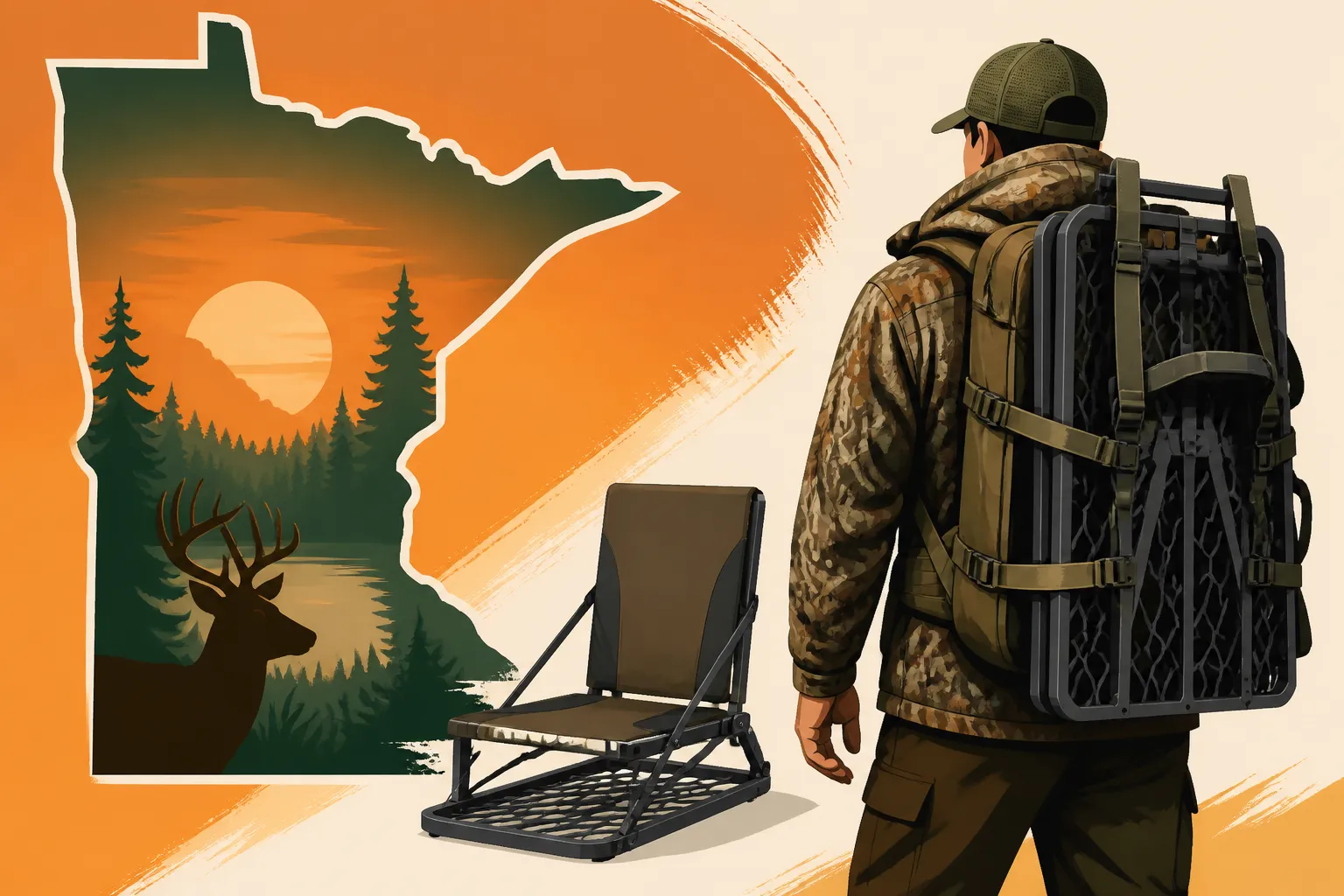
Portable Treestands Worth Packing In
For many Minnesota deer hunters, the dream of finding that unpressured buck means going where others won't. That often involves a long trek deep into public land, far from road access and the well-worn trails. But dragging a heavy, traditional treestand for miles can feel like a punishment, not a pursuit. This guide is all about embracing true portability, exploring the best options for lightweight, packable treestands that make getting off the beaten path not just possible, but enjoyable and highly effective.
Why Portability Matters for the Minnesota Hunter
Let's face it, Minnesota offers incredible hunting opportunities, but much of our best public land demands effort. You can't just pull up to the road and expect to find unpressured deer consistently. The key to unlocking those hidden pockets of activity often lies in your willingness to walk further, and that means every ounce of your gear needs to earn its place.
The Public Land Challenge
Our state boasts millions of acres of public land, from sprawling national and state forests to countless Wildlife Management Areas (WMAs). While this is a blessing, it also means these areas can see significant pressure, especially early in the season or around opening weekend. The deer, being the smart creatures they are, quickly learn to avoid easy-to-access spots. They'll retreat into the nastiest, thickest cover, often a mile or more from any vehicle access.
Imagine finally finding that perfect pinch point between a swamp and a mature oak ridge after an hour-long hike. You've scouted it with tools like GoHunt mapping, identified the fresh scrapes and rubs, and know this is where the action will be. But if your treestand weighs a ton and is awkward to carry, that prime spot might feel out of reach, or you might be too exhausted to set up quietly. A truly portable stand allows you to get to these remote locations feeling fresh and ready to hunt, giving you a distinct advantage over hunters who stick closer to the truck. This also ties into how important it is to be Scouting Minnesota Public Land Before Season.
Adaptability to Changing Conditions
Minnesota weather and deer patterns are anything but static. A cold front might push deer to a new food source, or a fresh snowfall could reveal a bedding area you hadn't noticed. What looked like a hot spot last week might be dead quiet today. Being able to quickly move your stand to adapt to these changes is critical.
A heavy, bulky stand often means you're committed to a single location once it's hung. But with a lightweight, packable system, you can scout on the fly, respond to new sign, or even shift with the wind direction if it suddenly changes. This flexibility is a game-changer, especially during the rut when deer movement is unpredictable and the hottest action can pop up anywhere. If you're trying to hunt The Minnesota Rut in Early November, being mobile can be the difference between seeing a giant and seeing nothing. This adaptability also extends to finding the perfect tree – sometimes the best spot doesn't have the ideal "stand tree" right where you want it, but a portable option gives you more choices.
Types of Portable Treestands for Minnesota Terrain
When we talk about "portable" treestands, we're really looking at a few distinct categories, each with its own benefits and considerations for the Minnesota landscape. Understanding these differences will help you choose the best system for your hunting style and the specific areas you frequent.
Hang-On Stands and Sticks
Hang-on stands, also known as fixed-position stands, are arguably the most versatile when it comes to tree choice. They consist of a platform and seat that you "hang" on a tree using a strap or chain, and you climb up to them using separate climbing aids like sections of sticks, ladders, or even screw-in steps (where legal).
The real beauty of hang-ons is their adaptability. You're not restricted to perfectly straight, limbless trees like with some climber designs. This means you can get into gnarled old oak trees, double-trunked maples, or even on trees with lower branches that offer fantastic cover. The stand itself can be quite lightweight, often under 15 pounds for minimalist models, and the climbing sticks can also be chosen for their light weight and packability. When hunting thick cover like Hunting Minnesota Cattail Sloughs for Deer or setting up in a big woods funnel, this versatility is priceless. You can carry the stand and sticks like a backpack, navigate through dense brush, and then precisely position your setup for the best shot angle and cover. The downside is the setup time; each stick needs to be secured, and then the stand itself, which can be noisy and time-consuming if you're not practiced.
Climbing Treestands
Climbing treestands are a favorite for many hunters who prioritize speed and ease of setup in the right conditions. They consist of two sections – a seat section and a platform section – that you "climb" up the tree with by alternating your weight and moving each section.
The main advantage here is that you don't need separate climbing sticks, reducing the total amount of gear you carry and the potential for noise during setup. For hunters who want to get into a tree quickly on a fresh piece of sign, a climber can be ideal. However, they come with a significant caveat: they require a straight, limbless tree to work effectively. In many parts of Minnesota, especially in older hardwoods or areas with a lot of twisted or brushy trees, finding a suitable climbing tree right where you need it can be a challenge. They also tend to be heavier and bulkier than minimalist hang-ons or saddle systems, which can make long treks more cumbersome. When choosing a climber, look for models that nest together tightly for a compact carry and have comfortable straps, especially if you plan on hiking a mile or more.
Saddle Hunting Systems
Saddle hunting has exploded in popularity for its ultralight weight and unparalleled portability. Instead of a large platform, a saddle hunter wears a special harness (the saddle) around their waist and hips, which attaches to a tree with a rope and carabiner system. You stand on small platforms or "sticks" that attach to the tree, allowing you to rotate 360 degrees around the tree.
This system is about as minimalist as it gets. The saddle itself, rope, and a few small platforms or sticks can weigh as little as 5-10 pounds total, making it incredibly easy to pack deep into remote areas. The ability to shoot from any angle around the tree is a huge advantage, allowing you to pivot silently for a shot without the movement associated with traditional stands. This is especially useful when hunting dense cover like Reading a Ridge for Northern Minnesota Deer where deer might appear from unexpected directions. Saddle hunting does have a learning curve; it feels different than sitting in a traditional stand, and practicing at home is essential to build confidence and proficiency. It's not for everyone, but for those who embrace it, it offers an unmatched level of mobility and stealth.
Key Features to Look for in a Packable Treestand
When you're trying to shave ounces and maximize efficiency for those deep woods hunts in Minnesota, every detail of your portable treestand matters. It's not just about the stand itself, but how it integrates with your entire system.
Weight and Packability
This is, perhaps, the most crucial factor for a "portable" stand. Every pound counts when you're trudging through marshy lowlands or up bluff country hills. Look for stands made from aluminum, which offers a great balance of strength and light weight. Some ultra-light models might use carbon fiber components, but these often come with a premium price tag.
Beyond the raw weight, consider how the stand packs. Does it fold flat? Do climbing sticks nest together or attach securely to the stand? Are there integrated backpack straps, or will you need to add your own system? A stand that's light but awkward to carry will quickly become a nuisance. Brands often offer accessories like specialized carrying straps or bags designed to make transport more comfortable and quiet. Think about how it will carry with the rest of your gear. If you're using a quality mapping app like GoHunt to find remote access points, you'll want to ensure your stand is comfortable enough to get you there without wearing you out. For those long walks into areas like the Boundary Waters Canoe Country Deer, minimizing bulk and weight is paramount.
Quietness and Stealth
There's nothing worse than hiking all that way, meticulously setting up, and then having your stand creak or clang every time you shift your weight. Deer have incredible hearing, and metallic noises will bust you in a heartbeat. Pay attention to how the stand is constructed. Are there moving parts that can rattle? Are connections metal-on-metal or do they have rubber or plastic bushings to dampen sound?
Before you even take it to the woods, set up your new stand at home and aggressively move around on it. Try to identify any potential noise points and address them. Sometimes a little bit of electrical tape, some felt strips, or even a strategically placed zip tie can quiet down a noisy component. Similarly, consider the material of your climbing sticks. Aluminum sticks can be clanky, but many now feature sound-ddampening coatings or designs. Your goal is to be a silent shadow, and a quiet treestand is an absolute must for success, especially when calling in a buck with Rattling and Grunting in Minnesota.
Safety and Stability
No matter how light or packable a stand is, safety should always be your number one priority. A fall from a treestand can have devastating consequences. Look for stands from reputable manufacturers that meet industry safety standards. Always, and I mean always, use a full-body safety harness. This isn't optional; it's essential.
When assessing a stand, consider its stability once it's set up on the tree. Does it feel rock-solid, or does it sway and shift? For hang-on stands, a good cam-buckle strap or chain system should secure it tightly. For climbers, ensure the cables or straps grip the tree firmly. For saddle hunting, practice your rope and carabiner setup until it's second nature. The platform you stand on, whether it's part of a hang-on or a separate stick for a saddle, needs to be slip-resistant, especially in wet or icy conditions. It's also vital to practice your setup and descent with your safety harness engaged so that the process is smooth and natural. Remember, you're investing in a piece of equipment that holds you twenty feet or more off the ground, so never skimp on safety. Reviewing resources on Safety Harnesses and Lifelines can give you more critical insights.
Setting Up and Hunting from Portable Stands
Having the right portable treestand is only half the battle. Knowing how to effectively use it, from scouting to silent entry, will elevate your hunting success. It’s all about creating a seamless experience that gets you into position undetected.
Scouting for Stand Locations
The beauty of a portable stand is that it frees you from the limitations of permanent setups. This means your scouting efforts can be much more dynamic. Instead of just looking for any good spot, you're now specifically looking for the best spot that offers killer shot opportunities, good cover, and a quiet approach, knowing you can get there with your light gear.
When you're out scouting, either weeks before the season or even the day of the hunt, focus on funnels, pinch points, bedding area edges, and transition zones. Utilize aerial imagery and topographic maps – tools like GoHunt provide invaluable layers – to identify terrain features that naturally channel deer movement. Look for rub lines, fresh scrapes, and heavy deer trails. With a portable stand, you can afford to scout a broad area and then pinpoint the exact tree that offers the best wind advantage and shooting lanes for that particular day. Don't just look for a good tree; look for the tree that maximizes your chances based on the current sign and conditions. Identifying these critical features is essential for Reading Aerial Photos for Big Woods Deer and finding that perfect Hanging a Stand on a Big Woods Funnel.
Silent Entry and Exit Strategies
You can have the lightest, quietest stand in the world, but if your walk in and out sounds like a herd of buffalo, your hunt is likely doomed. A portable system allows you to access truly remote areas, but that also means you need to be extra vigilant about minimizing your disturbance.
Plan your entry and exit routes meticulously, focusing on natural cover and using terrain features to mask your movement. Avoid walking directly down deer trails if possible; instead, walk parallel to them in the thicker cover or along ridge lines. Dress in quiet clothing – wool or fleece are excellent choices for Minnesota's varied conditions. Time your approach to arrive well before first light, giving the woods time to settle down after you've climbed into your stand. For exits, wait until the woods are calm after dark, or until any deer you've seen have moved off, to avoid spooking them for future hunts. Using a headlamp with a red light setting can help maintain your night vision and is less intrusive than a bright white light. Remember, the goal isn't just to get to your stand; it's to get there without the deer ever knowing you were there.
Practice Makes Perfect
Packing in a portable stand, especially a hang-on or saddle system with climbing sticks, takes practice. Don't let opening morning be your first attempt at setting it up in the dark. Set up your stand repeatedly in your backyard or a nearby park until the process becomes second nature.
Practice climbing quietly, attaching your stand securely, and getting into hunting position with minimal noise. Pay attention to how you manage your ropes, carabiners, and any tools like wrenches or Allen keys. The more you practice, the faster, quieter, and safer you'll become. This familiarity will reduce stress during actual hunts and allow you to focus on the task at hand: hunting deer. Get comfortable ascending and descending with your full hunting load, wearing your safety harness, and knowing exactly where everything is on your person. This dedication to practice ensures that when you find that trophy buck leaving tracks on a logging trail and need to Set Up On a Clear-Cut Edge quickly, you'll be ready.
Comparing Portable Treestand Systems
To help you visualize the differences and make an informed choice, here's a quick comparison of the primary portable treestand systems ideal for Minnesota hunting.
| Stand Type | Typical Weight Range (lbs) | Setup Complexity | Ideal Tree Type | Pros | Cons |
|---|---|---|---|---|---|
| Hang-On + Sticks | 15-25 (stand + sticks) | Moderate | Varied, leaning, branched | Most versatile, excellent cover options | More components to carry, can be noisy |
| Climbing Stand | 20-35 | Low | Straight, limbless | Quickest setup in ideal conditions | Limited to perfect trees, typically heavier |
| Saddle Hunting | 5-15 (saddle + platforms) | Moderate | Varied, small diameter | Ultralight, 360° shooting, highly mobile | Learning curve, not for everyone, unique feel |
Choosing the right portable treestand for your Minnesota hunting adventures is a deeply personal decision, but it's one that can significantly impact your success and enjoyment. By prioritizing light weight, packability, quietness, and above all, safety, you'll be well-equipped to venture deeper into the woods, chase those elusive mature bucks, and truly experience the wild side of Minnesota hunting.
Disclaimer
This article is for general informational purposes only and does not constitute professional advice. Laws, prices and regulations vary by location and change over time. Consult a qualified professional for guidance on your specific situation.