Handgun Hunting Rules in Minnesota
Hunting with a handgun in Minnesota often brings up a lot of questions and sometimes even confusion among hunters. Many folks wonder if it's even legal, what calibers are allowed, or if they can carry one during archery season. It can feel like navigating a maze of regulations, especially with recent changes to statewide rifle rules. This guide is here to untangle all that, giving you a clear, comprehensive look at the rules and practical considerations for handgun hunting deer in Minnesota, so you can head afield with confidence and clarity.
The Basics of Handgun Hunting for Deer in Minnesota
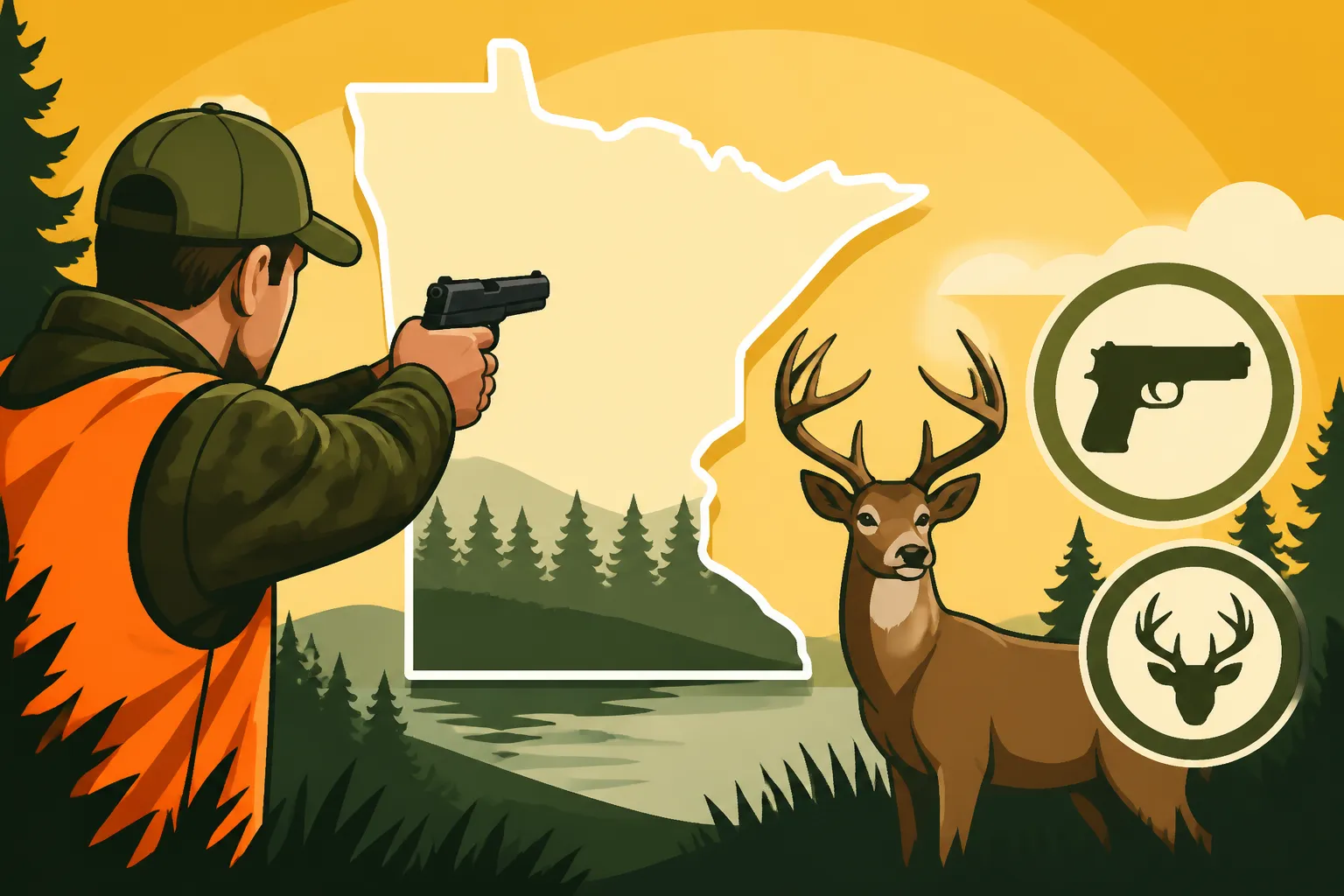
Let's cut right to the chase: yes, you can hunt deer with a handgun in Minnesota. But, as with most things in hunting, there are specific rules you absolutely need to understand before you load up and head out. The key is that for most purposes, a handgun used for deer hunting falls under the same general firearm regulations as a rifle or shotgun, with a few crucial distinctions. It's not a free-for-all, but it's certainly a viable and exciting option for many hunters seeking a different challenge.
The primary season for handgun hunting deer is the firearm deer season. This is when the vast majority of hunters will be carrying a handgun for deer. While Minnesota also has archery and muzzleloader seasons, cartridge handguns are generally not legal during the archery season, and muzzleloading handguns fall under the specific Muzzleloader Deer Hunting in Minnesota rules. Always double-check your specific permit area and weapon choice, as regulations can vary.
Legal Calibers and Ammunition
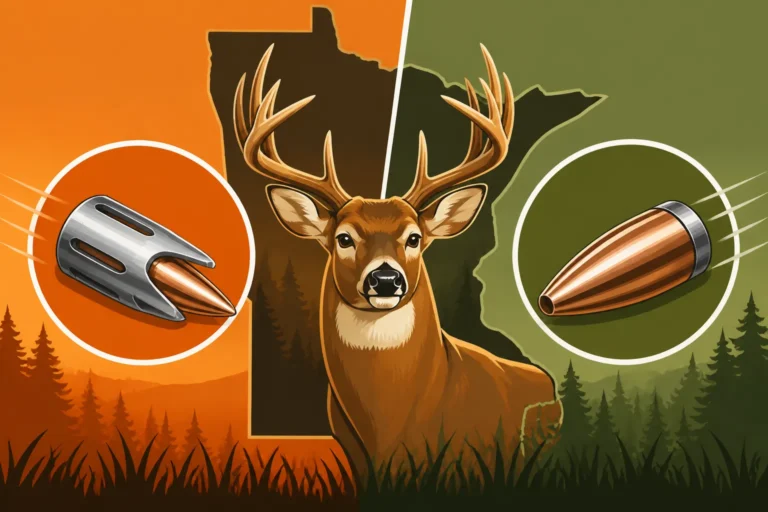
When it comes to handguns for deer hunting in Minnesota, not just any caliber will do. The regulations are pretty clear: you need to use a handgun chambered for a cartridge that fires a single projectile, and that projectile must be an expanding bullet. This means hollow points or soft points are typically what you're looking for, designed to expand upon impact and create a humane kill. Full metal jacket (FMJ) bullets, which are common for target shooting, are explicitly prohibited for deer hunting because they don't expand reliably and can lead to wounded game.
As for minimum caliber, Minnesota law requires a centerfire handgun that is .22 caliber or larger, and it must produce a minimum muzzle energy of 500 foot-pounds. This effectively rules out smaller rimfire calibers like .22 LR, which simply don't have the energy for ethical deer hunting, and many smaller centerfire handgun cartridges like .25 ACP or .32 ACP. Common and popular choices that easily meet these criteria include calibers like .357 Magnum, .41 Magnum, .44 Magnum, .45 Colt, 10mm Auto, and various .45 caliber semi-automatic cartridges designed for hunting. You'll often find that cartridges designed for lever-action rifles, like the .357 Mag or .44 Mag, also perform exceptionally well from a handgun platform and often exceed the energy requirements with ease.
When and Where You Can Hunt with a Handgun
Your primary window for handgun hunting deer in Minnesota will be during the state's firearm deer seasons. This includes the various zones, from the northern forests (100 Series) to the central (200 Series) and southern (300 Series) farmland zones. Each zone has its own specific dates, so it’s crucial to know which Minnesota Deer Seasons and Permit Areas apply to where you plan to hunt. You can also utilize a handgun during the Minnesota Muzzleloader Season Tactics if it is a muzzleloading handgun, but that's a different set of rules entirely.
The beauty of handgun hunting is that it's generally permitted on both public and private lands, as long as you have the necessary permissions and adhere to all other regulations. If you're hunting on public land, like a Wildlife Management Area or a State Forest, the general rules for firearm hunting apply. You'll need to be mindful of setbacks from roads and occupied buildings, and remember to always adhere to the blaze orange requirements. For private land, gaining permission is key, and it's always best to have that permission in writing, even if it's just a text message, to avoid any misunderstandings about Minnesota Trespass and Permission Law. Planning your hunt, whether on public or private ground, is made easier with tools like GoHunt, which can help you identify legal hunting areas and understand land ownership.
Specific Regulations for Handgun Hunters
Beyond the basics of caliber and season, Minnesota has a few specific nuances that handgun hunters need to be aware of. These regulations are in place to ensure safety, ethical hunting, and to maintain consistency with general firearms laws. It’s easy to overlook these details, but they are critical for staying on the right side of the law and ensuring a successful and responsible hunt.
One significant point of clarity came with the statewide rifle changes. Now that Hunting Minnesota Now That Rifles Are Legal Statewide is the norm, many of the previous restrictions that applied to "shotgun-only" zones no longer affect handgun hunters in the same way, as long as your handgun meets the caliber and energy requirements. This has opened up more opportunities for handgun enthusiasts in areas that were historically limited to shotguns or muzzleloaders.
Handgun Length and Barrel Restrictions
Surprisingly, Minnesota does not have a specific minimum barrel length requirement for handguns used in deer hunting, unlike some other states. The primary focus of the law is on the cartridge and its energy, not the physical dimensions of the firearm itself. This means you can use anything from a compact revolver to a long-barreled hunting handgun, as long as it meets the caliber and muzzle energy criteria. This flexibility allows hunters to choose a handgun that best fits their comfort and hunting style, whether that's a more traditional revolver or a larger, scoped single-shot pistol.
However, while there might not be a minimum, common sense and ethical hunting practice dictate that longer barrels often yield better accuracy and higher muzzle velocities, which can be beneficial for consistent energy delivery and flatter trajectories. If you're considering a new handgun for deer hunting, focusing on models with at least a 6-inch barrel is often a good starting point for achieving adequate accuracy and velocity at typical hunting ranges. Don't forget that any handgun must still meet the definition of a "handgun" – designed to be held and fired with one hand, or two hands, as distinct from a rifle or shotgun.
Carrying and Transporting Handguns in the Field
When carrying a handgun in the field for hunting, it's essential to understand Minnesota's rules for transportation and readiness. If you have a valid permit to carry a pistol, you can generally carry your handgun loaded and uncased in a holster while legally hunting during an open season. This provides immediate access, which is crucial for quick shots when hunting. However, always verify the specific rules for the permit area or refuge you are hunting, as some public lands may have stricter regulations regarding loaded firearms.
When transporting your handgun in a vehicle, the rules are stricter. Unless you have a permit to carry a pistol, all handguns must be unloaded and completely enclosed in a case. This means it can't just be sitting on your passenger seat, even if it's unloaded. It needs to be zipped into a soft case or secured in a hard case. These regulations apply even if you are just driving to or from your hunting spot. Familiarizing yourself with these nuances of Legal Firearms for Minnesota Deer Hunting is not just about avoiding a ticket; it's about responsible firearm ownership and ensuring public safety.
Practical Considerations for Handgun Hunters
Choosing to hunt with a handgun is a commitment to a different set of skills and limitations compared to hunting with a rifle or shotgun. While it offers a unique challenge and a deep sense of satisfaction, it also demands more disciplined practice and a keen understanding of ethical shot placement. It's not just about meeting the legal minimums; it's about being a responsible and effective hunter.
The appeal often lies in the close-quarters nature of the hunt, requiring you to get much closer to your quarry. This might mean refining your stalking skills or spending more time scouting for tight cover where deer feel comfortable. Whether you're hunting the thick cover of the Superior National Forest Ranger Districts or the edges of a Hunting a Standing Cornfield in Farm Country, understanding the effective range of your chosen handgun and your personal abilities is paramount.
Ethical Shot Placement and Range Limitations
The effective range of a hunting handgun is significantly shorter than most rifles. While a magnum handgun might be capable of hitting a target at 100 yards, your ethical hunting range, where you can consistently deliver a lethal, humane shot to a deer's vitals, will likely be much closer – often within 50-75 yards. This is a crucial distinction that separates target shooting from hunting. Every shot in the field must be taken with the utmost confidence in your ability to make a clean kill.
Practice is non-negotiable. You should be able to consistently hit a target the size of a deer's vital zone (roughly an 8-inch circle) every single time at your maximum ethical hunting distance. This means spending time at the range, practicing from various field positions, not just off a bench rest. Understanding deer anatomy is also critical for handgun hunting. Aim for the lung/heart area, just behind the shoulder, avoiding shoulder bone whenever possible. Remember, a handgun has less energy than a rifle, making precise shot placement even more vital for a quick, ethical harvest. Using mapping tools like those on GoHunt can help you visualize distances in your hunting area, ensuring you understand your range limitations in specific spots.
Choosing the Right Handgun and Optics
When selecting a handgun for deer hunting in Minnesota, you'll generally be looking at powerful revolvers or, increasingly, some robust semi-automatic pistols chambered in calibers like 10mm or .45 Super. Revolvers in .357 Magnum, .41 Magnum, and especially .44 Magnum are perennial favorites due to their reliability, power, and often excellent accuracy. Single-shot hunting pistols, like those from Thompson/Center, are also incredibly accurate and popular choices for hunters who prioritize precision over quick follow-up shots.
For optics, many handgun hunters find that a red dot sight or a low-power handgun scope significantly improves accuracy, especially as distances extend past 25-30 yards. A red dot offers fast target acquisition and works well in low light, making it a great choice for quick shots in thick timber. A handgun scope (designed with long eye relief) allows for more precise aiming at longer distances. Binocular Choice for Minnesota Whitetails is important, but for the handgun itself, a good optic can transform your capabilities. Consider durable, weather-resistant models that can handle the recoil and exposure to the elements during a typical Minnesota hunting season.
Common Misconceptions and FAQs
Given the evolving nature of hunting regulations and the specific challenges of handgun hunting, it's easy for misconceptions to take root. Clearing up these common questions can save you a lot of headache and ensure you're hunting legally and safely. It's always better to ask and know for sure than to operate on assumptions.
Many hunters, especially those who grew up in the "shotgun-only" era of southern Minnesota, might still carry outdated notions about what firearms are allowed. With Minnesota's New Statewide Rifle Rules, the landscape has changed, benefiting handgun hunters who meet the necessary criteria.
Is a Handgun a Muzzleloader?
This is a common point of confusion, and the answer is generally "no" for the purposes of Minnesota's firearm deer seasons. A cartridge-firing handgun is treated as a centerfire firearm and falls under the firearm deer season rules. It is not a muzzleloader.
However, there are muzzleloading handguns. If you choose to hunt with a pistol that is loaded from the muzzle with black powder or a synthetic substitute, and uses a cap or primer, then yes, that specific firearm would be considered a muzzleloader. In that scenario, you would be hunting under Minnesota Muzzleloader Season Dates and must adhere to all rules specific to muzzleloaders. But for the vast majority of handgun hunters using modern ammunition, their handgun is squarely in the "firearm" category during the general firearm season.
Handguns and Archery Season
Another frequent question revolves around using a handgun during Minnesota's archery season. For the vast majority of hunters, the answer is a firm "no." Bowhunting Minnesota's Long Archery Season is explicitly for bows (vertical bows and crossbows), and carrying a handgun, loaded or unloaded, while archery hunting is generally prohibited. The intent of archery season is to allow hunting with archery equipment only.
There are rare and specific exceptions, typically for individuals with certain disabilities who might qualify for special permits that allow the use of alternative weapons, but these are highly regulated and not for the general hunting population. If you're an able-bodied hunter carrying an archery tag, your handgun needs to stay at home or in its securely cased transport mode, away from the hunting activity itself. Always check the current regulations for any updates, but historically, archery season has been exclusive to bows.
| Feature | Handgun (Cartridge) | Rifle | Shotgun (Slug/Buckshot) | Muzzleloader (Any Type) |
|---|---|---|---|---|
| Primary Season | Firearm Deer Season | Firearm Deer Season | Firearm Deer Season | Muzzleloader Deer Season |
| Minimum Caliber | .22 cal or larger, centerfire | .22 cal or larger, centerfire | 20 gauge or larger | .40 cal or larger (rifle/pistol) |
| Ammunition Type | Expanding bullet, single proj. | Expanding bullet, single proj. | Slug (single proj.) or buckshot | Single proj. (patch/sabot) |
| Muzzle Energy Req. | 500 ft-lbs minimum | None specified (implied ethical) | None specified (implied ethical) | None specified (implied ethical) |
| Archery Season Use | Generally No | No | No | No |
| Blaze Orange Req. | Yes | Yes | Yes | Yes |
| Loaded Carry (No Permit) | Unloaded & Cased in vehicle | Unloaded & Cased in vehicle | Unloaded & Cased in vehicle | Unloaded & Cased in vehicle |
Disclaimer
This article is for general informational purposes only and does not constitute professional advice. Laws, prices and regulations vary by location and change over time. Consult a qualified professional for guidance on your specific situation.