Best Rifle Calibers for Minnesota Whitetails
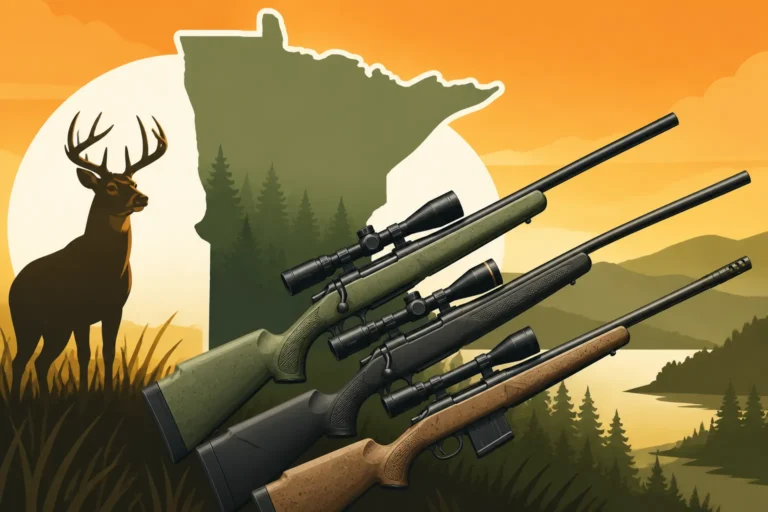
For years, Minnesota deer hunters faced a perplexing challenge: how to choose the right rifle when half the state was off-limits to traditional cartridges. The old "shotgun-only" zones forced many to compromise, often leading to frustrations with limited range and specialized ammunition. But with those restrictions largely gone, the landscape of rifle choices has exploded. This guide aims to cut through the confusion and help you confidently select the best rifle caliber for hunting whitetails across Minnesota's incredibly diverse terrain.
Understanding Minnesota's Deer Hunting Landscape
Minnesota is a hunter's paradise, but it's far from a monolithic deer habitat. From the vast boreal forests of the north to the rolling prairies and bluffs of the south, the terrain dictates everything from how you hunt to what caliber might serve you best. What works perfectly in a thick cedar swamp might be a poor choice on an open soybean field. Understanding these nuances is the first step in making an informed decision about your whitetail rifle.
Big Woods Challenges and Opportunities
Head north, and you're in the Big Woods – miles upon miles of dense forest, often characterized by thick aspen, spruce, and cedar bogs. Here, shots are almost universally close-range. We're talking 20 to 80 yards, maybe 100 on a logging road. Visibility is limited, and deer are often glimpsed for mere seconds as they ghost through the cover. In this environment, a fast-flat-shooting caliber isn't nearly as critical as one that delivers maximum energy on impact at close quarters, can drive through light brush, and allows for quick follow-up shots if needed. You're less concerned with a bullet's drop at 300 yards and more with its ability to anchor a deer before it can disappear into the impenetrable tangles. The dense canopy also means light can be at a premium, making quick target acquisition vital.
Hunting in these areas is often about still-hunting or methodical drives, where a rifle that handles well in tight spaces and points naturally is a huge asset. Think about carrying your rifle for miles through uneven terrain, busting brush, and navigating thickets. A heavy, long-barreled magnum quickly becomes a burden. Instead, a compact, handy rifle that can put a deer down swiftly and cleanly is the name of the game. When you're Where Big Woods Bucks Bed in Minnesota, you realize that these deer are masters of concealment, and your shot opportunities will often be fleeting.
Farm Country Field Edges
Shift your focus to central and southern Minnesota, and you'll find a dramatically different hunting experience. Here, agricultural fields dominate, interspersed with woodlots, shelterbelts, and cattail sloughs. Deer frequently feed in corn, soybeans, and alfalfa, often moving between these food sources and nearby cover. This environment often presents longer shot opportunities, sometimes stretching out to 200, 300, or even 400 yards across open fields. While close-range shots still happen, especially along brushy field edges or within small woodlots, the potential for extended distances is always present.
In farm country, a flatter-shooting cartridge becomes highly advantageous. You need a caliber that maintains its energy over distance and offers a less dramatic bullet drop, simplifying trajectory compensation. Accuracy at extended ranges is paramount, and a rifle that can consistently place shots within a deer's vitals at 200+ yards will serve you well. Many hunters employ treestands overlooking fields or set up ground blinds along transition zones. These setups often provide a more stable shooting platform than the run-and-gun tactics common in the Big Woods. If you're Hunting Minnesota Farmland Deer, you know that these animals often follow predictable patterns, moving between cover and food, creating defined shot lanes that can be quite long.
Bluff Country Considerations
Southeast Minnesota's bluff country, with its steep hills, deep valleys, and hardwood forests, offers a unique blend of hunting scenarios. You'll find dense timber reminiscent of the Big Woods, but also open ridges and clearings that can present longer shots. The topography creates swirling winds and complex thermals, and deer often use the elevation changes to their advantage. Shot angles can be steep, either looking down into a valley or up a hillside.
Here, a rifle caliber that offers a good balance of energy for timber shots and a relatively flat trajectory for potential longer shots across valleys or ridge tops is ideal. Maneuverability is still important as you navigate steep terrain. The ability to make precise shots, often from an unstable position or with an awkward angle, is a skill honed in this challenging landscape. Ethical considerations demand a caliber that can deliver enough energy to ensure a clean kill even with less-than-perfect angles, which can easily happen in the bluffs. Knowing the lay of the land, perhaps by utilizing scouting tools like GoHunt to identify elevation changes and potential bedding areas, can greatly assist in predicting shot distances and angles.
The New Statewide Rifle Rules and What They Mean
For decades, a significant portion of Minnesota was designated "shotgun-only" for deer hunting. This rule, designed for safety in more populated areas, forced hunters to use shotguns loaded with slugs or muzzleloaders. It created a distinct divide in gear, tactics, and what hunters considered "normal." But times have changed, and so have the regulations. Minnesota's New Statewide Rifle Rules have revolutionized how many Minnesotans approach deer season.
Beyond the Shotgun-Only Zones
The biggest shift, and one that has brought both excitement and a bit of confusion, is the removal of the statewide shotgun-only zone. Now, with very few exceptions in specific counties, you can legally hunt deer with a centerfire rifle anywhere in Minnesota. This means hunters in previously restricted areas are no longer limited to the effective range of a slug gun, which typically tops out around 150-200 yards, or the slower loading times of a muzzleloader. This change has opened up a world of possibilities for those who previously felt constrained by their equipment choices.
For many, this means finally being able to use that family heirloom bolt-action .30-06 that sat in the safe during deer season, or investing in a modern, accurate rifle chambered in a cartridge like the 6.5 Creedmoor or .308 Winchester. The freedom to choose a rifle caliber based purely on hunting conditions and personal preference, rather than geographic restrictions, is a game-changer. It allows for greater precision at longer distances, which can lead to more ethical kills and fewer wounded animals, especially in farm country or other open areas. This also highlights the importance of matching your rifle setup to the game and terrain, a topic explored further in Rifle Setups for Minnesota Deer Hunting.
Straight-Wall Cartridges Still Have a Place
Even with the new statewide rifle rules, straight-wall cartridges retain their value and legality across Minnesota. In fact, they were the bridge that allowed rifle-like performance in the shotgun zones before the full rule change. Cartridges like the .45-70 Government, .350 Legend, and .44 Magnum (in a rifle) are known for their heavy-hitting power at closer ranges. While they don't offer the flat trajectory of bottlenecked rifle cartridges, their significant energy transfer at typical Minnesota timber distances makes them highly effective.
For hunters who appreciate the history, unique ballistics, or lower recoil profiles of certain straight-wall options, or for those in the Which Thirteen Counties Kept Shotgun-Only Rules (though these are now quite limited), these cartridges remain a fantastic choice. They often perform exceptionally well in dense cover where shots are usually under 150 yards. If you're accustomed to the punch of a shotgun slug and want similar terminal performance with a rifle platform, a straight-wall is a logical choice. It’s important to understand Why Straight-Wall Rifles Are Now Legal Statewide if you're curious about the legislative journey that led to these expanded options.
Minimum Caliber Requirements
While Minnesota has become much more permissive regarding rifle calibers, there are still some foundational rules to be aware of. For deer, the general rule is that centerfire rifle ammunition must be at least .22 caliber and use expanding bullets. This means your old .22LR squirrel rifle is definitely not a deer rifle, nor is a full metal jacket (FMJ) military surplus round. The intent behind "expanding bullets" is to ensure a humane kill by causing sufficient tissue damage and energy transfer.
This minimum caliber rule largely isn't a concern for most traditional deer cartridges, which far exceed the .22 minimum. Most popular deer calibers start at .243 (6mm) and go up from there. However, it's a good reminder to always double-check your ammunition choice. Using a bullet designed for varmints on a deer could lead to a wounded animal and an ethical nightmare. Always choose a reputable soft-point, ballistic tip, or bonded bullet designed for medium game.
Key Factors in Choosing a Whitetail Rifle Caliber
Choosing a rifle caliber isn't just about what's legal or popular; it's about matching the tool to the task. When it comes to Minnesota whitetails, there are several critical factors that should guide your decision. Ignoring these can lead to frustration in the field, or worse, an unethical shot.
Bullet Energy and Ethical Kills
At its core, an ethical hunting shot delivers enough energy to quickly and humanely dispatch the animal. This means the bullet needs to penetrate vital organs and create a wound channel that incapacitates the deer rapidly. Different calibers deliver varying amounts of kinetic energy, and that energy diminishes over distance. A bullet that has ample energy at 100 yards might be significantly underpowered at 300 yards.
For whitetails, a good rule of thumb is to aim for a minimum of 1,000 foot-pounds (ft-lbs) of energy at impact. Many popular deer calibers will far exceed this at close range, but it's worth checking ballistic tables for your chosen load at your expected maximum range. Larger calibers generally carry more energy, but bullet construction also plays a massive role. A well-constructed, expanding bullet from a .243 Winchester can be more effective than a poorly constructed one from a .30-06 if it expands reliably and penetrates effectively. The key is finding a balance where the cartridge delivers sufficient energy and your bullet of choice performs as intended. This is especially true when considering where to aim for the best results on a deer.
Trajectory and Shot Distances
Trajectory refers to the path the bullet takes from the muzzle to the target. Some cartridges shoot a "flatter" trajectory, meaning the bullet drops less over distance, while others have a more pronounced arch. In the wide-open spaces of Minnesota's farm country, a flatter-shooting cartridge is a distinct advantage. It reduces the need for complex holdovers or turret adjustments, making quick shots at varying distances easier and more reliable. This helps immensely when you're glassing a deer across a cut cornfield and need to make a quick decision.
Conversely, in the dense woods of northern Minnesota, where shots are rarely beyond 100 yards, an ultra-flat trajectory is far less critical. Here, nearly all common deer calibers will shoot flat enough within those ranges that bullet drop is negligible. What matters more is how the bullet performs on impact. Understanding your cartridge's ballistics and then Sighting In a Rifle for Minnesota Woods Ranges appropriately—perhaps for a 100-yard zero rather than 200—is key to confidence and accuracy in the field. Using tools like the GoHunt app can help visualize potential shot distances on public lands before you even step foot in the woods, allowing you to choose your gear wisely.
Managing Recoil for Accuracy
Recoil, the backward kick of the rifle when fired, is often overlooked but incredibly important for accuracy. A rifle that kicks too hard for the shooter can lead to flinching, poor shooting habits, and ultimately, missed shots or wounded game. It doesn't matter how powerful a caliber is if you can't shoot it accurately and comfortably.
There's a reason many hunters opt for moderate-recoiling cartridges. They are simply easier to shoot well, especially under hunting pressure. If you find yourself anticipating the recoil, you're not focusing on your fundamentals – sight picture, trigger squeeze, and follow-through. For new hunters, youth hunters, or those sensitive to recoil, starting with a lighter-recoiling caliber like a .243 Winchester or 6.5 Creedmoor can build confidence and improve marksmanship. Even experienced shooters can benefit from reduced recoil, allowing for quicker recovery and potentially spotting the impact of their shot. Don't let ego dictate your caliber choice; choose what you can shoot most accurately.
Top Rifle Calibers for Minnesota Whitetails
With the new regulations firmly in place, hunters have more excellent choices than ever. Let's dive into some of the most popular and effective rifle calibers for Minnesota whitetails, weighing their strengths and ideal scenarios.
The Versatile .308 Winchester
The .308 Winchester is arguably one of the most balanced and versatile cartridges ever developed, and it’s an outstanding choice for Minnesota whitetails. It offers a fantastic combination of moderate recoil, excellent accuracy, and more than enough power for deer at typical hunting ranges. Its effective range generally extends to 300-400 yards, which covers almost all conceivable shots in Minnesota's diverse landscapes, from dense timber to open farm fields.
One of the .308's greatest strengths is its efficiency. It performs exceptionally well in rifles with shorter barrels, making for a more compact and maneuverable rifle—perfect for carrying through thick woods or climbing into a stand. Ammunition is widely available and comes in a huge variety of bullet weights and types, allowing you to tailor your load to specific hunting conditions. Whether you're making a quick shot through popple or taking a longer poke across a prairie, the .308 Winchester consistently delivers. It's a true do-it-all cartridge that has earned its place as a favorite among deer hunters worldwide. If you're looking for a single rifle to cover all your Minnesota deer hunting needs, the .308 is an incredibly strong contender.
The Classic .30-06 Springfield
The venerable .30-06 Springfield has been anchoring North American big game for over a century, and it remains a superb choice for Minnesota whitetails. It offers a power increase over the .308, especially with heavier bullet weights, extending its effective range and providing more margin for error on less-than-perfect shots. While its trajectory isn't as flat as some newer cartridges, it's more than adequate for shots out to 400 yards with practice.
The .30-06 shines in its versatility, able to handle everything from deer to elk to bear with proper bullet selection. For Minnesota deer, it provides a very healthy dose of energy, ensuring quick, ethical kills. The main trade-off is slightly increased recoil compared to the .308 or 6.5 Creedmoor, which some shooters may find less comfortable. However, for those who can manage it, the .30-06 offers undeniable authority. Its widespread popularity means ammunition is plentiful and rifles are easy to find. For a hunter venturing into areas where a moose or bear encounter might be possible while deer hunting, the .30-06 offers an extra layer of confidence.
The Modern 6.5 Creedmoor
The 6.5 Creedmoor has taken the shooting world by storm in recent years, and for good reason. It offers an incredibly flat trajectory, excellent accuracy, and surprisingly low recoil for its ballistic performance. These attributes make it an outstanding choice for deer hunting, particularly in areas where longer shots are a possibility, such as farm country or across open ridge tops in the bluffs.
While some purists might debate its "knockdown power" compared to larger .30-caliber cartridges, the 6.5 Creedmoor's efficiency, superior ballistic coefficients, and ability to precisely place a bullet make it deadly on whitetails. The 6.5mm bullets (approximately .264 caliber) create impressive wound channels with good expansion and penetration, often outperforming larger, less aerodynamically efficient projectiles. For hunters looking for a modern, accurate, and easy-to-shoot rifle that excels at longer ranges without punishing recoil, the 6.5 Creedmoor is an absolute winner. It's an excellent option if you're regularly presented with 200-300 yard shots and want to Zeroing a Rifle for Big Woods Distances might seem counterintuitive with this round, but even in thick cover, its inherent accuracy shines.
The Enduring .270 Winchester
Another classic that has stood the test of time, the .270 Winchester is a superb deer cartridge. Known for its flat trajectory and good terminal performance, it's often compared to the .30-06 but with slightly less recoil and typically a bit flatter flight path with common deer loads. It's a fantastic choice for open country and longer shots, but also more than capable in the timber.
The .270 excels at ranges out to 400 yards, making it highly effective for those farm field edges and across bluff country valleys. Bullet weights typically range from 130 to 150 grains, offering a great balance of speed and energy for whitetails. It's a cartridge that instills confidence in a hunter, knowing they have a powerful, accurate, and relatively flat-shooting round at their disposal. The .270 Winchester remains a top-tier choice for good reason, providing an excellent blend of attributes for any Minnesota deer hunter.
Less Common but Still Effective Calibers
While the .308, .30-06, 6.5 Creedmoor, and .270 Winchester dominate the market, several other calibers offer unique advantages and are perfectly capable of ethically taking a Minnesota whitetail. These might appeal to hunters looking for specific characteristics like reduced recoil, classic appeal, or simply something a little different.
.243 Winchester for Lighter Recoil
The .243 Winchester is often seen as an entry-level big game cartridge, and it’s an excellent choice for youth hunters, recoil-sensitive shooters, or anyone prioritizing accuracy and low recoil. It uses a 6mm bullet (similar to the 6.5 Creedmoor's .264, but slightly smaller) and delivers impressive velocity, resulting in a very flat trajectory. For deer, especially in open country, the .243 can be devastatingly effective with proper shot placement and appropriate bullet construction.
Its primary advantage is minimal recoil, making it incredibly pleasant to shoot and easy to master. This leads to greater accuracy and confidence in the field. While some hunters feel it's on the lighter side for larger bucks or longer shots, modern premium bullets have significantly enhanced its capabilities. As long as you stick to well-constructed 90-100 grain bullets and place your shot correctly, the .243 Winchester is a perfectly ethical and capable deer cartridge for most Minnesota hunting scenarios, especially when teaching a new hunter the ropes. It's truly a great option for those looking to enjoy their hunting without worrying about shoulder discomfort.
7mm-08 Remington for Balanced Performance
The 7mm-08 Remington is a fantastic, often overlooked, cartridge that offers a superb balance of power, trajectory, and manageable recoil. Essentially a .308 Winchester case necked down to accept a 7mm (.284 caliber) bullet, it takes advantage of the inherently good ballistic coefficients of 7mm projectiles. This means it often shoots flatter than a .308 with similar bullet weights, while still delivering significant energy.
For deer, the 7mm-08 is simply outstanding. It provides more than enough energy for clean kills at ranges out to 300-400 yards, often with less felt recoil than a .30-06 or even a stout .308 load. It's a favorite among those who appreciate efficiency and performance without the extra kick. Rifle availability might be slightly less than for the "big four," but ammunition is generally accessible. If you're seeking a middle-ground performer that punches above its weight, the 7mm-08 Remington is definitely worth a closer look.
.30-30 Winchester for Timber Hunting
For many generations of hunters, the .30-30 Winchester lever-action rifle was the deer gun, especially in the timber. And even with all the modern cartridge developments, it remains a surprisingly effective and beloved choice for certain types of hunting in Minnesota. The .30-30 is primarily a short-to-medium range cartridge, best suited for shots within 150 yards. Its round-nose or flat-nose bullets are designed for quick energy transfer, and its moderate recoil is very manageable.
In the dense Big Woods or tight cover of Minnesota, where shots are typically close and fast, a compact, quick-handling lever-action .30-30 can be incredibly effective. It's a rifle you can shoulder quickly and get on target in tight quarters. While its rainbow trajectory makes it a poor choice for long-range field shots, within its intended range, it's a proven deer getter. The nostalgic appeal of a lever-action also adds to its charm for many hunters. If your hunting involves still-hunting thick popple or sitting in a stand in dense hardwoods, and you appreciate tradition and reliability, the .30-30 is a humble but potent choice. Just make sure you understand its range limitations and stick to them for ethical hunting.
Here's a quick comparison of some popular calibers for Minnesota whitetails:
| Caliber | Typical Bullet Weight (grains) | Recoil (Relative) | Trajectory (Relative) | Ideal MN Terrain | Pros | Cons |
|---|---|---|---|---|---|---|
| .308 Winchester | 150-180 | Moderate | Good | All-around | Excellent versatility, accuracy, ammo availability, moderate recoil. | Not the flattest or most powerful, but very balanced. |
| .30-06 Springfield | 150-180+ | Moderate to Heavy | Good | All-around, Big Woods | High power, broad bullet selection, effective on larger game, widely available. | More recoil than .308/6.5CM, slightly less flat than some. |
| 6.5 Creedmoor | 120-147 | Light to Moderate | Very Flat | Farm Country, Bluffs | Superb accuracy, low recoil, excellent long-range performance, efficient. | Less kinetic energy than .30-calibers, "newer" perception. |
| .270 Winchester | 130-150 | Moderate | Very Good | All-around, Farm Country | Flat trajectory, plenty of power for deer, long-standing reputation. | Recoil can be similar to .30-06 for some. |
| .243 Winchester | 90-100 | Light | Flat | Open Country, Youth | Very low recoil, excellent accuracy, great for new/recoil-sensitive shooters. | Lighter for larger deer/longer shots, requires precise bullet placement. |
| 7mm-08 Remington | 120-150 | Light to Moderate | Very Good | All-around | Excellent balance of power, trajectory, and low recoil; efficient. | Less common than others, ammo may be less abundant. |
| .30-30 Winchester | 150-170 | Light to Moderate | Arched | Big Woods, Thick Cover | Classic, handy, quick to point, good close-range power, low recoil. | Limited effective range (under 150 yds), poor long-range trajectory. |
Matching Caliber to Your Hunting Style and Terrain
Ultimately, the "best" rifle caliber for Minnesota whitetails isn't a one-size-fits-all answer. It's the one that you can shoot most accurately, is appropriate for the typical distances you'll be shooting, and aligns with your personal hunting style and the specific terrain you frequent. There's a strong argument to be made that an accurately placed shot with a smaller, well-chosen caliber is far more ethical than a poorly placed shot with a magnum.
Choosing for Long-Range Opportunities
If you primarily hunt in Minnesota's farm country, open prairies, or areas of the bluff country that offer extended shooting lanes, prioritizing a flat-shooting caliber makes perfect sense. Cartridges like the 6.5 Creedmoor, .270 Winchester, and even the .308 Winchester or .30-06 Springfield (with lighter, faster bullets) will serve you well. These calibers minimize bullet drop and wind drift at longer distances, increasing your chances of making a precise shot when that big buck finally steps out at 250 yards.
Consider also the optics you pair with such a rifle. A good quality scope with clear glass and a capable reticle (or even a ballistic turret system) will complement a long-range caliber perfectly. Practice at varying distances is crucial, not just at 100 yards. Get to know your rifle's capabilities and your own limitations. Using a reliable mapping tool, like GoHunt, to scout public land before season can help you identify open areas where these longer shots might present themselves, influencing your choice of Optics for Minnesota Big Woods and Farmland.
Optimizing for Thick Cover
For hunters who spend their season in the dense forests of northern Minnesota, cattail sloughs, or thick brush of any kind, the calculus changes. Here, maneuverability, quick target acquisition, and immediate terminal performance are often more important than a laser-flat trajectory at 300 yards. You'll likely encounter quick, close-range opportunities, and you need a rifle that handles well in tight spaces.
Calibers like the .308 Winchester, .30-06, or even the classic .30-30 Winchester truly shine in these environments. Shorter-barreled rifles are often preferred for ease of carry and aiming in thick cover. The sheer kinetic energy of these cartridges at close range helps to ensure a rapid, ethical kill before a deer can crash into dense cover and become difficult to track. Remember that for Hunting the Rut in Late October or Hunting the Peak Rut in Early November, bucks are often on the move, and quick shots in thick areas are common. This makes your choice of firearm even more critical.
Personal Preference and Confidence
Perhaps the most important factor of all is personal preference and the confidence you have in your chosen rifle and caliber. If you're comfortable with your rifle, know its capabilities, and trust your ability to make an ethical shot, you're far more likely to succeed. A rifle that feels good in your hands, that you've practiced with extensively, and that you know shoots accurately is worth more than any theoretical ballistic advantage.
Many hunters have a deep connection to a particular rifle or caliber, passed down through generations or chosen after years of experience. There's nothing wrong with sticking to what works for you, as long as it's within ethical and legal parameters. Whether it's the thumping reliability of a .30-06 or the modern precision of a 6.5 Creedmoor, the best caliber is ultimately the one that gives you the most confidence when that moment of truth arrives in the Minnesota deer woods. Take the time to get familiar with your chosen Legal Firearms for Minnesota Deer Hunting before the season opens, and you'll be ready for whatever Minnesota throws your way.
Disclaimer
This article is for general informational purposes only and does not constitute professional advice. Laws, prices and regulations vary by location and change over time. Consult a qualified professional for guidance on your specific situation.