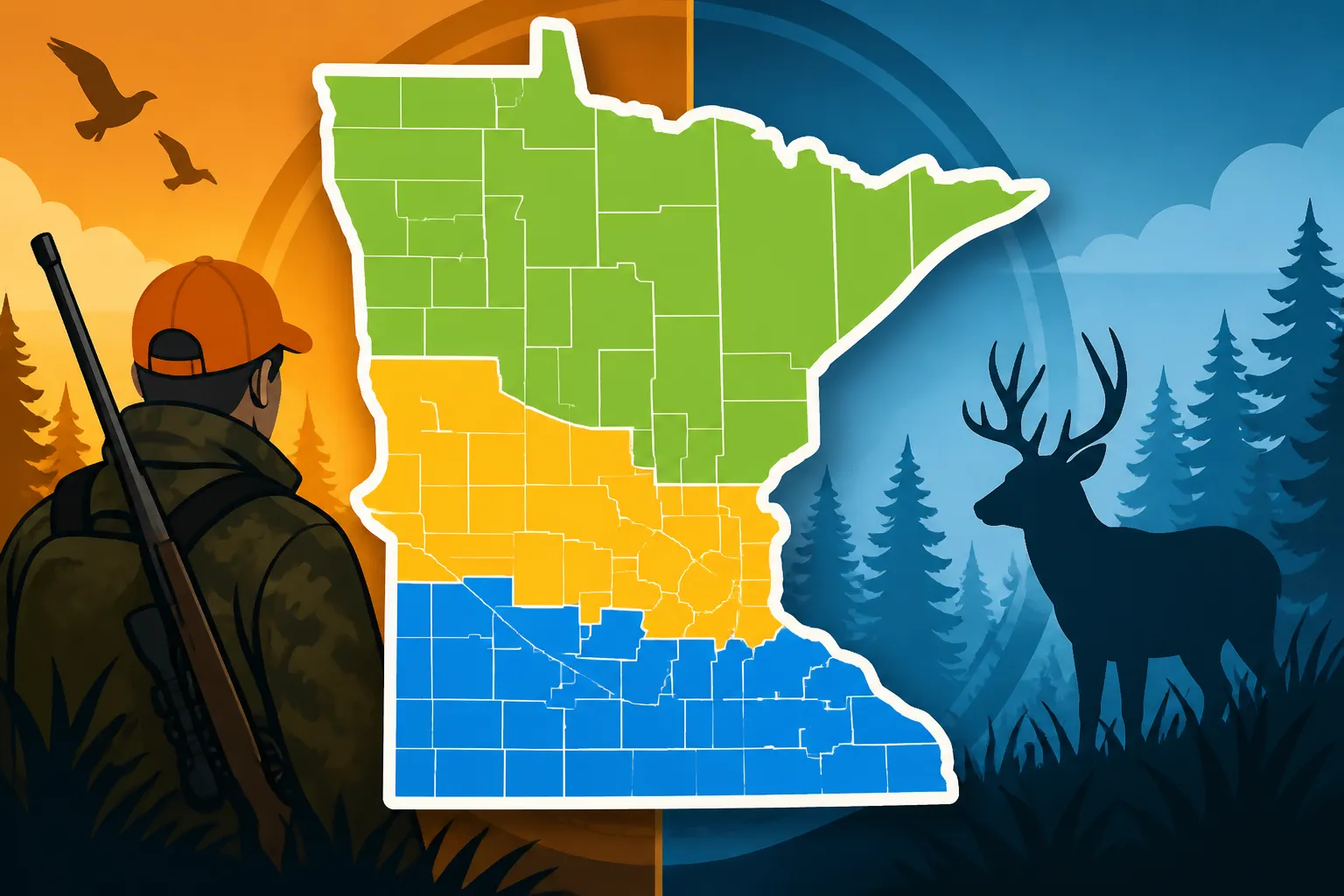
Which Zone a Minnesota County Falls In
Navigating Minnesota's hunting regulations can feel like trying to untangle a stubborn fishing line, especially when it comes to understanding which specific zone your chosen county or hunting spot falls into. It's a common frustration for hunters, both seasoned and new, because the rules and season dates can change dramatically from one permit area to the next, making proper planning incredibly difficult without a clear understanding. This guide is here to cut through that confusion, helping you confidently pinpoint the exact hunting zone for any Minnesota county, ensuring you're always hunting legally and effectively.
Unpacking Minnesota's Deer Permit Area System
Minnesota doesn't just divide its deer hunting opportunities by broad regions; instead, it uses a highly granular system of Deer Permit Areas (DPAs). Think of these as specific management units, often encompassing multiple counties or just portions of them, each with its own set of rules, antlerless permit options, and even season lengths. This system is designed to manage the deer population at a very local level, addressing everything from agricultural damage to population goals in wilderness areas. Without knowing your DPA, you're essentially hunting blind.
The Different Flavors of DPAs: Intensive, Managed, and Lottery
Within the DPA framework, there are three primary types that dictate how many deer you can harvest, particularly antlerless deer. This is where understanding your zone really starts to pay off, as it impacts your tag purchasing decisions and overall hunting strategy. You'll want to be familiar with the nuances of Intensive, Managed and Lottery Permit Areas before the season even begins.
- Intensive Harvest Areas: These are often found in areas with high deer populations, sometimes near urban centers or agricultural lands where deer numbers need to be reduced. In these DPAs, hunters typically have multiple opportunities to harvest antlerless deer, often being able to purchase several antlerless permits or harvest antlerless deer on their regular deer license without needing a special lottery draw. The goal here is to significantly reduce the deer herd. If you’re looking to fill the freezer, these can be excellent choices, though they might also see higher hunting pressure.
- Managed Harvest Areas: These areas aim to maintain a stable deer population. Hunters might have a more limited opportunity for antlerless deer, often requiring the purchase of an antlerless permit or needing to apply for a lottery if antlerless permits are restricted. These areas balance hunter opportunity with population goals, ensuring a healthy herd for years to come without excessive overpopulation or underpopulation. Many of Minnesota’s prime hunting counties fall into this category.
- Lottery Areas: These DPAs have lower deer densities, or the DNR wants to increase the herd, so antlerless permits are very limited and awarded through a lottery drawing. If you don't draw a lottery tag, you're typically restricted to harvesting only antlered bucks. This is often the case in some northern Minnesota counties, where harsh winters can naturally reduce deer numbers, or in areas where the focus is on growing older, larger bucks. Applying for the antlerless lottery before September 10 is crucial if you plan to hunt one of these areas.
Understanding these distinctions is paramount. For example, if you're hunting in an Intensive area like parts of southeastern Minnesota's bluff country, you might fill multiple tags. But if you're in a Lottery area up near the Canadian border, your focus might shift entirely to buck hunting unless you're one of the lucky few to draw an antlerless tag.
The Impact of Minnesota's Statewide Rifle Rule Changes
For years, Minnesota had a patchwork of shotgun-only zones, primarily in the southern and central parts of the state, with rifles generally reserved for the northern forests. This created a huge headache for hunters who might hunt in different areas or who preferred rifles. Thankfully, recent changes have significantly simplified things, but there are still nuances. You can find comprehensive details in Minnesota's New Statewide Rifle Rules.
Why Straight-Wall Cartridges Mattered (and Still Do for Some)
The big news in recent years was the legalization of straight-wall rifle cartridges statewide for deer hunting. This was a game-changer for many hunters who previously had to use shotguns or muzzleloaders in those former shotgun zones. Straight-wall cartridges, like the .45-70 Government, .350 Legend, or .450 Bushmaster, offer rifle-like performance but are deemed safer for more populated areas due to their lower maximum range compared to bottlenecked rifle cartridges. This change brought modern rifle technology to many hunters who were previously limited to slug guns.
While bottlenecked cartridges (like your typical .30-06 or .270) are now generally legal statewide for deer hunting, some counties still maintain a shotgun-only ordinance for local reasons. It’s a bit of a leftover from the old system, and it means you can’t just assume your favorite rifle is good to go everywhere. You absolutely need to check. Why Straight-Wall Rifles Are Now Legal Statewide provides further detail on the history and reasoning behind these changes.
Identifying the Thirteen Remaining Shotgun-Only Counties
This is where the direct query comes in: knowing which counties still have restrictions. Despite the statewide rifle legalization, thirteen counties in Minnesota retain local ordinances that restrict firearms for deer hunting to shotguns (with slugs), muzzleloaders, and certain pistol-caliber firearms. These counties are typically found in more densely populated areas or regions with unique geographical considerations.
Here are the counties that have chosen to maintain shotgun-only regulations:
- Anoka
- Carver
- Dakota
- Hennepin
- Ramsey
- Scott
- Washington
- Olmsted
- Wabasha
- Goodhue
- Rice
- Stearns (southern portion)
- Wright
If you plan to hunt in any of these counties, even with the new statewide rifle rules, you'll still need to use a shotgun with slugs, a muzzleloader, or a pistol-caliber firearm. This is a critical piece of information that can save you a lot of headache, or worse, a violation. Always double-check Which Thirteen Counties Kept Shotgun-Only Rules before heading out into the field.
Locating Your County's Specific Deer Permit Area
Alright, so you know the general rules about DPAs and the rifle situation, but how do you find the exact DPA your hunting grounds fall into? This is often the trickiest part, as county lines don't always align perfectly with DPA boundaries, especially in larger counties that might span multiple zones.
Utilizing the Minnesota DNR Website and Map Tools
The Minnesota Department of Natural Resources (DNR) website is your absolute best friend for this. They provide interactive maps and permit area descriptions that are constantly updated.
- Start with the DNR's Deer Permit Area Map: Head to the official Minnesota DNR website and look for their interactive deer permit area map. This map allows you to zoom in on specific regions, and often, by clicking on a DPA, it will bring up a pop-up box with details about that specific area, including its DPA number, harvest type (intensive, managed, lottery), and any special regulations. This is the most authoritative source.
- Use the Recreation Compass: The DNR's Scouting With the Minnesota Recreation Compass App is another fantastic tool. Available for both desktop and mobile, this mapping application allows you to overlay different layers, including public land boundaries, roads, and crucial for our discussion, the DPA boundaries. You can drop a pin on your intended hunting spot and immediately see which DPA it falls within. Many hunters also use this to identify Finding Your Minnesota Deer Permit Area before planning their scouting trips.
- Check the Current Hunting Regulations Handbook: Always carry or reference the most current Minnesota Hunting and Trapping Regulations Handbook. While maps are digital, the printed guide or PDF version will list all DPAs, often with general county associations, and provide a clear overview of the season dates for Minnesota Deer Seasons and Permit Areas. It’s your offline bible for the hunting season.
Third-Party Mapping Applications Like GoHunt
Beyond the official DNR tools, many hunters rely on robust third-party mapping applications that integrate DPA boundaries, public land information, and topographic maps. Services like GoHunt are incredibly popular for their detailed mapping layers, which can show you exactly where DPA lines run, even down to a specific timber stand. With GoHunt, you can usually select a "Hunting Units" or "Game Management Units" layer that will display the DPA boundaries, allowing you to instantly identify which zone you're in. These apps are particularly useful when you're scouting new ground or hunting near a DPA boundary, as they provide real-time GPS location relative to those lines. Whether you're planning a hunt on public land or trying to understand permission on private parcels, GoHunt can make identifying these zones much easier.
Let's look at a simple example. Say you're planning a trip to the Brainerd Lakes Area. You'd zoom in on that region on the DNR map or GoHunt, and you might see that parts of Crow Wing County fall into DPA 224 (often a Managed area) while other sections might be DPA 244 (perhaps a Lottery area, depending on the year's specific designations). This precision is vital because those two DPAs could have entirely different rules for antlerless harvest.
Navigating Different Hunting Season Structures by Zone
Knowing your DPA isn't just about deer numbers; it also influences your hunting method and when you can hunt. Minnesota has a variety of seasons, and while some are statewide, many are tied directly to these permit areas.
Archery Season and Its Duration
Minnesota's archery season is famously long, often running from mid-September right into December. However, even within this broad timeframe, there can be subtle variations based on the DPA. Some areas, particularly those designated as Intensive or Managed, might have extended opportunities for archery hunters, allowing for a longer season to help meet harvest goals. In contrast, some northern Lottery areas might see a slightly shorter window, or simply a period where deer movement is very limited. This longer season in many areas means you can be out there for Bowhunting Minnesota's Long Archery Season, giving you ample opportunity to fill a tag.
For instance, in some parts of the metro deer permit areas (which are often Intensive), the archery season can run almost continuously, providing ample opportunity to hunt even into the winter months, helping to manage suburban deer populations. This is a stark contrast to some far northern areas where harsh conditions might effectively end the season earlier for many hunters.
Firearm Seasons: 100, 200, 300A, and 300B Series
The general firearm deer seasons are probably where the zone system gets the most complex, as they are broken down into specific "series" that correspond to different regions and opening dates. This dictates Minnesota's Firearm Deer Season by Zone.
- 100 Series: Primarily encompasses the northern forest zone. This area generally has a single, continuous firearm season, often opening the first Saturday in November and running for about 16 days. The 100 series is famous for its "Big Woods" hunting culture, and understanding Opening Weekend Tactics in the 100 Series is key.
- 200 Series: Typically covers the central forest/farmland transition zone. This series usually offers a split season, with an earlier A season and a later B season, or sometimes a continuous season that starts later than the 100 series. Hunters might need to declare which season they intend to hunt when purchasing their license.
- 300A Series: Largely covers the agricultural regions of western and southern Minnesota. This series usually has a single, shorter season, often opening a week after the 100 series. These areas are known for larger deer and often involve hunting near agricultural fields.
- 300B Series: These are the late firearm zones, typically found in specific areas, often to address chronic deer issues or provide additional harvest opportunities. The 300B Late Firearm Zone offers a later opening date, often after the peak rut, extending the firearm season into late November or early December, providing a unique challenge and opportunity for hunters.
Each of these series has its own opening and closing dates, and understanding which series your county or DPA falls into is absolutely non-negotiable for planning your hunt. A hunter expecting to open in the 100 series could find themselves arriving a week early or late if their DPA is actually in a 300A zone. The specific dates can vary slightly year to year, so always confirm with the most current regulations.
Permit Area Types and Your Hunting Strategy
The DPA type (Intensive, Managed, Lottery) also influences specific hunting tactics and opportunities beyond just antlerless tags. It shapes the entire hunting experience.
Hunting Opportunities in Intensive and Managed Zones
In Intensive and Managed zones, particularly in areas like southeastern Minnesota's bluff country (which often falls into Managed or Intensive categories), you'll often find more liberal bag limits and a greater focus on herd control. This means opportunities for Late-Season Antlerless Hunting in Minnesota are more common, and hunters can frequently take advantage of additional special hunts or extended seasons. These areas are generally where you have a better chance of filling multiple tags and contributing directly to population management. They might also feature more diverse habitat, from sprawling farmlands to thick river bottoms, requiring a versatile approach to hunting. In these zones, using a map like GoHunt to identify specific cover and food sources within your DPA can give you a significant advantage.
Navigating the Challenges of Lottery Zones
Lottery zones, by contrast, present a different set of challenges. With fewer antlerless permits, the emphasis often shifts to hunting mature bucks. This might mean adjusting your scouting strategy to focus more on buck sign, travel corridors, and bedding areas. Patience becomes an even greater virtue. When planning a hunt in a Lottery DPA, it's wise to consider supplemental methods like Muzzleloader Deer Hunting in Minnesota during the December season, which can offer an additional opportunity to harvest a deer if you didn't fill your tag during the regular firearm season. Hunters in these areas also typically spend more time scouting public lands like the Superior or Chippewa National Forests, seeking out pockets of deer away from pressure.
Remember, every DPA is a unique ecosystem, and the DNR manages each based on local conditions, population goals, and even public input. Your job, as a responsible hunter, is to understand these distinctions and adapt your approach accordingly. Always check the DNR website or your GoHunt app for the most up-to-date DPA boundaries and regulations before heading into the woods.
| DPA Harvest Type | Antlerless Permit Availability | General Deer Population Goal | Typical Location Examples |
|---|---|---|---|
| Intensive | High; often multiple tags | Reduce / Significantly Lower | Urban fringes, high ag-damage areas |
| Managed | Moderate; often 1 tag via permit | Stable / Maintain | Central forest-farmland transition |
| Lottery | Low; via lottery application | Increase / Grow | Northern forests, remote areas |
Disclaimer
Always consult the official Minnesota Department of Natural Resources (DNR) website and the current year's hunting regulations handbook for the most accurate and up-to-date information on hunting zones, permit areas, and regulations. Hunting laws and boundaries can change annually, and it is the hunter's responsibility to ensure compliance.