Thermal and Night Vision Rules in Minnesota
Minnesota hunting regulations regarding thermal and night vision optics explain what allowed tools protect safety, conservation, and fair chase.
See it before it sees you.
Binoculars, spotting scopes, and rangefinders, plus packs, boots, layering systems, blinds, and stands that earn their weight.
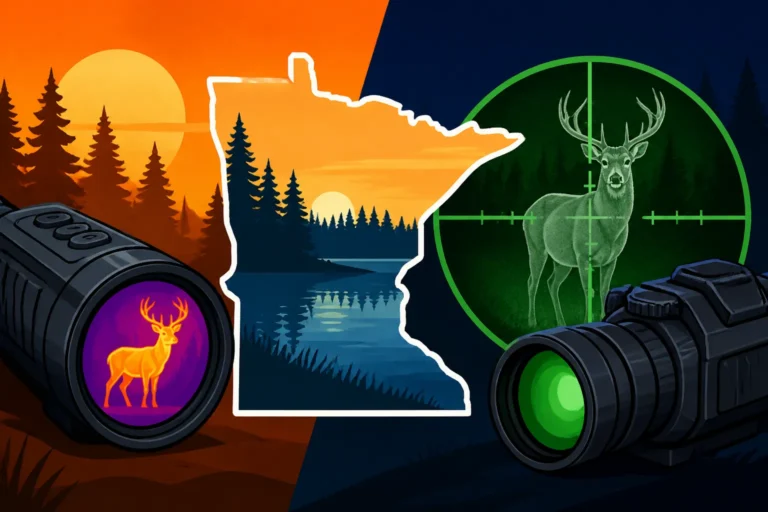
Minnesota hunting regulations regarding thermal and night vision optics explain what allowed tools protect safety, conservation, and fair chase.

Cold Minnesota deer hunting weather causes lens condensation on binoculars and rifle scopes when warm breath hits freezing glass.
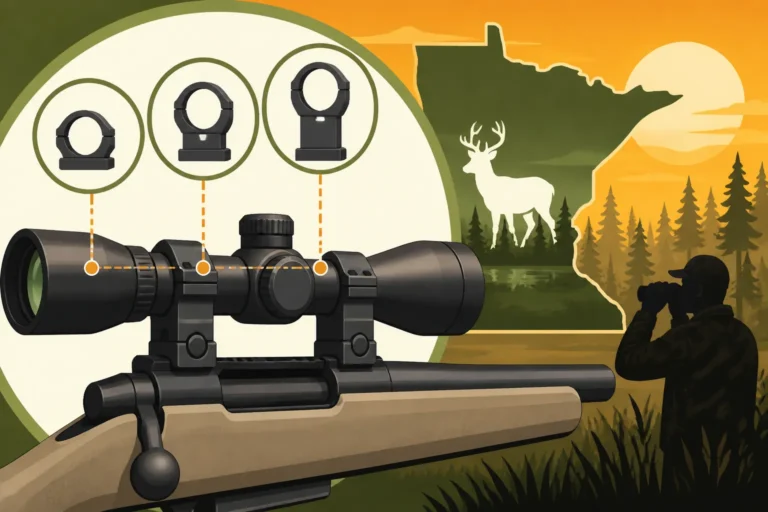
Scope mounting and correct ring height ensure rifle accuracy, prevent gear failure, and protect optics during deer hunting.
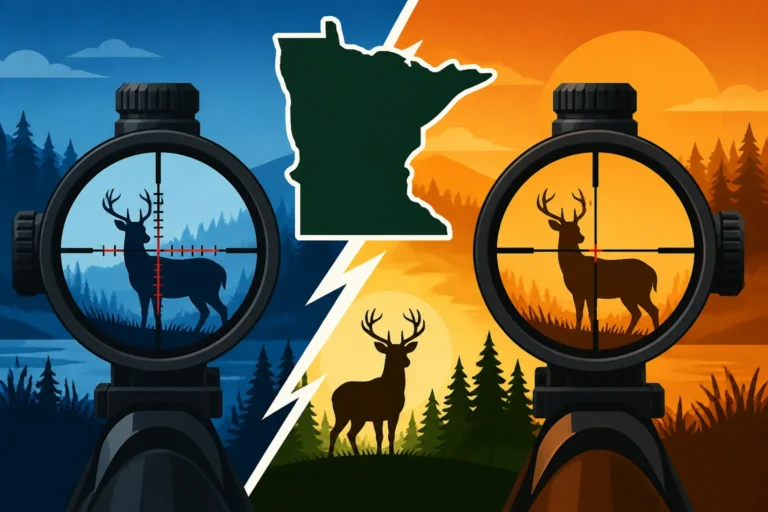
First focal plane and second focal plane rifle scopes differ in reticle placement, affecting aiming accuracy at varying magnifications.
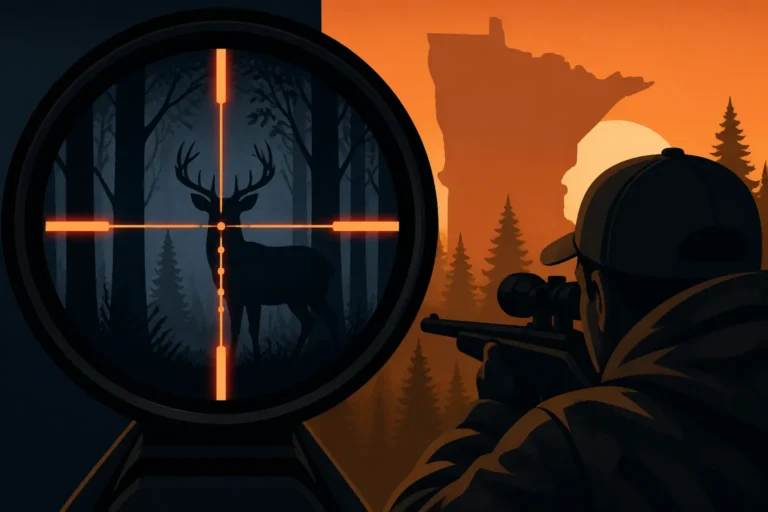
Illuminated rifle scopes provide clear aiming points for Minnesota deer hunters targeting trophy bucks in dark timber during the early November rut.
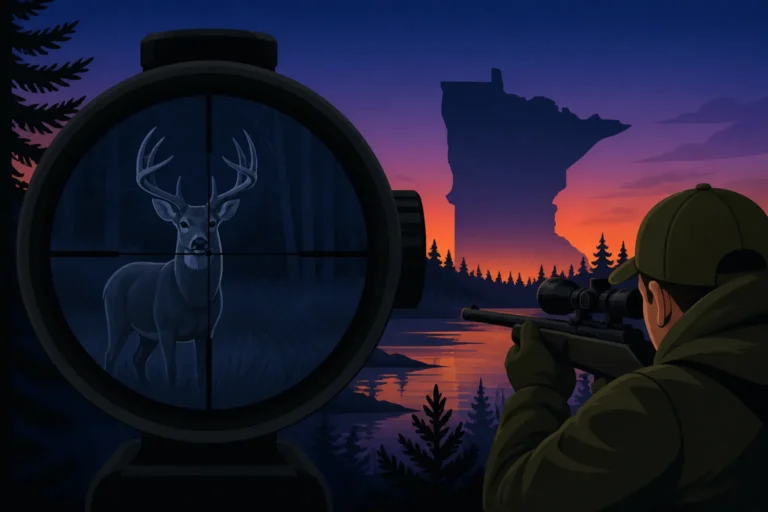
Rifle scope low-light performance relies on objective lens size, exit pupil calculations, glass quality, and multi-coated lenses.

Rifle scope magnification choices for Minnesota deer hunting cover fixed and variable power options for woods, fields, and 200 yard shots.
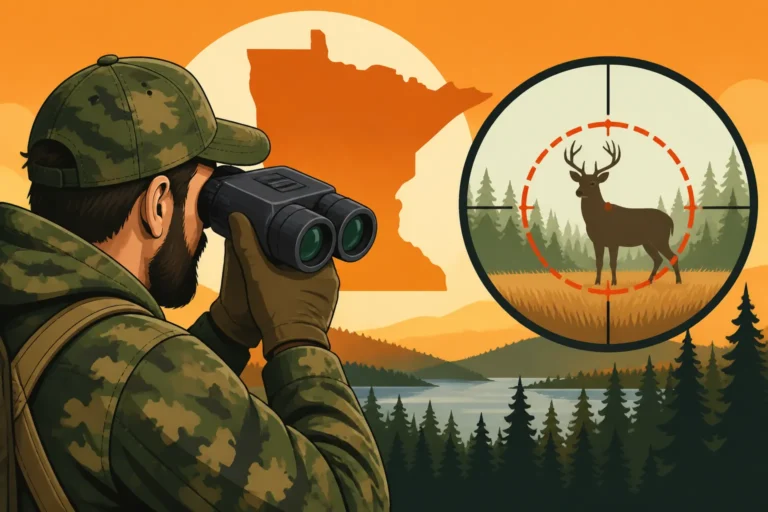
Rangefinding binoculars combine optical binoculars and laser rangefinders, helping Minnesota hunters measure yardage without switching gear.
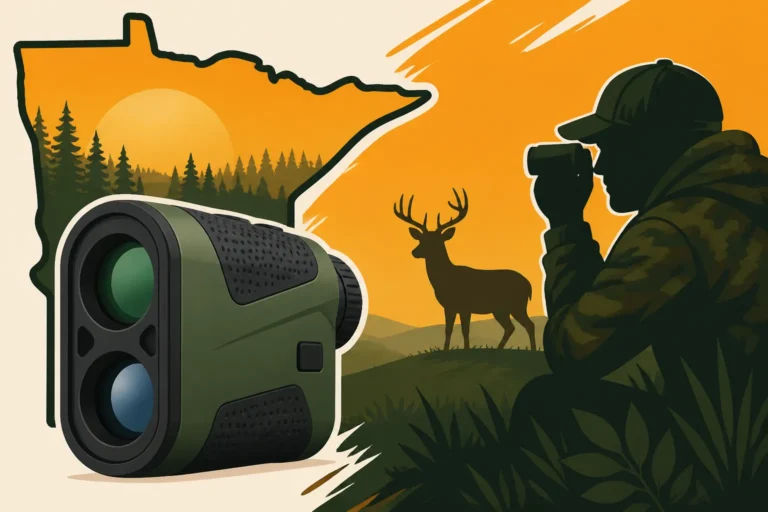
Budget rangefinders for Minnesota hunters provide reliable distance measurements under 100 yards without expensive gear.

Budget binoculars under one hundred fifty dollars for Minnesota hunting, evaluating optical performance, low light visibility, and durability.