Gray Versus Fox Squirrels in Minnesota
It’s a common scenario in Minnesota: you’re still-hunting through a quiet woodlot or sitting on a field edge, and a flash of movement catches your eye. A squirrel! But wait, is it a gray squirrel or a fox squirrel? For new hunters, or even seasoned veterans just trying to keep track, differentiating between these two common Minnesota residents can sometimes be tricky. This guide is going to clear up that confusion, diving deep into the unique characteristics, habits, and habitats of both gray and fox squirrels so you can identify them with confidence, whether you're carrying a .22 or just a pair of binoculars.
Understanding Minnesota's Common Squirrels: A Quick Look
Minnesota is home to several squirrel species, but when most folks talk about "squirrels," they're usually referring to the eastern gray squirrel and the eastern fox squirrel. These two charismatic rodents populate much of our state's woodlands and urban areas, providing endless entertainment and, for many, excellent small game hunting opportunities. Knowing which one you're looking at can inform your hunting strategy or simply deepen your appreciation for our state's wildlife.
The Elusive Gray Squirrel
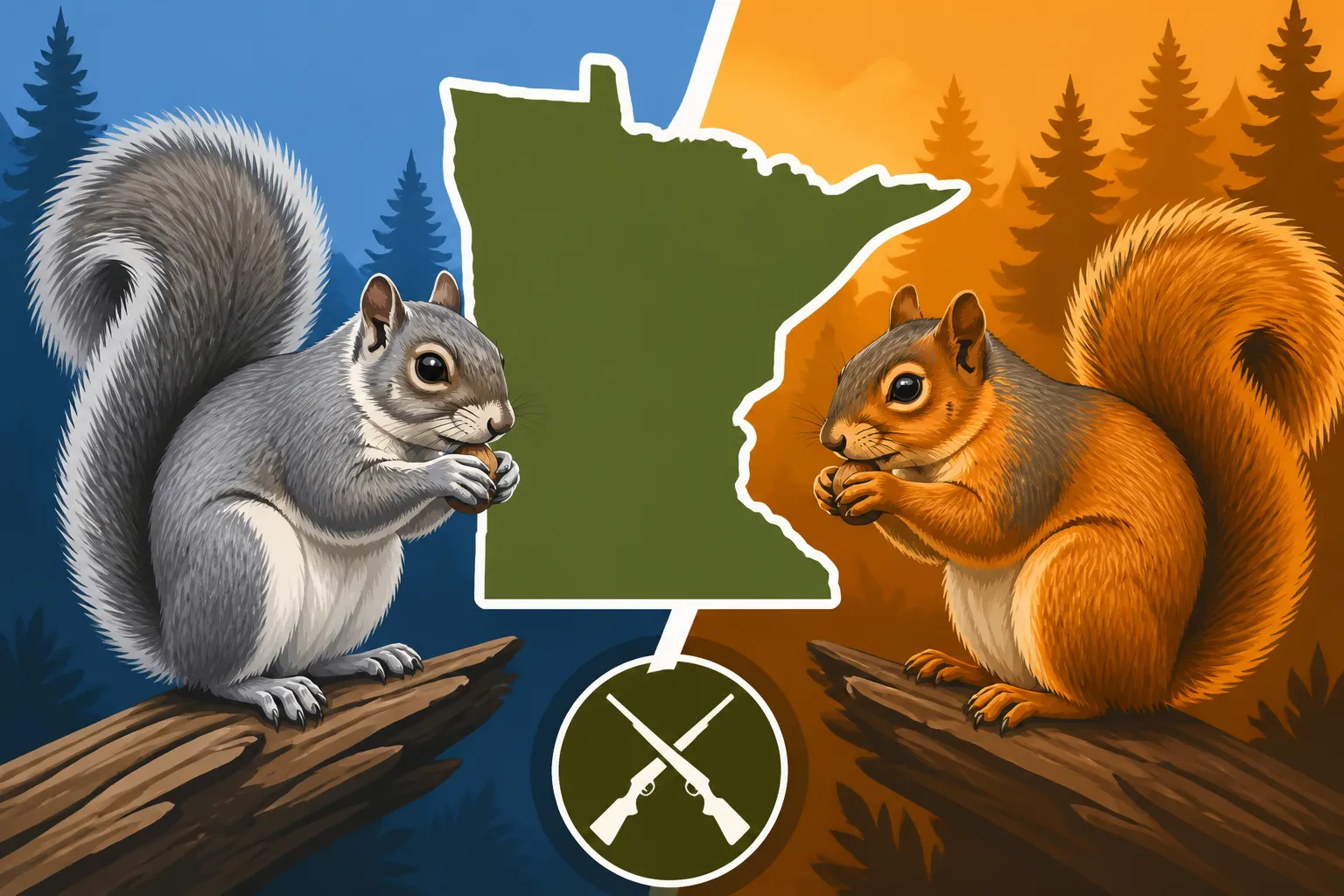
The eastern gray squirrel (Sciurus carolinensis), often just called a "gray squirrel," is what many people picture when they think of a squirrel. They're typically smaller and appear sleeker than their fox squirrel cousins. Their fur is predominantly a grizzled gray on their backs and sides, often with a brownish wash, and a crisp white or light gray belly. Their tails are famously bushy and often fringed with white hairs, giving them a more "classic" squirrel look. These squirrels are masters of the canopy, spending a significant amount of their lives in the trees. When startled, a gray squirrel's first instinct is usually to bolt straight up the nearest tree, flattening itself against a limb or circling the trunk to avoid detection. This arboreal nature means they thrive in mature hardwood forests, particularly those with dense canopies and a good mix of oak, maple, and basswood trees that provide plenty of nuts and cavities for dens.
Hunting gray squirrels often feels like a game of hide-and-seek. Their quick, erratic movements and tendency to stay high in the trees make them challenging targets. You might spot one foraging on the forest floor, only for it to disappear up a trunk the moment it catches wind of you. They're often found in family groups or loose colonies, so if you spot one, there might be others nearby. Understanding their preference for dense, mature woods means you'll be focusing your efforts where they feel most secure. Squirrel Hunting a Minnesota Oak Ridge can be incredibly productive for these quick-moving targets.
The Robust Fox Squirrel
In contrast, the eastern fox squirrel (Sciurus niger) presents a much different profile. They are noticeably larger and heavier-bodied than gray squirrels, often appearing stockier and more robust. Their coloration is distinct, typically featuring a reddish-orange or rusty-brown back, sides, and belly, with a lighter, sometimes yellowish-orange, patch on their underside. Their tails are also bushy, but usually match their body color and lack the prominent white fringe of the gray squirrel, instead often having a yellowish or orange cast. Fox squirrels are more at home on the ground than gray squirrels, often seen loping across open spaces or foraging extensively on the forest floor. They're less shy about venturing away from the immediate cover of trees, making them a common sight in more open woodlands, farm fields, and even suburban parks.
When a fox squirrel senses danger, its first reaction isn't always to scramble up a tree. Instead, they might freeze in place, relying on their camouflage, or bark loudly from a branch before eventually making a break for it. Their larger size and more terrestrial habits can make them seem less skittish in certain situations, though a pressured fox squirrel can certainly be just as wary. You'll often find them along the edges of cornfields, in smaller woodlots, or in sparse oak groves where they can easily access both tree-borne foods and agricultural crops. Hunters pursuing fox squirrels might find themselves focusing on areas with less dense canopy, like shelterbelts or scattered stands of timber bordering open land.
Key Differentiating Factors: Spotting the Details
While both species are undeniably squirrels, observing a few key details can quickly help you tell them apart. It's not just about a quick glance; really taking in their size, the nuances of their fur, and how they interact with their environment will make all the difference. Think of it like distinguishing between two similar breeds of dog – there are subtle but consistent indicators.
Size and Coloration
The most immediate and striking difference between gray and fox squirrels is their size. Fox squirrels are the giants of Minnesota's squirrel world, often weighing between 1.5 to 2.5 pounds and measuring 18 to 28 inches from nose to tail tip. They have a noticeable heft to them. Gray squirrels, on the other hand, typically weigh 1 to 1.5 pounds and are usually 15 to 20 inches long. While these are averages, the difference in body mass is usually quite evident when you see them side-by-side or have a good perspective.
Coloration, though sometimes variable, also offers reliable clues. Gray squirrels typically have that classic salt-and-pepper gray on their backs, often with a subtle rust or brown patch behind their ears or on their flanks. Their bellies are stark white. Their tails are a mix of black, white, and gray, creating a "frosted" or "salt and pepper" appearance. Fox squirrels, however, are dominated by reddish-orange and rusty-brown tones. Their backs and sides can range from a dull brown to a vibrant orange-red, and their bellies are typically a lighter orange, yellow, or cream, never pure white. The tail of a fox squirrel often mirrors its body color, being more reddish or tawny brown, without the distinct white edging you'd see on a gray squirrel. There can be melanistic (black) gray squirrels, especially in certain regions, which can throw a curveball, but these are still typically smaller and retain the gray squirrel body shape.
Habitat Preferences and Diet
Their choice of home turf is another strong indicator. Gray squirrels are almost inseparable from dense, mature forests, particularly those with a strong component of nut-bearing trees like oaks, hickories, and walnuts. They prefer closed canopy woods, where they can travel extensively through the treetops without touching the ground, relying on tree cavities for denning and nesting. You'll find them deep in the Northwoods, in large state forests, and even in older city parks with extensive tree cover. Their diet primarily consists of acorns, hickory nuts, walnuts, and beechnuts, supplemented by tree buds, fungi, and sometimes insects. Knowing this helps when you're Scouting Minnesota Public Land Before Season, as you'll focus on areas that fit this description.
Fox squirrels are far more adaptable and tolerant of varied habitats. While they still enjoy woodlands, they gravitate towards more open forests, woodlots, riparian (riverbank) corridors, and forest edges that border agricultural fields. They thrive in areas where trees are more scattered, and they spend a significant amount of time on the ground foraging. This preference often places them near cornfields, where they'll happily feed on waste grain, or in open oak savannahs. They use tree cavities and build leaf nests like grays, but their willingness to be on the ground makes them comfortable in less dense cover. Their diet is broader, including a lot of what gray squirrels eat, but also incorporating more seeds, buds, fungi, and notably, corn and other cultivated crops.
Behavior and Vocalizations
Watch how a squirrel moves and what it sounds like, and you'll gain further insight into its identity. Gray squirrels are incredibly agile and quick in the trees. They'll zip up and down trunks, leap between branches, and generally seem to prefer the arboreal world. When threatened, they often "spiral" around a tree trunk, keeping the tree between themselves and the perceived threat, or dash to the highest, densest cover available. Their vocalizations include a sharp, high-pitched "quack-quack-quack" bark and a softer "chuck-chuck-chuck" as they chew on nuts.
Fox squirrels, while capable climbers, spend much more time on the ground. You'll see them scampering across open lawns, fields, or along fallen logs. When spooked, they might make a dash for a tree, but they're just as likely to freeze mid-stride, hoping to blend in, or run a short distance and then climb a bit, perching on a low branch to assess the situation. They tend to be a bit less frantic in their escape. Their calls are often deeper and more guttural than a gray squirrel's, a coarser, more drawn-out "quaaak" or a chattering sound. Sometimes, a fox squirrel will even give a soft "cluck" sound, especially if it's agitated but not fully alarmed.
Here's a quick comparison table to help solidify these differences:
| Characteristic | Eastern Gray Squirrel | Eastern Fox Squirrel |
|---|---|---|
| Average Size | Smaller (15-20 inches, 1-1.5 lbs) | Larger (18-28 inches, 1.5-2.5 lbs) |
| Primary Color | Grizzled gray, sometimes brownish wash | Reddish-orange, rusty-brown, cinnamon |
| Belly Color | Distinct white or very light gray | Lighter orange, yellow, or cream (never pure white) |
| Tail Appearance | Bushy, often "frosted" with white-tipped hairs | Bushy, typically same color as body, less white fringe |
| Preferred Habitat | Dense, mature hardwood forests (oaks, maples) | Open woodlands, forest edges, woodlots near fields |
| Arboreal Tendency | Highly arboreal, travels through canopy | More terrestrial, spends significant time on ground |
| Reaction to Threat | Spirals trees, bolts to high cover | Freezes, barks from lower branches, runs on ground |
| Vocalizations | Sharp "quack-quack," softer "chuck" | Deeper "quaaak," chattering, sometimes a "cluck" |
Hunting Strategies for Each Species in Minnesota
Understanding the differences between gray and fox squirrels isn't just for curiosity; it directly impacts how and where you'll hunt them successfully in Minnesota. Both offer fantastic opportunities for small game hunting, providing a chance to hone your stalking skills, practice with a .22 rifle or small-gauge shotgun, and put some delicious wild game on the table. Always check Minnesota Small Game and Upland Bird Seasons before heading out.
Tactics for Gray Squirrels
Hunting gray squirrels often means immersing yourself in the deeper woods. They are creatures of dense cover, and you'll want to be where the big nut trees are. Still-hunting, where you move very slowly and deliberately through the forest, pausing frequently to scan the trees and listen, is incredibly effective. Look for areas with a mix of mature oaks and other mast-producing trees. Early mornings or late afternoons, when squirrels are most active, are prime times. A good pair of binoculars is essential for spotting their subtle movements high in the canopy or a tell-tale twitch of a tail. When you see one, move slowly and try to position yourself for a clear shot. Remember their spiraling defense; sometimes, moving to the opposite side of the tree can get them to show themselves.
Another effective method for gray squirrels is to find a good ambush point in a productive woodlot and simply sit quietly. Many hunters overlook the simple effectiveness of sitting still in a prime feeding area. Look for "cuttings" – the chewed remains of nuts – on logs or under trees, which indicate recent feeding activity. If you find a pile of fresh cuttings, it's a good bet squirrels are frequenting that spot. Silence and patience are your best friends here. A still day with little wind is ideal, as the rustling of leaves in the breeze can mask their movements and make it harder to hear them. Reading Cuttings Under an Oak can tell you exactly where to set up. Consider carrying a .22 rifle for precise shots, or a small-gauge shotgun (like a .410 or 20-gauge) with small shot for quicker, closer encounters.
Tactics for Fox Squirrels
Fox squirrels, with their more terrestrial nature and preference for open woods and field edges, often require a slightly different approach. You'll frequently find them where the woods meet agricultural fields, in smaller, scattered stands of timber, or along riparian zones. One highly effective tactic is "cut hunting" – identifying areas where squirrels have been cutting and feeding on nuts or corn. Walk slowly along field edges or through open woodlots, keeping an eye out for fresh cuttings under oak or walnut trees, or even discarded corn cobs in the woods adjacent to fields. Once you find a spot with active sign, you can either still-hunt slowly through the area or set up an ambush.
Because fox squirrels spend more time on the ground and can be a bit more visible, they can sometimes be easier to spot than their gray counterparts. However, their larger size also means they offer a slightly bigger target, making them a good option for newer small game hunters. If you're hunting with a dog, especially a good squirrel dog, fox squirrels can provide excellent action, as their ground-dwelling habits make them a bit easier for a dog to track and tree. Bird Dog Gear for Minnesota Cover can be helpful if you plan on bringing a canine companion. As with gray squirrels, a .22 rifle is excellent for accuracy, but a shotgun can be effective if you're targeting them closer to the ground or as they move between cover. Remember, fox squirrels might freeze when they see you, so pause frequently and scan the trees and ground carefully.
Beyond the Basics: Ecological Role and Ethical Harvest
Hunting squirrels isn't just about bagging game; it's also about connecting with nature, understanding the ecological balance, and ensuring an ethical harvest. These small game species play vital roles in Minnesota's ecosystems and provide accessible hunting opportunities for many, often serving as an entry point into the wider world of hunting.
Ecological Role and Population Health
Both gray and fox squirrels are more than just targets; they are integral parts of Minnesota's forest ecosystems. They are prolific "tree planters," burying nuts and acorns for later consumption, many of which are never retrieved and go on to germinate. This seed dispersal helps regenerate forests, particularly after disturbances. They also serve as a crucial food source for a variety of predators, including hawks, owls, foxes, bobcats, and even bears. Their populations are generally robust across the state, fluctuating somewhat based on mast crop availability (the annual production of nuts, berries, and seeds). Healthy squirrel populations are often an indicator of a healthy forest ecosystem. Minnesota's Department of Natural Resources monitors small game populations to ensure sustainable hunting opportunities exist.
Their widespread presence and adaptability mean that even as landscapes change, these squirrels continue to thrive. While their preference for certain types of habitat might shift regionally, overall, they are not a species of conservation concern in Minnesota. This abundance means hunters can enjoy generous seasons and bag limits, contributing to a tradition that dates back generations.
Culinary Delights and Ethical Harvest
Beyond the thrill of the hunt, squirrels offer fantastic table fare. Many hunters consider squirrel meat to be among the Best-Eating Game in Minnesota, touting its lean, mild flavor. The meat is versatile and can be prepared in countless ways, from slow-cooked stews and braises to fried squirrel and gravy. Because they are smaller, it might take a few squirrels to make a meal, but the effort is well worth it for the delicious, natural protein.
When hunting any game, ethical practices are paramount. This includes ensuring clean, humane shots, knowing your effective range, and always identifying your target positively before pulling the trigger. Understanding the subtle differences between gray and fox squirrels helps in this regard, ensuring you're making informed decisions. Always familiarize yourself with current Minnesota Hunter Safety Requirements and local regulations, including shooting hours and bag limits. By respecting the animal and the environment, we uphold the integrity of our hunting traditions and ensure these opportunities remain for future generations.
Disclaimer
This article is for general informational purposes only and does not constitute professional advice. Laws, prices and regulations vary by location and change over time. Consult a qualified professional for guidance on your specific situation.