Minnesota Grouse Drumming Surveys
Every grouse hunter in Minnesota has felt that familiar mix of anticipation and uncertainty as fall approaches. Will this year be a banner year for birds, or will we be working extra hard to fill our vests? It's a perennial question, one that often sparks lively debate around campfires. Thankfully, there's a valuable tool that helps us understand the pulse of Minnesota's ruffed grouse population long before opening day: the annual Grouse Drumming Surveys. This guide will walk you through what these surveys are, why they're so important, how they're conducted right here in our state, and most importantly, how you can use their insights to put more birds in your bag.
What Are Grouse Drumming Surveys and Why Do They Matter?
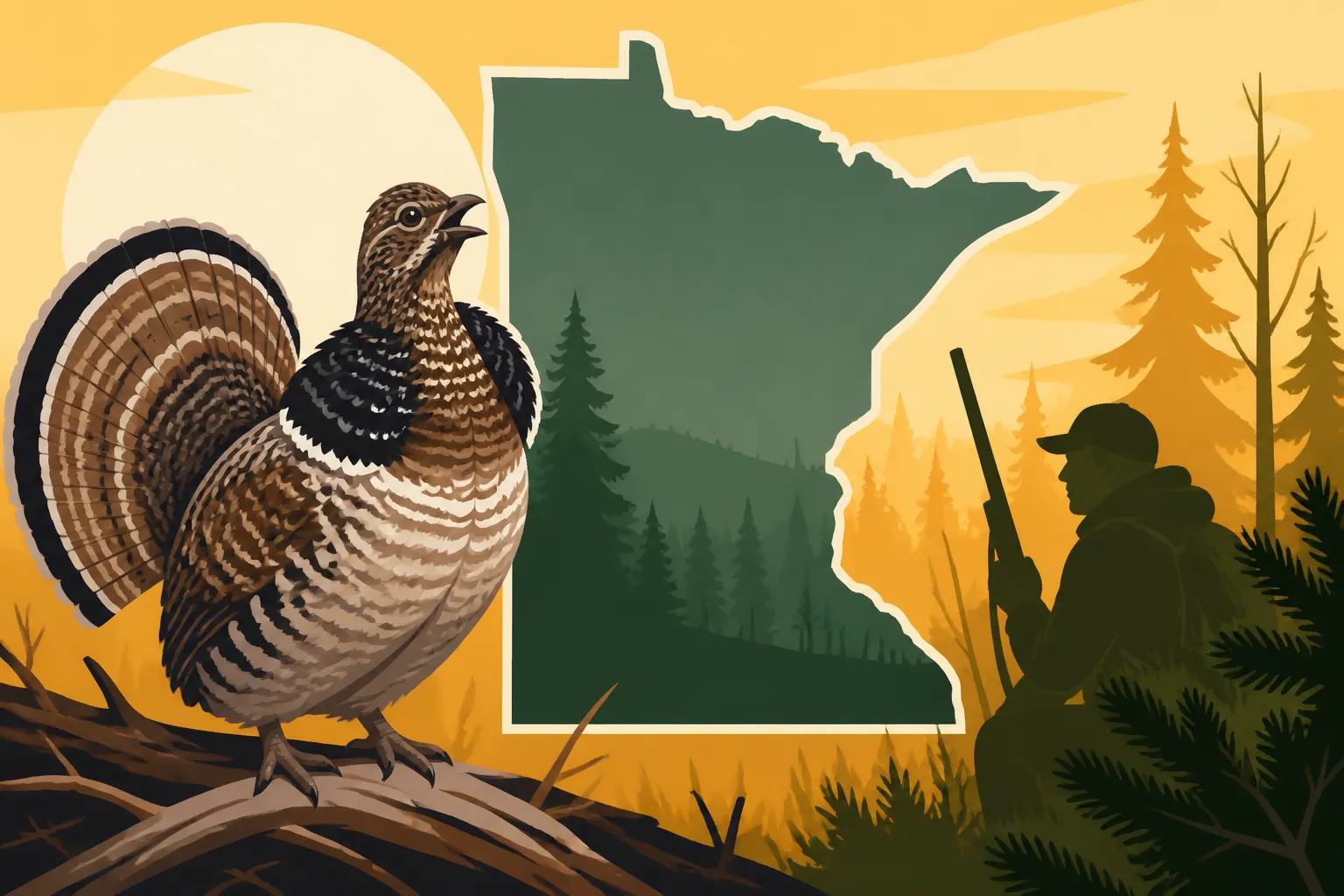
Before we dive into the nitty-gritty, let's understand the core of these surveys. They hinge on a very distinct and characteristic behavior of male ruffed grouse. Unlike many birds, ruffed grouse don't sing to attract mates or declare territory; instead, they "drum." This isn't a vocalization in the traditional sense, but rather a unique sound created by rapidly beating their wings against the air. It starts slowly, building into a rapid blur that produces a deep, resonant thump, thump, thump-thump-thump-thump-thump that echoes through the spring woods.
The Ruffed Grouse Drum and Its Significance
Imagine a male grouse perched atop a fallen log, his drumming log, often in a dense thicket of young aspen or alder. With puffed-up feathers and an air of defiance, he'll begin his drumming display. This percussive performance is primarily about attracting hens and warning off rival males. It's a loud and clear declaration of "This is my turf, and I'm ready to breed!" Because this behavior is so consistent and tied directly to the breeding season, it provides a reliable, audible signal that can be counted and tracked. Think of it as a census for grouse, where each drum beat is a declaration of presence. Without this distinctive behavior, getting a reliable count of these elusive woodland birds would be infinitely harder.
The drumming isn't just a quirky mating ritual; it's a vital indicator of a healthy, reproducing grouse population. A robust drumming display means active males, which usually correlates with successful breeding. Factors like winter severity, spring weather during nesting, and predator populations can all influence the vigor and number of drumming males, making this annual survey a critical snapshot of the grouse's current well-being. Knowing the health of the population is the first step toward effective management and, for us hunters, understanding what to expect when bird season rolls around.
From Drum to Data: The Purpose of the Surveys
So, why do natural resource agencies go to all this trouble every spring? The primary goal of grouse drumming surveys is to estimate the relative abundance of breeding ruffed grouse populations across Minnesota. It's not about counting every single bird, but rather establishing an index – a baseline and a trend. By consistently conducting these surveys year after year, biologists can track population fluctuations, identify long-term trends, and monitor the famous 10-year grouse cycle. If you've ever heard someone say, "It's going to be a good grouse year" or "The cycle is low," they're often referencing the patterns revealed by these very surveys.
This data is crucial for wildlife management decisions, helping to ensure sustainable hunting seasons. For instance, if drumming counts are significantly down in a particular region, it might signal underlying habitat issues or a particularly harsh winter that impacted survival. Conversely, high counts suggest a healthy, expanding population that can support robust hunting pressure. Beyond management, these surveys also validate the experiences of hunters and bird watchers on the ground, connecting scientific data with real-world observations. It allows us to understand not just if there are birds, but why their numbers are trending a certain way.
How Minnesota Conducts Drumming Surveys
The precision and consistency of these surveys are what make them so valuable. It's not just a casual listen; there's a strict methodology that has been refined over decades to ensure the data collected is comparable year after year, allowing for accurate trend analysis. This systematic approach is the backbone of understanding our grouse populations.
The Science Behind the Routes
Minnesota's grouse drumming surveys follow established routes, typically about 20 miles long, with 10 listening stops spaced at one-mile intervals. These routes are strategically located in areas known to be good grouse habitat, primarily across the forested regions of central and northern Minnesota. The surveys are conducted in the spring, generally from mid-April to mid-May, during specific weather conditions: light winds (less than 10 mph), no precipitation, and temperatures above freezing. These conditions ensure that the sound of drumming carries well and isn't obscured by environmental noise.
At each listening stop, surveyors, often dedicated staff or trained volunteers, wait for a brief period to allow any disturbance to subside, then listen intently for four minutes, recording every drum they hear. The direction and distance of the drum are often noted, though the key metric is simply the number of individual drumming males detected. This standardized procedure, performed at dawn when grouse drumming is most active, ensures that the data from one route can be directly compared to another, and from one year to the next. This is critical for tracking the elusive Minnesota Ruffed Grouse Numbers Today and understanding their fluctuations. For hunters interested in understanding patterns, knowing how these surveys are run can give you insight into the quality of the data.
Where the Surveys Happen
These carefully designed routes stretch across Minnesota's prime grouse country, covering vast tracts of aspen, birch, and mixed hardwood forests – the exact places grouse thrive. You'll find these routes concentrated in the northern two-thirds of the state, from the deciduous forests of central Minnesota up into the deep Northwoods near the Canadian border. These are the areas where hunters will often find excellent Grouse Hunting Minnesota Aspen Cover and where the drumming response is most vital.
While professional wildlife biologists conduct many of these surveys, the Minnesota DNR also relies on a network of dedicated volunteers, often passionate hunters and conservationists, who donate their time to drive these routes and listen. This collaborative effort ensures broad coverage and a deep commitment from the community. When it comes to hunting, knowing that these routes are in the very habitat you'll be scouting can give you confidence in the data's relevance. Understanding which areas are covered by these surveys can give you a better idea of where the Best Minnesota Counties for Grouse might be in any given season, and GoHunt can often help you identify public land within these known high-potential areas.
Interpreting Survey Results for Your Hunt
Okay, so the DNR collects this data, but how does that actually help you when you're lacing up your boots in September? Connecting those raw drumming counts to your personal hunting strategy is where the real value lies.
Connecting Drum Counts to Bird Numbers
The simplest way to interpret drumming survey results is to understand that a higher average number of drums per route generally correlates to a higher breeding population, and consequently, more birds on the landscape in the fall. If the statewide average drumming count is up significantly from the previous year, it’s a good indication that you might encounter more flushes. Conversely, if counts are down, you can expect to work a bit harder for your birds. It’s not a perfect one-to-one count of every bird, but it's a reliable index of population density.
It’s also important to look beyond just the statewide average. Often, the DNR will release data broken down by region, or even sometimes by specific permit areas or forest management units. This allows you to home in on areas where local conditions might be particularly good or bad, regardless of the broader trend. For example, one region might be experiencing a peak in the grouse cycle, while another is in a slight slump due to localized weather or habitat changes. Paying attention to these regional nuances can really fine-tune your hunting plans, helping you decide whether to stick to your usual haunts or explore new ground.
Using Data to Plan Your Season
Armed with the latest drumming survey results, you can become a much more strategic grouse hunter. If the counts are strong in a particular region, that's where you might want to concentrate your scouting and hunting efforts. You can combine this information with detailed habitat analysis. For instance, if surveys show high numbers in a northern county known for extensive aspen forests, you can then target specific types of cover within those forests, such as prime Grouse Hunting Minnesota Popple Cuts or alder runs.
Many hunters use mapping tools like GoHunt to overlay potential public hunting lands with known high-count survey areas. This allows them to visualize where the most promising grouse habitat might exist within regions that have shown strong drumming activity. You can identify clear-cuts, young aspen stands, and other key grouse habitat features on aerial imagery, then cross-reference that with areas that had good spring drumming activity. This kind of advanced scouting, sometimes combined with a pre-season walk to look for fresh cuttings or sign, can dramatically increase your odds. Remember, the goal is to be where the birds are, and these surveys are your best early clue. Scouting Minnesota Public Land Before Season with this data in mind can save you a lot of legwork.
Here’s a quick overview of how to interpret typical drumming count ranges:
| Drumming Count (Drums/Stop) | Interpretation for Hunters |
|---|---|
| 0.0 – 0.5 | Very Low. Expect extremely tough hunting; birds will be scarce. |
| 0.5 – 1.0 | Low. Hunting will be challenging; focus on prime, isolated cover. |
| 1.0 – 1.5 | Moderate. Decent hunting, but you'll still work for birds; consistent flushes in good cover. |
| 1.5 – 2.0 | Good. Solid hunting prospects; consistent action if you're in the right habitat. |
| 2.0+ | Excellent. Expect a banner year; high bird numbers and frequent flushes across suitable habitat. |
Note: These are general guidelines; actual hunter success depends on many factors including habitat, hunting pressure, and individual skill.
The Broader Picture: Grouse Cycles and Habitat
Understanding individual year-to-year fluctuations in drumming counts is valuable, but to truly grasp the dynamics of Minnesota's grouse population, we need to zoom out and look at the bigger picture: the long-term cycles and the critical role of habitat.
Understanding the 10-Year Cycle
One of the most fascinating aspects of ruffed grouse ecology is their famous population cycle, often described as a "10-year cycle." This isn't a strict calendar, but rather an observed pattern where grouse populations tend to peak, then decline to a low point, and then slowly recover over roughly a decade. While the exact causes are still debated, it's believed to be a complex interplay of predator-prey dynamics, disease, and environmental factors. When the cycle is at its peak, like we saw a few years ago, drumming counts are high, and hunters enjoy incredible numbers of birds. When it's at a low, things get tough.
Knowing Where Minnesota Sits in the Grouse Cycle is vital for managing your expectations and planning multi-year hunting strategies. If the cycle is on the upswing, you might plan more ambitious trips. If it's on the downswing, you might focus on finding those pockets of exceptional habitat that always seem to hold a few birds, even in tough years. Understanding How Long the Grouse Cycle Runs helps put individual season results into context, reminding us that good and bad years are part of a natural ebb and flow, not necessarily a permanent change. These long-term trends, heavily influenced by predator populations and climatic conditions, dictate the overall health of the grouse population.
Habitat as the Ultimate Driver
While cycles are natural, healthy habitat is the underlying foundation for any robust grouse population, regardless of where they are in their cycle. Ruffed grouse are intrinsically tied to young, regenerating forests, particularly those dominated by aspen (often called "popple" by locals). These young stands, typically 5-25 years old, provide dense cover from predators, abundant food sources like catkins and buds, and crucial nesting sites. Without this type of habitat, grouse simply cannot thrive. This is why you'll often hear hunters talking about looking for "thick stuff" or recent timber cuts when chasing grouse.
Forest management practices, especially timber harvesting, play a huge role in creating and maintaining this vital habitat. Well-managed clear-cuts, for example, can be grouse factories, promoting the vigorous growth of aspen and other deciduous trees that grouse depend on. Areas with diverse age classes of aspen, from young thickets to maturing stands, provide everything a grouse needs throughout its life cycle. This is where Aspen Management and Minnesota Grouse becomes so important. You can use mapping tools like the DNR's Recreation Compass or services like GoHunt to pinpoint logging activity or different forest stand ages on public lands, helping you identify prime areas. Ultimately, consistent drumming counts are a testament not just to the birds themselves, but to the health and abundance of the specific young forest habitat they call home. By supporting sound forest management, we ensure future generations of hunters will continue to hear that iconic drum beat in the Minnesota woods.
Disclaimer
This article is for general informational purposes only and does not constitute professional advice. Laws, prices and regulations vary by location and change over time. Consult a qualified professional for guidance on your specific situation.