Sitting a Field Edge in Late Season
Late season in Minnesota can be brutal on a hunter's motivation, especially when the landscape is frozen solid and deer seem to vanish into thin air. You've put in the time, endured the cold, and probably seen your fair share of empty fields, making you wonder if those elusive whitetails are even out there. But don't give up hope! This comprehensive guide is all about equipping you with the knowledge and tactics to successfully sit a field edge in late season, turning those challenging conditions into opportunities to fill your tag.
Understanding Late-Season Deer Movement on Field Edges
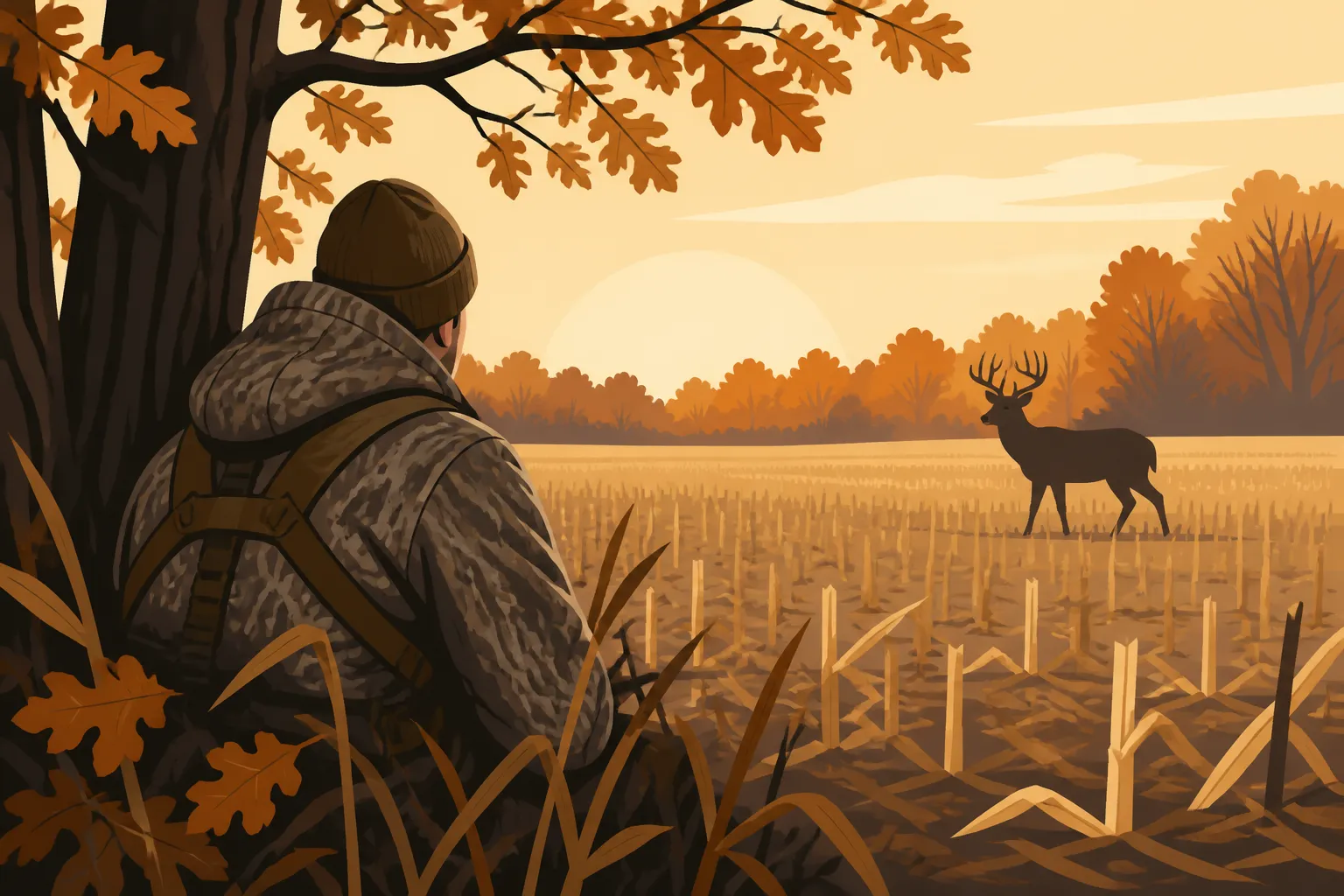
When the temperatures plummet and snow covers the ground, deer behavior shifts dramatically. Their primary focus becomes survival, and that means finding calories. This fundamental need drives their movements, making field edges, particularly those bordering dense cover, absolute hotspots if you understand what to look for.
Primary Food Sources in Winter
In the harsh realities of a Minnesota late season, deer are desperate for accessible, high-energy food. Crop fields, even those that appear "picked over," can be magnets. Cornfields are legendary late-season draws, as dropped ears or even just the stalks themselves provide residual energy. Deer will meticulously pick through rows, often in broad daylight if pressure is low enough. Soybean fields, while perhaps less obvious, still offer residual beans that are rich in protein and fat, crucial for winter survival. Often, these beans shatter and drop during harvest, leaving a hidden buffet. Beyond traditional agriculture, look for dedicated food plots planted with brassicas, winter rye, or turnips. These are specifically designed to be highly palatable and durable through cold weather, acting as a deer magnet when natural forage is scarce. The key is finding a field that still holds digestible food, not just barren stubble. Deer will work incredibly hard to access these precious calories.
Impact of Pressure and Weather
The late season brings its own set of challenges, and hunting pressure is a big one. Deer have been pursued for months by now, and they are incredibly wary. Any sign of human disturbance – an obvious entry path, a noisy approach, or a poorly placed stand – will send them seeking refuge deeper in the woods. They often become largely nocturnal, moving under the cover of darkness. This is where patience and proper strategy become paramount. Weather also dictates everything. A sudden cold snap after a mild period will often trigger increased daytime activity as deer need more calories to stay warm. Heavy snowfall can force deer to concentrate in areas with easier access to food and shelter, often near field edges bordering thick evergreens or dense brush. On the flip side, extremely cold, clear days can make deer hesitant to leave their thermal cover until the last possible light, making those fleeting moments just before dark your best bet. Always be checking the forecast and understanding how it might impact deer movement; it's like a puzzle you have to solve daily.
Bedding to Feeding Patterns
Deer in the late season are all about efficiency. They want to expend as little energy as possible to get to food, eat, and return to secure bedding. This creates predictable, though often subtle, travel corridors. Look for dense thermal cover like cedar swamps, thick stands of pines, or even heavy cattail sloughs adjacent to your target field. These areas offer protection from bitter winds and deep snow, making them prime bedding locations. Deer will often stage in the timber just inside the field edge, waiting for the safety of dusk before stepping out. Their travel routes between bedding and feeding will be the paths of least resistance – slight depressions in the terrain, fencelines, drainage ditches, or the edges of dense brush. Often, these routes connect directly to a specific corner or side of a field. Understanding Where Big Woods Bucks Bed in Minnesota can give you an edge, even if you're hunting farmland fringes, as the principles of security and thermal cover remain constant.
Strategic Scouting and Stand Placement
You can't just pick any field edge and expect success. Late-season hunting demands meticulous scouting and thoughtful stand placement. This isn't about covering ground; it's about pinpointing the exact spots where deer are most likely to show up, then setting yourself up to intercept them without being detected.
Identifying Key Food Plots and Crop Fields
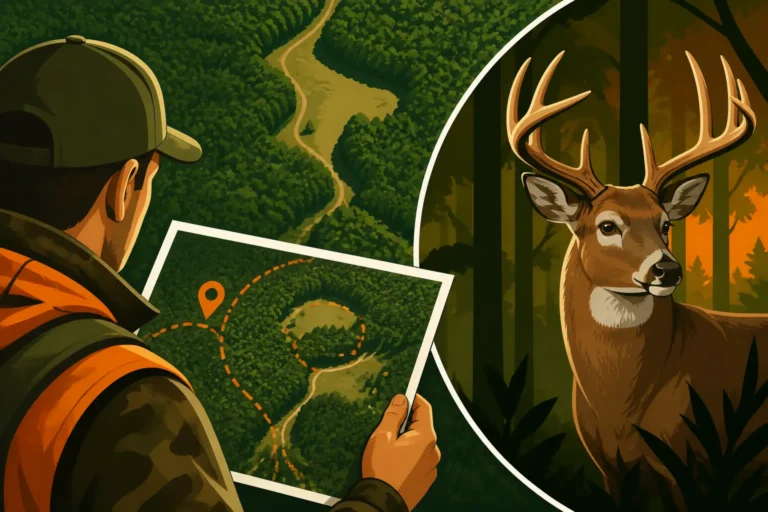
Effective late-season hunting starts long before you ever step foot in the woods with your weapon. Begin by poring over aerial maps, looking for those critical fields. Focus on standing corn, soybean remnants, or green food plots. Identifying these on a map is the first step, but ground verification is crucial. Sometimes, what looks like a promising field from above is actually barren once you get there. Walk the edges, looking for actual deer sign: tracks in the snow (freshness is key!), droppings, and browse lines along the field's edge. Pay close attention to trails leading into and out of the field, especially where they intersect with dense cover. A robust mapping tool like GoHunt can be invaluable here, allowing you to mark specific deer trails, bedding areas, and potential stand sites digitally before you even head out. It provides detailed satellite imagery that helps you visualize the terrain and vegetation, allowing you to scout from the comfort of your home. You'll want to find those fields that are genuinely holding deer, not just fields that could hold deer.
Entry and Exit Routes
This is where many late-season hunts go wrong. Your approach and departure are just as important as your time on stand. Deer are on high alert, and spooking them on your way in or out can ruin your hunt, and potentially the hunting for days to come. Plan your routes with extreme care, always considering the wind direction. You want to approach with the wind in your face or quartering to you, ensuring your scent is carried away from the deer. Utilize natural terrain features for concealment – drainage ditches, hedgerows, thickets, or deep timber. If you're hunting a public land field edge, think about Finding Ground Others Walk Past and use less obvious, more arduous entry routes that other hunters might avoid. Avoid walking directly across the field itself, as this leaves a heavy scent trail and is easily seen by watchful eyes. For those challenging retrieves after a successful hunt, consider your exit too. Sleds and Drags for Snow Country can be a lifesaver for getting a deer out without disturbing other hunters or future deer movement.
Optimal Stand/Blind Locations
Once you’ve identified the prime feeding fields and potential travel corridors, it’s time to pick your specific setup. For field edges, you generally have two main options: a treestand or a ground blind. If you're using a treestand, look for trees that offer excellent concealment against the skyline, preferably evergreens or hardwoods with plenty of natural cover. Focus on pinch points where deer traffic is funneled, or inside corners of the field where deer tend to cut across. Being positioned just inside the timber line, perhaps 10-20 yards in, can give you a better shot at deer that are staging or hesitant to fully commit to the open field.
If a treestand isn't feasible or you prefer more warmth and concealment, a ground blind can be incredibly effective in late season. Position it in natural cover, like a brush line or a clump of cattails, ensuring it blends in seamlessly. Many hunters find success by Brushing In a Blind on a Field Edge, giving it a natural look long before hunting it. Make sure your shooting lanes are clear but that the blind itself remains hidden. Think about prevailing winds for your hunt duration and set up on the downwind side of the anticipated deer approach. For instance, if deer are likely to come from a specific thicket, you want your wind blowing away from that thicket and across the field. Always consider the angle of the sun too; you don't want to be staring directly into it at prime hunting hours, especially during a sunrise or sunset sit.
Gear and Tactics for Cold Weather Success
The late season in Minnesota isn't just about deer strategy; it's a battle against the elements. If you're cold, you're miserable, and if you're miserable, you're not effective. Having the right gear and specific cold-weather tactics are non-negotiable for success.
Dressing for Extreme Cold
Staying warm is the absolute paramount concern when you're Cold-Weather Sitting Strategy in Minnesota. Layering is your best friend. Start with a moisture-wicking base layer – merino wool or synthetic is ideal, never cotton. Next, add a mid-layer for insulation, like a fleece or a puffy down vest. Your outer layers should be heavily insulated, windproof, and waterproof. Think about high-quality parka and bibs that can withstand sustained sub-freezing temperatures. Companies like Sitka or First Lite offer excellent options designed for extreme cold. Don't forget your extremities! Thick, insulated boots, perhaps with chemical toe warmers, are essential for keeping your feet from freezing. Many veteran hunters swear by oversized boots that allow for extra sock layers and prevent compression of insulation. For hands, a system of thin liner gloves under heavily insulated mittens that can be easily pulled off for shooting is often the best approach. A warm hat that covers your ears and a neck gaiter or balaclava are also critical to prevent heat loss. Remember, much of your body's heat escapes from your head and neck.
Using Ground Blinds vs. Treestands
The choice between a ground blind and a treestand in late season often comes down to personal preference, the specific terrain, and your tolerance for cold. Treestands offer a higher vantage point, which can be advantageous for spotting deer over varied terrain and often provides a better shot angle into a field. However, staying warm in a treestand when the wind howls and temperatures drop can be incredibly difficult, even with the best clothing. Every gust of wind can cut through layers, and sitting completely still often means your body isn't generating much heat.
Ground blinds, on the other hand, offer significant advantages for late-season field edge hunting. They provide excellent thermal protection from the wind and trap some of your body heat. The enclosed space offers superior concealment, allowing for more movement to stay warm, and you can even use a small, safe propane heater (with proper ventilation!) inside for added comfort. This increased comfort can lead to longer, more patient sits. For those exploring Using a Ground Blind on Minnesota Public Land, remember to set it up well in advance if possible to allow deer to get used to its presence, and always ensure you've brushed it in for maximum invisibility. While they might limit your line of sight slightly, the comfort and concealment benefits often outweigh this, especially when hunting wary, late-season deer in open field settings.
Decoy and Call Considerations
Late-season deer are typically not as responsive to calls as they are during the rut. The rut is long past, and their focus is on food and survival, not breeding. Aggressive rattling or loud grunting can often do more harm than good, potentially spooking already wary deer. If you're going to use calls, opt for subtle, realistic doe bleats or soft grunts that mimic a deer contentedly feeding or simply moving through the area. A single, short bleat might just pique a deer's curiosity enough to get them to pause or shift their direction slightly.
Decoys are a trickier proposition. A realistic buck decoy might work if you're in an area with a strong buck-to-doe ratio and a late-season urge for territoriality, but it's risky. Most often, a single doe or fawn decoy placed strategically in the field can offer a sense of security to other deer, signaling that the area is safe. However, in heavily pressured areas, deer might shy away from anything new. If you use a decoy, place it upwind of your position and far enough out into the field so that an approaching deer focuses on it rather than your blind or stand. Always consider the current Minnesota Deer Population Estimate and local deer behavior before deploying any attractants, as conditions vary wildly across the state. Remember, simplicity and subtlety are often the best tactics for late-season field edge hunting in Minnesota.
| Late-Season Food Source | Primary Attractor | Pros for Deer | Cons for Hunter |
|---|---|---|---|
| Standing Corn | High calories | Excellent energy, readily available | Often requires extensive searching for edible ears, high pressure areas |
| Soybean Stubble | Protein, fat | Residual beans provide crucial nutrients | Less visible food, often requires deer to work harder |
| Brassica/Turnip Plots | Green forage | Highly palatable, cold-hardy, high energy | Less common, often found on private land |
| Winter Wheat/Rye | Green forage | Provides digestible greens when other options are scarce | Low caloric density compared to corn, can be browsed down |
| Oak Acorns (Residual) | Fats, carbohydrates | High energy, natural food source | Highly variable year to year, quickly consumed |
Final Thoughts on Late-Season Field Edges
Hunting Minnesota's late season, particularly from a field edge, can be incredibly rewarding if you approach it with the right mindset and preparation. It's a game of patience, stealth, and adapting to the harsh realities of winter. By understanding why deer use these food sources, meticulously scouting their specific travel patterns, and gearing up to endure the elements, you stack the odds in your favor. Remember, those last few days of the season often present unique opportunities as deer become even more focused on survival. Don't let the cold deter you; embrace the challenge, apply these strategies, and you might just tag that hard-earned late-season whitetail. You can learn more about specific techniques in our guide to Hunting Minnesota's Long Archery Season or for firearm users, Minnesota's Firearm Deer Season by Zone.
Disclaimer
The information provided in this guide is for general informational purposes only and does not constitute legal advice. Hunting regulations in Minnesota are subject to change, and it is the hunter's responsibility to review and comply with all current Minnesota Department of Natural Resources (DNR) rules and regulations. Always prioritize safety and ethical hunting practices.