Dragging a Deer Out of a Slough
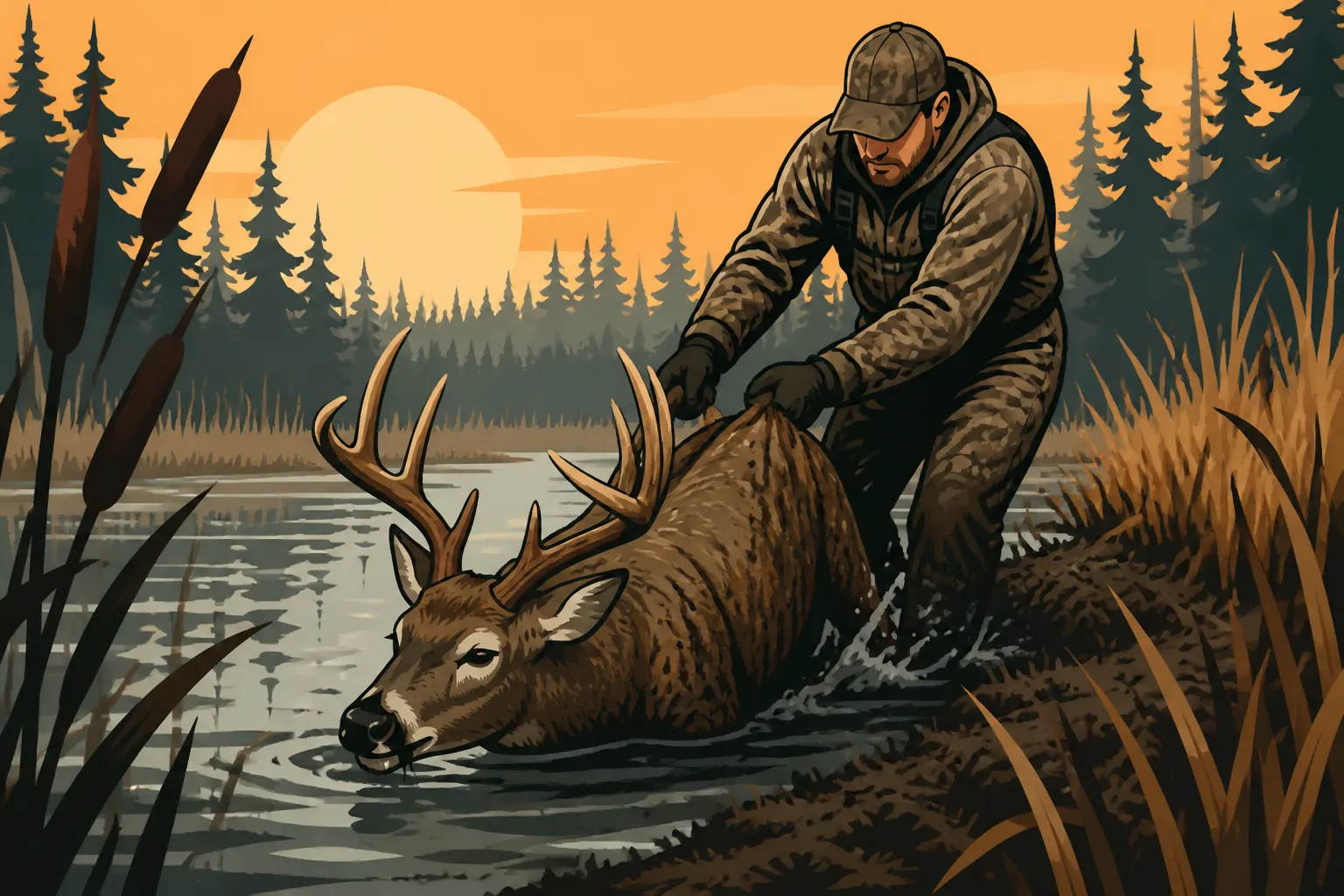
There are few things more frustrating than dropping a beautiful Minnesota whitetail only to watch it disappear into the tangled, mucky depths of a slough or a cattail marsh. The initial excitement quickly turns to a sinking feeling in your stomach as you realize the real work is about to begin. Retrieving a deer from that kind of challenging terrain can be daunting, dangerous even, but with the right approach and a bit of forethought, it’s a task you absolutely can conquer. This guide will walk you through everything you need to know to safely and effectively get your deer out of a slough.
Assessing the Situation: Before You Even Touch That Deer
Before you start wading in, blindly hoping for the best, take a deep breath and truly evaluate the scene. This isn't just about finding the deer; it's about making sure you don't become part of the slough's permanent residents. Minnesota's wetlands can be treacherous, even more so when they're cold and icy.
Safety First: Ice, Water, and Exhaustion
First and foremost, your personal safety is paramount. A deer isn't worth a broken leg, hypothermia, or worse. If you're hunting in late season, remember that even a seemingly solid layer of ice over a slough can be incredibly deceptive, especially where there's moving water or a lot of decaying vegetation releasing gases. You might find a thin crust that gives way instantly, plunging you into freezing water and thick muck. Always test the ice ahead of you with a walking stick or the butt of your rifle, if safe to do so. Think about how you'd get out if you fell through. Do you have self-rescue ice picks? Are you wearing a life vest, even under your hunting coat? If not, proceed with extreme caution.
Beyond the ice, the water itself can be dangerously cold, leading to rapid hypothermia. Even in early archery season, wading through cold water for an extended period can sap your strength and critical thinking abilities. Consider the depth – knee-deep is one thing, waist-deep or chest-deep water over a soft bottom is an entirely different beast. What if you get stuck? The thick, sucking mud can grab your boots and make every step a monumental effort. Trying to drag a heavy deer through that kind of resistance will exhaust you quickly, and exhaustion can lead to poor decisions or even injury. This is where having a hunting buddy truly shines. If you’re alone, seriously consider if the risk is too high or if you need to call for help.
The Layout of the Land and Water
Once you've ensured your safety, it's time to play detective and map out your extraction plan. Don't just charge in. Take a moment to survey the entire slough, if possible. Where did the deer enter? Where does the slough seem shallowest? Where are the firmest banks? Sometimes, even a slight change in elevation can mean the difference between knee-deep muck and relatively solid footing. Look for any natural landmarks that can serve as reference points for the deer's location, especially if you're Blood Trailing After Dark in Minnesota.
Identify the exact location of the deer. Is it partially submerged? How much of it can you see? Is it against a log, in a patch of thick cattails, or out in the open? Knowing this will help you determine the best approach. You're looking for the shortest, safest path to reach the deer, and more importantly, the most manageable path out. Often, the path of least resistance is not a straight line. You might need to skirt the edge of the slough, or even walk further around to find a more solid crossing or shallower section that offers a better exit point. Using an app like GoHunt or the Scouting With the Minnesota Recreation Compass App can be invaluable here, letting you zoom in on topo lines and aerial photos to find subtle rises or channels that might make access easier or harder. Pay attention to any water flow – currents, even slow ones, can shift sediment and make some areas softer than others.
Essential Gear for a Slough Extraction
Attempting to pull a deer out of a slough with just your bare hands is a recipe for disaster and back pain. Having the right tools won't just make the job easier; it can make it possible and safer. You need to think about not only pulling power but also personal protection from the elements.
Specialized Extraction Tools
A good, sturdy rope is your absolute best friend in a slough situation. Forget flimsy twine; you need at least 50 feet of high-quality nylon or polypropylene rope, preferably 3/8-inch or 1/2-inch thick. This allows you to stand on firmer ground, or even across a narrow channel, and pull. Attach it securely around the deer's antlers, head, or neck. If you have a second rope, you can create a V-shape harness, or even run it around the deer's hindquarters, to help steer it and distribute the pulling effort.
Deer drags specifically designed for retrieving game can also be a lifesaver. These are often made of durable straps with handles, making it easier to get a good grip without cutting into your hands. Some even feature a shoulder harness for more pulling power from your core. Brands like Hunter's Specialties make solid, reliable deer drags.
For tougher, muddier conditions, a plastic utility sled is a game-changer. Think of the inexpensive, durable sleds you can pick up at any hardware store or even a big box retailer. These act like a makeshift boat, distributing the deer's weight over a larger surface area and allowing it to glide over mud, water, and even light snow rather than dragging through it. You can load the deer onto the sled and then pull the sled. If the water is deep enough, the sled can float, turning the drag into more of a float. Consider the "Deer Sleigh'R" by Shappell or a simple heavy-duty toboggan from Pelican. Some hunters even carry a small, foldable tarp or heavy-duty ground cloth that can serve a similar purpose, although it won't glide as easily as a rigid sled.
Personal Safety and Comfort Items
You absolutely need appropriate footwear. Hip boots or, ideally, waders are non-negotiable if you anticipate wading into significant water or mud. Chest waders, especially those made for duck hunting, will give you the most protection from the elements and keep you dry and warm, which is critical. Make sure they fit well and aren't leaky. Underneath, wear synthetic layers, not cotton, as cotton loses its insulating properties when wet. For the ultimate guide, check out Waders for Cattail Marsh Hunting.
Waterproof gloves are also essential. Cold, wet hands lose dexterity and can become painful quickly. Insulated, waterproof gloves will protect your hands from the cold water, mud, and the abrasive nature of pulling a rope. A change of clothes kept in a dry bag back at your truck is a smart move. Even with waders, splashes happen, and you'll want something warm and dry to change into after the ordeal. Pack some water and snacks to replenish your energy, especially if the extraction takes longer than expected. A reliable headlamp with fresh batteries is crucial, as often these situations push into low light or darkness. And of course, a fully charged phone for emergencies, or just to tell your buddies you might be a little late for dinner.
The Often Overlooked "Brain Power" Gear
Sometimes the best tool isn't something you pull with, but something you think with. A good map or GPS app on your phone (like GoHunt, or the built-in mapping on the DNR's Minnesota Recreation Compass App) is incredibly helpful for visualizing the terrain. You can mark the deer's location, identify the nearest firm ground, and plan your route out. Even if you're in an area with poor cell service, many apps allow you to download maps offline, ensuring you can still navigate. Knowing your exact location in a confusing slough can prevent you from getting disoriented or accidentally trespassing on private land.
Binoculars can also be surprisingly useful. From a distance on firm ground, they allow you to scan the slough's features, spot submerged logs, identify denser patches of cattails, or pinpoint subtle rises in the terrain that might offer a more solid path. Sometimes the best view is from above. Finally, a sharp cutting tool like a heavy-duty knife, a small saw, or even a pair of pruning shears can be invaluable for clearing thick brush, stubborn cattails, or small saplings that are blocking your path or preventing you from getting a clear pull.
Step-by-Step Slough Retrieval Tactics
Now that you're geared up and have a plan, it's time to get hands-on. This phase requires patience, calculated effort, and often, a bit of creative problem-solving. Remember, rushing will only lead to exhaustion and potentially, a lost deer or an injury.
The Initial Approach and Securing the Deer
Your approach to the deer needs to be deliberate and slow. If you're wading, move carefully, probing the bottom with your feet or a stick before each step to gauge depth and firmness. The last thing you want is to step into a hidden hole and go down. As you get closer, assess the deer's position. Is it on its side, belly-up, or partially upright? This will affect how easily you can attach your rope and how it will drag.
Once you reach the deer, the goal is to securely attach your rope or deer drag. The best points are usually the antlers (if present and sturdy), around the base of the skull, or cinched tightly around the neck. Avoid attaching it to a leg, as this can twist the deer awkwardly and make dragging harder, or even tear the hide. If the deer is partially submerged, you might need to carefully lift or roll it slightly to get the rope underneath. Be mindful that disturbing the deer too much can cause it to sink deeper into soft mud. Secure a good knot – a bowline or a figure-eight loop are excellent choices as they are strong and relatively easy to untie even when wet. If you have a second person, one person can secure the rope while the other stays on firmer ground, ready to pull or offer support.
Leveraging Physics: Pulling vs. Floating vs. Sledding
This is where you decide on your primary method, based on the slough's characteristics.
-
Direct Pulling: If the slough is relatively shallow with a somewhat firm bottom, direct pulling might work. Attach your rope and, using a steady, consistent pull, try to get the deer moving. Don't yank. Small, incremental movements are better. If you have a partner, coordinate your pulls. One person might pull the head, while the other pushes the rear, or both pull in unison. This method is often employed when Hunting Minnesota Cattail Sloughs for Deer where the water isn't too deep, but the vegetation is dense.
-
Using Water Buoyancy: For deeper sections of the slough, or where the bottom is very soft and mucky, try to use the water to your advantage. If you can get the deer into water that's deep enough to partially float it, the resistance of the mud will significantly decrease. You're no longer dragging a dead weight through sludge, but rather guiding a buoyant object. If the deer is in shallower, mucky water, try to roll it into a deeper channel. You can even use a large fallen log or a sturdy branch as a lever to pry the deer up and into deeper water if it's really stuck.
-
Sledding (or "Floating" on a Sled): This is often the most efficient method for truly difficult sloughs. Get your plastic utility sled to the deer's location. Carefully roll or lift the deer onto the sled. This might be challenging, especially if the deer is large and you're alone. Once the deer is on the sled, attach your rope to the front of the sled. Now you can pull the sled across the mud or through the water. The sled distributes the weight, preventing the deer from sinking, and often glides much more easily than the deer itself. If the water is deep enough, the sled will float, and you'll essentially be pulling a raft. For particularly boggy areas or Hunting a Funnel Between Two Sloughs, this technique can save you hours of struggle and immense physical effort.
No matter the method, think about leverage. Can you get a higher pulling angle from a bank? Can you use a sturdy tree or log to brace yourself? If you have two ropes, one person can pull from the front while the other works a rope from the side, helping to steer the deer around obstacles or out of particularly deep ruts. Small, consistent efforts, rather than sporadic bursts, will get the job done with less exhaustion.
Getting Creative with Obstacles
Sloughs are rarely clear-cut. You're going to encounter obstacles.
- Thick Vegetation: Cattails, reeds, and brush can make dragging incredibly difficult. If the vegetation is too dense, you might need to use your cutting tool to clear a narrow path. Think of it like a tunnel.
- Fallen Logs and Debris: If a log blocks your path, try to roll the deer over it. If it's too high or heavy, you might need to find an alternative route, even if it means going slightly out of your way. Sometimes, you can wedge a second log or branch under the deer to create a ramp.
- Deep Mud Pockets: These are energy vampires. If you hit a really deep, sucking mud pocket, don't try to power through it. This is where the sled really shines. If you don't have a sled, try to use the water buoyancy method, or find a way around the pocket. You can sometimes lay down branches or logs in front of the deer to create a more solid "road" to pull it over.
The key here is patience. It might take an hour, or even several, to move a deer just a hundred yards. Don't get discouraged. Break the task into smaller, manageable segments. Pull for a minute, then rest. Regain your breath, reassess your next move, and then pull again. Remember, the deer isn't going anywhere, so take your time and do it safely and efficiently. If you find yourself completely stuck and alone, consider reaching out to a buddy for help, or even using your GoHunt app to pinpoint your location for assistance.
Post-Extraction Care and Clean-Up
You’ve done it! The deer is finally out of the slough and onto solid ground. The hard work isn’t entirely over, but the most difficult part is behind you. Now it's time to focus on processing your harvest and taking care of yourself and your gear.
Field Dressing and Transport Considerations
Once your deer is on dry, firm ground, you need to decide on your field dressing strategy. Depending on how long the extraction took and the ambient temperature, you might need to field dress immediately to begin cooling the animal. If it’s cold out, like during the Muzzleloader Deer Hunting in Minnesota season, you have a little more leeway, but swift action is always best to preserve the meat.
Mud and water will have inevitably covered parts of the deer. Try to brush off as much loose debris as possible before opening the cavity. You might want to carry some paper towels or a small cloth specifically for wiping down your hands and tools during field dressing. If the deer is particularly messy, you might even consider the gutless method if you're skilled at it, to minimize contamination of the meat. For detailed guidance on preparing your harvest, refer to our guide on Field Dressing a Deer in Cold Weather.
After field dressing, consider your transport. If you used a plastic sled to get it out of the slough, you can often continue to use it for the journey back to your vehicle, especially if you're traversing across snow or relatively open ground. For longer hauls or more varied terrain, a proper deer cart can be invaluable, saving your back from a long drag. If you're on public land that allows ATVs on designated trails, this might be an option, but always check the local regulations. Remember to legally register your deer as soon as required by Minnesota DNR rules.
Gear Cleaning and Personal Recovery
Your gear, especially your waders, ropes, and sled, will be covered in mud, water, and possibly deer blood. It’s crucial to clean everything thoroughly as soon as possible. Mud, when dry, becomes abrasive and can damage fabrics and ropes. Rinse your waders inside and out with a hose, letting them air dry completely. Pay special attention to the boot portion to remove all mud and grit. Cleaning your gear not only prolongs its life but also prevents the spread of potential diseases and eliminates lingering human or deer scent for future hunts. A simple scrub brush and some mild soap can do wonders.
As for you, the hunter, you’ve just completed a significant physical task. Take care of yourself. Get out of any wet clothes immediately and into your dry change of clothes. If you were battling cold water, focus on warming up gradually. Drink plenty of water or a warm beverage to rehydrate and replenish your energy. This is a good time to review what worked and what didn't in your retrieval process. Did your GoHunt app lead you to the best exit? Was your rope long enough? Did your waders hold up? Every challenging retrieval is a learning experience that makes you a better, more prepared hunter for next time you're Dragging a Deer Out of a Slough.
| Retrieval Tool/Method | Ideal Slough Conditions | Pros | Cons |
|---|---|---|---|
| Rope Drag | Shallow water, semi-firm bottom, moderate vegetation | Simple, lightweight, easy to carry | Highly physical, limited leverage, deer can sink in soft mud |
| Plastic Utility Sled | Deep mud, varied water depths, heavy vegetation | Distributes weight, floats in water, protects deer | Bulky to carry in, can get hung up on large obstacles |
| Water Buoyancy | Deeper water (waist-deep or more), very soft bottom | Reduces physical effort significantly, less friction | Requires sufficient water depth, difficult to steer in strong current |
| Deer Cart | Post-slough extraction, firm ground, trails | Saves back, efficient for long distances | Useless in slough itself, can be heavy to pull on rough terrain |
| Waders/Hip Boots | Any slough condition requiring wading | Keeps hunter dry and warm, crucial for safety | Can be bulky, expensive, potential for leaks |
Disclaimer
The information provided in this guide is for informational purposes only. Hunting can be a dangerous activity, and conditions in the field can change rapidly. Always prioritize your safety and follow all local, state, and federal hunting regulations. Consult with experienced hunters or local authorities for specific advice regarding your hunting area.