Crow Hunting Seasons and Tactics in Minnesota
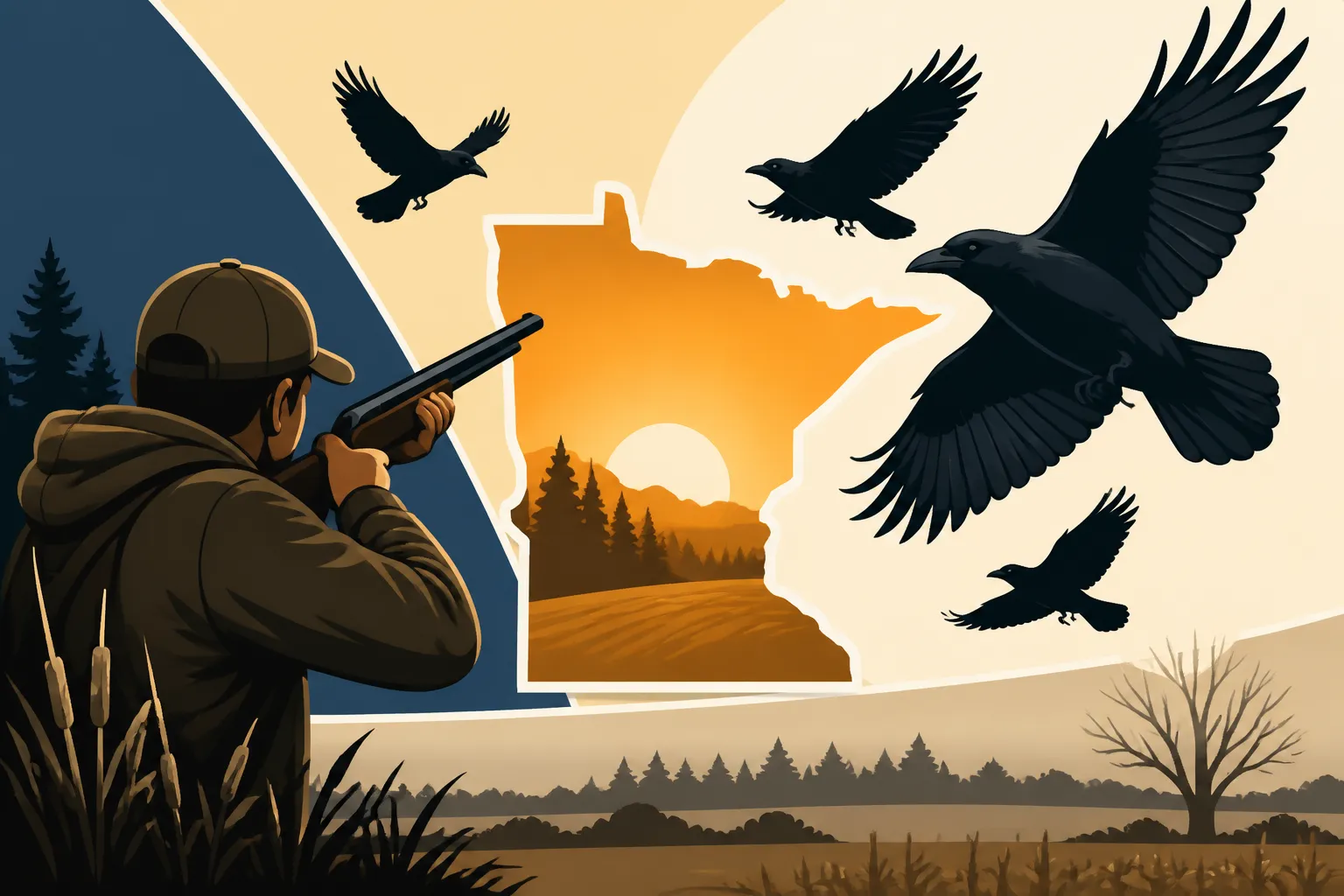
There's a unique frustration that comes with a seemingly endless supply of an animal that's both incredibly smart and, at times, a genuine nuisance. Crows in Minnesota fit that bill perfectly. They can decimate crops, harass other wildlife, and their sheer numbers can feel overwhelming, yet hunting them effectively isn't always as simple as it looks. This comprehensive guide will walk you through everything you need to know about navigating Minnesota's crow hunting seasons and implementing proven tactics to find success in the field.
Navigating Minnesota's Crow Hunting Seasons and Regulations
Crow hunting in Minnesota offers a fantastic opportunity to stay sharp during the off-season or just enjoy a challenging hunt when other game isn't available. However, just because they're plentiful doesn't mean it's a free-for-all. Understanding the specific regulations is key to staying legal and making the most of your time afield. The Minnesota Department of Natural Resources (DNR) sets clear guidelines for crow hunting, and while they're generally straightforward, a little nuance goes a long way.
The Open Season for Crows in Minnesota
Unlike many game species with very specific, often short seasons, crow hunting in Minnesota is quite liberal, giving hunters a long window of opportunity. The official season typically runs from August 1st right through to March 31st statewide. That's a huge stretch of time, encompassing late summer, fall, winter, and even early spring. This extended season means you can target crows in various conditions, from warm, leafy days to crisp, snow-covered landscapes.
This long season allows for flexibility, letting you fit crow hunts around other commitments or use it as a way to extend your hunting year. For example, if you're out Scouting Minnesota Public Land Before Season for deer in late summer, you can easily incorporate a crow hunt into your trip. Or, when big game seasons close, crow hunting can keep you engaged and your skills honed well into the colder months. It's a fantastic way to enjoy the outdoors and practice your marksmanship without the intense pressure often associated with deer or turkey seasons.
Daily Bag Limits and Legal Shooting Hours
One of the big appeals of crow hunting for many is the lack of a daily bag limit, and no possession limit. That means if you have an incredible day and the crows are really working your setup, you can keep shooting without worrying about hitting a cap. This freedom allows you to fully engage with the hunting experience and focus on improving your calling and shooting skills. It’s a stark contrast to the strict limits on most other game animals.
When it comes to legal shooting hours, Minnesota follows standard regulations, allowing you to hunt crows from 30 minutes before sunrise until 30 minutes after sunset. This timeframe is consistent with many other hunting seasons in the state. Planning your hunt around these hours is crucial, especially when setting up or retrieving equipment in low light. For those crisp, early morning hunts or the golden hour before dark, understanding these windows is just as important as knowing Minnesota Legal Shooting Hours for other species. Always double-check your local sunrise/sunset times, which are readily available online or through many hunting apps, to ensure you're always within legal limits.
Important Regulatory Nuances
While crow hunting is generally open and unrestricted in terms of limits, there are a few important points to keep in mind that pertain to all hunting in Minnesota. First, you still need a valid small game license to hunt crows in Minnesota, unless you are exempt (e.g., under mentored youth rules, or certain landowners on their own land). A small game license is typically inexpensive and covers a variety of species. You can find more details on Minnesota Small Game License Requirements.
Secondly, while specific blaze orange requirements don't apply to crow hunting (since they're not a big game species and are often hunted concealed), it's always a good idea to consider safety, especially if hunting on public land during other open seasons. While not legally mandated for crows, wearing Minnesota Blaze Orange Requirements or blaze pink is often a wise choice for visibility to other outdoor users. Lastly, while electronic calls are legal for crows in Minnesota (unlike migratory waterfowl, for instance), ensuring you're not violating local noise ordinances or disturbing other wildlife, especially nesting birds, should always be a consideration. Good sportsmanship and ethical hunting practices are paramount, regardless of the species you're pursuing.
Essential Gear for Effective Crow Hunting in Minnesota
Like any hunting endeavor, having the right gear can make or break your crow hunting experience. It’s not just about having a gun; it’s about thoughtful selection of calls, effective concealment, and appropriate firearms and ammunition. While you don't need to break the bank, investing in a few key items will significantly increase your success and enjoyment when chasing Minnesota's cleverest feathered foes.
Decoys, Calls, and Concealment
Crows are incredibly intelligent and have excellent eyesight, making effective concealment and realistic calling absolutely critical. You simply can't walk out into a field in broad daylight and expect them to fly right in. You need to create an illusion that draws them into range and keeps them from spotting you.
Decoys: Crow decoys are a game-changer. A spread of 6-12 realistic decoys can make your setup look like an active feeding or fighting flock, which is a huge attractant. You can find inexpensive plastic decoys that work perfectly. Place them strategically, mimicking crows feeding on the ground, or even one or two on elevated stands to suggest sentinels. The key is to make it look natural. Some hunters even incorporate an owl or hawk decoy among their crow decoys, creating the illusion that crows are mobbing a predator – a sight that drives other crows absolutely wild with curiosity and territorial aggression.
Calls: This is where the artistry comes in. Electronic calls are perfectly legal for crows in Minnesota and are incredibly effective. They can perfectly replicate a wide range of crow vocalizations, from the basic "caw-caw" to distress calls, fighting calls, and even the sounds of a murder of crows mobbing a predator. Leading brands like FoxPro or Primos offer electronic callers with extensive sound libraries. Manual calls, like a simple crow call or even a wooden friction call, can also be very effective for adding realism and controlling volume. Learning a few basic calls, like the "come-here" call, the "assembly" call, and a "distress" call, will serve you well. Start with an assembly call to get their attention, then switch to distress or fighting calls to really pull them in.
Concealment: Because crows are so visually acute, you need to become invisible. This means full camouflage, including a face mask and gloves. A ground blind is an excellent investment, providing superior concealment and allowing for movement without being detected. Position your blind strategically, breaking up its outline against natural cover like brush lines, treelines, or hay bales. If a blind isn't feasible, using natural cover like thick evergreens or a dense brush pile can work, but you'll need to remain absolutely motionless. Remember, even a slight shift of your head or the glint of exposed skin can send them packing.
Firearms and Ammunition Choices
For crow hunting, speed, pattern density, and range are important considerations when choosing your firearm and ammunition. You're typically shooting at relatively small, fast-moving targets, often at various distances.
Shotguns: A 12-gauge or 20-gauge shotgun is the most common and effective choice for crow hunting. It provides the spread necessary for hitting fast-flying birds. An improved cylinder or modified choke is often ideal, offering a good balance of spread for close-in shots and enough density for birds out to 35-40 yards. For ammunition, standard field loads with 7 ½ or 6 shot are excellent choices. They provide enough pellets for a dense pattern without being overkill. Don't be afraid to pattern your shotgun at various distances to see what works best with your choke and chosen load – this is similar to the care taken when Sighting In a Rifle for Minnesota Woods Ranges, just with a different objective.
Rifles (with caution): While shotguns are preferred, some hunters use small-caliber rifles like a .22LR or .17HMR for crows, especially in open country where longer shots are common and safety allows for it. These can be incredibly accurate for static or perched birds at extended ranges. However, using a rifle dramatically reduces your ability to hit flying targets and necessitates an extremely safe backstop. Always be absolutely certain of your target and what lies beyond it. This is not a tactic for areas with any potential for ricochets or proximity to roads, homes, or other hunters. Remember, Legal Firearms for Minnesota Deer Hunting are very different from what's practical or safe for crows.
Comfort and Safety Considerations
Crow hunting, especially during the colder parts of Minnesota's long season, can involve long periods of sitting still. Being comfortable will help you stay focused and effective. Dressing in layers appropriate for the weather, including good insulated boots, is essential. A comfortable hunting chair or seat in your blind will make a huge difference in your ability to remain motionless and alert.
Beyond comfort, safety is paramount. Always handle firearms responsibly, keeping the muzzle pointed in a safe direction and knowing your target and what's beyond it. If hunting with others, communicate clearly and establish zones of fire. While not legally required for crow hunting, wearing some form of Minnesota Blaze Orange Requirements or highly visible clothing when moving to and from your hunting spot, especially on public land, is a smart practice. Carry a small first-aid kit, a fully charged phone, and be aware of your surroundings. A good pair of binoculars can also help you spot incoming crows from a distance, allowing you more time to prepare for the shot.
| Firearm Type | Recommended Gauge/Caliber | Shot/Bullet Size | Choke (Shotgun) | Pros | Cons |
|---|---|---|---|---|---|
| Shotgun | 12 or 20 Gauge | 7.5 or 6 Shot | Imp. Cyl. / Mod | Excellent for flying targets, good pattern density, versatile | Limited effective range compared to rifles, less precise for perched birds |
| Rifle | .22LR, .17HMR | .22 or .17 cal | N/A | Highly accurate for long-range perched shots, quiet | Poor for flying targets, requires very safe backstop, less versatile |
Proven Tactics for Outsmarting Minnesota Crows
Crows are often underestimated as game animals. Their intelligence means they learn quickly, and they can spot danger from incredible distances. This makes crow hunting a true game of chess, where careful planning, precise execution, and adaptability are key to success. You can't just stumble into a field and expect them to swarm you.
Setting Up Your Hunting Location
The location of your setup is arguably the most critical factor in a successful crow hunt. You need to be where the crows want to be, and where you can effectively ambush them.
Visibility and Approach: First, consider the approach. Can you get to your setup without being seen by crows already in the area? This often means approaching before first light or during a lull in their activity. Once you're in position, consider the visibility. You want your decoys to be easily seen from a distance, but your blind or natural cover should blend seamlessly into the background. Placing your decoys and blind with the sun at your back can also give you an advantage, making it harder for incoming crows to see into your setup and reducing glare. Think about how deer hunters carefully plan their Entry Routes Through a Cattail Slough or a Treestand Setups in Minnesota Hardwoods – the same meticulous thought applies here.
Wind Direction and Terrain: Just like with deer, wind direction is important for crows. While they aren't scent-driven, crows use the wind for flight control. They'll often approach a feeding area or a call into the wind, allowing them to slow down and get a better look. Position your blind so that incoming crows will be flying into the wind as they approach your decoys, giving you a better shot opportunity. Additionally, observe the terrain. Look for natural flyways, treelines, or draws that crows commonly use. Setting up near a known crow roost or a consistent feeding area, like a freshly cut cornfield or a farm dump, will dramatically increase your chances.
Calling Strategies and Sequences
Calling is the heart of crow hunting. It's how you communicate with them, convince them to come closer, and keep them engaged once they're in range. Mastering a few key calls will dramatically improve your success rate.
Basic Calls: Start with an "assembly call" – a series of rhythmic caws (caw-caw-caw) to get their attention and make them think other crows are gathering. If you see birds in the distance, this can be your initial lure. Once they acknowledge your calls and start heading your way, you can switch tactics. A "distress call" – a series of frantic, broken caws – is incredibly effective. Crows are naturally curious and often aggressive towards anything they perceive as a threat to their flock, and a distress call signals trouble. They’ll often come in to investigate or mob whatever is causing the distress.
Advanced Sequences: For an even more compelling setup, combine calls. Start with assembly calls. Once crows are approaching, mix in "fighting calls" (a more aggressive, rapid series of caws) or "mobbing calls" (a mix of agitated caws and squawks, often including an owl or hawk hoot if using an electronic call). This creates a highly realistic scenario of a group of crows ganging up on a predator. Remember that a change in tone and volume is crucial. Don't call constantly; let there be pauses, mimicking natural crow conversation. Overcalling can make them suspicious. This takes practice, much like understanding Rattling Volume in Thick Popple Cover for deer. Observe how real crows communicate and try to mimic that natural ebb and flow.
The Art of the Ambush and Follow-Up Shots
Getting crows into range is one thing; successfully shooting them is another. Their keen eyesight and quick flight make them challenging targets.
The Initial Ambush: Once crows are committed and coming into your decoy spread, the timing of your shot is critical. Wait until they are fully within effective shotgun range, ideally cupping their wings to land or circling for a closer look. Don't shoot at the first distant bird you see. Let them commit. When you decide to shoot, pick a single bird and make a clean shot. If hunting with a partner, communicate who will take which bird. A fast, fluid mount and swing are essential.
Follow-Up and Multiple Birds: Crows often come in groups. If you've been successful on your first shot, stay concealed for a moment. Other crows from the original flock might circle back, or nearby birds might come to investigate the commotion, especially if you immediately switch back to distress calls. This is where the no bag limit really shines! You can often pick off multiple birds from a single flock. If you're using a semi-automatic shotgun, be prepared for quick follow-up shots. Sometimes a wounded crow on the ground, still flopping, can even act as an impromptu "live decoy" to keep other crows engaged. This ability to get multiple shots makes crow hunting excellent practice for other upland bird hunting, such as Pheasant Hunting Minnesota Farmland or Grouse Hunting Minnesota Aspen Cover.
Scouting and Finding Prime Crow Hunting Locations
You can have the best gear and calling skills in the world, but if you're not in an area with a healthy crow population, your efforts will be in vain. Scouting is just as crucial for crows as it is for any other game animal. Knowing where to look and how to identify key crow activity will put you in the right place at the right time.
Identifying Roosting and Feeding Areas
Crows are creatures of habit. They often have specific areas where they roost for the night and distinct areas where they feed during the day. Identifying these patterns is the backbone of successful crow hunting.
Roosting Areas: Crows gather in massive numbers at communal roosts, especially outside of nesting season. These roosts are often in large stands of mature timber, sometimes near urban areas, or in sheltered river bottoms. You'll often notice a huge influx of crows flying towards these areas an hour or two before sunset. This is the prime time to locate a roost. Drive around rural areas an hour before dark, listening and watching for large numbers of crows flying in the same direction. Once you've found a roost, don't hunt it directly, as you'll scatter them. Instead, focus on their flight paths to and from the roost in the morning and evening, or their feeding areas during the day.
Feeding Areas: Crows are opportunistic omnivores. They love agricultural fields, particularly those with spilled grain, freshly tilled soil where they can find insects, or fields with standing corn. They'll also frequent farm dumps, landfills, or areas where carcasses might be present. Drive country roads, paying attention to where you see large groups of crows gathered on the ground. These are your feeding hotspots. Mark these locations on a map using an app like the Scouting With the Minnesota Recreation Compass App, and plan your setup downwind or along a natural flyway nearby. Once you've identified a feeding area, check it again a few days later to confirm consistent activity before setting up a hunt.
Leveraging Public and Private Land Access
Once you've identified potential crow hotspots, the next step is gaining legal access to hunt them. Minnesota offers various options, but understanding the rules is key.
Public Land: Minnesota has a wealth of public land, including Wildlife Management Areas (WMAs), State Forests, and National Forests. While these areas are primarily managed for big game and waterfowl, crows are often present, especially in areas with mixed timber and agriculture. Always check the specific rules for any public land you plan to hunt, as some might have restrictions on certain activities or require special permits. You can find detailed information about Public Hunting Land in Minnesota and how to access it through the DNR's website and mapping tools. When hunting public land, be mindful of other users and potential shared use with other hunting seasons.
Private Land: Many of the best crow hunting opportunities are found on private agricultural land. Farmers often welcome crow hunters, as crows can cause significant damage to crops, especially corn, sunflowers, and other grains. This is where your ability to politely ask for permission comes into play. Approach landowners respectfully, explain your intentions, and offer to share any harvested birds if they have a use for them (some farmers use them as bait for furbearers). Showing respect for their property and offering to help with a nuisance species can often secure you access. This is a common practice for many hunters looking for diverse opportunities, much like when Getting Private Land Permission in Minnesota for deer or turkeys. Always get explicit permission before stepping foot on private property.
Reading the Landscape for Crow Activity
Beyond just identifying roosts and feeding areas, learning to "read" the landscape for subtle signs of crow activity can greatly enhance your scouting efforts. Crows leave clues, just like any other animal.
Flight Patterns and Communication: Pay attention to how crows fly. Are they flying purposefully in a straight line, likely heading to or from a roost? Or are they circling, squawking excitedly, perhaps indicating a feeding area or that they've spotted a predator? The intensity and type of their caws can tell you a lot. A lone crow flying silently might just be passing through, but a group of crows cawing loudly and erratically suggests high activity or agitation. Over time, you'll start to recognize these nuances. Similar to how you'd look for rub lines or scrapes when Finding Sign in Minnesota Big Woods, you're looking for patterns of behavior.
Topographical Features and Cover: Crows, like many birds, will often use natural corridors for travel. Look for prominent treelines, river courses, or edges of large timber blocks that connect different areas. These can be excellent places to set up an ambush, as crows will often follow these features. Consider how elevation changes affect their flight paths; they might dip into draws or fly over ridges. Understanding these natural movement patterns, much like Reading a Ridge for Northern Minnesota Deer, can help you position your setup perfectly to intercept incoming birds. Also, identify areas with dense cover that would allow for effective blind placement, ensuring you can remain hidden from their sharp eyes.
Disclaimer
Please note: Hunting regulations can change. Always consult the official Minnesota Department of Natural Resources (DNR) website or the current Minnesota hunting regulations booklet for the most up-to-date and complete information before heading afield. This guide is for informational purposes only and does not supersede state or federal law.