Late-Season Pheasant Tactics in Deep Snow
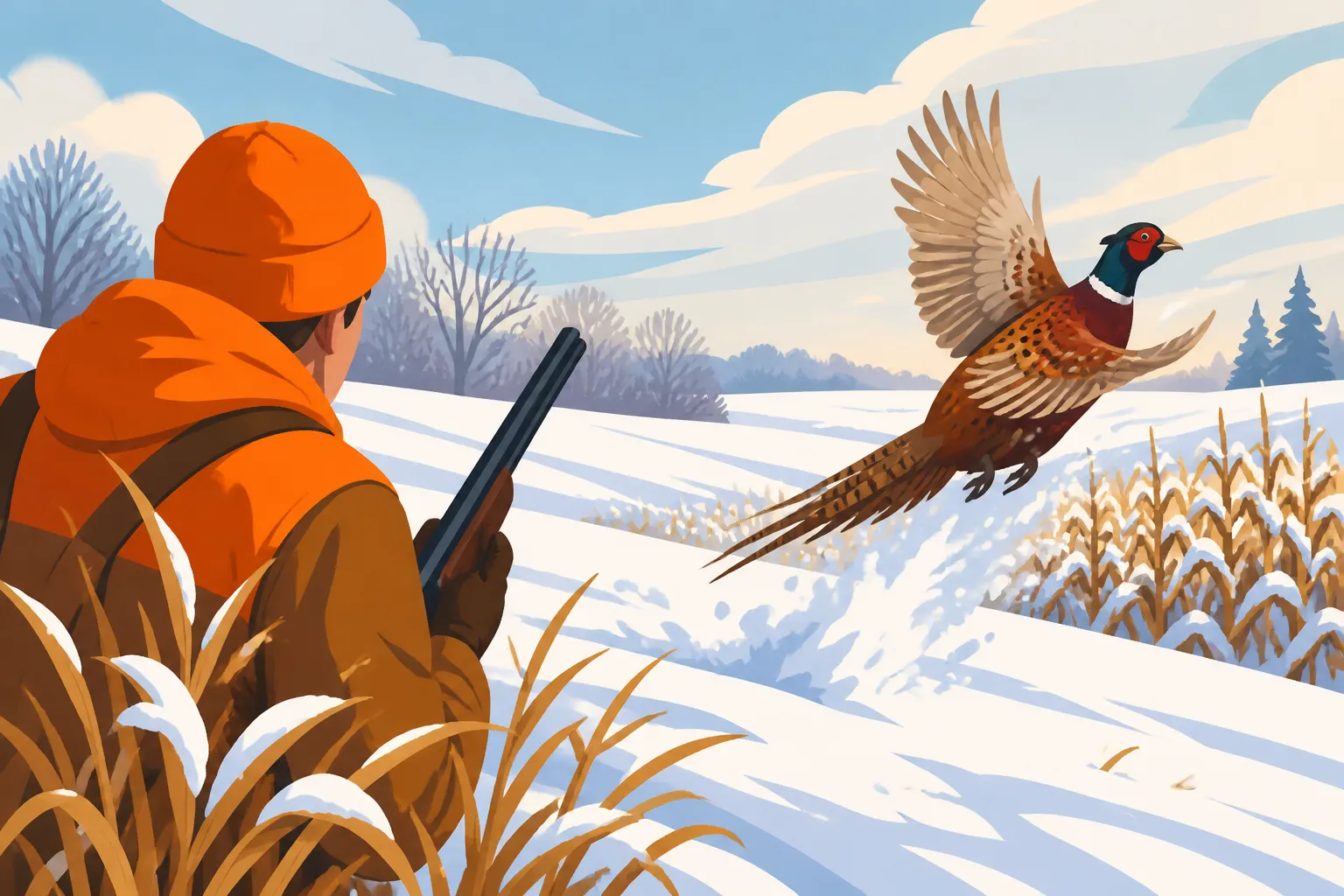
When Minnesota turns into a winter wonderland, the thought of chasing pheasants often gets pushed aside. It’s tough enough walking through a foot of snow, let alone trying to find a wily rooster that’s doing everything in its power to avoid you and conserve precious energy. But for those dedicated hunters who brave the cold, late-season pheasant hunting in deep snow offers a unique challenge and, often, some of the most rewarding opportunities. This guide is all about equipping you with the knowledge and tactics to find success when the white stuff piles up.
Understanding Late-Season Pheasant Behavior in Deep Snow
Pheasants are survivors, and as the season progresses and conditions worsen, their survival instincts kick into high gear. Deep snow dramatically changes their world, impacting where they live, what they eat, and how they move. Ignoring these changes is a surefire way to come home empty-handed.
How Deep Snow Changes Pheasant Habitat Use
Once the snow starts to really pile up, pheasants shift their priorities dramatically. Gone are the days of loafing around open stubble fields. Their primary concern becomes thermal cover – places where they can escape the biting wind and find some protection from the cold. This means they'll gravitate towards the thickest, densest cover available. Think heavy cattail sloughs, plum thickets so dense you can barely walk through them, gnarly brush rows, and even small cedar or pine groves if they offer enough overhead protection.
These spots aren't just for hiding; they're vital for survival. The deep snow itself can create an insulating layer, but without overhead protection from the wind and direct exposure, they're still expending massive amounts of energy just to stay warm. A dense cattail slough, particularly one with some topography or a southern exposure, acts like a natural bunker. They'll burrow down into the thickest parts, often using tunnels and runs they create beneath the snow. This behavior means that the easy-to-hunt cover from earlier in the season becomes largely vacant, and all the birds concentrate in these heavy, often difficult-to-access, pockets. You need to redefine what "good cover" means when snow is measured in feet, not inches.
Food Sources Under Snow and Winter Survival
Deep snow buries most of the easily accessible food sources that pheasants rely on in the early and mid-season. Those waste grains in corn stubble or sunflower fields become incredibly difficult to reach, requiring birds to expend precious energy digging through snow. This drastically limits their diet and forces them to become even more selective. They're looking for any exposed food, which often means gravitating towards field edges where wind might have scoured the snow, or specific areas where residual crops might still be standing tall enough to offer access.
Consider standing cornfields, especially those with some weed growth underneath. The corn stalks themselves can create micro-climates, and the ears might still be accessible. Patches of ragweed, smartweed, or other broadleaf weeds that rise above the snow can also be critical food sources. The key is to look for areas where thermal cover and an accessible food source are in very close proximity. Pheasants simply cannot afford long flights or walks across open, snow-covered ground just to get a meal. They'll make short forays from their protective cover to feed, then quickly retreat. This concentration of both food and cover creates undeniable hot spots that you'll want to target.
Energy Conservation and Roosting Habits
Late-season pheasants in deep snow are all about energy conservation. They become much less active during the day, choosing to hunker down in their dense cover rather than moving around unnecessarily. This means they will hold incredibly tight, often refusing to flush until you are practically stepping on them. This behavior is both a blessing and a curse: a blessing because when you find them, you're usually in close quarters for a good shot, but a curse because finding them requires an incredible amount of effort and patience.
Their roosting habits also shift. Instead of open grassland roosts, they'll seek out the very thickest, most impenetrable cover for night. This could be a dense stand of cattails, a thorny plum thicket, or even a tight shelterbelt with good undergrowth. These locations offer maximum protection from nocturnal predators and the severe cold. Understanding this means that hunting first thing in the morning might find them still in their roosting cover, allowing you to intercept them before they've even had a chance to move for food. As the day progresses, they might make short excursions, but they'll typically return to the security of thick cover to rest and conserve energy.
Effective Scouting and Location Strategies
Finding pheasants in deep snow isn't about covering vast amounts of ground; it's about covering the right ground. You need to be a detective, using all the tools at your disposal to pinpoint those small, crucial areas where birds are concentrated.
Utilizing Aerial Imagery and Topo Maps
Your scouting begins long before you ever step foot in the snow. Tools like GoHunt, other mapping apps, or even simple aerial photos from the DNR or USGS are invaluable. Zoom in on public land parcels, looking for those distinct signatures of dense, winter-holding cover. Identify the thickest cattail sloughs, especially those that are large and have intricate internal structure. Look for plum thickets, brushy creek bottoms, and shelterbelts that offer both height and dense undergrowth.
Beyond just cover, look for how these cover types relate to food sources. Are there standing cornfields adjacent to a cattail slough? Is there a brushy fenceline leading directly into a known feeding area? Look for transitions – places where different cover types meet, or where heavy cover bottlenecks into a smaller strip. These are natural travel corridors and often concentrate birds. Pay attention to topography as well. South-facing slopes can warm up slightly and melt snow faster, exposing food, while depressions can offer windbreaks. Scouting with these tools allows you to prioritize your efforts and avoid wasting precious energy slogging through unproductive areas.
Reading Sign and Tracking in Fresh Snow
Fresh snow is a late-season pheasant hunter's best friend. It acts as a giant chalkboard, recording every movement the birds make. Look for tracks leading into and out of thick cover. Don't just look for single tracks; often, you'll see multiple tracks converging, indicating a group of birds. Pay attention to the size and depth of the tracks – fresh tracks will be sharp and distinct. If you see dusting of snow on droppings or areas where birds have been digging for food, you know you're in an active area.
Following tracks can be slow, tedious work, but it's incredibly effective. Often, a pheasant will walk a long way in deep snow before deciding to flush. By tracking, you can learn their travel patterns, identify their preferred escape routes, and even pinpoint the exact spot they might be holed up. Keep an eye out for "flushing lanes" – areas where they've burst from the cover. This indicates past activity and potential present location. In some cases, if the snow is really deep and soft, you might even see wing imprints where a bird has flushed, giving you a definitive clue of recent presence. Don't just walk and hope; actively read the landscape.
Focusing on Thermal Refuges and Isolated Cover
As mentioned, pheasants are seeking thermal refuges. These are the unsung heroes of late-season habitat. Often, they are small, overlooked patches of cover that provide just enough protection to hold birds. These could be a dense stand of dogwood or willows along a ditch, a neglected old farmstead with overgrown hedges, or even a small, thick woodlot of evergreens that breaks the wind. These spots might not look like much in October, but in January with a foot of snow, they become magnets for cold birds.
Don't be afraid to work isolated patches. While large tracts of cover might seem more productive, the sheer effort required to push them can be daunting. Sometimes, a small, half-acre plum thicket completely surrounded by open fields will hold multiple birds because it's the only good cover for miles. These isolated patches often experience less hunting pressure, as most hunters gravitate towards larger, more obvious areas. Think of it like this: if you were a pheasant trying to survive a Minnesota winter, where would you hide? Look for areas that offer maximum protection with minimal exposure, especially those connected to a potential food source.
Driving and Flushing Tactics for Deep Snow
Hunting pheasants in deep snow is rarely a solo endeavor. It's a team sport, requiring coordinated effort, patience, and a willingness to put in the hard work. Pheasants will run extensively in deep snow, preferring to escape on foot rather than taking to the air. This makes effective blocking and strategic pushing absolutely essential.
Strategic Pushing and Blocking
When facing deep snow, the "walk-it-all" approach simply isn't feasible or effective. You need to be smart about how you engage cover. For larger blocks of cover, a strategic drive is almost always the most productive method. This involves dividing your hunting party into "pushers" and "blockers." Pushers enter the dense cover from one end, moving slowly and methodically, making noise, and encouraging birds to move forward. Blockers position themselves downwind, or at known escape points, ready to intercept birds that flush or run out of the cover.
Communication is paramount. Everyone needs to know their role and maintain their positions. Using two-way radios can be a lifesaver in large, thick cover, especially if cell service is spotty. The pace of the pushers needs to be slow enough to allow birds to be flushed but not so fast that they run past the blockers unnoticed. Pheasants will often try to sneak out the sides of the cover, so having flankers or even another blocker positioned along the edges can be very effective. This cooperative effort dramatically increases your chances of success.
Here's a simple breakdown of group tactics:
| Group Size | Strategy Focus | Key Roles | Advantages | Disadvantages |
|---|---|---|---|---|
| Small Group | Strategic "leap-frogging" or short pushes | 1-2 Pushers, 1-2 Blockers | More agile, less noise, can work smaller cover. | Limited coverage, pheasants can easily sneak by. |
| Large Group | Coordinated drives of extensive cover | 3+ Pushers, 2+ Blockers/Flankers | Maximizes coverage, seals off escape routes effectively. | Requires coordination, can be noisy, slower pace. |
Working Dense Cover and Cattail Sloughs
These are the pheasant magnets in deep snow, and they are notoriously difficult to hunt. Walking through dense cattails, especially when they're snow-packed, is exhausting work. This is where your pushers earn their stripes. Don't be afraid to break up a large slough into smaller, manageable sections. Instead of trying to push the entire thing at once, target a finger of cover or a specific dense corner.
Pushers need to move slowly, almost stomping, to make enough noise and movement to get those tight-holding birds to flush. If you rush, birds will simply run ahead of you under the snow and pop out the other side. Zigzagging through the cover, rather than just walking a straight line, can also help to displace birds. The more chaos and pressure you create within the cover, the more likely a pheasant is to decide that flying is its only option. Remember, the birds are trying to conserve every bit of energy, so they'll hold on until the very last second. Persistence is key here.
Utilizing Natural Funnels and Bottlenecks
Pheasants, like all wildlife, often follow the path of least resistance or are funneled by changes in habitat. In deep snow, these natural funnels and bottlenecks become even more pronounced. Look for strips of cover that narrow down, or areas where dense cover runs out, forcing birds into a smaller space before entering open ground. This could be a brushy fenceline that ends at a road, a narrow point in a slough between two open fields, or a small draw that feeds into a larger block of cover.
These are prime locations for blockers to set up. Birds that are pushed out of a large field or slough will often try to run through these funnels before flushing. Having a well-placed blocker or two in these spots can lead to excellent opportunities. Scout these areas beforehand using aerial maps to identify potential escape routes. Understanding how birds move through the landscape, especially when hampered by deep snow, will give you a significant advantage in positioning your hunting party effectively.
Essential Gear and Dog Care in Harsh Winter
Hunting in Minnesota's late-season snow and cold isn't for the faint of heart, and it certainly isn't for the unprepared. The right gear and meticulous care for your hunting dog are not just about comfort; they're about safety and effectiveness.
Layering for Extreme Cold and Wet Snow
Your clothing strategy needs to be robust. Cotton is truly rotten in cold, wet conditions because it loses its insulating properties when damp. Start with a good synthetic or merino wool base layer to wick moisture away from your skin. On top of that, build up with insulating layers. Fleece, down, or synthetic puff jackets work well as mid-layers.
For your outer shell, think waterproof and windproof, but also breathable. You’ll be working hard, and you’ll sweat, so trapping that moisture inside will quickly lead to a chill. Look for options with pit zips and vents. Insulated, waterproof boots are non-negotiable; your feet will be in snow all day. Brands like Irish Setter or Lacrosse offer excellent options built for harsh winter conditions. Don't forget a warm hat, gloves, and perhaps even hand warmers, which can be a real lifesaver during a cold sit as a blocker. If you're looking for more general cold-weather tips, our guide on Clothing for a Minnesota November provides excellent insights that apply here too.
Protecting Your Canine Hunting Partner
Your dog is your most valuable asset in the pheasant field, and deep snow can be incredibly hard on them. Their paws are particularly vulnerable to ice balls, cuts from crusty snow, and frostbite. Dog boots are a smart investment, especially for breeds with less fur between their pads. Even with boots, check their paws frequently for any signs of discomfort or injury.
A good insulated dog vest can provide crucial warmth and protection from sharp stubble or thorns hidden under the snow. Dogs expend an incredible amount of energy slogging through deep snow, so they need to be well-hydrated and fed. Bring extra water (and maybe a thermos of warm water to prevent freezing) and high-calorie treats. Watch your dog closely for signs of fatigue or hypothermia – shivering, reluctance to work, or moving slowly are all red flags. Know when to call it a day, even if you haven't filled your limit. Their well-being comes first. For more specific advice on canine gear, you might find our article on Dog Vests for Cold Water Retrieves useful, as some of those principles cross over to winter protection.
Navigation and Communication Tools
In vast, snow-covered landscapes, it's remarkably easy to get disoriented, especially when pushing through thick cover or if heavy snow is falling. A reliable GPS unit or a mapping app like GoHunt on your smartphone is essential. Download offline maps before you head out, as cell service can be spotty in remote areas. Mark your starting point, track your route, and use waypoints to mark known features or the location of other hunters. A backup battery pack for your phone or GPS device is also a must, as cold drains batteries quickly.
If you're hunting with a group, two-way radios are invaluable for maintaining communication, especially when pushers and blockers are out of sight. A fully charged cell phone (kept warm in an inside pocket) is always a good idea for emergencies. Beyond electronics, consider a physical compass and map as a backup. Being prepared for navigation challenges can mean the difference between a successful hunt and a dangerous situation. Our guide on Reading Aerial Photos for Big Woods Deer also contains excellent tips on using mapping tools that can be adapted to pheasant country.
Safety and Preparation for Challenging Winter Conditions
Winter hunting is inherently more challenging and carries greater risks than fair-weather outings. Being prepared isn't just about finding birds; it's about making it home safely.
Monitoring Weather Conditions and Forecasts
Before you even consider heading out, thoroughly check the weather forecast. Look beyond just the temperature. Wind chill can make a 10-degree day feel like -20, and that's a serious risk for frostbite and hypothermia. Pay attention to predicted snow accumulation, as even a few inches can make a tough walk significantly harder. Blizzard warnings or heavy snow advisories mean it's time to reschedule.
The weather can change rapidly in Minnesota. Even if the morning is clear, a winter storm can blow in quickly. Keep an eye on the sky, and if conditions start to deteriorate, don't hesitate to cut your hunt short. No pheasant is worth risking your health or safety. Remember, you'll be exerting a lot of energy, and that can make you more susceptible to the cold.
Hypothermia and Frostbite Prevention
These are the silent dangers of late-season hunting. Hypothermia occurs when your body loses heat faster than it can produce it, leading to a dangerously low core body temperature. Frostbite is the freezing of body tissue. Both are serious and can be life-threatening. The best defense is prevention through proper layering and staying dry.
Recognize the symptoms: uncontrollable shivering, confusion, slurred speech, clumsiness are all signs of hypothermia. Numbness, white or grayish-yellow skin, and firmness of tissue are signs of frostbite. Carry a small first-aid kit that includes emergency blankets or hand warmers. Know how to treat these conditions in the field: get the affected person to shelter, remove wet clothing, provide warm, sugary drinks (not alcohol), and get medical attention. Never rub frostbitten areas. Carrying a thermos of warm coffee or hot chocolate can be a welcome boost for both morale and core temperature.
Emergency Preparedness and Communication
Always tell someone where you're going and when you expect to return, especially if you're hunting alone. Provide them with details of your planned route and target area. If something goes wrong, this information can be critical for search and rescue efforts.
Carry essential survival items: fire starter, a knife, a whistle, a high-energy snack, a headlamp with extra batteries (it gets dark early in winter), and a fully charged power bank for your phone. A small portable shovel can also be incredibly useful if you get stuck or need to dig out. Consider a personal locator beacon (PLB) if you're venturing into truly remote areas without cell service. While hunting, it's also a good idea to refresh yourself on general first aid.
Disclaimer
Hunting is an inherently dangerous activity. This article provides general information and recommendations but does not account for individual skill levels, physical conditions, or specific local regulations. Always consult the Minnesota Department of Natural Resources (DNR) for current hunting regulations, season dates, permit requirements, and safety guidelines. The author and publisher are not responsible for any accidents, injuries, or legal issues that may arise from the use of this information. Hunt safely, ethically, and responsibly.