Two-Way Radios on a Deer Drive
One of the most frustrating things about organizing a deer drive in Minnesota is when you can't talk to your buddies. You've spent weeks scouting, planned out your routes with precision, and everyone knows their role – but then you step into that dense northern timber or a sprawling cattail marsh, and your cell phones become nothing more than expensive paperweights. This guide is all about cutting through that silence, showing you how two-way radios can be a game-changer for safer, more effective deer drives, ensuring everyone stays connected when it matters most.
Why Communication is King on a Deer Drive
Deer drives, when done right, are a symphony of coordinated movement and strategic positioning. But like any symphony, if the musicians can't hear each other, it quickly devolves into chaos. In Minnesota's varied landscapes, from the big woods to the river bottom sloughs, reliable communication isn't just a convenience; it's a necessity for both success and safety.
The Perils of Miscommunication
Think about a common scenario: you've got three drivers slowly pushing through a dense alder thicket, and two standers posted on a field edge. Without communication, how does a stander know if the deer they just saw slipping past their left flank was spooked by a driver on the right, or if it was an unpressured deer they need to be ready for? If a driver gets turned around or stumbles into a patch of thick stuff that requires a detour, without a way to relay that information, the entire drive can fall apart. Standers might wait for deer that have long since slipped out the side, or worse, drivers might inadvertently push game into an area where no one is waiting. Miscommunication often leads to missed opportunities, wasted effort, and a whole lot of frustration back at camp. Even more critically, it introduces significant safety risks, especially when hunters are moving through unfamiliar terrain or approaching property lines. Imagine a driver accidentally veering off course towards another hunter's position simply because they couldn't get a clear update on everyone's whereabouts.
How Radios Transform Drive Effectiveness
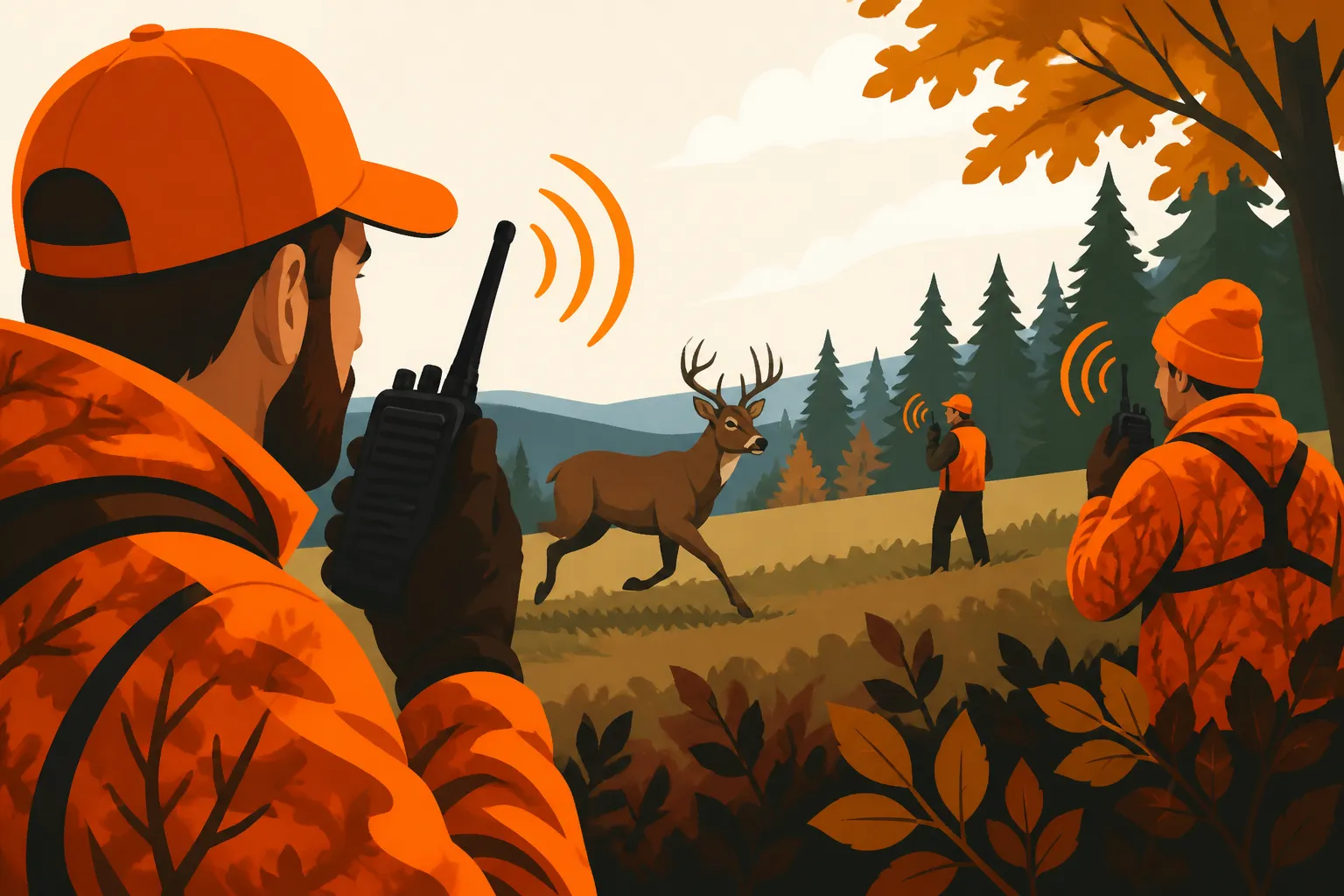
This is where two-way radios shine, transforming a potentially haphazard effort into a truly coordinated hunting strategy. With radios, every member of your hunting party, whether they're a stander or a driver, becomes an active participant in real-time. Drivers can report deer sightings, direction of travel, and how hard they're pushing. Standers can acknowledge, adjust their position if safe and appropriate, and prepare for incoming game. This dynamic information flow means you're not just reacting to deer, but actively influencing their movement and making informed decisions on the fly. Suddenly, the entire drive becomes more fluid and responsive, allowing for quicker adjustments to changing deer behavior or unexpected terrain features. It's like having an invisible tether connecting everyone, vastly increasing your chances of success. When you can communicate effectively, your drives become less about luck and more about calculated execution, ensuring that deer are pushed towards waiting guns, not escaping through unnoticed gaps. This real-time intelligence is invaluable, turning what can be a chaotic scenario into a strategic, well-oiled machine.
Choosing the Right Two-Way Radio for Minnesota Conditions
Alright, so you're sold on the idea of radios. But stepping into the world of two-way communication can feel a bit like learning a new language. With acronyms like FRS, GMRS, and MURS floating around, it's easy to get overwhelmed. The key is understanding what each type offers and, more importantly, what will actually work when you're tramping through Minnesota's woods or wading through a slough.
Understanding FRS, GMRS, and MURS Radios
Let's break down the jargon a bit.
- FRS (Family Radio Service) radios are perhaps what most people think of when they hear "walkie-talkie." They're low power, usually around 0.5 to 2 watts, and operate on shared channels. They're cheap, readily available at any big box store, and require absolutely no license to operate. The downside? Their range is notoriously limited, especially in heavy cover. Think line-of-sight communication or very short distances in the timber. Great for keeping track of kids in a park, but often frustratingly inadequate for deer drives where hunters might be spread out.
- GMRS (General Mobile Radio Service) radios are a step up. These can transmit at higher power levels, sometimes up to 50 watts, though typical handheld units are in the 5-watt range. This means significantly better range and clarity in challenging environments. The catch? You need a license to operate a GMRS radio. It's not a difficult test or an expensive fee, but it is a requirement. Once licensed, your entire family can use it. For deer drives, GMRS is often the sweet spot, offering the power needed to punch through some timber without being overly complex.
- MURS (Multi-Use Radio Service) radios are less common but worth a mention. They operate on five specific frequencies and are limited to 2 watts of power. No license is required. MURS radios tend to have slightly better range than FRS in some conditions due to their frequencies, but they are not as powerful as GMRS.
For most Minnesota deer drives, especially those where your group might be spread out in thick cover, GMRS is likely your best bet for reliable communication. While FRS might be tempting due to its simplicity, its limitations often lead to more frustration than connection.
Key Features for Deer Hunting Radios
When you're out there in the elements, not just any radio will do. You need something rugged and reliable.
- Range in Thick Cover: This is the big one, and it's also where marketing hype often clashes with reality. No handheld radio will give you 30 miles of range in dense Minnesota timber. Physics simply doesn't work that way. Expect typical real-world ranges in heavy woods to be more like 1-3 miles for a GMRS radio, and significantly less for FRS. Focus on radios that emphasize power output (GMRS for sure) and potentially external antenna options for optimal performance.
- Battery Life: Long days in the field demand long-lasting batteries. Look for radios with extended battery life or, even better, those that use standard AA/AAA batteries in addition to a rechargeable pack. Being able to swap out dead batteries in a pinch can be a lifesaver. Nothing kills morale faster than a dead radio halfway through a drive.
- Weather Resistance and Durability: Minnesota hunting often means cold, wet, or snowy conditions. Your radio needs to stand up to that. Look for units rated as water-resistant (IPX4 or higher) and built with robust, impact-resistant casings. Dropping a radio in the snow or having it take a tumble shouldn't mean the end of its service.
- Hands-Free Operation: Voice-activated (VOX) features are incredibly useful, allowing you to communicate without fumbling for the push-to-talk button, especially when you're carrying your rifle or bow. Privacy codes (often called CTCSS or DCS tones) are also important. They don't actually encrypt your conversation, but they filter out chatter from other radio users on the same frequency, so you only hear your group.
- Accessories: Consider radios with standard headphone jacks for external headsets or earpieces. These allow for more discreet communication, preventing you from spooking game with loud radio chatter, and can keep your ears warmer in the cold. A good quality, comfortable earpiece can make a huge difference in usability throughout the day.
| Feature | FRS Radio | GMRS Radio | MURS Radio |
|---|---|---|---|
| Power Output | 0.5-2 Watts | 5-50 Watts (handhelds typically 5W) | 2 Watts |
| License Required | No | Yes (for family) | No |
| Typical Range (Woods) | 0.5-1.5 Miles (highly variable) | 1-3 Miles (better penetration) | 1-2 Miles (can be good in some conditions) |
| Cost | Lowest | Moderate | Moderate |
| Channels | 22 shared channels | 30 channels (8 shared with FRS) | 5 dedicated channels |
| Best For | Very short distances, simple communication | Group deer drives, extended range, better clarity | Specific use cases, less common |
| Durability Options | Often basic, some rugged models | Wide range of rugged, weather-resistant options | Good durable options often available |
Ultimately, for a reliable deer drive experience in Minnesota's diverse hunting grounds, investing in a good set of GMRS radios, coupled with a proper license, is usually the best approach. You’ll find the clarity and range far outweigh the minimal upfront effort.
Tactical Use of Radios During a Deer Drive
Having the right radios is only half the battle; knowing how to use them effectively during a drive is what truly makes the difference. It's about establishing clear protocols and using the technology to enhance, not complicate, your hunt. A little planning goes a long way in ensuring smooth communication when the adrenaline starts pumping.
Pre-Drive Planning and Channel Assignments
Before anyone sets foot in the woods, gather your crew for a thorough briefing. This isn't just about showing everyone how to turn their radio on; it's about establishing a communication blueprint for the drive. First, designate primary and secondary channels. For instance, channel 1 might be for all active drive communication, while channel 2 is reserved strictly for emergencies or to check in with a specific stander without cluttering the main line. It's also crucial to assign clear roles and responsibilities to each hunter, whether they're driving or standing. Who is the lead driver? Who is the anchor stander?
During this briefing, discuss what information needs to be relayed and in what format. Keep it concise. "Buck moving southeast from Driver 3" is far better than "Hey guys, I just saw a really nice buck, I think it was a 10-pointer, and he went over that way, where Driver 3 is supposed to be." Establish simple code words or phrases for specific actions or sightings to minimize chatter and maintain discretion. This kind of detailed planning is especially important for Deer Drives With Three or Four Hunters, where every person's position and actions are critical to success. A quick check of a mapping app like GoHunt beforehand can help visualize the terrain and potential dead zones, allowing you to anticipate communication challenges.
Effective In-Drive Communication
Once the drive begins, disciplined communication is paramount. The goal is to inform without over-communicating. Drivers should periodically check in with their positions, especially if they encounter unexpected obstacles or significant terrain changes. "Driver 2, approaching the swamp edge," for example. When deer are spotted, the information needs to be quick and actionable: "Deer moving west, stander 1, get ready." Always confirm receipt of messages. A simple "Copy that" or "Received" lets the sender know their message got through.
It's tempting to chatter, especially during lulls, but resist the urge. Unnecessary talk ties up the channel and can spook game. Encourage the use of privacy codes (CTCSS/DCS) to filter out outside interference, keeping your channel clear for your group. If a stander sees a deer that isn't spooked by the drive, they can whisper an update, allowing others to prepare. Conversely, if a driver feels they're moving too fast or too slow relative to the others, they can quickly adjust. Imagine you're Posting a Drive Around a Minnesota Slough; drivers moving through the cattails can relay their progress, ensuring standers know exactly when to expect deer to break cover. This ongoing, clear communication keeps everyone synced and focused on the objective.
Safety and Emergency Protocols
Beyond coordinating deer movement, two-way radios are an indispensable safety tool. Before the hunt, establish clear emergency protocols. What's the distress signal? A repeated series of calls, perhaps "Emergency, Emergency, Emergency" followed by your name and location, should be universally understood. Everyone should know to respond immediately if an emergency call goes out. Conduct regular check-ins, especially if the group is spread out or the weather takes a turn. Even a simple, "All clear, Driver 4," confirms everyone is accounted for.
If a hunter becomes disoriented or injured, their radio is their lifeline. They can immediately call for help, providing their last known location or describing landmarks. While a mapping app like GoHunt can help pinpoint a hunter's precise location via GPS, the radio is how they communicate that information in real-time. This capability vastly reduces response times in critical situations. When you're out in remote parts of Minnesota, far from cell service, a working radio can literally be the difference between a minor incident and a serious problem. Knowing everyone can reach each other for help, whether it's for a sprained ankle or a more serious situation requiring a First Aid Kits for Remote Northwoods Ground, brings immense peace of mind to any hunting party.
Maximizing Radio Performance in Minnesota's Landscape
Minnesota's diverse geography, from rolling farmlands to vast forests and myriad lakes, presents unique challenges for radio communication. You can have the best radios on the market, but if you don't understand how the environment affects their performance, you'll still be battling static and dropped calls.
Terrain and Range Considerations
The biggest enemy of radio waves is solid matter. Hills, ridges, and dense timber act as giant signal blockers, turning what might be a five-mile line-of-sight range into a quarter-mile of static-filled frustration. When planning your drive, take a moment to consider the topography. If possible, drivers can try to stay on slightly higher ground or maintain line-of-sight with other members, even if it's just the tops of trees. Understanding Wind and Thermals on a Minnesota Ridge isn't just for deer movement; it also gives clues about how sound and signals might travel.
Water bodies, surprisingly, can sometimes help signals travel further over their surface, but deep, wet ravines or dense, swampy areas often absorb radio waves. A mapping tool like GoHunt can be invaluable here, allowing you to visualize elevation changes and dense cover before you even step foot in the woods. By anticipating where your signal might drop, you can adapt your drive plan, perhaps bringing standers closer or having drivers communicate their position more frequently through known "signal windows."
Battery Management and Weatherproofing
Minnesota weather is famously unpredictable, and cold temperatures are notorious battery killers. A fully charged battery might only last half as long in freezing conditions compared to a mild autumn day. Always start with freshly charged batteries. Consider carrying spare battery packs, or even a small, portable power bank to recharge USB-chargeable radios during a lunch break. If your radios use standard AA or AAA batteries, bring plenty of extras.
Weatherproofing isn't just for heavy rain. Snow, sleet, and even dense fog can infiltrate electronic components and degrade performance. While many radios are rated as water-resistant, "resistant" doesn't mean "proof." Keep your radio tucked away in a waterproof pouch or inside your jacket when not actively using it, especially during heavy precipitation or when wading through deep snow. Condensation can also be an issue when moving a cold radio into a warm cabin or vehicle. Letting it warm up slowly can help prevent internal fogging. Think about the care you take to keep your Keeping a Muzzleloader Dry in Lake-Effect Snow; your radio deserves similar consideration.
Antenna Upgrades and Accessories
While internal antennas are convenient, they're often a compromise for portability. For GMRS radios, many models allow for external, longer whip antennas. These can significantly improve your range and signal clarity, especially in challenging terrain. A longer antenna catches more signal and transmits it more effectively. However, they can be cumbersome in thick brush, so weigh the trade-offs for your specific hunting style.
Beyond antennas, accessories like high-quality headsets or shoulder mics are game-changers. A good earpiece allows you to hear communications clearly without blasting sound, preventing you from spooking game. It also frees up your hands, letting you focus on hunting. Shoulder mics bring the microphone closer to your mouth, improving transmission clarity without having to dig the radio out of your pack. For those really cold days, some headsets even offer ear protection and warmth. Investing in these small add-ons can vastly improve the user experience and effectiveness of your two-way radios, making them truly integral to a successful and safe deer drive in Minnesota. Utilizing tools like GoHunt for scouting and mapping capabilities, combined with reliable radio communication and smart accessories, creates a powerful setup for any serious hunter.
Disclaimer
This article is for general informational purposes only and does not constitute professional advice. Laws, prices and regulations vary by location and change over time. Consult a qualified professional for guidance on your specific situation.