Safety Harnesses and Lifelines
There's an undeniable thrill that comes with perching high in a treestand, overlooking a swamp edge or a fresh cut in the hardwoods, waiting for a Minnesota whitetail to materialize. It’s part of the magic of deer hunting, getting that elevated perspective. But with that elevation comes a very real, very sobering danger: falling. Far too many hunters, even seasoned veterans, think it won't happen to them, or they cut corners, only to face a life-altering or even fatal accident. This guide isn't here to scare you, but to empower you with the knowledge and the right gear to make sure you come home safely every single hunt, focusing specifically on the critical roles of full-body safety harnesses and lifelines.
The Harsh Reality of Treestand Falls
Let's be honest, we all know someone, or have heard stories, about a hunter taking a tumble from a treestand. It's not a rare occurrence; sadly, it's one of the leading causes of serious injury and even death in deer hunting. The irony is that nearly every one of these accidents is preventable with the right equipment and adherence to proper safety protocols.
Why Falls Happen, Even to the Best of Us
Falls aren't always dramatic tumbles from a great height. Often, they happen silently, unexpectedly. It could be a slippery step on a climbing stick, a rotten branch you grabbed for balance, or simply nodding off during a long, cold sit. I've known guys who've fallen just stepping into their stand, or trying to adjust a camera arm. It's often during the ascent or descent when you're transitioning between climbing aid and stand, that hunters are most vulnerable. Fatigue, numb fingers from the cold, or even that moment of distraction when a squirrel barks near your head can be all it takes. When you're dealing with darkness, cold, and often a level of exhaustion, your reflexes aren't always at their sharpest. This is precisely why relying on simple attentiveness isn't enough; you need a mechanical system that is always connected to prevent a fall.
The Inadequacy of Old-School Safety Belts
Back in the day, many of us, myself included, used those flimsy waist belts. We thought we were being safe. The truth is, a waist belt alone is incredibly dangerous if you fall. If you're suspended by just your waist, you can suffer from suspension trauma (also known as "harness hang syndrome") very quickly. This restricts blood flow, leading to serious medical complications, even if you weren't injured in the initial fall. Plus, they offer little protection if you hit your head or flip upside down. Modern full-body harnesses, combined with a proper lifeline, address these critical flaws, providing continuous security and a much safer way to hang if the unthinkable happens.
Full-Body Harnesses: Your Foundation of Safety
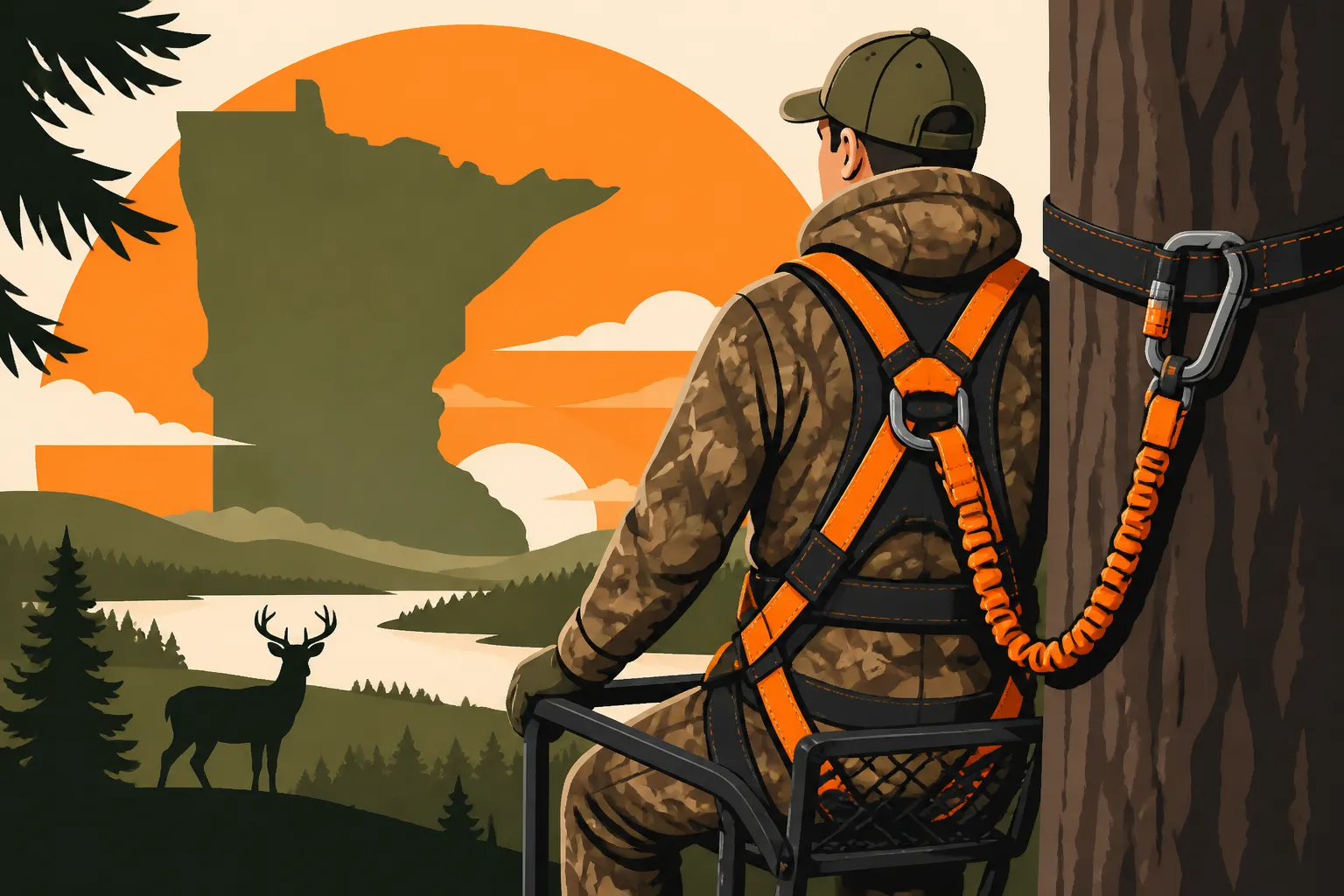
A full-body harness is your personal safety net, designed to distribute impact and suspension weight across your shoulders, chest, and legs, rather than just your waist. It’s the single most important piece of safety gear you can buy for treestand hunting, and frankly, if you're not wearing one, you shouldn't be in a treestand.
What Makes a Good Harness?
Modern harnesses come in various styles, but they all share key features. They typically consist of durable webbing straps, buckles for adjustment, and a D-ring at the back for attaching your tether or lifeline. Some are minimalist, designed to be worn over light clothing, while others are built into a vest, offering pockets and other features. The key is that they fit snugly but comfortably over your hunting clothes, including those bulky layers you wear during Cold-Weather Sitting Strategy in Minnesota. When you put it on, ensure all straps are secure, and there's no slack. You want it tight enough that if you were to fall, you wouldn't slip out, but not so tight that it restricts your movement or breathing.
I’ve had friends who invested in harnesses that felt a bit like a medieval torture device, which made them less likely to use it. Don’t fall into that trap. Spend a little time trying different models. Some popular choices from brands like Hunter Safety System, Muddy, and Summit (though I can't speak to specific products or features) focus on comfort and ease of use, which makes a huge difference in compliance. Look for features like quiet buckles and easy adjustability, especially if you're layering up for those late-season hunts. Remember, the best harness is the one you actually wear, every single time.
Inspection and Maintenance
Just like your rifle or bow, your safety harness needs regular attention. Before and after each season, give it a thorough once-over. Check all webbing for frays, cuts, or excessive wear. Inspect the stitching, especially around the D-ring and buckle points. Look for any signs of UV damage, which can weaken the material over time. Test all buckles to ensure they latch securely. If your harness has been involved in a fall, even a minor one, it should be retired immediately, even if it looks fine. The integrity of the materials can be compromised in ways you can't see. Most manufacturers recommend replacing harnesses every few years, regardless of use, so check the tag for specific recommendations. Proper storage, away from direct sunlight and moisture, will extend its life.
The Lifeline: Your Continuous Connection
While a harness is vital, it's only half the equation. The lifeline is what provides continuous, hands-free attachment from the moment your feet leave the ground until you're safely back down. This is the game-changer that prevents most falls entirely, or at least keeps you from hitting the ground if you slip.
What is a Lifeline System?
A typical lifeline system consists of a robust rope or strap that extends from the base of the tree, up past your treestand platform, and then back down again, forming a continuous loop. Attached to this loop is a Prusik knot or similar sliding knot with a carabiner. Your harness tether then clips into this carabiner. As you climb, you slide the Prusik knot up with you. If you slip, the Prusik knot instantly cinches down on the main rope, stopping your fall within inches. This system ensures that you are connected to the tree from the very first step of your ascent until your last step on the ground. This continuous attachment is the single most important principle of treestand safety.
Installing Your Lifeline System
The best time to install a lifeline is often during the off-season or well before hunting pressure builds, perhaps when you're doing your Scouting Minnesota Public Land Before Season. This allows you to work unhurriedly and silently.
Here’s a general step-by-step process:
- Select a Strong Tree: Choose a healthy, living tree that can support your weight and the stand.
- Attach the Top Anchor: Ascend the tree using proper climbing techniques (and if it's an initial setup, still use a harness and tether from another safety rope) to the height of your stand or slightly above. Secure the lifeline's top loop around the tree, ensuring it's above your head when you're standing on the platform. Make sure it's tight and won't slip down.
- Drop the Rope: Drop the remaining rope length down to the base of the tree.
- Secure the Bottom Loop: Gather the slack and create a second loop at the bottom, just above the ground, tying it off securely around the tree. This creates the continuous safety line.
- Attach the Prusik Knot: Slide your pre-tied Prusik knot and carabiner onto the main lifeline rope.
- Test It: Give the rope a good tug to ensure everything is secure. Always test at a low height first.
You can also use climbing sticks like those mentioned in Climbing Sticks for Rough Bark to install your stand and then the lifeline. Some hunters prefer to leave lifelines up all season, especially on private land or less-pressured public ground. If you're on public land, be mindful of Treestand Rules on Minnesota Public Land, which might dictate how long permanent fixtures can remain. For portable setups, you might deploy a lifeline with each hunt, but the principle remains the same.
Effective Use and Emergency Planning
Having the gear is one thing; using it correctly and knowing what to do in an emergency is another. This is where practice and preparation truly save lives.
From Ground to Stand: The Continuous Connection Rule
This is paramount: always stay connected. Before you even put a foot on your first climbing stick, clip your harness tether into the Prusik knot on the lifeline. As you ascend, slide the Prusik knot up the main rope, keeping it at chest height or above. When you reach your stand, step onto the platform, and then make your final adjustments to the Prusik knot so your tether has the right amount of slack for comfortable movement while still preventing a long fall. Never unclip from the lifeline until you are safely back on the ground. This also applies if you’re using a saddle, which has its own unique safety considerations as explored in Saddle Hunting in Minnesota Oaks.
What to Do if You Fall
Even with all precautions, falls can happen. The lifeline and harness are designed to stop you, but then what? Suspension trauma is a real concern. If you find yourself suspended, you need a plan.
- Assess Yourself: Check for immediate injuries. Are you able to move your arms and legs?
- Activate Suspension Relief: Many harnesses come with a suspension relief strap or a small "stirrup" that you can deploy to stand in. This takes pressure off your upper legs and allows blood to circulate, buying you critical time. If your harness doesn't have one, consider carrying a small piece of rope that you can loop and stand in.
- Call for Help: If you have cell service, call 911 or a trusted contact. Many hunters use GPS devices or satellite communicators (like those from GoHunt's navigation tools) in remote areas where cell service is non-existent.
- Self-Rescue: If you can, try to swing your feet to the tree and push yourself back onto the stand. If that's not possible, slowly and carefully try to descend the tree, using the lifeline as your main support. This is why practicing at a safe, low height is so important.
- Never Panic: Panicking will only make things worse. Breathe, assess, and execute your plan.
It's also a great idea to carry a small knife or multi-tool, easily accessible, that could cut a rope in an absolute emergency, although self-cutting should be a last resort. For those long days out, always ensure your pack, perhaps one designed for public land hunts as discussed in Packs for a Day on Public Land, contains essential safety items like a First Aid Kits for Remote Northwoods Ground.
Pre-Season Practice and Familiarity
This is critical. Before you head out into the dark, cold woods, practice with your harness and lifeline in your backyard at a low height. Get comfortable with the fit, clipping in and out, and ascending/descending while connected. Simulate a fall (safely, just a slight drop) to understand how the Prusik knot grabs and how it feels to hang. This builds muscle memory and confidence, which are invaluable when the real moment of truth arrives. You wouldn’t just grab a new rifle and head to the deer stand without sighting it in, right? Treat your safety system with the same respect.
Safety System Checklist
To help you stay organized and ensure your gear is ready, here's a quick checklist to review before each season and periodically throughout.
| Component | Pre-Season Check | Pre-Hunt Check | Action if Failed |
|---|---|---|---|
| Full-Body Harness | Inspect webbing for cuts, frays, UV damage. | Check buckles for secure latching. | Replace immediately. |
| Examine stitching for wear or looseness. | Ensure D-ring is intact and free of obstruction. | Retire harness. | |
| Verify expiration date (if applicable). | Confirm comfort and snug fit over clothing. | Adjust or get new harness. | |
| Lifeline Rope/Strap | Inspect for nicks, cuts, frays, knots, kinks. | Check for any signs of animal chew marks. | Replace lifeline. |
| Examine all splices or sewn connections. | Ensure it's free of ice or excessive moisture. | Dry thoroughly, inspect again. | |
| Prusik Knot & Carabiner | Check Prusik knot for fraying, especially the loop. | Ensure carabiner gates open/close smoothly and lock. | Replace Prusik or carabiner. |
| Confirm knot is tight and secure. | Verify smooth sliding on the lifeline. | Re-tie or replace Prusik. | |
| Tether Strap | Inspect for wear, cuts, or stretching. | Confirm it's the correct length for your setup. | Replace tether. |
| Suspension Relief Strap | Ensure it's easily accessible and deployable. | Practice deploying it to ensure functionality. | Replace or adjust. |
Final Thoughts on Treestand Safety
Hunting from an elevated position offers a tremendous advantage, whether you're setting up for archery season or during the firearm opener. From understanding deer movement patterns discussed in Treestand Setups in Minnesota Hardwoods to maximizing your shot opportunities, a treestand is a powerful tool. But it's only truly advantageous if you're safe. The extra minute it takes to put on your harness and connect to your lifeline is negligible compared to the consequences of a fall.
Don't let complacency set in. Every hunt, every climb, every descent needs your full commitment to safety. You owe it to yourself, your family, and your hunting partners to make safety your absolute top priority. After all, the best memory of a hunt is always walking back out of the woods, safe and sound, ready for the next adventure.
Disclaimer
This article is for general informational purposes only and does not constitute professional advice. Laws, prices and regulations vary by location and change over time. Consult a qualified professional for guidance on your specific situation.