Best Minnesota Counties for Grouse
Minnesota counties featuring young aspen forests and active timber management provide productive habitats for ruffed grouse.
Know what you’re after.
Big game, small game, upland birds, and waterfowl — identification, behavior, rut and migration timing, and how each species moves through the season.
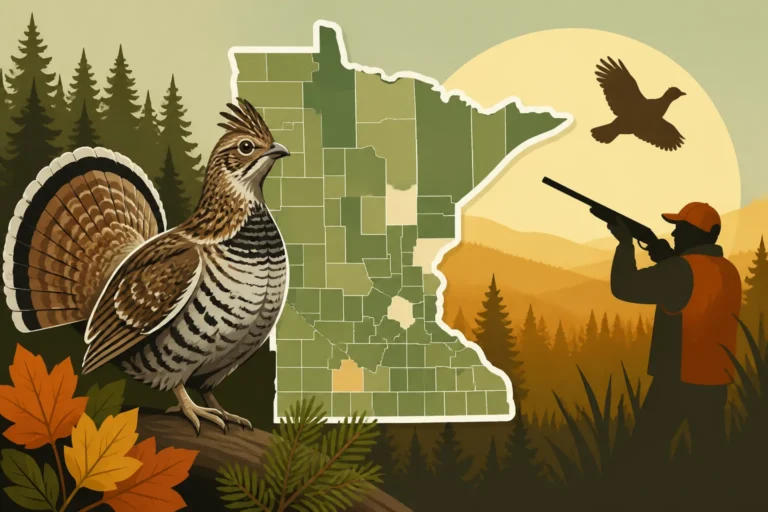
Minnesota counties featuring young aspen forests and active timber management provide productive habitats for ruffed grouse.
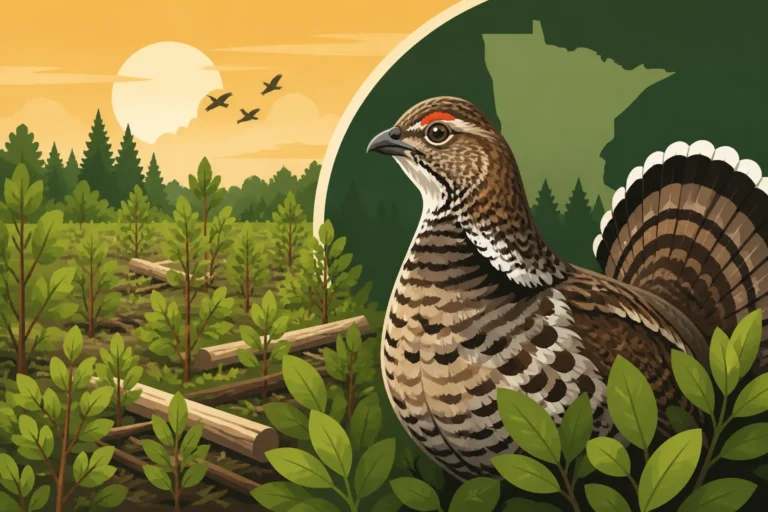
Popple cuts provide ruffed grouse in Minnesota with male aspen buds for winter food and dense sapling cover to evade predators.
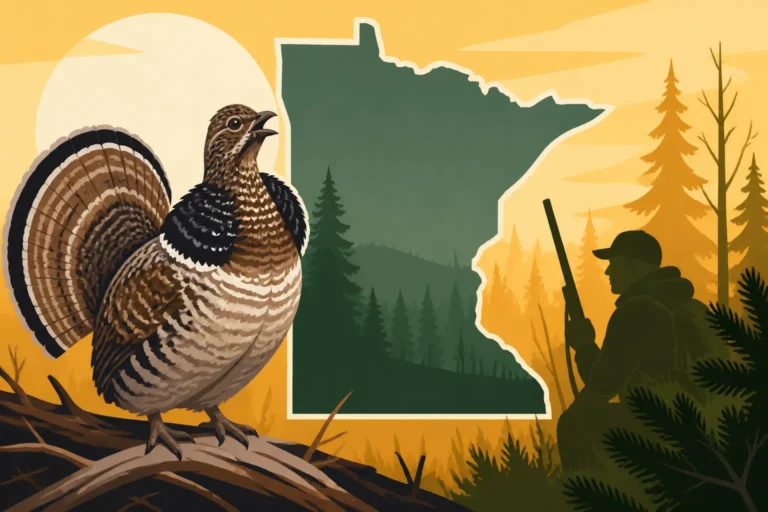
Minnesota ruffed grouse drumming surveys track breeding bird populations, measuring annual wildlife trends and helping hunters anticipate seasons.
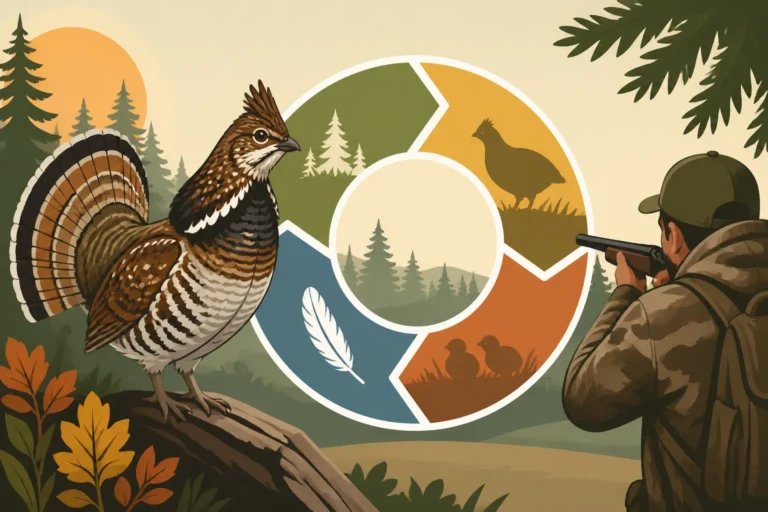
The ruffed grouse population cycle runs eight to eleven years in Minnesota, detailing phases from low numbers to peak abundance.
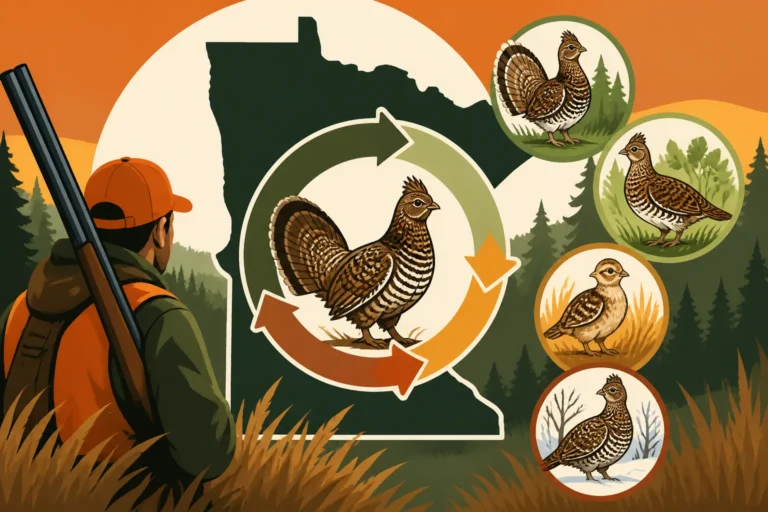
Minnesota ruffed grouse population cycles, spanning eight to eleven years, shape hunting success through dramatic fluctuations in bird abundance.
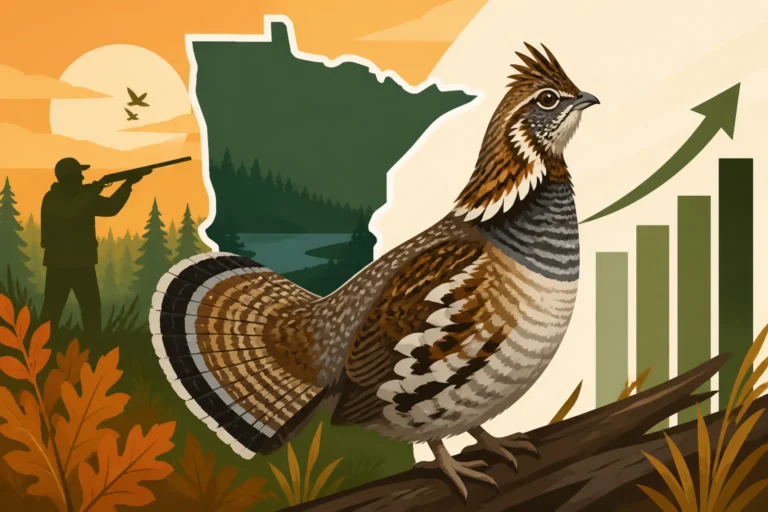
Minnesota ruffed grouse population cycles and annual Department of Natural Resources drumming survey data explained for hunters.
Minnesota record book gobblers are scored using National Wild Turkey Federation measurements for beards, spurs, and weight.
Minnesota wild turkey roosting habits, seasonal shifts, and safe habitats help hunters predict evening and morning locations.
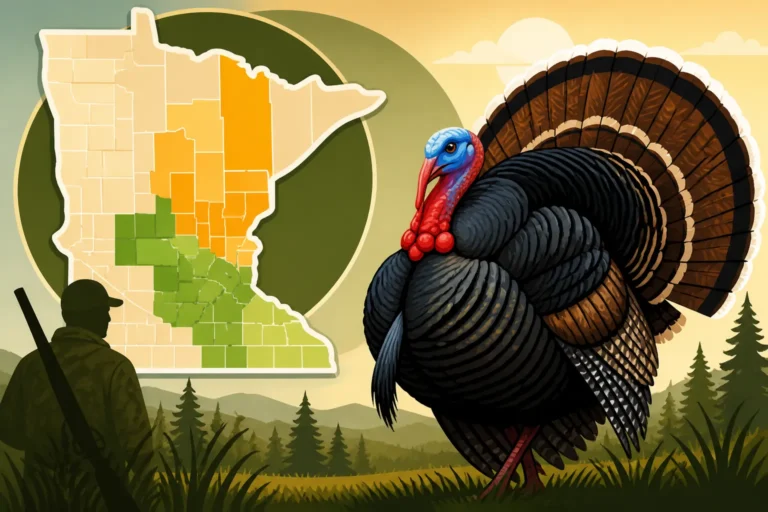
Houston, Fillmore, Winona, and Olmsted counties in southeast Minnesota offer the best turkey hunting opportunities and highest bird densities.

Minnesota turkey hatches and wild poult survival rates face constant threats from nest predators, harsh weather, and habitat loss.