Getting Private Land Permission in Minnesota
One of the most persistent frustrations for any hunter in Minnesota, especially those tired of crowded public land, is gaining access to private property. It can feel like an impossible puzzle, navigating unspoken rules, awkward conversations, and the fear of simply being told "no." This comprehensive guide will walk you through the entire process of respectfully and effectively securing private land hunting permission in Minnesota, from understanding the legal landscape to building lasting relationships with landowners.
Understanding Minnesota's Trespass Laws
Before you even think about approaching a landowner, it’s absolutely critical to understand the legal framework surrounding private property and hunting in Minnesota. Ignorance of the law is never an excuse, and a misstep here can lead to fines, loss of hunting privileges, or worse. The last thing you want is to accidentally violate someone's property rights, as that can sour future opportunities for not just you, but for all hunters in the area. It sets a bad precedent.
What Minnesota Trespass Law Requires
In Minnesota, the core principle is that private land is, well, private. You cannot be on it without permission. This isn't just a polite suggestion; it's codified law. The state generally operates under a "posted or not" rule for agricultural land and forested land that's not clearly posted. However, the safest and most legally sound approach for any private land, regardless of its classification, is to assume you need explicit permission to enter for hunting or any other recreational activity. This permission doesn't just apply to hunting; it applies to scouting, retrieving game, or even simply walking through. Always err on the side of caution. If you are unsure, do not enter. This strict adherence to permission protects both you and the landowner.
Imagine you're driving down a county road in Fillmore County, renowned for its bluff country deer, and you spot a prime-looking piece of timber. It might not have "No Trespassing" signs every 50 feet, but that doesn't mean it's open season. That timber is someone's property, and stepping foot on it without a clear, unequivocal "yes" from the owner is trespassing. The law doesn't care if you "thought it looked unkempt" or "didn't see a fence." The burden is on you to secure permission beforehand.
Do You Need Written Permission in Minnesota?
This is a question that comes up a lot, and while Minnesota law often accepts verbal permission for recreational activities, written permission is always, always, always better. Verbal agreements can be easily misinterpreted, forgotten, or even denied by a landowner who might have a change of heart or memory. A simple written note, signed and dated by the landowner, stating that you (and any specific companions) have permission to hunt on their property for a specific season or duration, provides undeniable proof. It protects you from any misunderstanding or challenge.
Consider a scenario: you've been hunting a fantastic woodlot for three seasons on what you believed was verbal permission from old Mr. Johnson. One day, Mr. Johnson passes away, and his children inherit the land. They find you on the property, and they have no knowledge of any agreement, verbal or otherwise. Without a written document, you could be facing a trespassing charge, despite your good intentions and history. A written agreement clarifies everything and prevents future disputes, no matter what changes occur with the property ownership. It's not about distrust; it's about good practice and clear communication for everyone involved. Do You Need Written Permission in Minnesota? is a topic we've covered in more detail.
Minnesota Posted Land Rules
Minnesota has specific regulations regarding "posted" land. Generally, if land is enclosed by a fence, or if it has signs conspicuously placed at intervals of 500 feet or less along its boundaries, it is considered posted against trespassing. These signs must include language like "no trespassing," "private property," or similar wording. However, it's crucial to understand that even if land isn't posted in this textbook manner, it is still private, and you still need permission. Posted signs simply make the intent of the landowner even more explicit and can carry stiffer penalties if ignored.
Think about hunting pheasants in southwest Minnesota. Many prime fields will have clear "No Trespassing" signs marking the boundaries, often near a slough or shelterbelt. These signs are a direct message: "Do not enter without permission." Even if you see a beautiful rooster fly into a field that isn't perfectly posted every 500 feet, the default assumption should always be that it's private and requires permission. Ignoring these signs, or the general principle of private property, can lead to negative encounters and erode the trust that hunters work hard to build with the farming community.
Retrieving Game From Private Land in Minnesota
This is perhaps one of the most stressful situations a hunter can face: you've made a great shot on a deer or a goose, but it crosses onto adjacent private property where you don't have permission. Your immediate instinct might be to pursue, but you cannot do so without permission. Even if the game is clearly dead just over the property line, crossing that line without explicit permission from the landowner is still trespassing. This rule is absolute and non-negotiable.
The proper protocol is to locate the property owner as quickly as possible and request permission to retrieve your animal. Carry a map or use a mapping app like onX Hunt to quickly identify the parcel owner. Explain the situation calmly and respectfully. Many landowners, understanding a hunter's ethical responsibility to recover game, will grant permission, especially if you show respect and urgency. However, they are under no legal obligation to do so. If permission is denied, or if you can't locate the owner, you must respect their decision. Losing an animal is heartbreaking, but violating property rights is worse and damages the reputation of all hunters. We have an entire article dedicated to Retrieving Game From Private Land in Minnesota, if you want to dive deeper.
The "Why" Behind Private Land Access
While public land hunting offers incredible opportunities across Minnesota, many hunters actively seek private land access for a variety of compelling reasons. It’s not just about avoiding crowds, though that's a significant factor. Private land can offer a completely different hunting experience, often leading to higher quality hunts and more consistent success. Understanding these benefits can also help you articulate your interest to a landowner when you approach them.
Less Pressure, More Opportunity
Let's be honest, public land, especially during popular seasons like the firearm deer opener in the 100 Series, can feel like a war zone. You hear shots ringing out, see orange vests everywhere, and sometimes it feels like you're hunting other hunters more than you're hunting deer. Private land, by its very nature, limits access, which drastically reduces hunting pressure. This can lead to deer, turkeys, or pheasants that behave more naturally, are less skittish, and follow more predictable patterns.
Imagine the difference between hunting a WMA near the Twin Cities versus a private woodlot in rural Pope County. On the WMA, deer might go completely nocturnal or move into thick, inaccessible cover after opening weekend. On a private parcel with limited pressure, deer often continue to use normal travel corridors and feeding areas throughout the season, offering more consistent opportunities. This reduced pressure often correlates with older age-class animals, as they haven't been pushed and harassed as much. Hunting Pressure on Minnesota Public Land is a common challenge for many of us.
Access to Unique Habitat
Private land often encompasses habitat types that are less common or more difficult to access on public ground, or that are managed in specific ways that benefit wildlife. This could be anything from meticulously managed food plots on a large farming operation to untouched mature timber that hasn't seen a chainsaw in decades, or even pockets of dense cover that act as a sanctuary. Farmers might have standing corn that provides exceptional late-season deer cover, or CRP fields that hold incredible pheasant numbers.
Think about a prime cattail slough in Minnesota's farm country. On public land, these might be pounded by hunters. On private land, such a slough, especially if it's buffered by good crop fields, can be a magnet for deer, offering both food and bedding. Similarly, carefully managed stands of aspen and alder on private timberland might be phenomenal for grouse and woodcock, with the landowner actively managing for those species. Hunting a Standing Cornfield in Farm Country is a classic example of unique private land opportunity.
Flexibility and Control
One of the often-overlooked benefits of private land permission is the increased flexibility and control it grants you over your hunting experience. On public land, you're bound by general regulations and the actions of countless other hunters. On private land, within the bounds of state law, you can often coordinate directly with the landowner to tailor your approach.
This might mean discussing specific stand locations to minimize disturbance to their property, or even working together on habitat improvements like hinge-cutting or creating small food plots, if they're open to it. You might have the flexibility to hunt specific wind directions without worrying about another hunter setting up downwind of you. This level of control allows for more strategic and often more enjoyable hunting, as you're working within a more predictable environment. It also allows you to be the primary influence on the hunting pressure on that specific parcel, helping you steward the deer herd or game population more effectively.
Approaching Landowners: The Initial Contact
The idea of knocking on a stranger's door and asking to hunt can be intimidating. Many hunters shy away from it, fearing rejection or feeling like an imposition. However, with the right approach and preparation, it's one of the most effective ways to gain access. Remember, landowners are people, and a respectful, well-thought-out approach goes a long way.
Doing Your Homework Before You Knock
Before you even think about approaching a door, do your reconnaissance. This isn't just about finding land; it's about finding the right land and the right landowner to approach. Start by identifying parcels of interest using online mapping tools. Brands like onX Hunt and GoHunt provide detailed property line information, parcel sizes, and often, landowner names and mailing addresses. This is invaluable. Look for parcels that offer good habitat, are somewhat secluded, or connect to larger blocks of cover.
Once you have a landowner's name, a quick online search might reveal their primary business or interests, which can help you tailor your conversation. Perhaps they're a fellow outdoors enthusiast, or maybe they're known for supporting local youth activities. Having this information shows you've done your homework and aren't just randomly knocking. Also, understand the local area. Are there other hunters already using this land? Are there known issues with trespassers? Being informed demonstrates respect and seriousness. Scouting Minnesota Public Land Before Season is a common practice, and you should apply similar rigor to private land scouting.
The Art of the Knock: First Impressions
Timing and presentation are everything when it comes to the actual knock on the door. Never approach a landowner when they are clearly busy, such as during harvest season, when they're working outside with heavy machinery, or during family meal times. Weekday evenings or weekend afternoons, when they might be home and more relaxed, are generally better. Always dress presentably – clean clothes, no strong cologne, and definitely no camo or full hunting gear. You want to appear respectful, not like you're about to go hunt immediately.
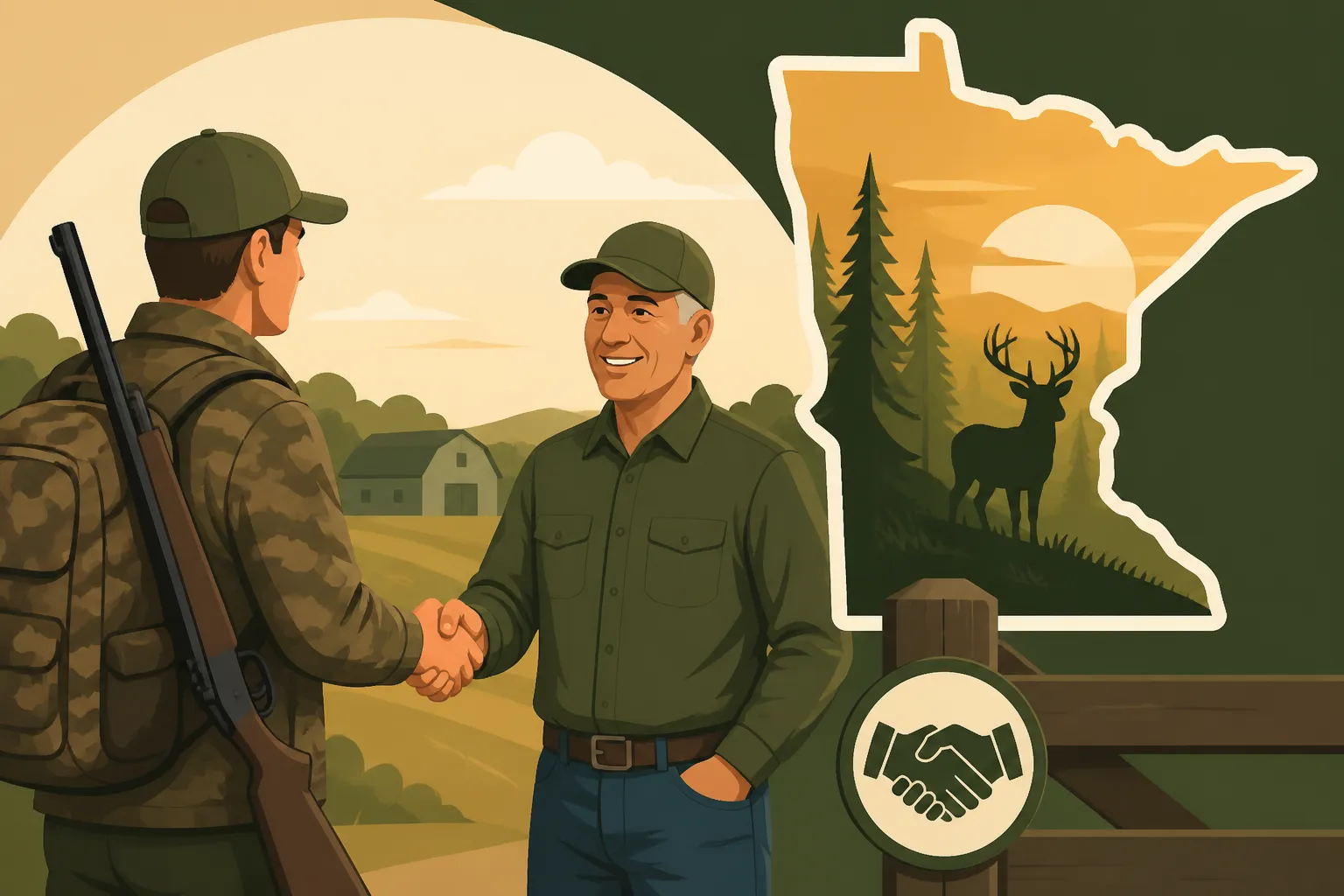
When you approach the house, park your vehicle in a way that doesn't block their driveway or feel intrusive. If there are dogs, wait for the owner to manage them before getting too close. When they answer the door, introduce yourself clearly, state where you're from (e.g., "I'm John Smith from Brainerd"), and immediately explain why you're there. "Hello, my name is [Your Name], and I was hoping to speak with the landowner about the possibility of hunting on your property." Keep it brief and polite. Their initial impression of you is paramount.
Crafting Your Pitch
Once you have their attention, your "pitch" needs to be concise, polite, and focused on respect and responsibility. Don't start by talking about the huge buck you saw; start by explaining your commitment to ethical hunting and your respect for their property. Emphasize that you are asking for permission, not demanding it.
Here’s a possible framework:
- Introduce yourself again and reiterate your purpose. "As I mentioned, I'm [Your Name], and I'm a hunter who respects private property. I noticed your land has some excellent habitat…"
- Explain why you're interested in their specific property. "I noticed you have a great woodlot bordering some cornfields, and I've seen some deer sign there. I'm a quiet, respectful hunter who truly appreciates good habitat."
- State what you're offering in return. This isn't always about money; it's about responsibility. "I would treat your property with the utmost respect, just like it was my own. I'm always mindful of gates, fences, and livestock. I'd be happy to share any trail camera photos of deer on your land, or even help with small chores if you ever need a hand."
- Be clear about what you want to hunt and when. "I'm primarily interested in bowhunting for deer during the archery season," or "I'd love to try to call in a turkey during the spring season."
- Address their potential concerns. "I'm a very safe hunter and always know my backstop. I'd only be out there at specific times we agree upon, and I'd be happy to show you my hunting license and insurance."
- Provide contact information. Always leave a business card or a written note with your name, phone number, and a brief reminder of your request.
- Be prepared for "no" gracefully. "I completely understand if this isn't something you're interested in, but I appreciate you taking the time to listen. Thank you." A polite rejection leaves the door open for future inquiries or referrals to other landowners.
Remember, you're asking for a privilege, not exercising a right. Humility and genuine respect are your most potent tools.
Building and Maintaining Relationships
Securing permission is just the first step. The true art lies in fostering a long-term, positive relationship with the landowner. This isn't a transactional interaction; it's about trust, respect, and mutual benefit. A good relationship ensures continued access for you and can even open doors to other opportunities.
Respecting Their Property and Rules
This is non-negotiable and paramount. Every landowner will have specific rules and expectations for their property, and it is your duty to not only follow them but to exceed them. Did they ask you to close all gates? Double-check them. Did they say to avoid a certain field because of grazing livestock? Stay clear, even if you see a monster buck there. Park exactly where they tell you to, drive slowly on their access roads, and leave absolutely no trash, spent casings, or blood trails.
Consider a farming family in Otter Tail County. They might give you permission to hunt a woodlot behind their barn, but they'll explicitly tell you not to drive ATVs across their hayfields. Respecting this rule, even if it means a longer walk, is critical. If you leave a gate open and their cattle get out, or if you leave a pile of trash by your stand, you've not only jeopardized your own access but likely made it harder for any other hunter to gain permission on that property in the future. Go above and beyond to protect their property as if it were your own.
Communicating Clearly and Often
Good communication is the cornerstone of any strong relationship, and it's especially important with landowners. Before you hunt, always notify them that you'll be on the property. A quick text or phone call, "Hey [Landowner's Name], just wanted to let you know I'm heading out to the north woodlot this evening," shows courtesy and thoughtfulness. This is especially important if there are other people who use the property, such as family members, farmhands, or even other hunters.
Beyond just informing them of your presence, communicate any observations. Did you see a fence down? Notice some suspicious vehicle tracks near their back forty? Spot a sick-looking deer? Share that information. It shows you're engaged and looking out for their interests, not just your own. Always thank them after a hunt, whether successful or not. "Had a great evening out there, saw a couple of does. Thanks again for the opportunity!" This small gesture reinforces your appreciation.
Offering Help Beyond Hunting Season
One of the most effective ways to solidify a relationship is to offer help outside of the hunting season. This isn't about being a free laborer, but about demonstrating your commitment and willingness to be a good neighbor. It could be as simple as offering to help stack firewood, fix a fence, or clear some brush. Many landowners are busy, and a little extra help can go a long way.
For example, a landowner might mention needing help with a fallen tree after a windstorm. Offering your chainsaw and an afternoon of your time builds immense goodwill. Maybe they have some unwanted invasive species in a woodlot you hunt; offering to help clear them not only improves their land but also enhances the habitat you hunt. This kind of genuine assistance transforms you from "that hunter" into "a trusted friend," and that's the ultimate goal in securing long-term private land access. This reciprocity creates a strong bond that often lasts for years.
What to Offer (and What to Expect)
When seeking private land permission, it's important to understand that it's often a two-way street. While your primary goal is access, considering what you can offer the landowner, and being clear about what you both expect, will lead to the most successful outcomes.
Beyond Just "Thank You": Practical Offerings
While a sincere "thank you" is essential, many landowners appreciate practical gestures. This doesn't necessarily mean money, though some landowners might be open to a lease agreement (which we'll discuss later). Think about services or goods that genuinely benefit them.
- Help with chores: As mentioned, offering to fix fences, cut firewood, clear brush, or even run errands can be invaluable.
- Wildlife management assistance: If they're interested, offer to help monitor their property for CWD, or provide insights into deer movement, or help with nuisance animal control like coyotes or foxes.
- Share game cameras: Offer to set up a trail camera and share the photos, especially if they enjoy seeing the wildlife on their property. This also gives them eyes on their land when they can't be there.
- Gift baskets or produce: A gift certificate to a local restaurant, a basket of specialty foods, or even offering to share some of your harvested game (processed, of course) can be a thoughtful gesture.
- Security: Being an extra set of eyes on their property, especially if it's rural and isolated, can be a major benefit. Report suspicious activity, check on things if they're away, and generally be a trustworthy presence.
A hunter who helps a farmer mend a fence in spring, or pitches in to stack wood in the fall, is far more likely to retain access than one who just shows up with a bow and disappears after the season. This kind of mutual benefit turns a transaction into a partnership.
Understanding Landowner Concerns
Landowners often have valid concerns when considering granting hunting access. Addressing these proactively can alleviate their worries and increase your chances of getting a "yes." Common concerns include:
- Safety: This is usually number one. They worry about stray bullets, accidental injuries, or hunters not being mindful of their home, outbuildings, or livestock. Emphasize your commitment to safety, knowing your backstop, and using appropriate calibers or weapons for the area.
- Property damage: Gates left open, fences cut, ruts in fields, trash, or damage to crops are all major fears. Reiterate your respect for their property and your commitment to leaving it cleaner than you found it.
- Liability: Many landowners worry about what happens if a hunter gets hurt on their property. While Minnesota's recreational use statute offers some protection, you can offer to sign a liability waiver and carry your own insurance.
- Poaching or unethical behavior: They don't want their property to become a haven for rule-breakers. Stress your ethical hunting practices and your commitment to following all game laws.
- Disruption: They might have other activities planned, or simply enjoy the peace and quiet of their own land. Be flexible with your hunting times and agree to communicate your presence.
A simple table can help you visualize these common concerns and how to address them:
| Landowner Concern | Your Proactive Response |
|---|---|
| Safety of People/Livestock | Emphasize strict adherence to safety rules, knowing backstops, notifying of presence. |
| Property Damage (Gates, Fences, Fields) | Promise to treat property as your own, close gates, avoid driving on wet fields, pack out all trash. |
| Liability if You Get Hurt | Offer to sign a liability waiver, confirm you carry your own insurance. |
| Unethical Hunting/Poaching | Stress ethical conduct, adherence to game laws, and commitment to fair chase. |
| Disruption/Privacy | Communicate hunting schedule, avoid specific areas, respect their family time. |
| Inconvenience | Offer assistance with chores, be flexible, and minimize impact on their daily routine. |
Setting Clear Expectations and Boundaries
The biggest source of friction in any hunting permission scenario is often a lack of clear communication upfront. Don't leave anything to assumption. Once permission is granted, sit down (or have a clear conversation) and discuss all the details.
- Specific hunting areas: Where exactly are you allowed to hunt? Are there off-limits zones? Use a map (like onX Hunt's property line overlay) to draw out boundaries if needed.
- Allowed species and weapons: Are you allowed to hunt deer, turkeys, pheasants? Bow, rifle, or shotgun? Clarify this.
- Dates and times: What days of the week? What parts of the season?
- Access points: Where should you park? What roads or trails can you use?
- Guests: Can you bring a friend or family member? If so, do they also need to check in with the landowner?
- Game recovery: What's the protocol if an animal runs onto adjacent land or near their home?
- Emergency contact: Exchange phone numbers for emergencies.
- Terms of duration: Is this permission for one season, or ongoing until revoked?
Having a written agreement that outlines these points, even a simple one, can prevent misunderstandings down the road. It provides a reference for both parties and ensures everyone is on the same page. This clarity protects you and builds confidence with the landowner, demonstrating your professionalism and foresight.
Using Technology to Your Advantage
In today's connected world, technology has become an indispensable tool for hunters seeking private land access. From identifying landowners to scouting from afar, various apps and platforms can significantly streamline your efforts and improve your chances of success.
Mapping Tools for Landowner Identification
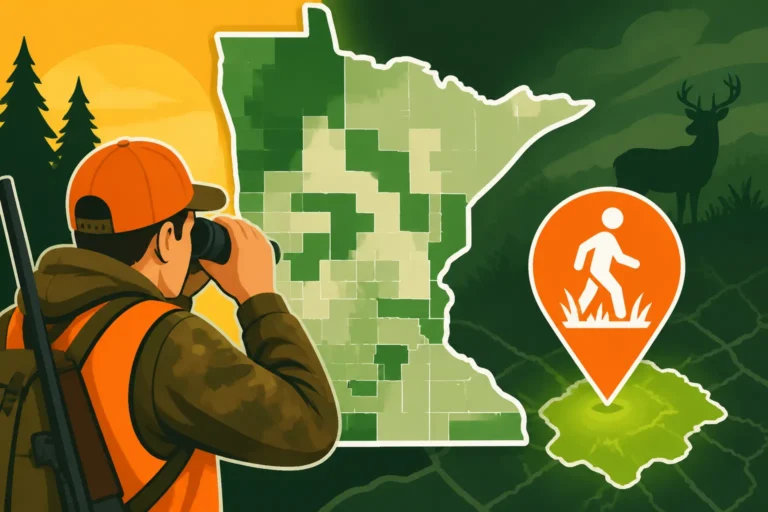
Gone are the days of guessing property lines or relying solely on plat books. Modern mapping applications are a game-changer. Services like onX Hunt and GoHunt provide detailed satellite imagery overlays with clearly marked property boundaries, parcel numbers, and, most importantly, landowner names and sometimes even mailing addresses. This allows you to precisely identify the owner of that intriguing woodlot or prime pheasant cover without ever stepping foot on the property.
Imagine you're driving through Houston County's bluff country, Hunting Southeast Minnesota Bluff Country, and you spot a narrow, unhunted-looking finger of timber that looks like a perfect deer funnel. With a mapping app, you can instantly see whose land it is, get their contact information, and determine if it connects to other desirable habitat. This saves you immense time and effort, ensuring you're contacting the correct individual and have a solid understanding of the property's layout before you even knock on the door. It also helps you understand adjacent landowners, which is crucial for game recovery planning.
Digital Communication and Record Keeping
Technology extends beyond just maps. Once you've established contact, digital tools can help with communication and organization.
- Email: If a landowner prefers, email can be a great way to send polite check-in messages, share trail camera photos, or send a draft of a written permission agreement. It creates a written record of your interactions.
- Text Messaging: For quick notifications ("Heading out this afternoon!"), texts are often preferred by busy landowners. Always confirm their preferred method of contact.
- Spreadsheets or Notes Apps: Keep a simple digital log of the properties you've researched, the dates you contacted landowners, their responses, and any specific rules or preferences they shared. This helps you stay organized, especially if you're pursuing multiple leads.
Maintaining a clear digital record ensures you don't miss important details and can quickly reference past conversations or agreements. It demonstrates your professionalism and thoughtfulness to the landowner, showing you take their property and your access seriously.
Scouting From Afar with Satellite Imagery
Before you even consider contacting a landowner, use satellite imagery to thoroughly "e-scout" the property. This allows you to identify key features, assess habitat quality, and even pinpoint potential hunting locations, all from your computer or phone. Look for:
- Food sources: Crop fields, orchards, mature oak stands (especially after Hunting After a Poor Acorn Year).
- Water sources: Ponds, creeks, sloughs.
- Bedding areas: Thick cover, dense timber, marsh edges.
- Travel corridors: Fence lines, drainage ditches, timber edges, funnels between different habitat types.
- Topography: Ridges, ravines, elevation changes that might dictate animal movement or provide thermal advantages.
By thoroughly scouting a property virtually, you can develop a solid understanding of its potential. When you eventually speak with the landowner, you can articulate specific reasons why you're interested in their land, showing you've put thought and effort into your request. This informed approach demonstrates serious intent and respect, rather than a casual, uninformed request. Reading Aerial Photos for Big Woods Deer is a skill that translates perfectly to private land scouting.
Common Pitfalls and How to Avoid Them
Even with the best intentions, it's easy to make mistakes that can jeopardize your chances of gaining private land permission, or worse, lead to the revocation of existing access. Being aware of these common pitfalls and actively working to avoid them is crucial for long-term success.
Disrespect and Entitlement
This is, without a doubt, the fastest way to get a "no" or lose permission you already have. Approaching a landowner with an attitude of entitlement, or showing disrespect for their property or their time, is a huge red flag. Never assume that because land is unposted or appears unused, you have any right to be there.
A prime example: I once heard about a group of deer hunters who, after being granted permission, immediately started complaining about the condition of the access road and demanded the landowner trim some branches so their truck wouldn't get scratched. This kind of behavior is incredibly off-putting. Landowners are doing you a favor, granting you a privilege. Your attitude should always be one of gratitude and humility. Even if a landowner seems gruff or dismissive, maintain your polite and respectful demeanor. Remember, their answer might be based on past negative experiences with other hunters.
Ignoring Boundaries or Rules
Once you have permission, deviating from the agreed-upon terms is a surefire way to have it revoked. This includes crossing onto neighboring properties where you don't have permission, hunting in off-limits areas, using prohibited weapons, or violating any other specific rules the landowner has set. Even accidentally, if you cross a property line while tracking a deer, it can cause problems.
Consider a scenario where a farmer gives you permission to hunt a woodlot but explicitly tells you to avoid the field where his horses graze. If you decide to cut through that field anyway because it's a shortcut to your stand, and the horses get spooked or injured, you've created a major problem. It shows a fundamental lack of respect for their instructions and their property. Always double-check your location using your GPS or mapping app, and if in doubt, err on the side of caution and stay within the agreed-upon zones. Clarity is key, and adhering to those boundaries demonstrates trustworthiness.
Assuming Permission is Permanent
Private land permission is almost always a privilege, not a right that lasts forever. It can be revoked at any time, for any reason, by the landowner. Assuming that once you have permission, it's yours for life, can lead to complacency and ultimately, the loss of access. A landowner's circumstances can change – they might decide to lease the land to someone else, sell the property, have a bad experience with another hunter, or simply change their mind.
It's important to "re-earn" your permission each year. This means checking in before each season, reiterating your gratitude, and offering any help. Don't just show up on opening day without contacting them since last season. A quick phone call or visit demonstrates that you value the access and are not taking it for granted. This proactive approach ensures the relationship remains strong and increases the likelihood of continued access. Even after many years, continuing to express gratitude and offer assistance reinforces that you are a valuable, respectful guest.
Alternative Private Land Options
While directly knocking on doors is highly effective, it's not the only way to gain private land access in Minnesota. There are other avenues worth exploring, especially if direct approaches aren't yielding results or if you're looking for more structured arrangements.
Minnesota Hunting Lease Prices Per Acre
For those who are serious about consistent private land access and are willing to invest financially, hunting leases are a viable option. A lease is a formal agreement where you pay a landowner for exclusive hunting rights to their property for a specified period, usually a season or a year. Lease prices in Minnesota can vary wildly depending on several factors:
- Location: Prime areas in Southeast Minnesota (known for big bucks) or high-pheasant-density areas in the southwest will command higher prices.
- Habitat quality: Properties with diverse habitat, food plots, and water sources are more valuable.
- Size: Larger parcels might have a lower per-acre cost but a higher overall price.
- Game species: Deer and turkey leases often differ from waterfowl or pheasant leases.
- Exclusivity: A lease for exclusive use will be more expensive than one allowing multiple hunters.
While I can't give specific current prices, expect a significant investment, often ranging from tens to hundreds of dollars per acre annually. It's crucial to have a clear, written lease agreement that outlines all terms, including access, permitted activities, liability, and duration. This formalizes the relationship and provides clear expectations for both parties, making it a powerful tool for Finding a Minnesota Hunting Lease.
Finding a Minnesota Hunting Lease
Finding available hunting leases can take some legwork, but several resources can help:
- Word of Mouth: Often, the best leases are found through networking. Talk to other hunters, local farmers, or people involved in agricultural services.
- Online Lease Platforms: Websites dedicated to connecting landowners with hunters seeking leases are becoming more common. A quick search for "Minnesota hunting leases" might reveal current listings.
- Local Real Estate Agents: Some agents specialize in rural or recreational properties and might be aware of landowners interested in leasing hunting rights.
- Agricultural Extension Offices: Sometimes, county extension offices or conservation districts might have information or leads, as they work directly with landowners.
- Direct Inquiries: Just as you'd ask for permission, you can also inquire about leasing opportunities when approaching landowners. Some might prefer a lease for a more formal arrangement and compensation.
When considering a lease, always scout the property thoroughly, ideally with the landowner, before signing anything. Understand the historical hunting pressure, game sightings, and any existing infrastructure. A well-chosen lease can provide unparalleled hunting opportunities and stability for years to come.
Hunting Small Private Tracts in Minnesota
Don't overlook smaller, often overlooked parcels of private land. While everyone dreams of a sprawling 100-acre timber block, many fantastic hunting opportunities exist on smaller tracts that might be passed over by others. These could be 5-10 acre woodlots, overgrown creek bottoms, abandoned farmsteads, or even thickets bordering suburban areas.
Often, these smaller parcels are owned by individuals who aren't traditional farmers or large landowners. They might be older residents, hobby farmers, or even city dwellers who inherited a small piece of rural property. They might not get many requests for hunting access, making them more receptive. These properties can act as crucial travel corridors, bedding areas, or escape cover for deer and other game, especially if they are surrounded by larger agricultural fields or development. A small, brushy creek bottom connecting two larger woodlots can be a phenomenal bowhunting spot, as deer use it as a sanctuary. Hunting Small Private Tracts in Minnesota requires a different scouting mindset, focusing on pinch points and overlooked cover. Don't dismiss a parcel based on size alone; its strategic location can be far more important.
Disclaimer
This article is for general informational purposes only and does not constitute professional advice. Laws, prices and regulations vary by location and change over time. Consult a qualified professional for guidance on your specific situation.