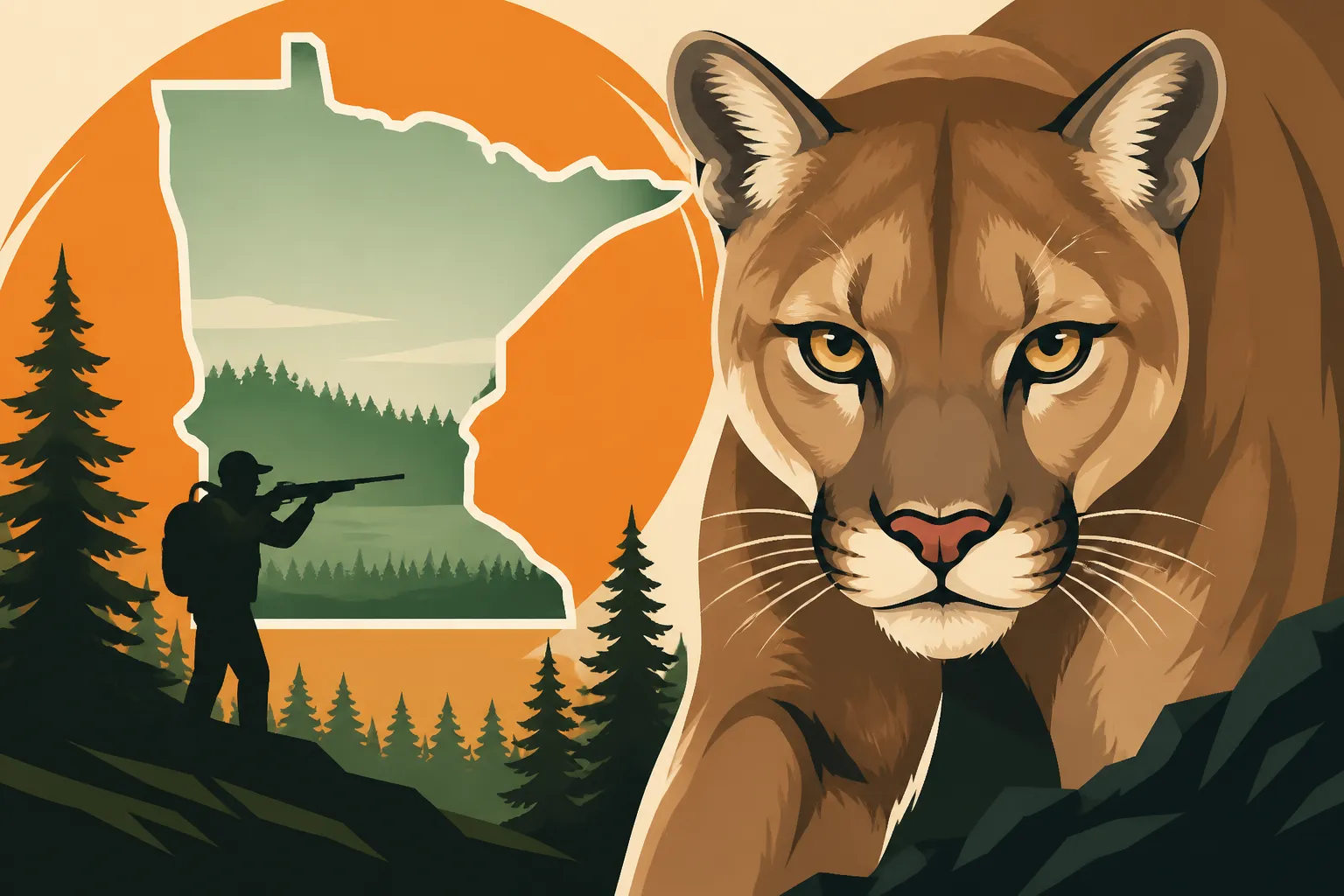
Minnesota Cougar Confirmations
For years, tales of cougar sightings in Minnesota have swirled around campfires and coffee shops, often met with a mix of excitement and skepticism. It's tough to discern what's a genuine glimpse of an incredibly elusive animal and what might be a misidentified bobcat or even a large house cat. This guide cuts through the speculation, focusing on the official confirmations of cougars in our great state, helping you understand their presence and what it means for Minnesota hunters and outdoor enthusiasts.
The Elusive Minnesota Cougar: Separating Fact from Fiction
Let's be real, spotting a cougar in Minnesota feels like a once-in-a-lifetime event, almost mythical. And because they're so rare and elusive, it's easy for rumors to spread faster than a wildfire in a dry cattail marsh. Every blurred photo or distant glimpse can become "proof" of a cougar, leading to a lot of confusion and excitement.
Why the Mystery? The Nature of Cougar Sightings
The main reason cougars remain so mysterious here in Minnesota is simply their nature. They are incredibly shy, solitary creatures that actively avoid human contact. They're built for stealth, moving silently through dense cover, and their natural camouflage makes them almost invisible even when they're relatively close. This means that most "sightings" are incredibly brief – a flash of movement, a long tail disappearing into the brush, or a shape on the horizon that could be almost anything.
It's completely understandable why folks get confused. We have other animals that, in a quick glance, can be mistaken for a cougar. A large bobcat, especially a healthy male, can look surprisingly big, and their movements are similar. Even some large domestic dogs, running free, have been called in as cougars. The frustration comes when you know you saw something big and cat-like, but proving it is a whole different ballgame. It's not about doubting what someone believes they saw; it's about the stringent criteria needed to actually confirm such a rare animal.
The Importance of Confirmed Evidence
So, what exactly is a "confirmed cougar" in the eyes of wildlife biologists and the Minnesota DNR? It's more than just a fleeting glimpse or a blurry cell phone picture. Confirmation usually requires tangible, irrefutable evidence. This can include clear photographs or video footage where the animal's distinct features (like that long, thick tail or specific body proportions) are unmistakable. DNA evidence from scat, hair, or a kill site is golden, providing definitive proof. We're talking about something like a verified track cast, a carcass (sadly, sometimes a road-killed animal), or direct observation by trained wildlife personnel.
When you report a sighting, it's like putting together pieces of a puzzle. The DNR relies on good, solid information to make a determination. That means noting the date, time, precise location, and a detailed description of the animal, its behavior, and any signs it left behind. Think of it like a hunter trying to interpret faint tracks in the snow; every detail matters. While a blurry photo might get a conversation started, it's the high-quality, undeniable evidence that allows the DNR to add it to the official record. This rigorous approach ensures that we're dealing with actual cougar presence, not just enthusiastic but unverified reports.
A Look at Confirmed Cougar Sightings in Minnesota
Despite the rumors and the sheer rarity, Minnesota does have a history of confirmed cougar sightings. These aren't resident animals in the sense of a breeding population, but rather transient individuals passing through. Understanding their origins and travel patterns helps paint a clearer picture of their presence here.
Historical Context and Dispersal Patterns
Cougars were once native to Minnesota, but like many large predators, they were extirpated from the state by the early 20th century due to habitat loss and targeted hunting. Any cougars confirmed in Minnesota today are almost certainly individuals dispersing from established populations out west. The most likely source? The healthy cougar population in the Black Hills of South Dakota. These young males, often driven out of their home territories by older, dominant males, embark on incredibly long journeys in search of new hunting grounds and mates. Imagine trekking hundreds of miles across unfamiliar terrain, avoiding human settlements and other predators. It's a testament to their incredible resilience and instinct.
These long-distance travelers typically follow river corridors, wooded ravines, and other natural cover, moving through agricultural landscapes and even occasionally skirting urban areas under the cover of darkness. While most confirmed individuals are males, there have been extremely rare instances of confirmed female cougars, which would be a much more significant indicator of potential breeding activity if found with young. However, sustained evidence of a breeding population, like dens or multiple generations of kittens, has yet to be confirmed. Are There Breeding Cougars in Minnesota? remains a topic of ongoing wildlife monitoring.
Geographic Distribution of Confirmed Cases
When we look at where confirmed cougar sightings tend to occur in Minnesota, a pattern emerges. The majority of confirmed cases are reported in the western and central parts of the state, which makes sense given the proximity to the Dakotas. These areas often feature a mix of rugged terrain, river valleys, and agricultural lands that can provide cover and a food source like Minnesota Deer Herd Size. While less common, there have also been confirmed instances further east and even into the northern forests, highlighting the incredible distances these animals can cover.
Imagine a young cougar traversing the open plains of western Minnesota, hugging the wooded edges of the Minnesota River Valley, or perhaps using a large wetland complex as a travel corridor. It's not necessarily about "hotspots" where they live, but rather routes they use on their journey. For example, a confirmed sighting near a major highway might indicate an animal trying to cross or following a wooded creek that parallels the road. Knowing these general patterns can be useful for anyone who spends a lot of time in the field, whether scouting for Scouting Minnesota Public Land Before Season or just enjoying the outdoors.
The GoHunt Perspective on Cougar Movements
For outdoor enthusiasts who use advanced mapping and land management tools, services like GoHunt offer incredible insights into wildlife behavior and habitat. While GoHunt primarily focuses on hunting analytics and success rates for specific game animals, the ability to overlay various data layers—like public land boundaries, terrain features, and even historical satellite imagery—can indirectly help you understand potential cougar travel corridors. If you're using GoHunt to identify prime deer habitat or scout remote areas, you're inherently looking at the same types of cover and food sources that a transient cougar would utilize. This can add an extra layer of awareness to your outdoor adventures.
Thinking about the journey a cougar might take, a tool like GoHunt could help you visualize the connectivity of wooded areas, river systems, and even large swaths of grassland that provide cover for such a journey. It’s about being informed and understanding the broader ecosystem. While GoHunt might not have a specific "cougar sighting" overlay, its utility in understanding the lay of the land, potential bedding areas for deer, and escape routes can make you more attuned to the environment where a cougar might quietly be passing through. It helps you see the landscape through the eyes of a large predator, even if you’re primarily focused on finding Where Big Woods Bucks Bed in Minnesota.
Here's a quick look at the typical differences in evidence when it comes to cougar reports:
| Type of Report | Likelihood of Confirmation | Key Characteristics of Evidence |
|---|---|---|
| Distant Visual Sighting | Low | Brief glimpse, indistinct features, often at long range, poor light conditions, common misidentification |
| Blurry Photo/Video | Low to Moderate | Animal partially obscured, poor resolution, difficult to discern key identifying features |
| Clear Photo/Video | High | Distinct body shape, long tail, head features, often with size reference, date/time stamp |
| Track Cast | High | Clear paw pad definition, claw retraction (or lack thereof), size comparison, often requiring an expert |
| Scat/Hair DNA | Very High | Lab analysis provides definitive species identification, requires proper collection and preservation |
| Carcass | Very High | Direct physical evidence, allows for necropsy and biological analysis |
| Kill Site | Moderate to High | Distinctive feeding pattern (caching, specific bone damage), requires expert interpretation |
Understanding Cougar Behavior and Public Interaction
It's natural to feel a rush of excitement, or perhaps a touch of apprehension, when thinking about cougars in our Minnesota landscape. The key is to understand their behavior and how to react, should you ever be lucky enough—or unlucky enough—to encounter one.
What Confirmed Sightings Tell Us About Cougar Presence
The pattern of confirmed cougar sightings in Minnesota strongly suggests that we are primarily seeing transient animals. These are typically young males dispersing from established populations far to our west, seeking new territory. They aren't here to stay, at least not yet, in the sense of forming a resident, breeding population. This means they are generally just passing through, focusing on finding food, water, and shelter as they navigate an unfamiliar landscape. Their presence, while exciting, doesn't currently indicate a change in our ecosystem regarding predator-prey dynamics on a broad scale, nor a significant threat to game animals like White-Tailed Deer Across Minnesota.
These animals are incredibly skilled hunters, primarily preying on deer, but they are opportunistic and will take smaller game if available. Their natural instinct is to avoid humans. Unlike, say, a black bear that might become habituated to human food sources, cougars maintain a healthy distance. The very fact that sightings are so rare, even when a cougar has traveled hundreds of miles through populated areas, speaks volumes about their stealth and desire to remain unseen. We can learn a lot about their incredible journey and resilience just from the few confirmed glimpses we get.
How to React to a Cougar Sighting
An encounter with a cougar is extremely rare, but knowing what to do is crucial. The primary rule is never run. Running can trigger a chase instinct in a predator. Instead, if you see a cougar, make yourself appear as large as possible. Raise your arms above your head, open your jacket, and speak in a loud, firm voice. Maintain eye contact. If you have children or pets with you, pick them up immediately. Back away slowly, giving the animal plenty of space to escape. Throwing objects at it if it approaches you can also be a deterrent. These are general guidelines that apply to most large predators, including How Many Wolves Minnesota Has or a defensive black bear.
It's incredibly important to report any confirmed or suspected cougar sightings to the Minnesota DNR. They are the official body that tracks these animals. When you report, be ready to provide as much detail as possible: the exact location (GPS coordinates if you have them), date, time, a description of the animal (size, color, markings), its behavior, and any evidence left behind (tracks, scat, a kill site). If you have clear photos or video, those are invaluable for confirmation. Remember, reporting helps wildlife managers understand the movements of these animals and their potential future in Minnesota. It's not about fear-mongering but about informed coexistence.
The Future of Cougars in Minnesota
The idea of cougars returning to Minnesota as a breeding population is a fascinating one, sparking both excitement and concern among different groups. Understanding the factors at play helps us gauge what the future might hold for these majestic animals in our state.
Are Breeding Populations Establishing?
As of now, the evidence for established breeding populations of cougars in Minnesota is still lacking. While we have numerous confirmed individual cougars passing through, the critical piece of the puzzle—proof of multiple females, den sites, or evidence of successful reproduction like kittens—has not consistently materialized. Dispersing males are typically seeking new territories and mates, but the sheer distance from existing populations, coupled with habitat fragmentation and potential mortality risks during their journey, makes establishing a foothold challenging.
For a viable population to take root, you'd need multiple animals—both males and females—to successfully navigate the journey, find suitable habitat, and then find each other. While Minnesota certainly has areas with good deer populations and cover that could support cougars, the consistent evidence of breeding simply isn't there yet. It's a waiting game, with wildlife biologists carefully monitoring confirmed sightings for any hints of this significant shift. The DNR continues to gather data on animals like Minnesota Black Bear Population and Minnesota Wolf Delisting History, which gives us insight into how larger predators manage to thrive (or struggle) within the state's diverse landscapes.
Implications for Hunters and Outdoor Enthusiasts
For the average Minnesota hunter or outdoor enthusiast, the current presence of transient cougars has minimal direct impact. They are so rare and elusive that encountering one while hunting Pheasant Hunting Minnesota Farmland or even stalking deer in the Superior National Forest Ranger Districts is an extremely low probability event. You're far more likely to see a Minnesota Turkey Population Estimate or a whitetail deer.
However, awareness is always a good thing. Knowing that a cougar could be in the area just adds to the wildness and excitement of our Minnesota outdoors. It encourages a deeper respect for the natural world and its incredible creatures. For those who use mapping tools like GoHunt, it's another layer of understanding of the landscape – not just where game animals might be, but also where these incredible wanderers might be passing through. It simply means paying attention to your surroundings, being mindful of wildlife, and appreciating the incredible diversity Minnesota has to offer. The prospect of their return, even in a limited capacity, represents a fascinating chapter in Minnesota's wildlife story, a reminder of the wild heart that still beats strong in our state.
Disclaimer
This article is for general informational purposes only and does not constitute professional advice. Laws, prices and regulations vary by location and change over time. Consult a qualified professional for guidance on your specific situation.