Minnesota’s Four-Year CWD Testing Rotation
It's tough enough to keep track of Minnesota's ever-changing deer seasons, permit areas, and regulations, but then you throw Chronic Wasting Disease (CWD) into the mix, and suddenly it feels like you need a law degree just to understand where and when you can hunt, let alone what to do with your deer. The truth is, CWD is a serious concern for our cherished whitetail herd and our hunting traditions, and the state's management strategy is constantly evolving. This comprehensive guide is here to untangle the complexities of Minnesota's four-year CWD testing rotation, giving you a clear roadmap of what it means for you, your hunt, and the future of deer hunting in the North Star State.
Understanding CWD and Its Threat to Minnesota's Deer Herd
What is CWD and Why is it So Worrisome?
Imagine a disease that slowly, inexorably, wastes away a deer's brain, turning it into a zombie-like shadow of its former self before it ultimately dies. That's essentially what Chronic Wasting Disease (CWD) does. It's a fatal neurological illness that affects deer, elk, moose, and other cervids. Unlike bacterial or viral infections, CWD is caused by abnormal proteins called prions. These prions accumulate in the brain and other tissues, causing neurological damage that manifests as severe weight loss, abnormal behavior, drooling, stumbling, and eventually, death. There's no cure, no vaccine, and once an animal contracts it, it's 100% fatal.
What makes CWD so uniquely terrifying for hunters and wildlife managers alike is the way it spreads and persists. These prions are incredibly resilient. They can stick around in the environment for years, even decades, in soil, plants, and water, long after an infected animal has died. This means that even if a CWD-positive deer is removed from an area, the landscape itself can remain contaminated, posing a risk to future generations of deer that use the same habitat. The idea that a disease can lurk in the dirt, invisible and waiting, is a deeply unsettling prospect for anyone who cares about the health of our deer herd and the sustainability of hunting.
The worry isn't just about individual sick deer, although that's heartbreaking enough. It's about the long-term health of entire deer populations. If CWD becomes widespread, it can significantly reduce deer numbers, alter herd demographics, and ultimately diminish the quality of hunting opportunities that we've come to expect in Minnesota. It threatens not just the animals, but the very fabric of our hunting culture, the deer camps, the traditions, and the cherished moments we spend in the woods. That’s why understanding and addressing CWD is such a critical, collective effort.
The Silent Spread: How CWD Affects Deer Populations
The insidious nature of CWD lies in its silent spread. An infected deer might appear perfectly healthy for months, even years, before clinical signs become apparent. During this incubation period, the animal is shedding infectious prions through its saliva, urine, feces, and even decomposing carcass, contaminating the environment without anyone knowing. This makes early detection incredibly challenging, especially in a sprawling landscape like Minnesota. Imagine a hunter harvesting a seemingly healthy deer, only to find out weeks later it was CWD positive, having potentially spread prions across miles of wilderness.
This environmental persistence, combined with direct animal-to-animal transmission, creates a perfect storm for widespread infection. Deer are social creatures; they gather at communal food sources, salt licks, and bedding areas. These shared spaces become hotspots for prion accumulation and transmission. As infection rates climb, entire local populations can be affected, leading to chronic declines in deer numbers. We've seen this play out in other states where CWD has been present for longer, with severe impacts on local herds and a noticeable reduction in hunting success. It's a slow bleed, but a deadly one.
Beyond the direct impact on deer health, CWD also profoundly impacts hunter behavior and the overall hunting experience. When CWD is detected in an area, new regulations often follow – increased testing, carcass restrictions, and even changes to bag limits. This can complicate hunts, add extra steps to the post-harvest process, and sometimes even deter hunters from pursuing deer in affected zones. The fear of contamination, the uncertainty of meat safety, and the added logistical hurdles can diminish the enjoyment of what should be a straightforward and rewarding activity. It's a heavy burden to bear for those of us who just want to enjoy our time afield and bring home healthy venison.
Early CWD Findings and Minnesota's Initial Response
Minnesota's CWD story began back in 2002 when the disease was first detected in a captive elk herd in Olmsted County. This was a jarring wake-up call, as it signaled that the disease was indeed on our doorstep, even if confined to a farmed setting initially. The state immediately launched efforts to contain it, recognizing the grave threat it posed to our wild deer. However, the real game-changer came in 2010, when CWD was confirmed in wild white-tailed deer in southeastern Minnesota, near Pine Island. This moved the fight from containment of captive animals to managing the disease in our vast and wild deer populations.
The initial response was robust and, understandably, focused on immediate containment and understanding the extent of the spread. This involved intensified surveillance efforts, including mandatory CWD testing for harvested deer in the affected permit areas of southeastern Minnesota. The goal was to quickly identify any other positive cases, understand the geographic distribution, and prevent further movement of the disease. Hunters in these areas faced new requirements, bringing their deer to designated sampling stations, often right at the check station or a local bait shop. It was a significant shift for many, adding a new layer of responsibility to their post-harvest routine.
These early efforts also led to the establishment of specific CWD Management Zones in Minnesota and CWD Surveillance Zones in Minnesota. These zones had stricter rules regarding deer carcass movement, baiting, and sometimes even increased antlerless harvest opportunities to reduce deer densities and, in theory, slow the spread of the disease. It was a time of rapid learning and adaptation for both wildlife managers and hunters as everyone grappled with this new, persistent threat. The DNR worked tirelessly to communicate the urgency, and while the new rules were certainly an adjustment, most hunters understood the gravity of the situation and stepped up to do their part.
The Evolution of Minnesota's CWD Management Strategy
From Mandatory Testing to the Four-Year Rotation
In the early days of CWD detection in wild deer, especially in areas like southeastern Minnesota, the approach was often one of intense, mandatory surveillance. This meant that for specific permit areas, often those directly surrounding known positive cases, every deer harvested during certain firearm seasons had to be submitted for CWD testing. This seemed like the most logical approach at the time: cast a wide net, gather as much data as possible, and try to pinpoint the exact locations of the disease. While this provided valuable data, it also came with significant logistical challenges and placed a considerable burden on hunters and DNR staff alike.
Imagine opening weekend in the southeastern bluffs, a bustling scene with hunters everywhere. Now imagine thousands of deer pouring into check stations, each needing a sample taken. The sheer volume of deer, the cost of processing all those samples, and the staffing required to manage the stations became immense. It wasn't sustainable as a statewide, long-term solution, especially given the state's vast geography and the distribution of deer populations. There had to be a more strategic way to monitor the disease without overwhelming resources and hunters. This led to a critical reevaluation of the overall strategy.
That's where the idea of the four-year CWD testing rotation came into play. Instead of trying to test every deer, everywhere, every year, the Minnesota Department of Natural Resources (DNR) developed a more targeted, cyclical approach. The goal was to maintain effective surveillance across the state, even in areas where CWD hasn't yet been detected, while still focusing intensive efforts on known CWD zones. This shift acknowledged the reality of limited resources and aimed to make the testing process more efficient and predictable for everyone involved. It was a move towards smarter, more strategic CWD detection rather than an all-out, constant assault.
Objectives of the Rotational Surveillance Program
The DNR's decision to implement a four-year CWD testing rotation wasn't made lightly. It was born out of a desire to achieve several key objectives, balancing the critical need for CWD detection with practical limitations. The primary goal is sustained, early detection. CWD is a disease that can take years to show symptoms, meaning that by the time a sick deer is visibly noticed, the disease might already be well-established in the area. A systematic rotation ensures that every part of the state's deer range is thoroughly surveyed on a regular basis, allowing for the earliest possible identification of new CWD introductions. This early warning system is crucial for effective containment.
Another significant objective is the efficient allocation of resources. Full-scale, mandatory testing across the entire state every year would be astronomically expensive and logistically impossible. By rotating surveillance efforts, the DNR can concentrate its personnel, funding, and lab capacity on a specific quadrant each year. This allows for a more thorough sampling effort in that designated region, maximizing the chances of detection, while still keeping an eye on other areas through voluntary testing and continued vigilance. It's about working smarter, not necessarily harder, by focusing efforts where and when they are most needed.
Finally, the rotation aims to engage hunters in a manageable and predictable way. When hunters know that their specific region will be under mandatory testing during a particular year in the cycle, they can plan accordingly. This predictability helps manage expectations and facilitates cooperation. The DNR relies heavily on hunters to provide samples, and a clear, understandable system makes it easier for us all to participate. It's a shared responsibility, and making that responsibility clear and less burdensome ensures greater participation, which is vital for gathering the data needed to protect Minnesota's white-tailed deer population.
Decoding Minnesota's Four-Year CWD Testing Rotation
How the Quadrants Work
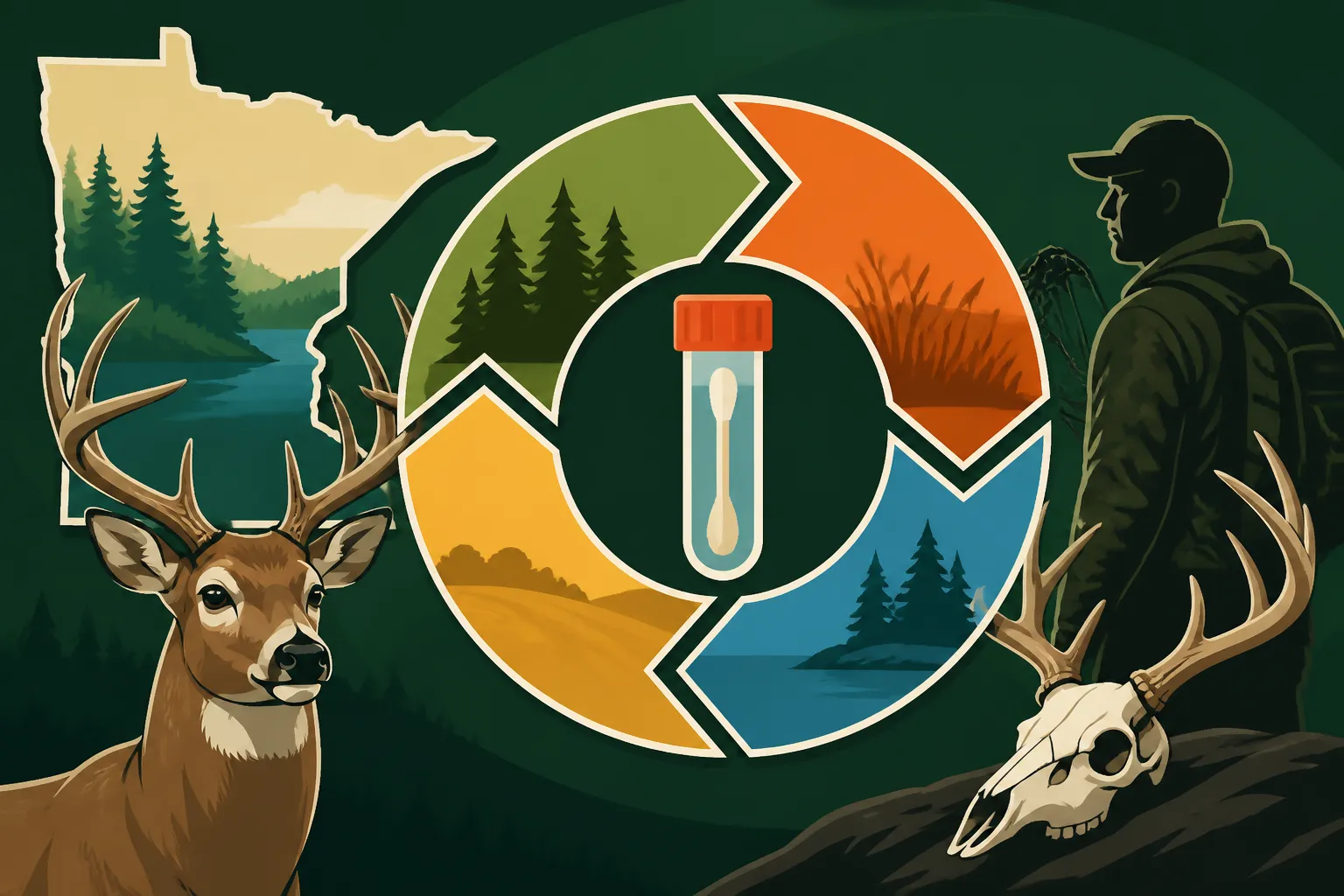
The backbone of Minnesota's CWD testing strategy is its four-year rotation, dividing the state into four distinct geographical quadrants: Northwest, Northeast, Central, and Southeast. Each year, one of these quadrants is designated as the "intensive surveillance" area, meaning that mandatory CWD testing is required for all deer harvested within that quadrant's designated permit areas during the opening weekend of the firearm season, and often extending throughout specific periods. This systematic approach ensures that every region of the state gets a thorough check every four years, creating a comprehensive monitoring program over time.
For example, let's say the Northwest quadrant is scheduled for intensive testing in 2026. During that year, hunters who successfully harvest a deer in one of the permit areas within that Northwest quadrant during the mandatory testing period will be required to submit a sample for CWD testing. The other three quadrants – Northeast, Central, and Southeast – would not have mandatory testing in 2026, though voluntary testing is always encouraged and often available. The following year, the rotation shifts, and perhaps the Central quadrant comes up for its intensive surveillance, and so on. This predictable cycle allows hunters to anticipate when their local hunting grounds will be part of the mandatory testing effort.
It's absolutely crucial for hunters to know which quadrant their hunting area falls into and what year that quadrant is scheduled for intensive testing. This information is readily available on the Minnesota DNR website, and it's something you should check annually as part of your hunting prep. Planning your hunt, especially if you're targeting areas close to quadrant lines, requires knowing these details. Utilizing tools like the Recreation Compass map or other digital mapping resources can help clarify specific permit area boundaries within each quadrant, ensuring you're fully prepared for any mandatory testing requirements. And a tool like GoHunt can make visualizing this even easier. Knowing your quadrant and its cycle is as important as knowing your Minnesota Deer Seasons and Permit Areas.
The Annual Testing Schedule: What to Expect
When your quadrant's year for intensive CWD surveillance arrives, you'll need to be prepared for some specific requirements. Typically, mandatory testing focuses on the opening weekend of the firearm deer season, but often extends into subsequent days or even weeks depending on the permit area and CWD risk. This is when hunters in the designated permit areas within that quadrant must submit the head of their harvested deer, or a specific lymph node sample, to a designated CWD sampling station. These stations can range from staffed check stations with DNR personnel, offering assistance and information, to self-serve kiosks where you can submit your sample yourself with clear instructions.
The process usually involves collecting specific lymph nodes from the deer's head. If you're bringing the entire head, DNR staff or volunteers will take the sample for you. If you're at a self-serve kiosk, you might be provided with a kit and instructions on how to collect the lymph nodes yourself, or simply directed to leave the head in a designated receptacle. It's vital to correctly fill out all accompanying paperwork, providing your license information, the date and location of the harvest, and contact details so you can be notified of the results. This information is critical for the DNR to track the disease effectively.
After you've submitted your sample, the wait begins. The samples are sent to a lab for analysis, and this can take several weeks, especially during peak hunting season. The DNR will usually notify you of your deer's test results via email or postcard, often within 3-4 weeks. It's always a good idea to keep your unique sample ID number handy so you can check the results online once they become available. Knowing How Long Minnesota CWD Results Take can help manage expectations during this waiting period. During this time, it's generally recommended to follow Minnesota Carcass Movement Restrictions if you are in a CWD-affected area, and hold off on processing large amounts of meat until results are in, though many hunters choose to process and freeze, then dispose of meat if the test comes back positive.
CWD Management and Surveillance Zones
Beyond the statewide four-year rotation, Minnesota also maintains specific CWD Management Zones and CWD Surveillance Zones. These are distinct geographical areas where CWD has either been detected (Management Zone) or where there's a heightened risk of detection due to proximity to a CWD positive area (Surveillance Zone). These zones have additional, often stricter, regulations that apply regardless of the statewide four-year rotation schedule. This dual-layer approach allows the DNR to focus intense, ongoing efforts where the threat is most immediate while still conducting broad surveillance across the rest of the state.
In CWD Management Zones, you can expect mandatory testing to be in effect annually during specific periods, not just when that quadrant is "up" in the rotation. These zones might also have specific regulations regarding increased antlerless harvest, aimed at reducing deer densities to slow transmission. Furthermore, strict Minnesota Carcass Movement Restrictions are always in place in these zones, limiting what parts of a deer can be moved out of the area to prevent accidental spread of prions. Hunters in these zones also face Minnesota Feeding and Baiting Bans in CWD Zones, as concentrating deer at bait sites can increase disease transmission.
CWD Surveillance Zones act as a buffer or early warning area. While they might not have mandatory testing every year like a Management Zone, they will often have enhanced voluntary testing opportunities, and hunters are strongly encouraged to submit samples. Carcass movement restrictions might also apply, although they can sometimes be less stringent than in full Management Zones. The key takeaway here is that if you're hunting in or near any of these designated CWD zones, you need to pay extra close attention to the specific regulations for that particular zone, as they can supersede or add to the general statewide rules. Always consult the current DNR hunting regulations for the most up-to-date information.
Practical Steps for Hunters During a CWD Testing Year
Mandatory Testing Requirements
When your chosen hunting zone or quadrant is under mandatory CWD testing, your responsibilities as a hunter expand a bit. It's not just about taking a deer; it's about contributing vital data to protect the herd. Generally, mandatory testing applies to deer harvested during the opening weekend of the firearm season within specified permit areas. However, these requirements can sometimes extend for longer periods, or even cover muzzleloader seasons, particularly in CWD Management Zones. The DNR provides clear maps and guidelines each year, so make sure to check before you head out.
Your primary task will be to submit a sample from your harvested deer. The most common method involves bringing the deer's head, or sometimes the entire carcass, to a designated CWD sampling station. These stations are usually staffed by DNR personnel or trained volunteers who will extract the necessary lymph node sample. They'll also record important information like the harvest location and your contact details. This hands-on approach ensures consistent sample quality and provides an opportunity for hunters to ask questions. You can find a list of these stations, often including local meat processors, on the DNR website by searching for Finding a Minnesota CWD Sampling Station.
In some areas, or during off-peak times, self-serve kiosks might be available. These are typically unstaffed locations where you can follow instructions to take a sample yourself or deposit the deer head. While convenient, it places the responsibility squarely on the hunter to ensure the sample is collected correctly and all paperwork is accurately filled out. Always remember that compliance isn't just a legal requirement; it's a critical act of stewardship for our deer herd. Failing to test a deer in a mandatory zone can result in fines and other penalties, but more importantly, it creates a gap in the vital data needed to track and fight CWD.
Voluntary Testing Options
Even if you're not hunting in a quadrant or permit area that has mandatory CWD testing this year, your contribution to CWD surveillance is incredibly valuable. Voluntary testing plays a huge role in providing the DNR with broad, statewide data, helping them detect any new CWD introductions outside the planned rotation. If you're passionate about the health of Minnesota's deer, considering voluntary testing is a powerful way to do your part.
Many hunters choose to voluntarily test their deer, especially if they hunt near CWD zones, travel extensively between different regions, or simply want peace of mind about the venison they consume. The process for voluntary testing is similar to mandatory testing. You'll typically need to locate a designated self-serve sampling station or, in some cases, a participating taxidermist or meat processor who can collect and submit the sample for you. The DNR often provides specific instructions and kits for voluntary submissions, which can sometimes even be mailed in directly to the lab. You can often find information on Ordering a Mail-In CWD Test Kit on the DNR website.
While there might be a small fee associated with voluntary testing in some cases, it's a worthwhile investment in the future of our deer. Every sample submitted, regardless of whether it's mandatory or voluntary, adds another piece to the puzzle, helping the DNR understand the disease's distribution and prevalence. If you use a resource like GoHunt, you can quickly identify areas with higher CWD risk and make an informed decision about voluntary testing, even if your specific permit area isn't currently under a mandatory order. It’s an easy way to contribute to a healthier deer population for everyone.
Carcass Movement Restrictions and Processing
This is one of the trickiest, and most important, aspects of CWD management for hunters: what you can and cannot do with your deer carcass, especially if you harvest it in a CWD-affected area. The primary concern is preventing the spread of infectious prions from one location to another via deer parts. Prions are concentrated in the brain, spinal cord, lymph nodes, and spleen, but can also be found in other tissues. So, the rules are designed to keep these high-risk materials from moving out of a CWD zone.
In areas designated as CWD Management or Surveillance Zones, there are strict Minnesota Carcass Movement Restrictions. Generally, you are prohibited from moving whole carcasses or high-risk parts (brain, spinal cord, etc.) out of these zones. What can you move? Typically, you can move deboned meat, antlers (with or without skull plate, if clean of brain matter), hides, and capes (without skull attached). Some areas may also allow movement of skull plates or whole skulls after they have been thoroughly cleaned of all brain and spinal tissue (e.g., boiled, power-washed). It's crucial to understand these rules before you ever pull the trigger, especially if you plan to hunt in a CWD zone and then travel home to process your deer.
For processing, if you harvest a deer in a CWD zone, consider having it processed by a local butcher within that zone, if possible. They are usually familiar with the regulations and can ensure proper handling and disposal of high-risk materials. If you process it yourself, do so in the CWD zone and dispose of the high-risk parts appropriately, often at specific landfill sites approved by the DNR. If you choose to process your deer before receiving test results, it’s a good practice to de-bone the meat and keep it separate from other deer parts. Should your deer test positive, you’ll want to contact the DNR for guidance on proper disposal, which typically involves deep burial or specific landfill options. The rule of thumb: when in doubt, check the current regulations or contact the DNR. Don't risk contributing to the spread of this devastating disease.
Navigating the Impact of CWD on Hunting Practices
Changes to Deer Management Units and Regulations
The discovery and ongoing management of CWD inevitably lead to adjustments in how the DNR manages deer populations within affected areas. These changes aren't arbitrary; they are carefully considered efforts to mitigate the spread and impact of the disease. Hunters in CWD zones or those hunting in quadrants during their intensive surveillance year often see changes to antlerless permit availability, bag limits, and even the structure of specific hunting seasons. These adjustments are designed to reduce deer densities, which is believed to be a key factor in slowing down CWD transmission. Fewer deer congregating means less opportunity for prions to spread.
For example, in a CWD Management Zone, the DNR might increase the number of antlerless tags available or even designate the area as an "intensive harvest" zone, allowing hunters to take multiple antlerless deer. This strategy aims to reduce the overall deer population in the affected area, especially the female segment, which contributes most to reproduction and overall deer numbers. While this can provide more hunting opportunities, it can also change the dynamics of the hunt, shifting focus from trophy bucks to population control. It’s a necessary tool in the CWD fight, even if it alters traditional hunting strategies.
Furthermore, hunters might find that Applying for the Antlerless Lottery Before September 10 becomes even more critical in CWD-affected areas, as the number of available permits can fluctuate based on management needs. Special hunts or extended seasons might also be implemented to achieve specific harvest goals. It’s vital to consult the annual DNR regulations, maps, and even the DNR website directly for the most current rules concerning deer management units within CWD zones. Relying on outdated information could lead to misunderstandings or even violations, so always double-check the specifics for your intended hunting area.
Baiting and Feeding Bans
One of the most immediate and impactful changes for hunters in CWD-affected areas is the implementation of baiting and feeding bans. These bans are a cornerstone of CWD management, based on the understanding that congregating deer at artificial food sources or mineral licks significantly increases the risk of disease transmission. When deer gather at a bait pile, they interact closely, sharing saliva, urine, and feces. If just one deer is shedding CWD prions, it can rapidly contaminate the site, exposing numerous other deer. This is why Minnesota Feeding and Baiting Bans in CWD Zones are so critical.
The bans typically cover all forms of baiting (e.g., corn, apples, commercial deer attractants) and feeding (e.g., supplemental food plots, mineral blocks) within a designated CWD zone. These regulations are not put in place to punish hunters, but rather to disrupt a known pathway for disease spread. While many hunters rely on baiting or mineral sites as part of their strategy, especially for Bowhunting Minnesota's Long Archery Season or getting trail camera pictures, adapting to these bans is essential for the greater good of the herd. It requires a shift in tactics, moving towards more natural scouting and hunting methods.
For hunters accustomed to using bait, these bans can feel like a significant hurdle. It forces a return to fundamentals: scouting natural food sources, understanding deer travel corridors, and focusing on classic woodsmanship. It encourages a deeper connection to the landscape and the deer's natural patterns. While it's an adjustment, it's a necessary one if we're serious about slowing CWD. Remember, adhering to these bans isn't just about avoiding a citation; it's about actively preventing the disease from gaining a stronger foothold in our beloved Minnesota deer populations.
Staying Informed with DNR and GoHunt Resources
In the complex and ever-changing landscape of CWD management, staying informed is perhaps the most crucial "tactic" a hunter can employ. The Minnesota DNR is the primary source of official information, and their website is a treasure trove of resources. You'll find detailed maps of CWD zones, updated testing requirements, press releases on new detections, and comprehensive guides to the four-year rotation. It’s important to make visiting the DNR's CWD section an annual ritual before the season starts.
Beyond official channels, a resource like GoHunt can be incredibly helpful for visualizing and interpreting CWD data in a practical hunting context. GoHunt, and similar mapping applications, often integrate DNR land boundaries, permit area lines, and CWD zone overlays directly onto their maps. This allows hunters to easily see if their planned hunting spot falls within a mandatory testing area or a restricted zone. Instead of poring over static PDF maps, you can get real-time, location-specific information right on your phone or computer, helping you plan your hunt with confidence and compliance.
Using these tools collaboratively allows you to approach your hunt with a complete understanding of the CWD landscape. For example, if you're Scouting Minnesota Public Land Before Season, you can use GoHunt to identify potential new areas, then cross-reference with DNR CWD maps to understand any testing or carcass movement rules that might apply. This proactive approach not only keeps you in compliance but also enhances your ability to make informed decisions about where and how to hunt, ultimately contributing to the collective effort to manage CWD. Don't underestimate the power of good information in protecting our hunting heritage.
The Long-Term Outlook for Minnesota's Deer and Hunting Heritage
The Role of Hunter Participation in CWD Management
Let's be blunt: without hunters, Minnesota's CWD management strategy would crumble. The DNR simply doesn't have the resources to collect thousands upon thousands of deer samples across the entire state. That data, the foundation of understanding CWD's distribution and prevalence, comes almost exclusively from us, the hunters. Whether it's submitting a head for mandatory testing, dropping off a sample at a self-serve kiosk, or opting for voluntary testing even when not required, every single sample contributed by a hunter is a vital piece of the puzzle. It helps wildlife managers track the disease, identify new hotspots, and make informed decisions about future regulations.
Think of it as a shared responsibility, a collective stewardship of our wildlife. We reap the rewards of a healthy deer herd, so it's only right that we contribute to its well-being when it's under threat. The frustrations of mandatory testing, the changes to carcass movement rules, or the bans on baiting are all understandable. Believe me, I get it. But these measures are designed to protect what we all cherish: abundant, healthy deer and the opportunity to hunt them for generations to come. When hunters engage actively, ask questions, and comply with regulations, we become part of the solution, not just observers.
This participation extends beyond just submitting samples. It also means staying informed, reporting sick deer sightings to the DNR, and being advocates for sound CWD management practices in your hunting circles. It means explaining the "why" behind the regulations to fellow hunters who might be confused or frustrated. Our collective voice and actions are powerful, and our commitment to CWD management will directly impact the long-term health of our Minnesota deer. It’s about ensuring that those deer camps and traditions endure.
Research and Future Directions
While the four-year testing rotation is a robust surveillance tool, the fight against CWD is far from over, and it's constantly evolving. Wildlife researchers, both within the DNR and at academic institutions, are relentlessly working to understand CWD better and to find new ways to combat it. This includes everything from studying the basic biology of prions and how they spread, to exploring potential new detection methods that might be faster, cheaper, or less invasive than current lymph node sampling. Imagine a day when a simple saliva test could tell you if your deer is CWD positive!
Current research also focuses on understanding the environmental persistence of prions and developing strategies to decontaminate affected areas, if that's even possible. Scientists are also investigating whether some deer might have a natural genetic resistance to CWD, which could potentially be leveraged in breeding programs, though that's a very long-term prospect. It's a complex, multi-faceted scientific challenge, and significant resources are being dedicated to it both nationally and within Minnesota. This ongoing research is critical because CWD isn't a static problem; it's a dynamic one that requires continuous learning and adaptation.
For hunters, keeping an eye on these research developments can provide hope and insight into the future. While immediate solutions are scarce, the dedicated work happening behind the scenes could one day lead to breakthroughs that fundamentally change how we manage CWD. In the meantime, the data we provide through testing directly feeds into these research efforts, giving scientists the real-world samples they need to study the disease's progression in wild populations. Every sampled deer contributes to this larger scientific endeavor, pushing us closer to a future where CWD is better understood and hopefully, eventually, controlled.
Adapting to a New Reality
Let's be realistic: CWD isn't going away. It's an established part of the wildlife landscape in Minnesota, particularly in the southeastern region, and it's a threat that demands our ongoing attention. For hunters, this means adapting to a new reality. The days of simply heading out into the woods, shooting a deer, and dragging it home without a second thought about disease management are, unfortunately, largely behind us. We now live in an era where CWD awareness, testing, and responsible carcass handling are simply part of being a diligent hunter.
This adaptation isn't just about following rules; it's about a shift in mindset. It means approaching your hunt with an understanding of the larger ecological challenges. It means recognizing that our individual actions have collective consequences for the health of the herd. It means being prepared for unexpected changes in regulations, understanding that the DNR is making the best decisions they can with the information they have, often in difficult circumstances. This might mean being more flexible with your hunting locations, exploring new areas, or focusing more on still-hunting tactics rather than relying on traditional methods that might be restricted.
Ultimately, CWD is a test of our commitment to conservation and our hunting heritage. It's a call to embrace our role as stewards of Minnesota's wildlife. By understanding the four-year testing rotation, complying with regulations, contributing to surveillance, and staying informed, we can all play a vital role in minimizing the impact of CWD and ensuring that future generations can enjoy the rich tradition of deer hunting in our beautiful state. It's not the future we hoped for, but it's the future we have, and together, we can navigate it.
Minnesota's CWD Testing Quadrant Rotation
| Quadrant | Current Testing Year (Example) | Next Testing Year (Example) | Key Regions/Counties Included | Primary Focus |
|---|---|---|---|---|
| Southeast | 2023 | 2027 | Fillmore, Houston, Olmsted, Winona, Mower, Wabasha, Goodhue, Rice, Dakota, Scott, Carver, Washington, Ramsey, Hennepin, Anoka, Chisago, Isanti, Sherburne, Wright, McLeod, Sibley, Le Sueur, Waseca, Steele, Dodge, Freeborn | Long-term Management & Intensive Surveillance due to established CWD |
| Central | 2024 | 2028 | Benton, Morrison, Todd, Stearns, Kandiyohi, Meeker, Renville, Chippewa, Lac qui Parle, Yellow Medicine, Redwood, Lincoln, Lyon, Murray, Pipestone, Rock, Nobles, Jackson, Martin, Faribault, Blue Earth, Watonwan, Brown, Nicollet, Renville, Swift, Big Stone, Stevens, Pope, Douglas, Grant, Traverse, Wilkin, Otter Tail, Becker, Wadena | Rotational Surveillance |
| Northeast | 2025 | 2029 | Carlton, St. Louis, Lake, Cook, Itasca, Koochiching, Cass, Aitkin, Crow Wing, Pine, Kanabec, Mille Lacs | Rotational Surveillance |
| Northwest | 2026 | 2030 | Clay, Norman, Polk, Red Lake, Pennington, Marshall, Kittson, Roseau, Lake of the Woods, Beltrami, Clearwater, Mahnomen, Hubbard | Rotational Surveillance |
Note: The "Current Testing Year" and "Next Testing Year" are examples for illustrative purposes. Always check the official MN DNR website for the most up-to-date and specific year-by-year schedule for each quadrant.
Disclaimer
The information provided in this article is for general guidance and informational purposes only. Hunting regulations, CWD testing requirements, and zone boundaries are subject to change. Always consult the most current official Minnesota Department of Natural Resources (DNR) regulations and specific permit area information before planning and executing your hunt.