Layout Blind Hunting a Cut Cornfield
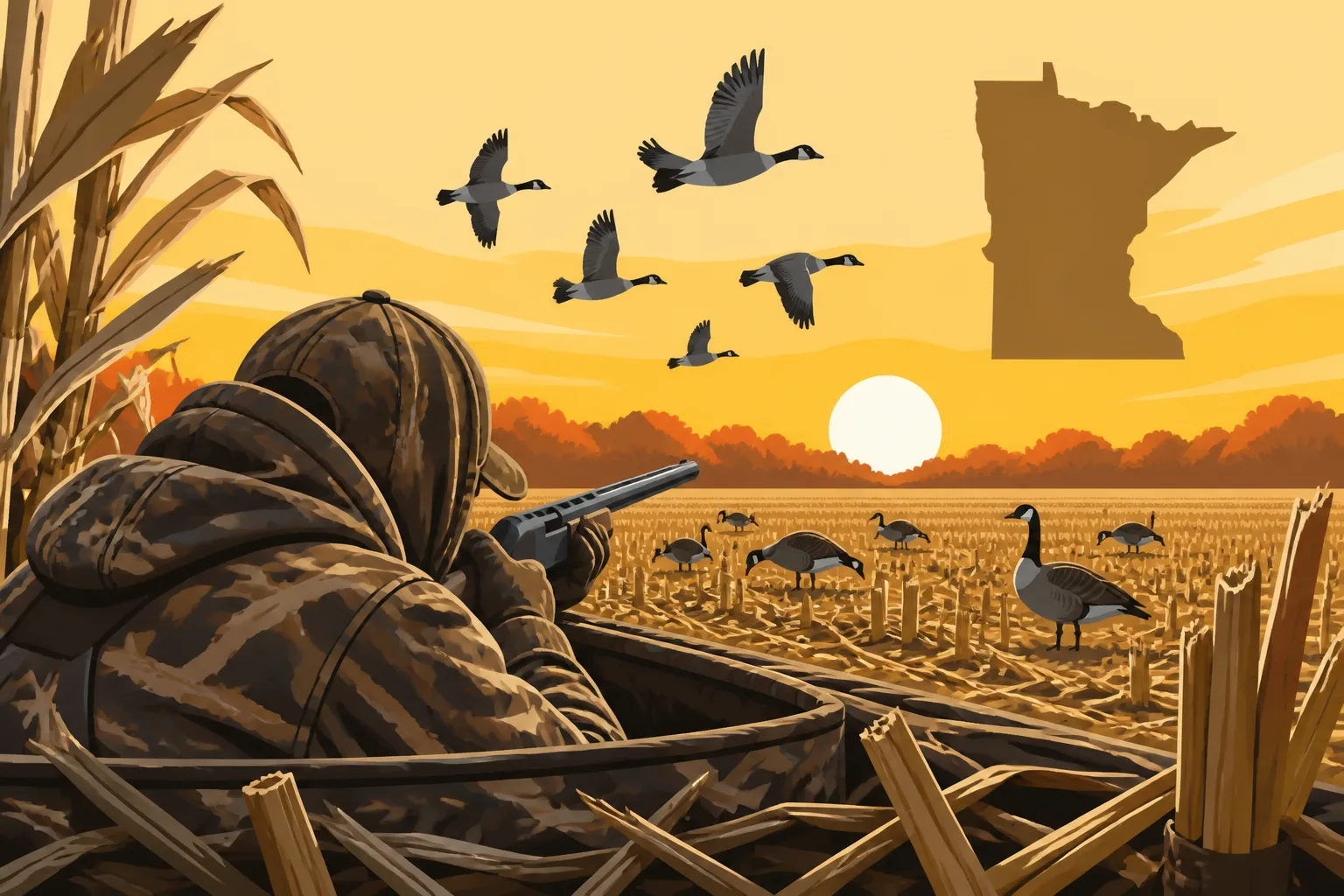
There’s nothing quite like the sight of a flock of mallards or a gaggle of geese locked up, wings cupped, and pitching straight into your spread. But achieving that perfect finish can feel impossible when you’re hunting wide-open Minnesota cut cornfields where natural cover is practically nonexistent. This guide is all about mastering the art of the layout blind, transforming those challenging open fields into your secret weapon for incredible waterfowl hunts.
Why Cut Cornfields Are Waterfowl Magnets
Cut cornfields in Minnesota are absolute goldmines for waterfowl, especially during migration and the late season. It's not just about the grain left behind; it's a whole ecosystem that develops after harvest, drawing in birds by the thousands. Understanding why these fields are so attractive is the first step to hunting them effectively.
The Irresistible Food Source
Once the combines roll through, they invariably leave behind a significant amount of waste grain. For ducks and geese, this scattered corn is a high-energy, readily available food source that’s absolutely critical for them to fuel up during their long migrations or to build fat reserves for surviving the cold Minnesota winter. Think about it: a Canada goose can pack away a surprising amount of corn in a single feeding session. When birds discover a field with a good concentration of this leftover sustenance, they'll often return day after day until it's picked clean. This habit makes these fields incredibly predictable and, thus, incredibly huntable.
Many experienced hunters will tell you that finding the "right" cut cornfield often comes down to scouting, and tools like the GoHunt app can be immensely helpful for identifying potential feeding locations. You're not just looking for any cut cornfield, but one that birds are actively using. Look for concentrations of droppings, tracks, and feathers, which are tell-tale signs of recent activity. The fresher the sign, the better your chances. This dedicated scouting is far more effective than just picking a field at random, and can often be done effectively by driving around just before dusk or at dawn.
The Safety and Accessibility of Open Fields
Beyond the food, these open fields offer a sense of security for waterfowl. In a big, unobstructed expanse, birds have a clear line of sight, making it easier to spot predators—be they coyotes or eagles—from a distance. This feeling of safety, coupled with the sheer abundance of food, often makes them prefer fields over more enclosed areas, especially during daylight hours when they're feeding. They can gather in large numbers, providing collective security.
This is where the layout blind truly shines. Traditional ground blinds or trying to hide in a ditch just doesn't cut it when birds are accustomed to sweeping views. A well-brushed-in layout blind virtually disappears into the stubble, allowing you to intercept birds right where they feel most secure. It's a game of deception, and the flat, low profile of the layout blind is your ultimate camouflage. Without it, you'd be attempting to hunt against the natural instincts of cautious waterfowl that are hardwired to detect anything out of place in their feeding grounds.
Selecting and Concealing Your Layout Blind
The success of your hunt in a cut cornfield hinges almost entirely on your ability to disappear into the landscape. This means choosing the right layout blind and, perhaps even more importantly, mastering the art of concealment.
Choosing the Right Layout Blind for Minnesota Fields
Not all layout blinds are created equal, and what works well in a harvested wheat field might not be ideal for the taller, more robust stubble of a Minnesota cornfield. You'll want a blind that is rugged, easy to brush, and comfortable for long hours in potentially cold conditions. Brands like Avery, Final Approach, and Rogers Sporting Goods offer excellent options that are popular among Minnesota waterfowl hunters. Look for features such as a durable frame, a comfortable headrest and back support, and a weatherproof bottom to keep you dry.
Consider the profile of the blind. While all layout blinds are low-profile, some are slightly taller than others. In a freshly cut field with short stubble, a super-low blind is paramount. If the corn was cut higher, leaving more standing stalks, you might get away with a slightly taller model. The color and pattern of the blind's fabric are also crucial; aim for patterns that mimic dried vegetation or corn stubble. Many blinds come with stubble straps or pockets, which are absolutely essential for effective camouflage. Don't skimp on quality here; a cheap, uncomfortable blind that can't be properly brushed will quickly lead to frustrated hunts and weary bones.
Here’s a quick comparison of general layout blind considerations:
| Feature | Ideal for Cut Cornfields | Less Ideal |
|---|---|---|
| Profile | Ultra-low, blends seamlessly with short stubble | Taller, stands out against flat ground |
| Color/Pattern | Realistic corn stubble, dried grass, browns, tans | Bright, green, or patterns for other environments |
| Stubble Straps | Abundant, easy-to-use straps/pockets for natural material | Few or no stubble straps, harder to brush in |
| Comfort | Padded back, headrest, easy entry/exit, durable waterproof bottom | Basic padding, awkward entry, permeable bottom |
| Durability | Robust frame, heavy-duty fabric for repeated setup/take-down | Flimsy frame, thin fabric prone to tearing |
| Weight | Manageable for carrying into remote fields | Excessively heavy, difficult to transport |
Masterful Blind Concealment Techniques
This is where the rubber meets the road. A layout blind is only as good as its concealment. Start by placing your blind in a natural low spot or a slight depression in the field. Even a foot or two of elevation change can make a huge difference in breaking up your outline. Avoid setting up on a high point where your blind will be silhouetted against the sky. Often, the best spots are found by literally getting on your hands and knees and looking at the field from a duck or goose's perspective.
Next, you need to brush it in, and I mean really brush it in. This isn't just about throwing a few handfuls of cornstalks on top. You want to weave stubble, dried weeds, and any other natural debris from the field into every available strap and pocket on your blind. Pay particular attention to the edges and ends of the blind, where outlines are most noticeable. Break up the straight lines of the blind's frame. If you can, try to pull some existing corn stubble around the blind’s edges. The goal is for your blind to look like nothing more than a random pile of crop residue, a featureless lump in the field. Don't forget about your face; a good face mask or face paint is vital, as the contrast of exposed skin against your camo will stick out like a sore thumb to circling birds. When you're done, step back, and if you can still clearly see your blind, you haven't put in enough work.
Crafting Effective Decoy Spreads for Field Hunting
Decoying in cut cornfields is an art form, especially when you're hunting from a layout blind. You're trying to replicate the natural feeding patterns of waterfowl, and your spread needs to be convincing enough to draw in wary birds that have seen plenty of decoys.
Understanding Decoy Placement and Numbers
When setting up your spread, remember that ducks and geese are looking for safety and food. They want to land among other birds that are relaxed and feeding. Therefore, your decoys should reflect this. Avoid placing decoys in neat, unnatural rows. Instead, create irregular clusters, leaving open landing zones upwind of your blinds. This is where birds prefer to land, as it allows them to face into the wind, slow down, and drop in without excessive effort. For Canada geese, a spread of 3-5 dozen full-body or shell decoys is often a good starting point, sometimes more if hunting large migratory flocks. For ducks, especially mallards, a dozen or two feeding and resting decoys might suffice.
Consider the wind direction. Always set up your blinds downwind of your main decoy spread, with the open landing zone directly in front of you. This forces the birds to fly directly over your blinds as they come in to land, presenting ideal shooting opportunities. Many hunters forget about the "kill hole" — the specific spot you want birds to commit to. Leave a generous opening in your spread, roughly 15-20 yards from your blinds, where the birds will naturally want to settle. This creates a psychological funnel, guiding their descent exactly where you want them. For more details on this, look into tactics for Decoy Spreads for Minnesota Divers, adapting the principles to field hunting.
Motion Decoys and Natural Realism
Motion is critical, especially on calm days when static decoys can look lifeless. Adding a few motion decoys can significantly increase the realism of your spread. Flapping-wing decoys, such as a "Mojo Mallard" or a "Lucky Duck," can simulate active birds landing or taking off, catching the attention of distant flocks. Even subtle motion, like a handful of decoys on Texas Rigs that sway gently in the breeze, can make a difference. For geese, a flag or a couple of feeder decoys on stakes that allow for slight movement can break up the monotony of a static spread.
However, use motion decoys judiciously. Too many flapping-wing decoys can look unnatural, especially to birds that have been hunted heavily. A couple of well-placed motion decoys are often more effective than a dozen. The goal is to create the illusion of a vibrant, active feeding area, not a disco party. The overall realism of your spread, from the body posture of your decoys to their natural spacing, will dictate whether wary birds commit. Remember, you're competing with dozens of other potential fields in Minnesota, and often the difference between success and failure comes down to small details in your setup.
Adapting to Conditions and Maximizing Success
Hunting cut cornfields from a layout blind is rarely a "set it and forget it" endeavor. Success often comes down to your ability to adapt to changing weather, bird behavior, and hunting pressure.
Reading Bird Behavior and Adjusting Your Strategy
Waterfowl are incredibly sensitive to changes in weather and hunting pressure. On bluebird days with no wind, birds will often circle higher and be warier. This is when your concealment needs to be absolutely flawless, and you might need to rely on softer, more subtle calling to coax them in. On windy days, birds will fly lower and commit faster, but the wind can also make them difficult to control, sometimes blowing them past your spread quickly. Adjust your calling intensity based on the wind and their reaction. A strong crosswind might require repositioning your blinds slightly to keep the birds from landing too far out.
It's also crucial to pay attention to how birds are reacting to your spread. Are they flaring at a certain point? Are they circling but not committing? This could indicate a problem with your blind concealment, decoy placement, or even your calling. Don't be afraid to make adjustments mid-hunt. I've often seen hunters stubbornly stick to their original plan, only to watch flock after flock flare off. Sometimes, simply moving a single decoy or adding a bit more stubble to a visible part of your blind can turn the hunt around. This adaptability is key when hunting any species, whether it's Early Goose Season Tactics in Minnesota or late-season ducks.
Dealing with Hunting Pressure and Public Land
Minnesota public lands, especially during peak seasons, can see significant Hunting Pressure on Minnesota Public Land. This pressure can make birds incredibly wary, forcing them to feed in different fields or alter their flight patterns. If you're hunting a public field that's getting hammered, you might need to get there earlier, scout harder, or even try to find fields that are a bit more off the beaten path. This could mean walking an extra mile or two to a less-accessible parcel that other hunters overlook. Utilizing tools like Scouting Minnesota Public Land Before Season can give you an edge in finding these untouched gems.
On heavily pressured birds, less can sometimes be more. A smaller, incredibly realistic spread might be more effective than a massive, flashy one. Tone down your calling, focusing on subtle feeding chuckles and contented murmurs rather than aggressive hail calls. Remember, these birds have heard it all. Also, consider the timing. Birds might use pressured fields only during low-light hours or in the middle of the day when most hunters have packed up. Adapting to the specific pressure patterns in your hunting area is paramount. A good example of this is seen when hunting Canada Geese on Minnesota Farmland, where birds often get educated quickly to common hunting tactics.
Staying Warm, Dry, and Patient in Minnesota Weather
Minnesota weather can be notoriously unpredictable, especially during the fall and early winter waterfowl seasons. You might start a hunt in mild, sunny conditions only to have a bitter north wind and lake-effect snow roll in. Staying warm and dry in a layout blind is not just about comfort; it's about staying alert and focused. Layering is crucial. Start with a good moisture-wicking base layer, add insulating layers like fleece or down, and top it off with a waterproof and windproof outer shell. Even if it's not raining, the ground in a cut cornfield can be damp, so a blind with a good, thick waterproof bottom is essential, as mentioned when discussing Layout Blinds and Marsh Boats.
Patience is perhaps the most undervalued virtue in layout blind hunting. There will be lulls when no birds are flying, or when they just aren't committing. Resist the urge to sit up, check your phone, or move around unnecessarily. Even a slight movement can flare birds that are circling high, even if you can't see them. Keep your head down, peer through the mesh, and stay ready. The best hunts often come from being in position and perfectly still when that unexpected flock suddenly appears on the horizon. Sometimes, your best tactic is simply to wait out the birds and let them decide to come in on their own terms.
Disclaimer
The information provided in this article is for general guidance and educational purposes only. Hunting regulations and conditions can change rapidly. Always consult the latest Minnesota Department of Natural Resources (DNR) regulations and guidelines before planning any hunting trip. Hunter safety is paramount; always follow safe firearm handling practices and be aware of your surroundings.