Hunting Mille Lacs and Big-Water Divers
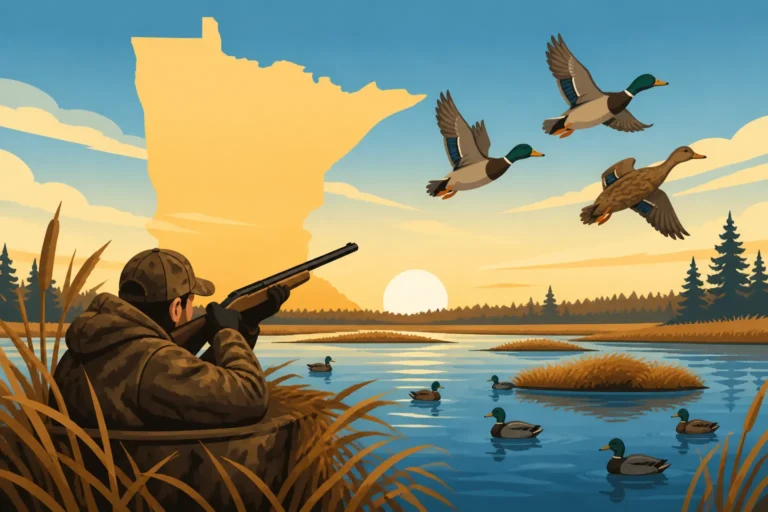
The vast expanse of Minnesota's big lakes, especially iconic ones like Mille Lacs, can feel utterly overwhelming when you're trying to chase diver ducks. It’s a completely different game than sneaking into a cattail slough, demanding specialized knowledge, specific gear, and an unwavering commitment to safety. This comprehensive guide is designed to equip you with the strategies and insights needed to confidently and successfully hunt diver ducks on these challenging, yet incredibly rewarding, open waters.
Understanding Diver Duck Behavior on Big Water
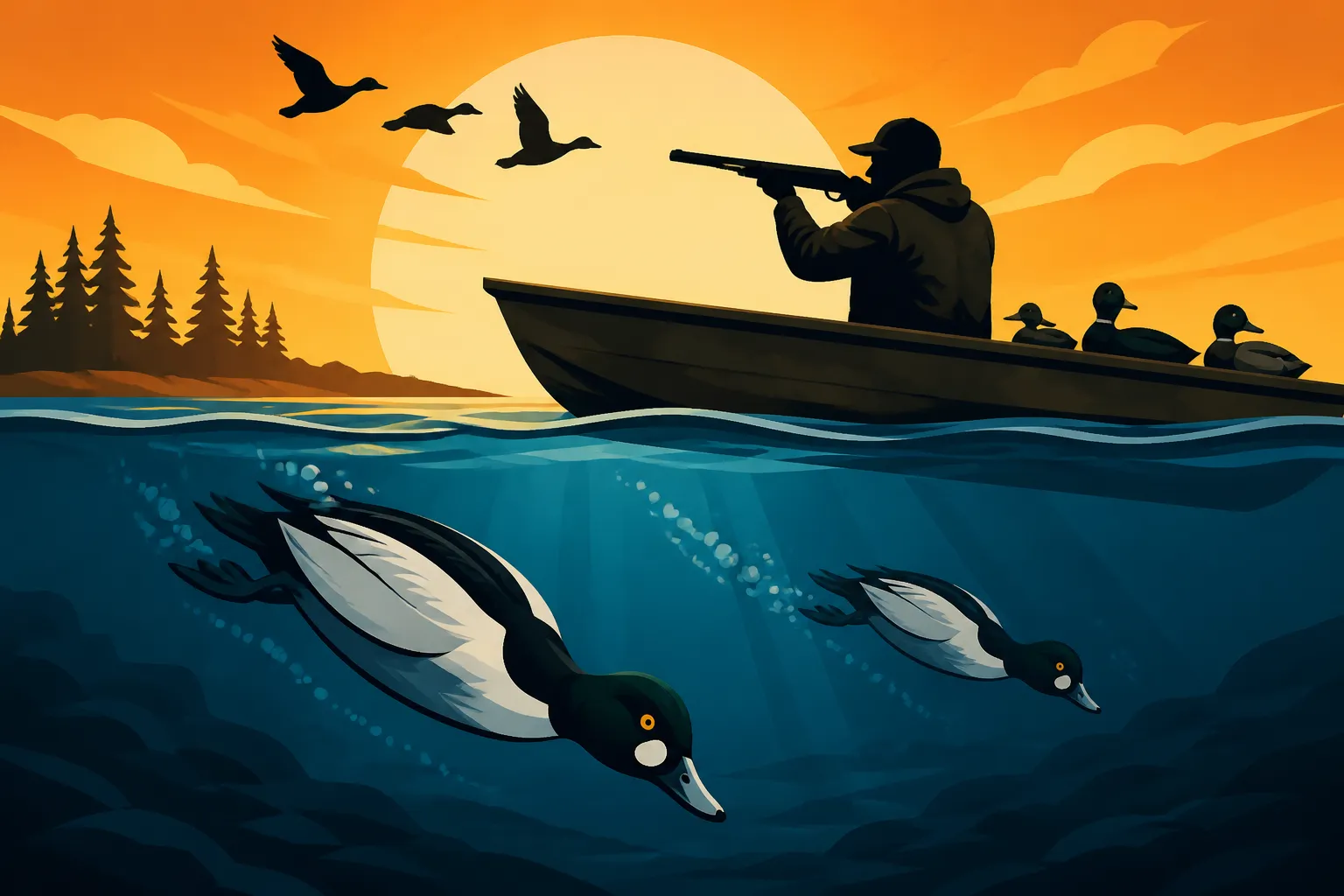
Diver ducks, unlike their dabbling cousins, spend most of their time on large, open bodies of water, diving deep to feed on aquatic vegetation, mollusks, and small fish. This fundamental difference dictates nearly every aspect of how you approach hunting them. They aren't typically found in shallow, muddy marshes, but rather congregate on expansive lakes where they feel secure and have access to their preferred food sources.
Key Species and Their Habits
When you're out on a big lake in Minnesota, you're primarily going to encounter a few key species of diver ducks, each with slightly different preferences. Bluebills, or scaup, are arguably the most common and often travel in large rafts. They love areas with zebra mussels or other abundant invertebrates. Canvasbacks, often called the "King of Ducks," are powerful fliers and strong divers, typically seeking out submerged aquatic vegetation like wild celery. Redheads, with their distinctive rust-colored heads, are also vegetation eaters and often raft with 'cans' or bluebills. Goldeneyes, known for their distinct calls and rapid wingbeats, are hardy ducks that stick around even as the ice starts to form, feeding on invertebrates and small fish. Understanding these nuances is critical. For instance, you might target a deeper water setup for bluebills and goldeneyes, while canvasbacks and redheads might be found slightly shallower, though still on big water.
Reading the Lake: Wind, Waves, and Food Sources
Hunting big water divers means becoming intimately familiar with the lake itself. The wind is your most significant factor, dictating wave conditions and, critically, how ducks will position themselves. Divers typically prefer to land and take off into the wind, and they'll raft up in areas that offer some protection from brutal waves, or where the wind concentrates their food. On a blustery day, the lee side of a point or an island might be a hotspot. Food sources are equally vital. On Mille Lacs, for example, identifying areas with extensive clam beds or submerged vegetation is paramount. You might use historical data, aerial maps, or even a good depth finder on your boat to pinpoint these locations. A prime spot will often have current that helps filter nutrients or keeps ice at bay longer, which divers appreciate.
Migration Patterns and Peak Times
Timing is everything in diver hunting. These ducks are migrants, pushing through Minnesota on their journey south, often in waves. Early season might see smaller groups of local birds, but the real action begins as the weather turns colder up north. Typically, the peak diver migration through Minnesota kicks off in mid-October and can run strongly through November, often extending right up until the lakes freeze solid. Bluebills often arrive first in significant numbers, followed by canvasbacks and redheads, with goldeneyes and buffleheads making up the late-season contingent. Keeping an eye on weather forecasts across Manitoba and northern Minnesota can give you a heads-up on incoming flights. A strong north wind after a cold front is often a diver hunter's best friend, pushing fresh birds into our lakes. You can learn more about general bird movements by checking out "Duck Migration Timing Through Minnesota".
Essential Gear for Big-Water Diver Hunting
Diver hunting on large lakes is not for the faint of heart, nor for the under-equipped. The gear you bring isn't just about success; it's fundamentally about safety. Cutting corners here can lead to dangerous, even life-threatening, situations.
The Indispensable Boat and Motor Setup
Your boat is your lifeline and your platform. It needs to be seaworthy, stable, and appropriately powered for the unpredictable conditions of a big lake like Mille Lacs. A deep-V hull, typically 16-20 feet long, is often preferred for its ability to cut through chop and offer a dry ride. Aluminum boats like those from Lund or Alumacraft are popular choices due to their durability and lighter weight. A powerful, reliable outboard motor (think 50-150 horsepower) is crucial not just for getting to your spot quickly, but for fighting strong winds and currents, or making a swift escape if the weather turns. Always have a kicker motor or at least oars as a backup. Beyond the boat itself, invest in high-quality electronics: a GPS with up-to-date mapping (many hunters use a robust app like GoHunt for this, integrating public land and water data), a depth finder, and a VHF radio for emergency communication.
Specialized Decoys and Spreads for Open Water
Forget the dozen mallard decoys you use in the backwaters; diver hunting calls for a serious spread. Divers are drawn to large numbers, signifying safety and good feeding. You'll want dozens, often hundreds, of decoys. These should primarily be diver species: bluebills, canvasbacks, redheads, and goldeneyes. Magnum-sized decoys are excellent for visibility on vast water. Many hunters use Texas Rigs for quick deployment and retrieval, but on truly big, rough water, traditional gang lines or long lines with heavy main anchors might be more effective at keeping your blocks from getting tangled or drifting. It’s a significant investment, but a well-executed spread makes all the difference. For more insights on this, read "Decoy Spreads for Minnesota Divers".
Anchoring Systems and Retrieval Tools
On a big lake, especially on a windy day, a standard anchor won't cut it. You need heavy anchors, often 15-30 pounds each, for both your boat and your decoy lines. Mushroom anchors, grappling hooks, or even heavy concrete blocks can work. The critical part is enough rope – you want at least a 3:1 scope, meaning three times the depth of the water in rope, or more if the current is strong. Having an anchor retrieval system, like a buoy and ring setup, can save your back (and your anchor) on deep, snaggy bottoms. For retrieving downed birds, a long-handled landing net is essential, as is a reliable retrieving dog. If you don't have a dog, be prepared to maneuver your boat, which can be tricky in heavy waves. A good pair of waders, even if you’re mostly in a boat, can be invaluable for wading to retrieve a bird close to shore or in shallower water, like those described in "Waders for Minnesota Marsh Hunting".
Setting Up for Success: Blinds and Execution
Getting your gear ready is one thing; setting it up effectively on the water is another entirely. This is where experience and a keen understanding of duck behavior truly pay off.
Concealment Strategies on Open Water
On open water, hiding from ducks that approach from any direction is a major challenge. There are primarily two approaches: boat blinds and layout blinds. Boat blinds are essentially a framework built around your boat, covered in natural camouflage or artificial grass mats. They work best when anchored in slightly shallower water near a point or a weed line, blending with the natural surroundings. It’s crucial that the blind doesn't look like a solid block on the water. Breaking up the outline is key. Layout blinds, traditionally used in fields for geese, can also be used on large sandbars or shallow flats on big lakes. These low-profile blinds allow hunters to lie flat, becoming nearly invisible. However, their use is extremely limited on many big lakes due to depth and safety concerns, and they are much more common when "Layout Blind Hunting Minnesota Farm Fields". The most critical aspect of any concealment is keeping movement to an absolute minimum and ensuring you're completely hidden from above.
Effective Decoy Placement for Divers
Diver ducks are typically less wary of decoy spreads than dabblers, but they still prefer a natural-looking setup. The classic "J-hook" or "U-shape" spread is popular, with the opening of the "J" or "U" facing into the wind, inviting ducks to land right in your shooting hole. Place your boat or blind at the bend or top of the "J." Often, diver spreads are anchored far from the boat, creating a landing zone right in front of the blind. For bluebills, consider large, dense rafts of decoys to mimic their natural congregating behavior. For canvasbacks, longer lines of decoys simulating a feeding line can be effective. Mix species to make it look more natural, but ensure you have enough of each primary species you're targeting. Some hunters swear by adding a few spinning-wing decoys on calm days, though their effectiveness can vary on big, rough water.
Shot Selection and Ethical Considerations
When divers are working your spread, they often come in fast and low, sometimes skipping across the waves. This makes for exhilarating but challenging shooting. Practice your lead, as these birds are typically faster than they appear. Use a shotgun capable of handling heavy waterfowl loads, and choose a choke that patterns well with steel shot (required for all waterfowl hunting). A modified or improved modified choke is often a good all-around choice. Ethical hunting means knowing your effective range and only taking clean shots. Wounding birds on big water can lead to difficult or impossible retrievals, which is not only frustrating but results in wasted game. Be patient, let the birds commit, and aim for clean kills within your capabilities. Always respect the "Minnesota Duck Daily Bag Limit" and other regulations.
Safety First: Mastering the Elements
Hunting big water divers inherently carries risks. The sheer size and unpredictability of lakes like Mille Lacs demand an unwavering focus on safety.
Navigating Challenging Weather Conditions
Big lakes can turn from a glassy calm to a raging tempest in a matter of minutes, especially during the fall. Always check the marine weather forecast before heading out, and continually monitor conditions while on the water. If winds are forecast to exceed 15-20 mph, or if severe thunderstorms are predicted, it's often best to stay home. Learn to read the sky and the water for subtle changes in wind direction, cloud cover, and wave height. Never push your luck. If conditions deteriorate, pull your spread and head for shore or a protected bay immediately. A calm morning can quickly become a white-knuckle ride back to the landing, and getting caught in a squall far from safety is a terrifying experience.
Essential Safety Equipment and Practices
Beyond a seaworthy boat, every hunter needs a full complement of safety gear. This includes Coast Guard-approved personal flotation devices (PFDs) for everyone on board, readily accessible. In cold water conditions, wearing an inflatable PFD or even a full survival suit is highly recommended. Carry a fully charged cell phone in a waterproof case, but also a backup communication device like a handheld VHF radio, as cell service can be spotty on large expanses of water. A fully stocked first-aid kit, spare paddles, a fire extinguisher, signaling devices (flares, whistle, air horn), and extra warm, dry clothes stored in a waterproof bag are non-negotiable. Always let someone know your float plan – where you're going, when you expect to return, and who is with you.
Emergency Planning and Communication
Even with the best preparation, emergencies can happen. Have a clear plan for what to do if the motor dies, someone falls overboard, or the weather turns hostile. Know how to use your VHF radio to call for help on channel 16. Practice man-overboard drills. If you end up in the water, remember the "1-10-1" rule: 1 minute to control breathing, 10 minutes of meaningful movement, 1 hour before unconsciousness from hypothermia. Wearing your PFD is key. If you hunt with others, designate a safety officer for the trip. Before you head out, review local regulations concerning "Minnesota Blaze Orange Requirements" if you are mixing with other seasons or on certain public lands.
Scouting and Timing Your Hunt on Mille Lacs
Hunting big water is a game of patience and perseverance, but also of precise timing and diligent scouting. You can’t just show up and expect birds to be everywhere.
Pre-Season Reconnaissance and Digital Tools
Long before opening day, successful diver hunters are already "on the lake" – often from their computer screens. Start by poring over bathymetric (lake depth) maps, looking for subtle changes in depth, submerged humps, weed lines, and transition areas where divers might feed or rest. Satellite imagery (like what you'd find on GoHunt or other mapping apps) can reveal historical weed beds, sandbars, or even old clam beds. Identify potential boat launch locations and emergency exits around the lake. The goal is to narrow down large expanses to a few promising areas. This digital scouting can save you countless hours of fuel and frustration once the season starts. Pay attention to areas that consistently hold waterfowl each year.
In-Season Scouting for Active Feeding Zones
Once the season is open and birds are migrating, nothing beats on-the-water scouting. Take a few hours (or even full days) to simply drive around the lake with your binoculars, looking for rafts of ducks. Pay close attention to where they are feeding, resting, and how they react to wind and light boat traffic. Sometimes a quick run at dawn or dusk can reveal flight patterns. Are they favoring a particular bay? Are they stacked up on the lee side of an island? These observations are golden. Diver ducks will often move around the lake based on wind shifts, available food, and hunting pressure. What was hot yesterday might be cold today. Don't be afraid to pull up your spread and move if your spot isn't producing. Scouting is an ongoing process throughout the season.
Synchronizing with the Migration
As mentioned earlier, understanding the broader migration flow is paramount. Keep an eye on weather patterns to our north. When cold fronts push south, that's often when new waves of divers arrive. Talk to other hunters, local bait shops, and conservation officers to get a feel for bird movements. Websites and forums dedicated to Minnesota waterfowl hunting can also provide valuable real-time intel. The goal is to be on the water when the fresh birds are arriving, before they become educated by heavy hunting pressure. Patience is key, as divers often move in surges, so you might have a few slow days followed by an epic one. Remember that "Minnesota Waterfowl Zones and Seasons" dictate when you can even be out there, so know your dates.
Overcoming Common Challenges
Big-water diver hunting presents unique hurdles that can frustrate even the most seasoned hunter. Being prepared for these challenges will help you stay safe and increase your chances of success.
Dealing with Changing Conditions and Pressure
The most common challenge is the weather. A perfectly calm morning can give way to whitecaps by noon, making decoy retrieval dangerous or impossible. Always have a plan B, and don't hesitate to call it a day if conditions turn too rough. Hunting pressure is another significant factor on popular lakes like Mille Lacs. Everyone wants a piece of the pie. Early in the season, you might find fewer birds due to pressure or warmer weather, but as colder temps push birds south, the competition often heats up. Respect other hunters, maintain appropriate distances from their spreads, and avoid sky-busting or educating birds for everyone else. Sometimes, the best strategy is to find those less-accessible, slightly rougher spots that deter other hunters, as long as you can safely navigate them. You might even find yourself on a lake where "Diver Ducks on Lake Winnibigoshish" are more prevalent and less pressured.
Dealing with Tough Retrievals
Retrieving downed divers on big water can be incredibly difficult. A wounded bird might dive and resurface far from your position, or ride a wave out of sight. A strong current or heavy chop can make reaching a bird by boat a challenge. This is where a well-trained retrieving dog truly shines, making quick work of birds that would otherwise be lost. If you don't have a dog, a long-handled landing net is essential, and sometimes you'll need to use your boat to quarter a crippled bird until you can safely retrieve it. Never, ever risk falling out of your boat or capsizing for a bird. The duck isn't worth your life. Consider a specialized dog vest for cold water retrieves, and ensure your boat has a safe re-entry point if someone were to fall overboard.
Respecting Other Hunters and Regulations
Public land and water mean shared resources. Always be courteous to other hunters, anglers, and recreational boaters. Give other hunting parties plenty of space – a good rule of thumb is to set up at least a quarter-mile, and ideally half a mile, from another spread to avoid interfering with their birds or creating dangerous cross-fire. Be mindful of your shooting hours, and adhere strictly to all "Minnesota Migratory Game Bird Certification" rules, bag limits, and licensing requirements, including the "Minnesota Federal Duck Stamp Requirement". Report any violations you witness to the authorities. By being a responsible and respectful hunter, you contribute positively to the hunting community and ensure these opportunities remain for future generations.
| Diver Species | Primary Food Source | Preferred Water Depth | Common Group Size | Flight Speed | Peak Migration (MN) |
|---|---|---|---|---|---|
| Bluebill (Scaup) | Mollusks (zebra mussels) | Deep (10-30 ft) | Large rafts (50-500+) | Fast | Mid-Oct to Mid-Nov |
| Canvasback | Submerged vegetation | Medium (5-15 ft) | Medium flocks (10-100) | Very Fast | Late Oct to Mid-Nov |
| Redhead | Submerged vegetation | Medium (5-15 ft) | Small to Medium (10-50) | Fast | Mid-Oct to Mid-Nov |
| Goldeneye | Invertebrates, small fish | Deep (15-40 ft) | Small flocks (5-30) | Erratic, Fast | Late Oct to Dec |
| Bufflehead | Invertebrates | Shallow to Medium | Small groups (2-10) | Very Fast, Erratic | Late Oct to Dec |
Disclaimer
Please remember that hunting regulations, seasons, and permit requirements can change. Always consult the official Minnesota Department of Natural Resources (DNR) website or their current hunting regulations handbook before planning any hunting trip. Safety should always be your top priority when venturing into the outdoors.