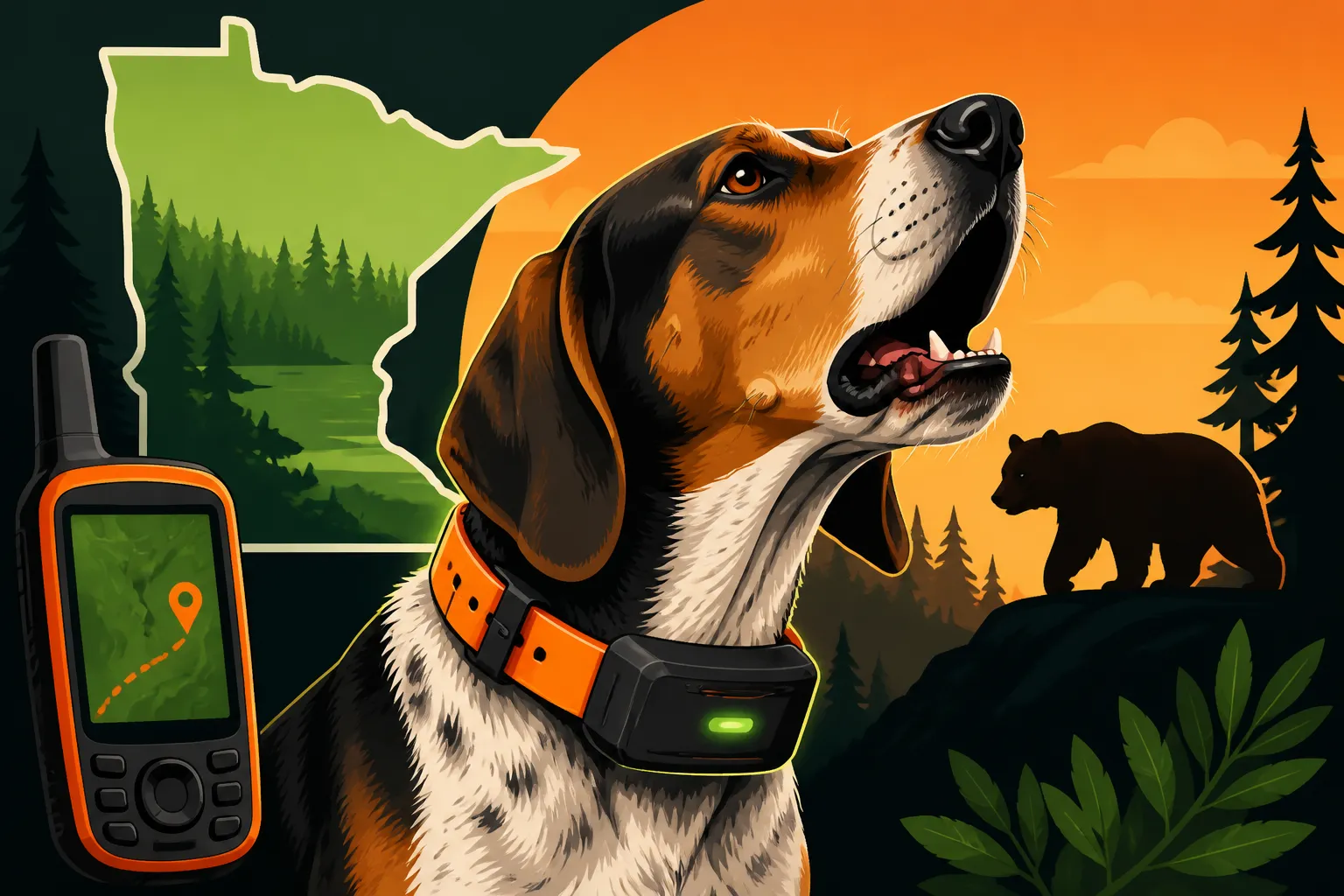
GPS Collars for Minnesota Bear Hounds
There's nothing quite like the sound of a hound on a hot bear trail, but that excitement quickly turns to a knot in your stomach when the baying suddenly goes silent, and you're left wondering where your valuable dog has gone in Minnesota's vast forests. This guide is all about demystifying GPS collars for bear hounds, helping you understand their critical role in safety and success, and how to choose and use the best system for your hunting adventures.
The Indispensable Tool: Why GPS Collars Are Crucial for Minnesota Bear Hounds
For anyone running hounds for black bears in Minnesota, a GPS collar isn't just a nice-to-have gadget; it's an absolutely essential piece of gear. The sheer scale and ruggedness of Minnesota's bear country, from the dense popple thickets of the north to the sprawling swamps and mixed hardwoods, makes it incredibly easy for even the most experienced hounds to get out of sight and earshot. Without a reliable way to track them, you're not just risking losing a valuable dog; you're risking their safety and potentially putting yourself in a dangerous situation trying to find them.
Ensuring Dog Safety in Wild Territory
Minnesota's landscape is beautiful, but it's also wild and unforgiving. Think about those vast stretches of public land, where a bear can lead a hound for miles through areas with little to no human access. A dog could encounter anything from a busy road to another bear, a wolf, or even deep, freezing water. A GPS collar provides that constant digital tether, allowing you to monitor your dog's position and movement in real-time, even when they're pushing hard on a track far beyond your hearing. This visibility means you can make critical decisions, like when to call a dog back from dangerous terrain or when to start moving yourself to intercept them before they cross a major highway. It’s about being proactive in protecting your hounds.
Furthermore, these collars often come with features that can monitor a dog's activity levels, giving you clues about their condition. Is your dog suddenly slowing down? Are they static for too long? These could be indicators of exhaustion, injury, or that they've treed a bear and are holding it. Being able to see this information remotely allows you to assess the situation and plan your approach, or even call for backup if necessary, which is particularly important when you're deep in the wilderness trying to retrieve a dog or follow up on a treed bear. The peace of mind alone is worth the investment, knowing you have a lifeline to your canine companions.
Tracking and Understanding Hound Behavior
Beyond safety, GPS collars are powerful tools for understanding and optimizing your hounds' performance. Imagine your dogs hitting a fresh track and taking off. With a GPS collar, you’re not just listening; you’re watching their progress on a digital map. You can see their speed, their direction, and how they navigate different terrain features. Are they running along a ridge, or have they plunged into a cedar swamp? This insight is invaluable. You can learn which dogs stay on track, which ones might be prone to skirting around obstacles, and how different bears lead your pack.
Over time, this data allows you to analyze past hunts, review track lines, and identify patterns that can inform future strategies. Did they consistently lose signal in a particular type of cover? Did they excel at finding bears in a specific part of the permit area? This is where the magic happens – turning raw location data into actionable intelligence. You can overlay their tracks with topographical maps, identifying key funnels or bedding areas that the bears frequent, or figuring out the best ways to approach a treed bear without blowing the setup. Many experienced hound hunters use this information to refine their training programs, making their dogs more efficient and safer in the field. This also ties into how you might use a sophisticated mapping tool like GoHunt to cross-reference known bear sign with your dogs' tracking data.
Unpacking the Tech: How Modern GPS Collar Systems Function for Hound Hunters
Modern GPS collar systems are a marvel of technology, combining several different communication methods to ensure that you always have a connection to your dogs, even in challenging environments. Understanding how these systems work will help you appreciate their capabilities and choose the best one for your specific hunting style in Minnesota. They've come a long way from just a simple radio signal.
The Role of Satellite GPS and VHF Radio
At the heart of every GPS collar is, of course, the Global Positioning System itself. The collar contains a small GPS receiver that picks up signals from satellites orbiting the Earth. These signals allow the collar to calculate its precise location – latitude, longitude, and often altitude – usually within a matter of feet. This location data is then sent back to your handheld receiver. However, satellite signals aren't foolproof, especially under dense tree canopy, deep ravines, or in areas with heavy weather, which is common in Minnesota's big woods.
This is where the venerable VHF (Very High Frequency) radio signal comes into play, often working in tandem with the GPS. Once the collar determines its GPS location, it transmits that data, along with traditional VHF beeping, back to your handheld receiver via a radio signal. This VHF signal is generally more reliable in heavy cover than a direct satellite link from the collar to your handheld (which isn't typically how these systems work for real-time tracking anyway). The VHF signal bounces and penetrates vegetation better. So, even if the GPS might be a little slow to update in a super thick cedar swamp, the VHF radio signal ensures that the location data, once acquired by the collar, still reaches your device. Some collars also revert to a traditional VHF-only signal if GPS acquisition is lost, giving you a general direction and proximity even without precise coordinates.
Handheld Devices and Smartphone Integration
The interface through which you track your dogs has evolved significantly. Most dedicated GPS collar systems still rely on a rugged, purpose-built handheld receiver. These devices are designed for outdoor use, often featuring durable construction, long battery life, and physical buttons that are easy to operate with gloved hands. They typically display a map with your position and the position of each collared dog, along with directional arrows, distances, and status updates like "treed" or "on point." These handhelds are crucial for reliability in areas with no cell service, which is a common scenario when you're Hunting the Boundary Waters Canoe Area or deep in the Superior National Forest.
However, many modern systems also offer seamless integration with smartphones. This usually involves pairing the handheld device with your phone via Bluetooth, or in some advanced systems, the collars might transmit data directly to a cellular network (requiring a separate subscription and cell service). When integrated with your smartphone, you can often view your dogs' locations on more detailed mapping applications, providing richer topographical information, satellite imagery, and even public land boundaries. This fusion of a dedicated tracking device with the power of a smartphone’s mapping capabilities, perhaps using an app like GoHunt to visualize terrain and property lines, offers the best of both worlds for many Minnesota bear hunters, providing both rugged reliability and advanced mapping detail.
What Matters Most: Essential Features for a Minnesota Bear Hound GPS Collar
When you’re staring at the rows of GPS collars online or in the sporting goods store, trying to figure out which one is right for you, it can feel a bit overwhelming. But for hunting Minnesota’s black bears with hounds, certain features rise to the top as non-negotiables. These are the aspects that will genuinely impact your success and, more importantly, the safety of your valuable pack in our challenging environment.
Range, Battery Life, and Durability
Let's talk about range first. Minnesota bear country is vast. A bear isn't going to stick to a small woodlot; they'll lead your hounds on a marathon across ridges, through swamps, and over clear-cuts. You need a system that offers excellent range, often measured in miles, allowing you to track your dogs even when they're far out. Keep in mind that advertised "line-of-sight" ranges are rarely achieved in dense forests; thick cover and hilly terrain will always reduce effective range. Look for systems known for strong signal penetration and reliability in varying conditions.
Battery life is another critical factor. A bear hunt can last for hours, sometimes even stretching into the next day if a dog trees a bear far from a road or camp. Collars that can last for 20-40 hours or more on a single charge are ideal, especially during colder Minnesota days when batteries tend to drain faster. You don't want your tracking device dying right when your dogs have a bear bayed up miles from your truck. Many systems now offer different power modes, allowing you to adjust the update rate (how often the collar sends a signal) to conserve battery when dogs are static, and increase it when they're on the move.
Finally, durability cannot be overstated. Your hounds are crashing through brush, swimming across creeks, and wrestling with a bear at the base of a tree. Their collars will take a beating. Look for collars that are rugged, waterproof (not just water-resistant), and built to withstand impacts, mud, and extreme temperatures. A flimsy collar won't last a single season. The handheld receiver also needs to be tough enough to survive drops, splashes, and general abuse in the field.
Mapping Capabilities and Geofencing
Modern GPS collars aren't just dots on a blank screen; they integrate sophisticated mapping. The best systems offer detailed topographical maps, showing elevation changes, water bodies, and contour lines. Many also feature satellite imagery, which can be incredibly useful for identifying different types of cover, clearings, and potential obstacles. Having public land boundaries overlaid on your map is also a huge advantage, helping you avoid accidental trespass and understand where your dogs are in relation to property lines, especially if you're hunting Minnesota public land before season. Some systems, particularly those that integrate with smartphones, allow you to use third-party mapping applications like GoHunt, which can provide even richer map layers and land ownership information.
Geofencing is a feature that can be a real game-changer for hound hunters. This allows you to set virtual boundaries on your map. If a dog crosses one of these boundaries – perhaps entering a no-hunting zone, crossing a major highway, or straying too far from your designated hunting area – the system will alert you. This gives you precious extra minutes to react and try to call the dog back or head them off, potentially preventing a dangerous situation or an unwanted foray onto private land. It's an extra layer of protection, particularly useful for younger, more inexperienced hounds or when hunting near populated areas.
| Feature | Description | Importance for Minnesota Bear Hounds |
|---|---|---|
| Range | Distance collar can transmit location data to receiver. | Crucial for tracking dogs over vast distances in large permit areas. |
| Battery Life | How long collar/handheld lasts on a single charge. | Essential for long hunts, especially when dogs tree a bear far from access or overnight. Cold weather demands robust battery. |
| Durability | Resistance to water, impacts, mud, and extreme temperatures. | Hounds are rough on gear; collars must withstand thick brush, water, and direct contact with game. |
| Mapping | Quality of topographical maps, satellite imagery, and land ownership overlays. | Helps navigate dense cover, understand terrain challenges, and identify property lines. Integration with GoHunt can enhance this. |
| Geofencing | Virtual boundaries that trigger alerts if dogs cross them. | Provides early warning if dogs enter dangerous areas (roads, non-hunt zones) or stray too far. |
| Update Rate | How often the collar sends new location data. | Faster updates mean more precise tracking of fast-moving dogs, but can consume more battery. |
| Bark Detection | Collar senses when a dog is barking (often indicating a treed bear). | Invaluable for quickly identifying if dogs have located and held a bear, even if they're out of earshot. |
| VHF Backup | Traditional radio signal for general direction if GPS fails. | Offers a safety net in extremely dense cover or GPS-denied environments, allowing for approximate location. |
| Multi-Dog Support | Ability to track multiple collars simultaneously. | Essential for hunting with a pack; allows monitoring of individual dogs and overall pack movement. |
Making the Choice: Selecting the Best GPS Collar System for Your Hunting Style
Choosing the right GPS collar system isn't a one-size-fits-all decision. What works perfectly for a solo hunter with a single dog might not be ideal for a large group running a full pack. Your budget, the number of dogs you run, and the specific terrain you typically hunt in Minnesota will all influence your decision. It's about finding the balance that provides maximum reliability and utility for your approach to Bear Hunting With Bait and Hounds in Minnesota.
Considering Your Pack Size and Hunting Terrain
If you're a solo hunter running just one or two reliable hounds, your needs might be simpler. You might prioritize a system that's lightweight and easy to manage, perhaps with a focus on maximum battery life for those long retrieves. However, if you're part of a larger bear hunting camp and routinely run a pack of 5-10 dogs, then multi-dog tracking capability becomes paramount. You'll need a system that can display all your dogs clearly, ideally allowing you to customize their icons or colors for quick identification. The ability to monitor individual dog stats like speed and status is also important for pack management.
The terrain in which you typically hunt also plays a huge role. Are you primarily in the dense, rolling hills and swamps of northern Minnesota, where line-of-sight is rare and satellite signals can be intermittent? Then a system with strong VHF backup and robust signal penetration will be crucial. If you hunt more open areas, or farmland fringes where bears occasionally venture, systems with greater cellular integration might be more viable, provided you have consistent cell service. Hunters who frequent areas like the deep timber of the Chippewa National Forest will have different demands than those hunting closer to agricultural lands in other parts of the state.
Comparing Popular GPS Collar Brands and Models
The market for GPS dog tracking collars is pretty competitive, with a few key players consistently innovating. Garmin, for instance, has long been a dominant force with their Alpha and Astro series, offering rugged handhelds with excellent mapping and multi-dog capabilities. They've refined their technology over many generations, providing reliable range and features like bark detection, which alerts you when a dog is actively baying or treed. These systems are often the benchmark for durability and performance in the hunting community.
Other companies also offer strong contenders, sometimes with different takes on the technology. Some brands might focus more heavily on real-time cellular data for tracking, which offers virtually unlimited range where cell service exists, but becomes useless without it. Others might emphasize integration with smartphone apps, allowing for a more visual and detailed mapping experience on a larger screen, especially when paired with comprehensive mapping platforms like GoHunt. When comparing models, pay close attention to the update rate (how often the collar pings its location), the number of dogs a single handheld can track, and the subscription costs, if any, associated with cellular or advanced mapping features. Read reviews from other bear hound hunters in similar terrain to get a realistic idea of real-world performance.
Beyond the Beep: Integrating GPS Data into Your Bear Hunting Tactics
Having a GPS collar on your hounds is one thing; effectively using the data it provides to enhance your bear hunting strategy is another entirely. It's not just about finding a lost dog; it's about making smarter decisions in the moment and learning from every pursuit to become a more successful and safer hound hunter in Minnesota's unique environment.
Real-Time Decision Making in the Field
Imagine your dogs are screaming through a thick lowland swamp, and their track suddenly changes direction, veering towards a major highway you know is a couple of miles away. With a GPS collar, you see this immediately on your handheld or smartphone map. You can make an instant decision: do you try to cut them off? Do you call them back? Do you inform a partner positioned further down the road? This real-time visibility is invaluable for preventing dangerous situations. Without it, you might not know they were headed for trouble until it was too late. When you're Running Hounds for Minnesota Bears, every second counts.
Similarly, if your dogs suddenly stop and their "treed" or "static" indicator pops up, you know instantly you have a bear located. You can then use your GPS to navigate directly to them, even if they're deep in dense cover that would otherwise be impossible to traverse efficiently. As you're making your way, you can monitor the dogs' behavior – are they still barking vigorously? Are they moving slightly, indicating the bear might be trying to come down or move? This ongoing feedback helps you plan your approach carefully, ensuring you arrive ready and can manage the situation safely. You can also use your GoHunt app to quickly identify the best approach route, avoiding potential hazards or private property.
Analyzing Tracks and Improving Future Hunts
The data collected by your GPS collars isn't just for the immediate hunt. Many systems allow you to save and review the tracks your dogs made, creating a rich history of their pursuits. This post-hunt analysis is a goldmine for improving your strategy. You can review how your dogs worked a particular bear track, where they might have lost it, or how they navigated challenging terrain. Did they consistently get hung up in a certain type of cover? Did they always push bears towards a specific escape route?
By studying these tracks, you can gain a deeper understanding of bear behavior in your hunting area and identify patterns in your dogs' performance. For example, if you notice your younger dogs consistently splitting off or running check-back lines when an older, more experienced dog stays true, it provides valuable insights for training. You can also overlay these historical tracks with your general scouting efforts, perhaps using a detailed map from GoHunt to see if the dogs' pursuits consistently lead them through certain food sources, bedding areas, or travel corridors you hadn't noticed before. This analytical approach helps you refine your hunting spots, improve your dog training, and ultimately increase your chances of success on future bear hunts.
Keeping Your Gear Running: Maintenance and Troubleshooting for GPS Collar Systems
Even the most robust GPS collar system needs regular care and attention to perform reliably in the demanding conditions of Minnesota bear hunting. Neglecting maintenance can lead to frustrating failures in the field, so taking a little time before and after each season, and even after each hunt, will save you a lot of headaches.
Pre-Season Checks and Routine Care
Before the bear season even kicks off, conduct a thorough inspection of all your GPS equipment. Charge all collars and handheld devices fully. Turn them on and ensure they acquire a GPS signal and link up correctly. Check the firmware on your handheld and collars – manufacturers often release updates that improve performance, add features, or fix bugs. It’s like updating the software on your phone; it keeps things running smoothly.
Inspect the physical condition of each collar. Look for frayed straps, cracks in the casing, or damage to the antenna. Pay close attention to charging ports and ensure they're clean and free of debris. If you're using removable batteries, check them for any signs of swelling or corrosion. Clean the charging contacts on both the collars and the chargers. After each hunt, wipe down the collars to remove mud, burrs, and any other grime. If they've been submerged, dry them thoroughly. Store your equipment in a dry, temperate place, away from extreme heat or cold, to prolong battery life and electronic components. This diligent routine, especially if you're frequently running hounds for various game throughout the year, is key to preventing mid-season failures.
Common Issues and Field Troubleshooting Tips
Even with the best care, you might encounter issues in the field. One of the most common problems is a loss of signal or inaccurate readings. This can often be attributed to very dense cover, deep ravines, or heavy storms. If a dog goes "offline," try moving to higher ground if possible, or an area with a clearer view of the sky. Sometimes simply waiting a few minutes for the collar to re-acquire satellites is all it takes. Ensure your handheld's antenna is fully extended and pointed in the direction you last saw the dog or where you believe they might be.
Another common frustration is poor battery life. This can be due to extreme cold, an aging battery, or simply having the update rate set too high for the duration of the hunt. In cold weather, try to keep your handheld device warm, perhaps in an inner pocket. Carry fully charged spare batteries for your handheld if your model allows. If a collar’s battery life significantly degrades, it might be time to replace the collar or, if possible, the internal battery. If you’re experiencing persistent issues, consult the manufacturer's troubleshooting guide. Sometimes a factory reset of the device can resolve software glitches. Having a backup plan, like an old-fashioned compass and a good topographic map (which you can reference in an app like GoHunt), is always wise for those moments when technology temporarily lets you down, reminding you to always be prepared for Hunting Pressure on Minnesota Public Land without full reliance on electronics.
Disclaimer
This article is for general informational purposes only and does not constitute professional advice. Laws, prices and regulations vary by location and change over time. Consult a qualified professional for guidance on your specific situation.