Minnesota Bear Harvest Trends
Minnesota bear harvest trends explain population health, management strategies, and factors like food sources influencing hunter success.
Know what you’re after.
Big game, small game, upland birds, and waterfowl — identification, behavior, rut and migration timing, and how each species moves through the season.

Minnesota bear harvest trends explain population health, management strategies, and factors like food sources influencing hunter success.
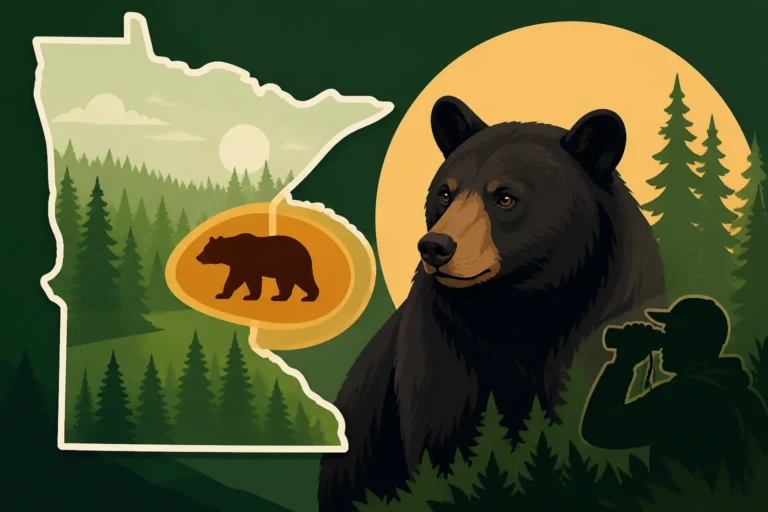
Minnesota black bear range expansion shows how populations moved from northern forests into agricultural fringes and suburban outskirts.
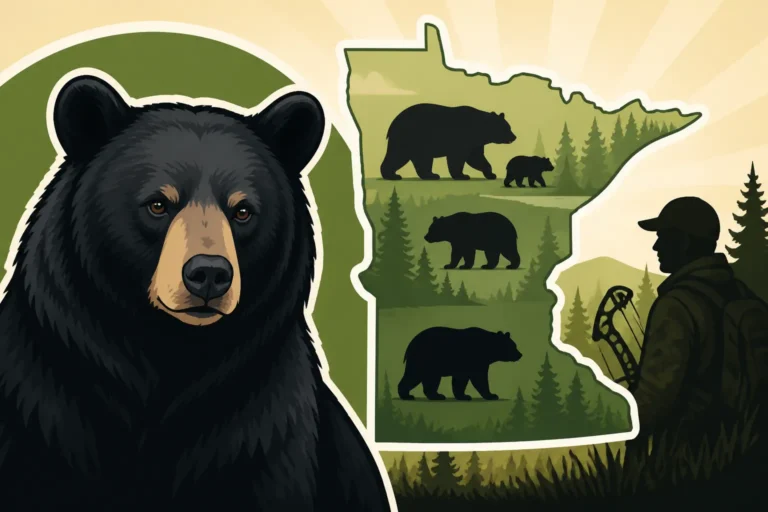
Minnesota black bear numbers range from 12,000 to 15,000 animals, monitored through bait stations and den surveys by the Department of Natural Resources.
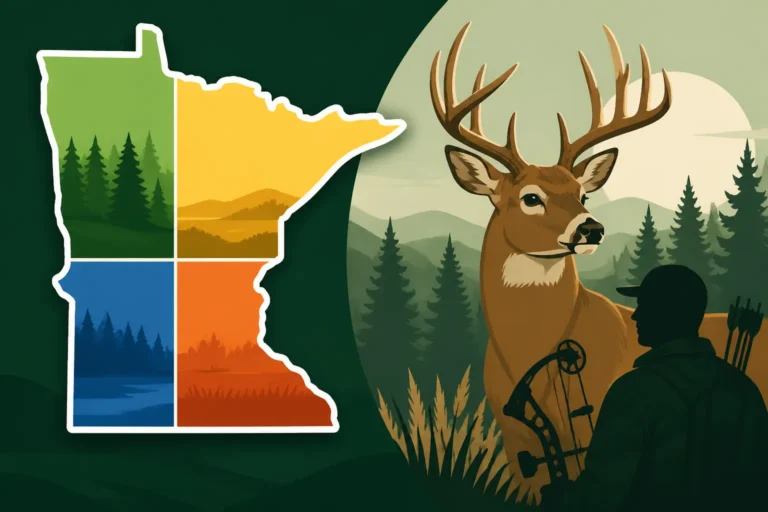
Minnesota’s Statewide CWD Quadrant Plan explains chronic wasting disease management strategies, hunting regulations, and testing efforts for deer.
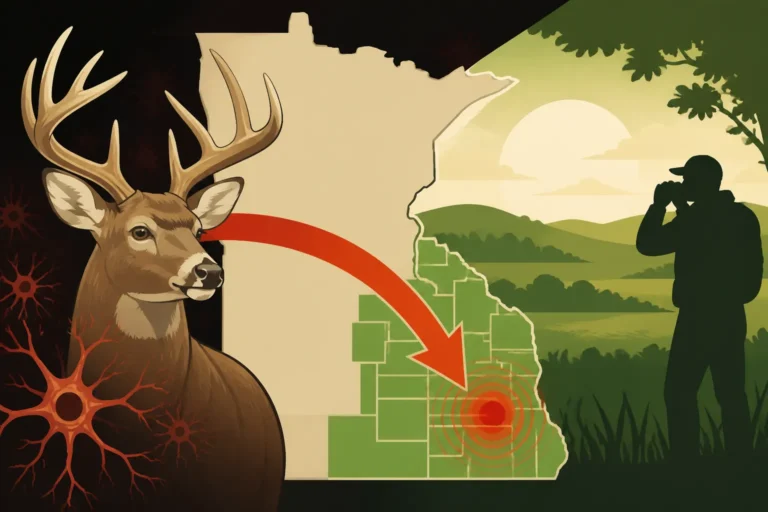
Chronic Wasting Disease spreading into wild deer herds in Southeast Minnesota and its impact on local hunting traditions.
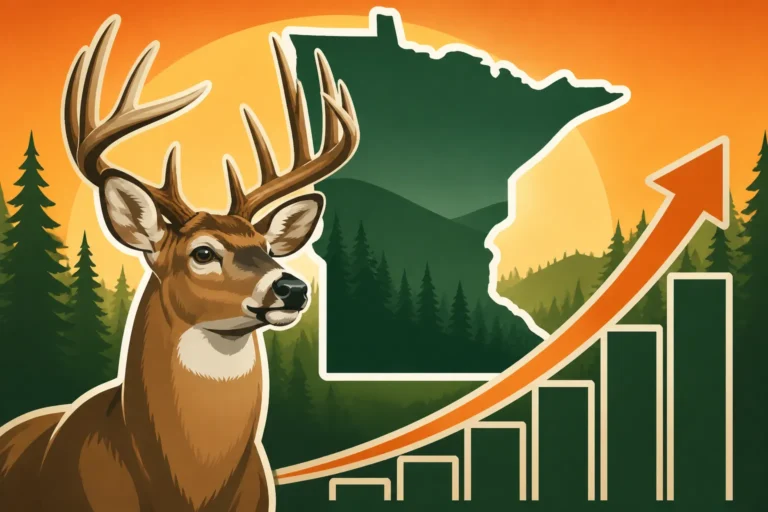
Minnesota deer harvest records reveal population trends, permit area management goals, and firearm, archery, or muzzleloader harvest numbers.
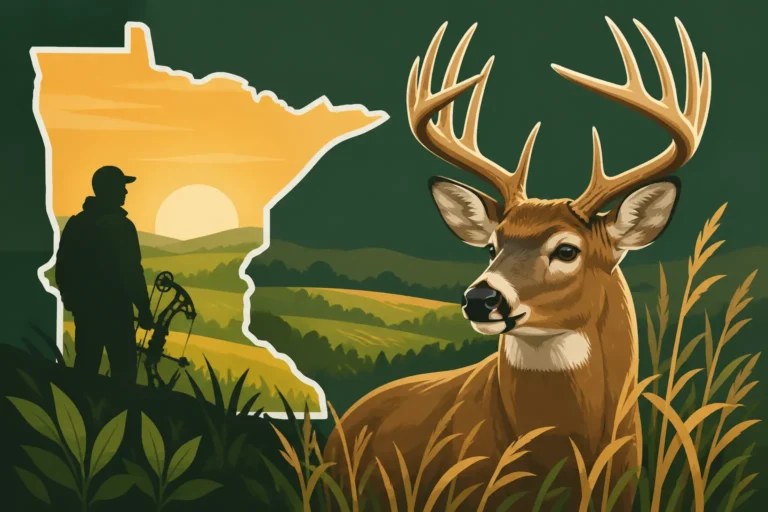
Southeast Minnesota bluffs and hardwood forests create ideal habitats, rich food sources, and natural sanctuaries that produce giant whitetail bucks.
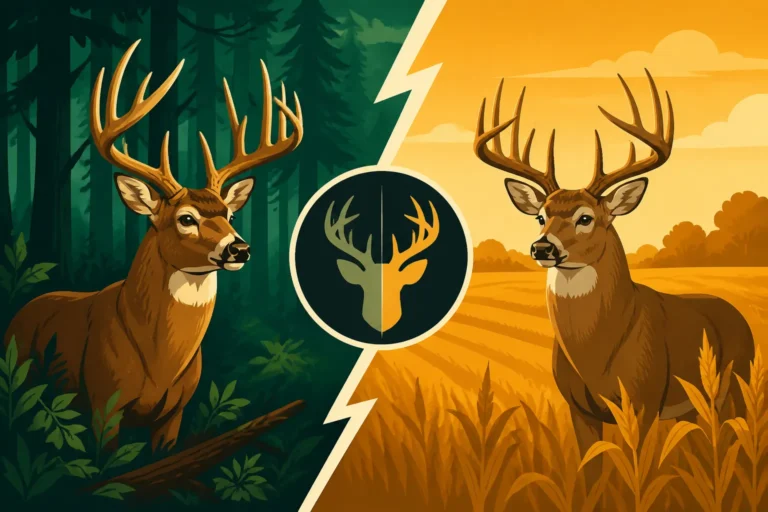
Minnesota deer hunting environments differ between dense northern forests and agricultural fields, presenting unique challenges for hunters.
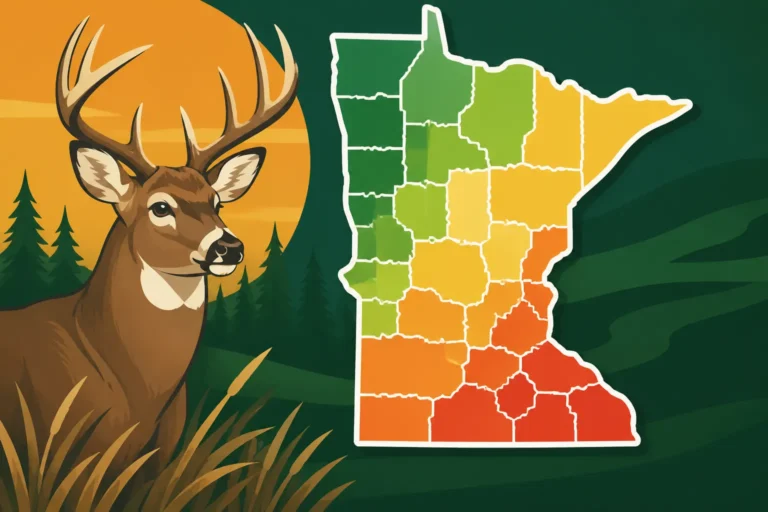
Minnesota deer density and permit area types determine harvest goals, antlerless quotas, and hunting opportunities statewide.
Minnesota deer population estimates combine aerial surveys, public reports, and harvest data models used by the Department of Natural Resources.