Layout Blinds and Marsh Boats
There’s nothing quite like the sight of a flock of mallards circling, wings set, dropping into your decoy spread. But let's be real, achieving that picture-perfect moment isn't always easy, especially when you're trying to hunt open water or wide-open farm fields here in Minnesota. The sheer challenge of disappearing from the keen eyes of waterfowl can be a major source of frustration, leading to blown opportunities and uncomfortable, exposed sits. This guide is all about helping you conquer that challenge by diving deep into the world of layout blinds and marsh boats, giving you the practical know-how to blend seamlessly into your hunting environment and increase your success rate.
The Art of Disappearing: Understanding Layout Blinds for Waterfowl
Waterfowl, particularly ducks and geese, have an uncanny ability to spot anything out of place from high above. When you’re hunting in environments with minimal natural cover—think flooded cornfields, barren stubble fields, or the wide-open expanse of a large marsh—a traditional upright blind or even just huddling behind a few cattails often just won't cut it. This is where layout blinds come into their own, offering a level of concealment that can truly make you invisible.
Why Traditional Blinds Fall Short in Open Country
Picture this: you've set up your spread in a fantastic cut cornfield that you know birds are using. You've got your decoys out, the wind is perfect, but the only "cover" is a few sparse corn stalks and maybe a fence line. If you try to stand up or even sit on a bucket, your silhouette is going to stick out like a sore thumb against the horizon. Ducks and geese, especially those that have seen a few seasons, are incredibly wary of anything that doesn't look natural. They’ll flare at the slightest hint of danger, turning a hopeful approach into a rapidly departing flock.
The same goes for many shallow marsh or slough situations. While cattails can offer decent cover, there are often wide-open pockets of water or mudflats that birds prefer to land in. Trying to build a natural blind from scratch in these spots is often futile; either the materials aren't there, or what you manage to construct still looks like a lump that doesn't belong. You end up spending more time trying to hide than actually hunting, and the birds still spot you. It's a frustrating cycle that many waterfowl hunters experience, leading to many missed opportunities.
Key Features of a Good Layout Blind
The magic of a layout blind lies in its ultra-low profile design, essentially allowing you to lie down flat in the field or marsh. This eliminates your vertical silhouette entirely, making you appear as just another bump in the terrain, especially when properly brushed in. These blinds come in a few main styles, often referred to as "coffin blinds" or "tombstone blinds," depending on their shape and how much of your upper body they enclose. The best ones are designed to be almost unnoticeable to approaching birds.
Beyond just being low to the ground, portability is huge. You don't want a blind that's a beast to lug across a muddy field or through thick cover. Many modern layout blinds are designed to fold up relatively compactly, sometimes even resembling a large backpack, making them manageable for one hunter to carry, along with their shotgun and a few essentials. Setting them up should be quick and intuitive, often involving a simple frame that pops into place. You want to be able to deploy your blind in the dark, without fumbling, so you can focus on getting your decoy spread just right.
Durability and weather resistance are also non-negotiables for Minnesota hunting. These blinds will be exposed to driving rain, early season frost, and potentially even some light snow. Look for rugged fabrics, strong stitching, and a waterproof bottom to keep you dry and comfortable. A good layout blind needs to stand up to the elements and the wear and tear of being hauled around, set up, and taken down repeatedly. Finally, comfort is often overlooked. You might be lying in that blind for hours, sometimes in freezing temperatures. Padded backrests, headrests, and enough interior room to shift around and stretch are crucial for staying put and maintaining focus.
Decoy Spreads and Layout Blind Placement
Placing your layout blind isn't just about finding a flat spot; it's about making it disappear within your decoy spread. The goal is for the birds to commit to landing among your blocks without ever recognizing your blind as a threat. Typically, you'll place your blind at the back edge of your main landing zone, often a little downwind, so incoming birds are flying over your decoys and looking away from your position as they commit. Think of it as being the "apex predator" hidden amongst your plastic prey.
The most critical step in blind placement is brushing it in. Every good layout blind comes with brush straps or stubble straps sewn into its fabric. These are specifically designed for you to weave in natural vegetation from the immediate area—corn stalks, cattails, grass, mud, even snow. The key is to break up the hard lines of the blind and make it blend seamlessly with the surrounding environment. If you're hunting a cornfield, cut corn stalks and lay them over and around your blind. In a grassy field, use tall grass. The more effort you put into brushing it in, the more invisible you become.
Consider the wind, too. Birds almost always land into the wind, much like an airplane taking off or landing. So, positioning your blind to have the wind at your back or quartering from the side will give you the best shots as birds approach. You want them to be focused on the decoys directly in front of them, not scrutinizing the lump where you're hiding. A well-placed and thoroughly brushed-in layout blind, combined with a realistic decoy spread, can truly be a game-changer for Layout Blind Hunting Minnesota Farm Fields or even open marsh fronts.
Navigating the Water: Marsh Boats for Duck and Goose Hunters
While layout blinds excel on solid (or at least semi-solid) ground, many of Minnesota's prime waterfowl spots are primarily water-based. From vast wild rice beds to expansive shallow lakes and interconnected sloughs, water is often the main highway. Trying to hunt these areas relying solely on waders can be incredibly limiting, and frankly, dangerous.
The Limitations of Waders Alone in Minnesota's Waterfowl Habitat
We've all been there: you think the water is waist-deep, take another step, and suddenly you're up to your chest, or worse, over your waders. Minnesota's waterfowl habitat is notorious for its deceptive depths, soft, mucky bottoms that can swallow a boot, and hidden obstacles like submerged logs or beaver runs. Relying solely on waders often means you can only access the very edges of productive areas, leaving prime landing zones and thick cover untouched.
Beyond the depth, there's the sheer logistics of carrying gear. Imagine trying to haul a dozen decoys, a shotgun, a blind bag, and a bucket across a quarter-mile of mucky bottom while fighting against resistance. It's exhausting, time-consuming, and can leave you sweaty and uncomfortable before the hunt even begins. Then, once you've shot a bird, retrieving it from deeper water without a boat becomes a major headache, often resulting in lost birds or another dangerous wade. The safety implications, especially in cold Minnesota water, cannot be overstated. Pushing your limits in waders can quickly turn a fun hunt into a hypothermic emergency. This is where Waders for Minnesota Marsh Hunting truly hit their limit.
Types of Marsh Boats and Their Applications
Marsh boats come in various shapes and sizes, each designed with specific hunting scenarios in mind. The choice largely depends on the water you're hunting, how many people you're bringing, and how much gear you need to transport.
Sneak Boats: These are typically small, low-profile, one or two-person boats designed for quiet navigation through shallow waters and dense cover. They often feature an open cockpit and a flat bottom, making them stable and easy to paddle or pole. Their low profile allows them to blend into cattails or shorelines, making them excellent for jump-shooting or setting up small, informal blinds directly on the boat. They are perfect for solo hunters or small groups exploring tight sloughs or river backwaters, like when Hunting the Mississippi River Backwaters.
Layout Boats: These are the ultimate in open-water concealment. Built incredibly low to the water, they are essentially floating layout blinds. Designed for hunting large bodies of water, they allow hunters to lie nearly flat at water level, disappearing amidst a large decoy spread. Often used in conjunction with a larger "tender boat" for transportation and bird retrieval, layout boats are specialized tools for serious diver hunters on big lakes like Mille Lacs. While less common for general marsh hunting due to their specialized nature, they are unrivaled for certain Diver Hunting on Mille Lacs Open Water situations.
Jon Boats: More versatile than specialized sneak or layout boats, jon boats are flat-bottomed aluminum boats known for their stability and capacity. While not inherently low-profile, they are easily camouflaged with netting, natural vegetation, or even custom blind frames. They are excellent for transporting larger decoy spreads, multiple hunters, and all the associated gear across larger marsh systems or even smaller lakes. Their flat bottom makes them suitable for relatively shallow water, and they can be powered by small outboards or electric trolling motors. A well-equipped jon boat can be a fantastic workhorse for a variety of Minnesota waterfowl scenarios, from Hunting Mille Lacs and Big-Water Divers to setting up in large cattail beds.
| Boat Type | Primary Use | Pros | Cons | Ideal Minnesota Scenario |
|---|---|---|---|---|
| Sneak Boat | Stalking, shallow water, small spreads | Extremely low profile, easy to hide, maneuverable | Limited capacity, can be less stable in rough water | Small sloughs, river backwaters, jump-shooting |
| Layout Boat | Open water, extreme concealment | Unmatched concealment on open water, very effective | Requires a tender boat, specialized use, less versatile | Large lakes for diver hunting, high-pressure open water |
| Jon Boat | Transport, larger spreads, multiple hunters | Stable, high capacity, versatile, can be easily modified | Higher profile requires more concealment effort, heavier to move | Large marshes, flooded fields (for access), larger rivers |
Concealment and Navigation Strategies with Marsh Boats
Just owning a marsh boat isn't enough; you need to know how to disappear with it. Camouflaging your boat is paramount. Forget about fancy patterns on the boat itself if it's going to be exposed. Instead, focus on using local, natural materials. Cut cattails, willow branches, wild rice stalks, or whatever vegetation is dominant in your hunting spot, and lash it to your boat. Camo netting draped over a simple frame can provide a base, but the natural elements are what truly break up the boat's outline and make it blend in. The goal is for your boat to look like a natural part of the shoreline or a floating island of vegetation.
Navigation in a marsh requires a specific touch. Quiet propulsion is key. Paddles, push poles, or small electric trolling motors are often preferred over gas outboards, especially once you're close to your hunting area. You don't want to spook birds with a roaring engine. Learning to "read" the marsh—identifying channels, hidden mudflats, and firmer bottoms—comes with experience and is crucial for efficient and silent movement. Mapping tools, like those available through GoHunt, can be invaluable here, offering detailed satellite imagery that might reveal deeper channels or hidden pockets of open water before you ever launch your boat.
Safety is, of course, a massive factor when hunting from a boat in cold water. Always wear a PFD (Personal Flotation Device), even in shallow water. Carry a whistle, a waterproof first-aid kit, and ensure your communication device (phone, satellite messenger) is in a dry bag and easily accessible. A bilge pump, even a small hand-operated one, is a must-have for any boat, as a small leak or unexpected splash can quickly become a problem. Being prepared for the unexpected is part of the Minnesota waterfowl hunting experience.
Pairing Them Up: Combining Layout Blinds and Marsh Boats
While both layout blinds and marsh boats are powerful tools on their own, their true potential often lies in their synergy. By combining these two elements, you can unlock access to previously unreachable spots and achieve an unparalleled level of concealment in even the most challenging Minnesota waterfowl environments.
The Synergy of Land and Water Concealment
Imagine a vast, flooded cornfield. The water is only a foot or two deep, too shallow for most boats to effectively hide in, but too deep to comfortable wade for hours. This is a perfect scenario for a marsh boat to transport you and your layout blind to the ideal X. You can motor or pole your boat into the field, deploy your layout blind, brush it in thoroughly with cornstalks, and then either hide your boat a short distance away in a natural depression or thicker vegetation, or use a low-profile sneak boat as your blind itself. This combination allows you to capitalize on the best features of both, putting you right where the birds want to be, without compromise.
This dual approach is also invaluable for accessing remote areas on public land that see less pressure. Perhaps there's a fantastic cattail slough deep within a WMA, or a hidden pond only accessible by traversing a small stream. Your marsh boat becomes the workhorse, ferrying heavy layout blinds, dozens of decoys, and all your gear across challenging terrain that would be impossible to tackle on foot. Once at your destination, the layout blind provides the surgical precision of concealment needed for wary birds. This strategic pairing opens up new possibilities for Scouting Minnesota Public Land Before Season and truly getting off the beaten path.
Logistics: Transport, Setup, and Retrieval
Successfully combining a marsh boat and a layout blind requires careful logistical planning, especially when you're dealing with early morning starts and freezing temperatures. First, consider how you'll get both pieces of equipment to your launch point. A small sneak boat might fit in the bed of a truck, but a jon boat or a larger layout boat will likely require a trailer. Make sure your vehicle can handle the load and that you have all the necessary tie-downs and safety equipment.
Once at the launch, efficiency is key. You'll likely be setting up in the dark, so having a well-rehearsed routine is essential. Load your layout blind into your boat in a way that allows for quick deployment upon arrival. Have your decoy bags organized and easily accessible. A good headlamp (with spare batteries!) is invaluable. When you reach your desired spot, secure your boat, deploy your layout blind, and immediately start brushing it in. The quicker you can disappear, the better, especially as dawn approaches. Remember, birds start moving early.
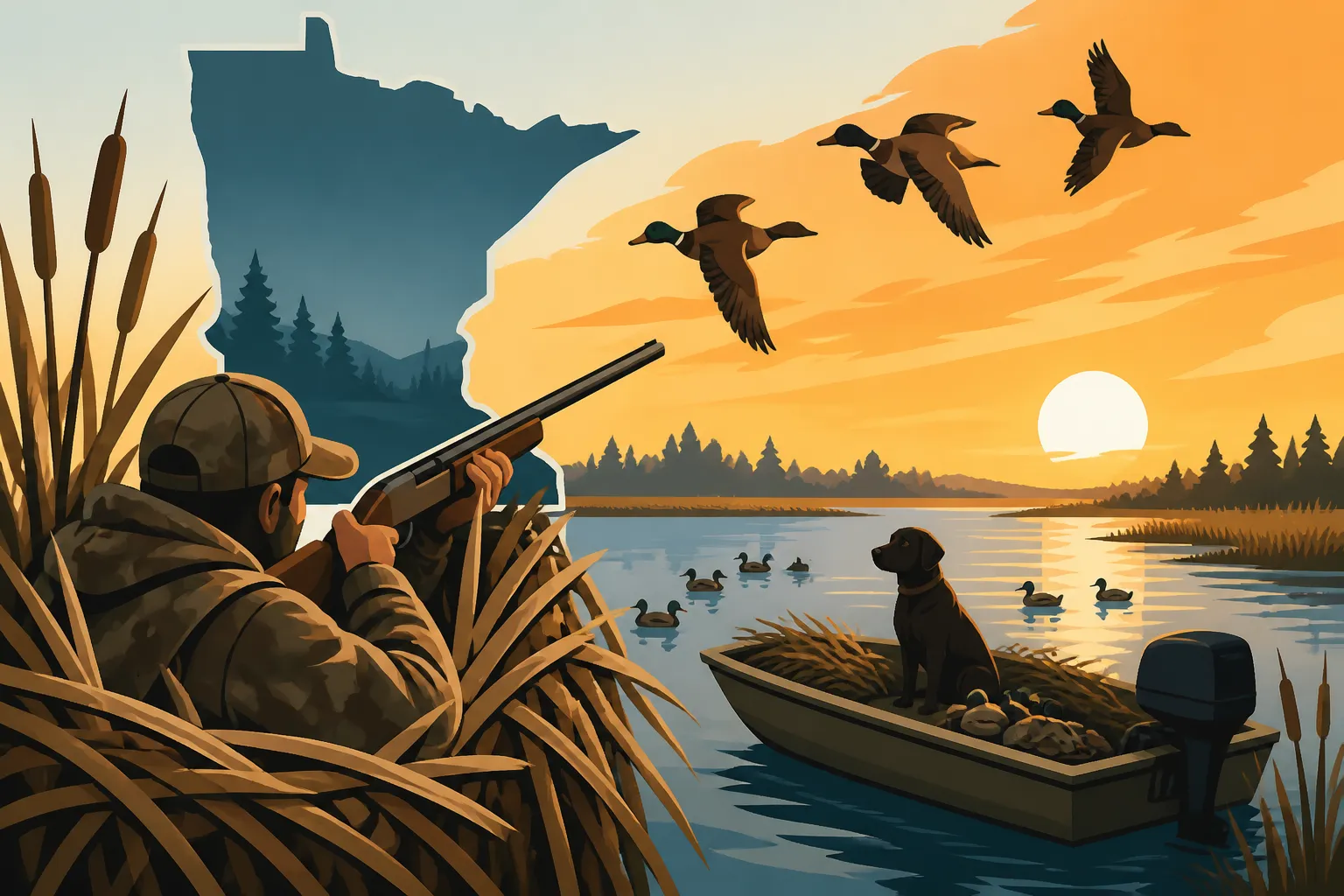
Retrieving downed birds is another area where the marsh boat proves invaluable, even if you’re hunting from a layout blind on the edge of a flooded field. Instead of trying to wade out through mud and water, you can quickly launch your boat (if it was hidden nearby) or paddle out from your blind, making for swift and safe retrieves. This reduces the chance of losing cripples and keeps you dry and warm, allowing you to focus on the next flock. Having a retriever dog is a fantastic asset in these situations, but a boat serves as excellent backup, especially for long retrieves.
Adapting to Different Minnesota Waterfowl Scenarios
Minnesota offers a diverse array of waterfowl hunting opportunities, and the combined use of layout blinds and marsh boats allows for incredible adaptability.
For instance, when hunting a large lake like Mille Lacs or one of the sprawling shallow lakes in western Minnesota for divers, a specialized layout boat might be deployed from a larger tender boat, allowing you to position yourself directly in a prime diver flight path over open water. This offers unparalleled concealment for those fast-flying birds.
Conversely, if you're targeting mallards and geese in a flooded agricultural field near Fergus Falls or across the Red River Valley Public Ground, a stable jon boat can transport you and your layout blinds to the perfect "X" in the middle of the standing or cut corn. You then utilize the layout blind on the elevated ground within the field, while the boat is used for deployment, retrieve, and potentially a mobile blind itself if the water is a bit deeper around the edges.
Even in the winding sloughs and backwaters of the Mississippi River, where Hunting the Mississippi River Backwaters is a popular pursuit, a smaller sneak boat or a camouflaged canoe can be used to silently approach a secluded pocket, then pull up onto a small rise or dry bank where a layout blind is quickly deployed. This versatility ensures you're never limited by the terrain and can always adapt your setup to the specific conditions and bird behavior of the day.
GoHunt and Other Tools for Waterfowl Success
Beyond the physical gear, modern technology and smart preparation play a huge role in successful waterfowl hunting. Understanding where to set up, what the terrain looks like, and how to stay safe are just as critical as your choice of blind or boat.
Planning Your Hunt with Mapping Tools
The old days of just driving around looking for birds are mostly behind us. Today, detailed mapping tools have revolutionized how we scout and plan our hunts. Before you even leave the house, you can use these apps to meticulously scout potential spots. You can analyze aerial imagery to identify water depths, the density of cattail cover, the location of subtle humps in a field, and most importantly, access points. This digital reconnaissance saves countless hours and miles, allowing you to narrow down your options to the most promising locations.
For example, platforms like GoHunt offer incredibly detailed satellite views and topographic maps. You can use their layers to differentiate between public and private land, identify shallow flats, deep channels, and even pinpoint areas of thick vegetation that could provide natural cover for your boat or blind. Knowing land ownership is crucial in Minnesota, ensuring you're not trespassing and that you have legal access to your chosen hunting ground. Many hunters also use these tools to mark potential retrieve routes or escape paths in case conditions change. GoHunt is an invaluable resource for navigating complex land ownership and terrain features, giving you a distinct advantage in your planning.
Essential Accessories for Layout Blinds and Marsh Boats
Having the right accessories can make or break a waterfowl hunt, enhancing comfort, safety, and efficiency.
For layout blinds, specialized decoy bags that accommodate larger goose or duck decoys are a must. Mud anchors can be invaluable for securing your boat or even your layout blind in soft, mucky bottoms, preventing it from drifting or shifting in strong winds. A good quality push pole is essential for navigating shallow, vegetated waters where an outboard would be impractical or too noisy. And for any boat, particularly those that might encounter rough water or leaks, a reliable bilge pump (manual or electric) is a crucial safety item.
Safety gear should always be at the top of your list. Personal Flotation Devices (PFDs) are legally required on boats and are simply smart to wear. Dry bags are excellent for protecting electronics, extra clothing, and your lunch from water damage. Having a first-aid kit, a headlamp, and a reliable form of communication (fully charged phone, satellite messenger) are non-negotiable, especially when you're hunting in remote Minnesota marshes or on large bodies of water. Even a simple thermal blanket can be a lifesaver if you unexpectedly get wet in cold weather. Many avid hunters use apps like GoHunt for their mapping capabilities, but the company also sometimes offers helpful accessories or suggests essential gear that pairs well with their hunting philosophy, focusing on practicality and reliability in the field.
Maintenance and Storage for Longevity
Your layout blinds and marsh boats represent a significant investment, and proper care will ensure they last for many seasons. After every hunt, especially if your gear has been exposed to mud, duck guts, or saltwater (less common in Minnesota, but good practice), take the time to clean everything thoroughly. Hose down your layout blind, scrubbing off any mud or debris, and let it air dry completely before folding it for storage. This prevents mildew and extends the life of the fabric.
For your marsh boat, rinse it out, paying attention to any mud in the bilge or under floorboards. Inspect the hull for any dings, scratches, or potential leaks. Small tears in a layout blind can often be patched with a repair kit, and minor scuffs on a boat can be touched up. Address these issues promptly before they become larger problems.
Proper off-season storage is crucial. Store layout blinds in a dry, rodent-free area, ideally in a bag that protects them from dust and UV light. If possible, hang them or store them flat to prevent permanent creases in the fabric. Boats should be stored covered, either indoors or with a good quality tarp, to protect them from the elements. Ensure any engines or batteries are properly winterized if you're storing them in freezing temperatures. Taking these simple steps will ensure your gear is ready to go when Minnesota waterfowl season opens again next year.
Disclaimer
This article is for general informational purposes only and does not constitute professional advice. Laws, prices and regulations vary by location and change over time. Consult a qualified professional for guidance on your specific situation.