Best Minnesota Ground for Public Land Bears
Finding good bear hunting ground on public land in Minnesota can feel like searching for a needle in a vast, wild haystack. Many hunters dream of the challenge and reward of pursuing one of the Northwoods' most formidable creatures, but the sheer expanse of public forests can be overwhelming. This guide will walk you through identifying the best public land opportunities for bear hunting across Minnesota, focusing on where bears thrive and how to pinpoint those prime locations.
Understanding Minnesota's Bear Country
Minnesota boasts a robust black bear population, and thankfully, a significant portion of their range overlaps with abundant public hunting land. It's not like deer hunting where every woodlot has potential; bears have specific habitat needs that concentrate them in certain areas. Understanding these general regions is your first step to narrowing down the "best ground."
The Core Bear Range and Permit Areas
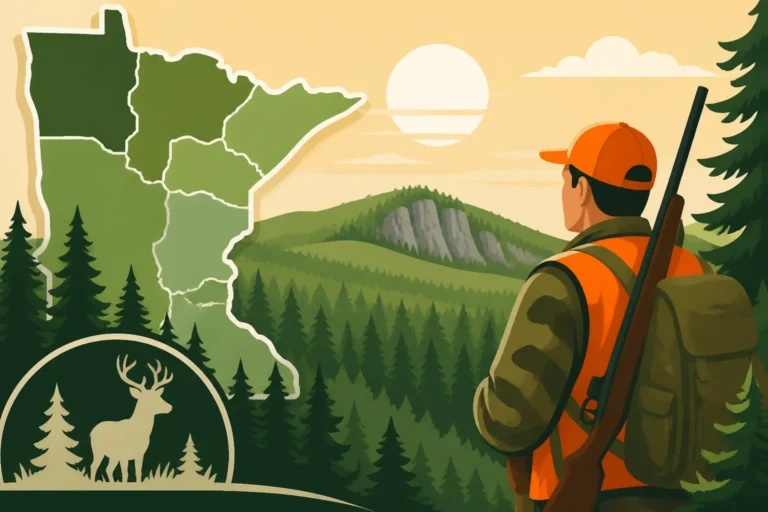
When we talk about Minnesota bear country, we're primarily looking at the northern two-thirds of the state. This expansive region, often called the "Forest Zone," is where you'll find the densest bear populations. Think of the large, contiguous blocks of forest land – that's prime bear habitat. The Department of Natural Resources (DNR) manages bear hunting through a lottery system within specific bear permit areas (BPAs). These BPAs are essentially zones that help distribute hunting pressure and manage the bear population effectively. Areas like those in the Superior National Forest or the vast tracts surrounding places like Grand Rapids, Remer, or Park Rapids, often fall into these high-potential BPAs.
Within these BPAs, you're looking for counties with extensive public ownership, such as St. Louis, Itasca, Cass, Beltrami, Koochiching, Lake, and Cook counties. These areas are characterized by vast mixed hardwood and conifer forests, numerous lakes, swamps, and remote access points. The DNR's Minnesota Bear Lottery and Permit Areas system is crucial to understand, as applying for the right permit area is key. You'll want to study the success rates and application numbers for these specific areas to gauge your odds and potential for finding bears. For a deeper dive into these regions, you can look into Minnesota's Fifteen Bear Permit Areas to understand the nuances of each zone.
Where Bears Are Expanding
While the core range remains the primary focus, it's worth noting that Minnesota's bear population has shown a remarkable ability to expand its range. In recent decades, bears have been reported and occasionally harvested further south than their traditional strongholds. This expansion often follows corridors of undeveloped land, river bottoms, and larger private woodlands that connect to the main forest zone. However, for consistent public land bear hunting, your best bet will still be within the established permit areas of the northern and central parts of the state.
These fringe areas might offer an exciting opportunity for a lucky hunter, but they come with less predictability and often smaller pockets of public land. If you're specifically targeting public ground, sticking to the heart of bear country will yield more consistent results. Keep in mind, however, that even in these expanding areas, the principles of finding good cover and food remain the same. Understanding Bears Moving Into Southern Minnesota might give you an edge if you're exploring unique, less pressured opportunities, but for a dedicated public land bear hunt, the northern forests are your best bet.
Characteristics of Prime Public Bear Habitat
Simply knowing which part of the state has bears isn't enough. You need to understand what kind of public land makes for truly productive bear hunting. Bears are creatures of opportunity, driven by food, cover, and a desire to avoid human interaction.
Food Sources and Seasonal Movements
Bears are omnivores, and their diet changes throughout the season, directly influencing where you'll find them. Early season bears (August/September) are often focused on lush vegetation, berries, and early mast crops. As fall progresses, they shift to heavier mast crops like acorns, hazel nuts, and beechnuts, if available. Swamps and low-lying areas with abundant blueberries, raspberries, or wild sarsaparilla can be hotspots. Later in the season, if the mast crop is poor, bears will key in on agricultural fields like oats or corn, though this is more common on private land.
When scouting public land, look for diverse forest types. Areas with aspen stands (which often have berries and young browse), oak ridges (for acorns), and lowland spruce/fir bogs (for security and certain berry types) are all excellent indicators. Water sources are also critical, especially during dry spells. Creeks, small beaver ponds, and stagnant pools within dense cover can be travel corridors and feeding spots. A good starting point would be to research Where Minnesota Bears Live to understand these habitat preferences in more detail for different regions.
Cover, Water, and Remote Sanctuaries
Bears need thick cover for security, bedding, and raising cubs. This means seeking out dense stands of conifers, thick alder swamps, or large areas of blowdowns and tangled undergrowth. They are not typically found in wide-open, park-like forests. The thicker, nastier, and harder-to-access the area, the more likely a bear is to call it home. These remote sanctuaries are where older, larger bears often live.
Public land that offers vast, unbroken blocks of this kind of cover, especially far from roads and human activity, is gold. Look for sections of national forests like the Superior or Chippewa, large state forests, or specific Minnesota Wildlife Management Areas (WMAs) known for their remoteness and habitat diversity. These remote areas also offer quietude, a critical factor for bears.
Consider areas that are difficult for most hunters to access. This might mean long walks, canoe access, or navigating through dense swamps. Bears, like big deer, often gravitate to these pressure-free zones.
Access and Pressure Considerations
Public land that has limited access often means less hunting pressure, which translates to a higher likelihood of encountering mature bears. While forest roads are great for initial access, don't be afraid to leave them far behind. Many public lands, especially in the national forests, have minimal maintained trails. This means you'll be bushwhacking, which is exactly what a bear hunter often needs to do.
Think about areas that require substantial effort to reach. Perhaps it's a piece of state forest that's a two-mile hike from the nearest parking spot, or a section of WMA that's surrounded by a marsh and only accessible from one narrow finger of high ground. These are the places where bears feel safe. Over time, hunting pressure on easily accessible public lands tends to push bears deeper into these remote havens. Areas with a history of Bear Encounters Around Minnesota Cabins can also indicate consistent bear presence, though hunting near residential areas on public land requires extra caution.
E-Scouting and On-the-Ground Reconnaissance
Modern tools have revolutionized how we scout public land, but nothing beats putting boots on the ground. Combining these two approaches is the most effective way to find public land bears.
Leveraging Mapping Tools
E-scouting is your secret weapon for public land bear hunting. Platforms like onX Hunt and GoHunt provide invaluable layers of information that can save you countless hours of unproductive walking. You can quickly identify public land boundaries, forest types, topography, water sources, and even historical satellite imagery that shows past logging cuts or clearings.
- onX Hunt: This app is fantastic for its detailed land ownership maps. You can clearly see state forests, national forests, and WMAs. Look for areas with vast, unbroken blocks of public land. Utilize the timber layers to identify dense conifer stands for bedding, and elevation changes to spot potential travel corridors or ridges with mast crops. The hybrid satellite view is excellent for picking out remote clearings or areas with diverse tree cover that might hold berries. You can drop pins for potential bait sites (if baiting is your method and legal in the area), bedding areas, or travel routes. onX Layers for Minnesota Land Status can help you understand how to best use this tool.
- GoHunt: While often geared towards Western big game, GoHunt's mapping features can still be useful. Its terrain analysis tools might highlight subtle elevation changes or water features that bears use. Both platforms allow you to mark waypoints, track your routes, and measure distances, which is crucial for planning your approach to remote bear country.
When e-scouting, prioritize areas far from roads, with thick cover, and near identified food sources. Look for areas where several habitat types converge – a marsh bordering an aspen stand next to an oak ridge, for example. These transition zones are often high-activity areas for bears. Make sure you understand Finding Minnesota Property Lines to avoid accidental trespassing when scouting or hunting.
Finding Remote Access Points and Natural Funnels
After identifying promising areas on your maps, the next step is to figure out how to access them. Sometimes, an old logging road that isn't on current maps or a faint ATV trail (check ATV Rules on Minnesota Forest Roads before using one) might lead into a prime area. Other times, it means planning a long hike through thick cover.
Look for natural funnels on the landscape that concentrate bear movement. These could be narrow strips of high ground between two swamps, a ridge line that bears follow, or a dense timber edge alongside a more open area. Bears, like deer, prefer to travel using the path of least resistance while remaining in cover.
On-the-ground scouting, even just walking the perimeter of a promising area before the season, can reveal fresh sign like scat, tracks, rubbed trees, or claw marks on berry bushes. This confirms your e-scouting suspicions and gives you confidence in your chosen spot. Remember, cellular service can be spotty in remote parts of Minnesota, so downloading offline maps on your mapping app is essential. You might also find it useful to learn about Using Recreation Compass Without Cell Service for an alternative navigation tool.
Tactics for Hunting Public Land Bears
Once you've identified your ideal public land bear ground, it's time to think about the actual hunt. Minnesota allows both baiting and still-hunting (spot-and-stalk or stand hunting over natural food sources) for bears.
Spot-and-Stalk vs. Baiting on Public Ground
Many public land bear hunters choose to bait. If you decide to go this route, you'll need to research the specific regulations for Building and Freshening a Minnesota Bear Bait in your chosen permit area. Baiting is a labor-intensive but often effective method, drawing bears to a specific location. Public land bait sites require careful selection to ensure you're in an area with good bear activity, sufficient cover, and minimal human disturbance. You'll need to register your bait site, and it must be set up a certain distance from roads, trails, and dwellings. Strategic use of Trail Cameras on a Minnesota Bait Site can help you monitor activity without constant in-person visits.
However, hunting bears without bait, often called still-hunting or spot-and-stalk, is a true wilderness experience and can be incredibly rewarding. This involves moving slowly and quietly through likely bear habitat, often in areas with abundant natural food sources like oak ridges, berry patches, or near dense bedding areas. This method demands keen observation skills and an understanding of bear behavior. If you prefer this approach, learning more about Hunting Bear Without Bait or Dogs can provide excellent strategies.
For stand hunting over natural food sources, choose locations that offer good visibility into a feeding area while still providing a clear shot opportunity. This might be a treestand overlooking an oak flat or a ground blind tucked into the edge of a berry patch. Positioning is crucial for success, ensuring you have a clear shooting lane and a favorable wind direction.
Safety and Logistics in Bear Country
Hunting in bear country, especially on remote public land, requires a focus on safety and solid logistics. Always let someone know exactly where you are going and when you expect to return. Carry a reliable compass and a GPS device (or your phone with downloaded offline maps) as it's easy to get disoriented in dense forests. A First Aid Kits for Remote Northwoods Ground is essential.
Bear hunting often takes place in warm weather, particularly during the early season. Proper meat care is paramount to prevent spoilage. Have a plan for how you will field dress and extract your bear, especially if you are hunting in a remote area. A good field dressing knife, game bags, and perhaps a small tarp or drag can be invaluable. Consider if you'll be gutting the bear in place or using the gutless method to lighten the load for packing out. Knowing how to efficiently Handling Bear Meat Safely immediately after the harvest is critical.
Finally, always be bear aware. While black bears are generally shy, a wounded bear or a sow with cubs can be dangerous. Carry bear spray and know how to use it. Be mindful of your surroundings, listen for sounds of breaking brush, and scan your environment constantly. The thrill of hunting a public land bear in Minnesota's vast forests is an unforgettable adventure, but it requires respect for the animal and the wild places it calls home.
Public Land Bear Hunting Comparisons
To help you visualize the different types of public land you might encounter and their suitability for bear hunting, here's a brief comparison:
| Public Land Type | Key Characteristics | Bear Potential | Pros | Cons |
|---|---|---|---|---|
| National Forests | Vast, contiguous blocks of mixed forest, remote areas. | High | Huge areas, often remote, diverse habitat, good for both baiting/still. | Very remote, difficult access, limited cell service. |
| State Forests | Large forest tracts, often with more roads than NF. | High | Good size, slightly better access than NF, diverse habitat. | Can be higher pressure near roads, still requires deep penetration. |
| Wildlife Management Areas (WMAs) | Managed for wildlife, often diverse habitats (forest, swamp, field). | Moderate-High | Targeted habitat management, often good food sources. | Can be smaller, potentially higher pressure, specific regulations. |
| County Forests | Vary in size, managed locally, can be fragmented. | Moderate | Good local option, less known than state/national forests. | Can be smaller, fragmented, variable habitat quality. |
This table highlights that while all public lands can hold bears, the larger, more remote forest systems generally offer the best and most consistent opportunities.
Disclaimer
This article is for general informational purposes only and does not constitute professional advice. Laws, prices and regulations vary by location and change over time. Consult a qualified professional for guidance on your specific situation.