Legal Firearms for Minnesota Deer Hunting
For years, Minnesota deer hunters grappled with a confusing patchwork of firearm regulations, particularly the division between "shotgun zones" and rifle-allowed areas. This often meant owning multiple types of firearms or limiting hunting opportunities to specific regions. While recent legislative changes have significantly simplified these rules, understanding the specifics of what's legal and ethical for deer hunting in the North Star State is still crucial. This guide will walk you through the current legal firearms for Minnesota deer hunting, covering everything from the statewide rifle allowance to shotguns, muzzleloaders, handguns, and important ammunition considerations, ensuring you're well-informed and ready for the season.
The Evolution of Minnesota Deer Firearm Laws
The history of deer hunting in Minnesota, especially concerning firearms, has been a journey of adapting to changing landscapes, population densities, and safety considerations. For generations, hunters navigated a system that felt, at times, overly complicated, leading to a lot of head-scratching moments at deer camp.
Navigating the Old Shotgun Zones
Think back to the "good old days," or perhaps, the "confusing old days," depending on your perspective. Minnesota used to be carved into distinct deer hunting zones. A large portion of the state, primarily the more populated central and southern regions, was designated as "shotgun-only" zones for firearm deer hunting. The rationale was often rooted in public safety; with higher population densities, it was believed that shotgun slugs, with their typically shorter effective range compared to high-powered rifles, would pose less risk.
This meant that if you hunted in, say, the agricultural lands near Rochester, you were carrying a slug gun. But if your family cabin was up in the deep woods of the Iron Range, a rifle was perfectly acceptable. This created a logistical challenge for many hunters who might pursue deer in different parts of the state. They either had to own and maintain different firearms or restrict their hunting efforts to areas that suited their chosen weapon. It also led to a lot of frustration for hunters who felt limited by the range and ballistic capabilities of shotguns, especially when trying to reach deer across larger fields or open tracts.
The Landmark Shift to Statewide Rifle Legality
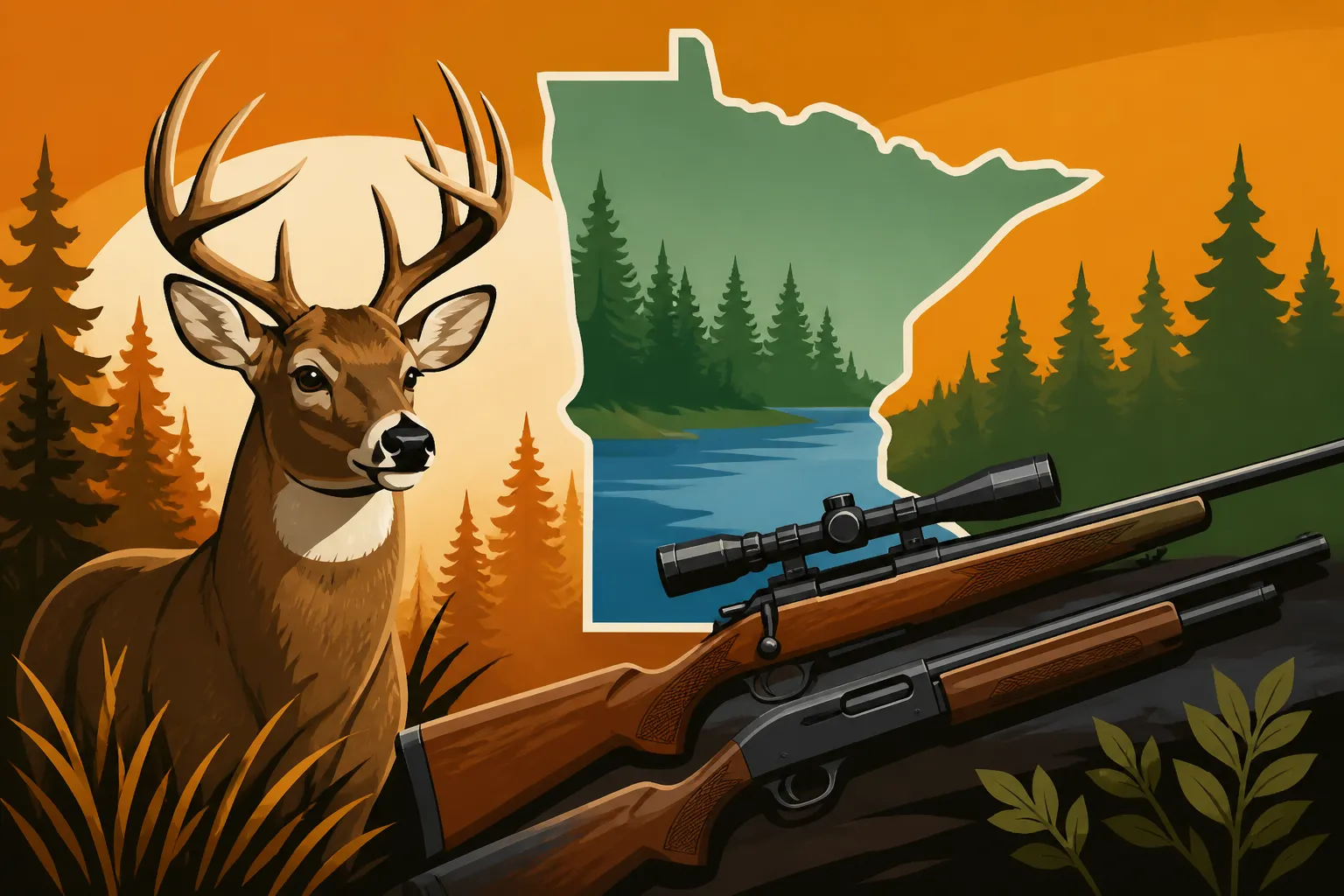
The hunting landscape in Minnesota underwent a monumental transformation with recent legislative changes. The big news? Rifles are now legal for deer hunting statewide. This was a significant win for many hunters who had long advocated for a more streamlined and less restrictive set of regulations. The era of the "shotgun zone" as a broad state designation officially came to an end.
This shift means that hunters, regardless of where they are in Minnesota, can choose to hunt deer with a rifle, provided they adhere to all other state and local regulations. The conversation around Why Straight-Wall Rifles Are Now Legal Statewide initially focused heavily on certain cartridge types, but the legislation ultimately expanded to include all legal rifle cartridges. This change brought Minnesota in line with many other deer hunting states and significantly simplified the equipment choices for deer hunters. It recognized advancements in bullet technology and a broader understanding of ethical shot placement, regardless of firearm type. However, it's still absolutely critical to remember that while the state law has changed, local units of government (counties, cities, townships) can still have their own ordinances regarding the discharge of firearms, including rifles. It's always your responsibility to check these local rules before heading afield. Many hunters rely on digital mapping tools like GoHunt to scout public lands and understand property boundaries, which can be invaluable when navigating state and local regulations.
Deciphering Legal Rifle Calibers and Cartridges
With rifles now broadly legal across Minnesota, understanding the nuances of acceptable calibers and cartridge types is essential. This is where the real choices open up for hunters, offering greater flexibility to match their firearm to the terrain and personal preference.
The Rise of Straight-Wall Cartridges
Initially, much of the discussion around expanding rifle legality centered on "straight-wall" cartridges. These cartridges, as the name suggests, have a case that is straight from the base to the mouth, without a bottleneck or "shoulder." They were favored in some states with traditional shotgun-only zones because their ballistics were often considered to be similar to shotgun slugs in terms of effective range, making them a perceived safer option in more populated areas.
For Minnesota hunters, the legalization of straight-wall cartridges was a game-changer. Popular examples include the .45-70 Government, a classic lever-action round known for its heavy punch; the .350 Legend, a newer cartridge specifically designed for these types of regulations, offering moderate recoil and good performance; and the .444 Marlin, another powerful option. Other options like the .44 Magnum, .357 Magnum, and .50 Action Express are also considered straight-wall. These cartridges offer excellent deer-stopping power at typical hunting ranges found in Minnesota's thick timber and even provide good reach across many farm fields. They are an excellent choice for those who want rifle performance without the longer-range capabilities often associated with necked-down cartridges. Before heading out, it’s always smart to double-check the latest DNR regulations, and platforms like GoHunt often compile or link to these crucial updates, helping you confirm if specific Straight-Wall Cartridges Legal in Minnesota have any unique stipulations.
Beyond Straight-Walls: Necked-Down Cartridges are Now Legal
Here’s the really crucial point that many hunters might still be a little hazy on: the statewide rifle legality now extends to all legal rifle cartridges, not just straight-walls. This means the classic, bottlenecked cartridges that have been the backbone of rifle hunting for over a century are now fair game across the entire state. This includes popular choices like the .30-06 Springfield, .308 Winchester, .270 Winchester, 6.5 Creedmoor, and many more.
The advantages of necked-down cartridges are significant, especially for hunters in areas with longer sightlines. They typically offer a flatter trajectory, higher velocities, and often greater effective range compared to straight-walls. For instance, someone hunting wide-open agricultural fields or clear-cuts might appreciate the extended reach and flatter shooting of a 6.5 Creedmoor. Conversely, in the dense cover of northern Minnesota, where shots are typically much closer, a .30-30 might be just as effective and easier to maneuver. The key is to match your cartridge to the hunting environment and your personal comfort level. For an even deeper dive into this, you might find the article Hunting Minnesota Now That Rifles Are Legal Statewide incredibly insightful.
Minimum Caliber and Bullet Performance
While the options are broad, there are still some basic legal requirements to consider. For big game in Minnesota, including deer, the minimum legal caliber for centerfire rifles and handguns is .22 caliber. This means common cartridges like .223 Remington or 5.56 NATO are technically legal, though many experienced hunters would argue that a larger caliber offers more ethical performance on deer, especially if shot placement isn't perfect.
When it comes to bullet choice, the law specifies that bullets must be designed for big game hunting, meaning expanding projectiles. Full metal jacket (FMJ) bullets are generally not allowed for hunting big game due to their inability to expand and create a sufficient wound channel for a quick, ethical kill. Bullet construction and weight are critical for proper energy transfer and penetration. A bullet that performs well at 100 yards might fragment too quickly at 20 yards or fail to expand at 300 yards. This is where personal research and practice come into play. Many ask, Is a .243 Enough for Minnesota Whitetails? The consensus is yes, a .243 is generally sufficient with proper bullet selection and shot placement, but heavier calibers offer more margin for error. Understanding bullet performance and practicing extensively with your chosen load is paramount for ethical hunting.
Other Legal Options: Shotguns, Muzzleloaders, and Handguns
Even with the widespread legality of rifles, a variety of other firearms remain legal and highly effective for deer hunting in Minnesota. Many hunters continue to prefer these traditional methods for their unique challenges, seasons, or simply out of long-standing personal preference.
Shotguns Still Stand Strong
Despite the major legislative change, shotguns remain a perfectly viable and often excellent choice for deer hunting across Minnesota. You might ask, Do You Still Need a Shotgun in Minnesota? The answer is no, not necessarily for statewide deer hunting, but they are still a fantastic option. Modern slug technology has dramatically improved the accuracy and effective range of shotguns. With rifled barrels and saboted slugs, many hunters can achieve respectable accuracy out to 150 yards or even beyond, rivaling the performance of some traditional rifles.
Many hunters, particularly those who grew up in the old "shotgun zones" or who prefer hunting in dense brush where shots are close and fast, still choose their trusty slug guns. They can be incredibly potent in thick woods or heavy cover. While the state-mandated "shotgun-only" zones are gone, hunters should still be vigilant. Some Which Thirteen Counties Kept Shotgun-Only Rules is a bit of a misnomer now; instead, it’s vital to check with individual counties or cities for any local ordinances that might restrict firearm discharge, which could effectively make an area "shotgun-only" due to safety rules, even if state law permits a rifle. For detailed advice on selecting the right ammunition, take a look at Shotgun Slugs for Minnesota Deer.
Muzzleloaders: Embracing a Traditional Challenge
The muzzleloader season in Minnesota is a cherished tradition for many, offering a unique opportunity to extend the deer hunting season into the colder, often snowy, weeks of December. This is a time when the woods are quieter, and the challenge of a single-shot, front-loading firearm adds a distinct layer of satisfaction.
To hunt deer with a muzzleloader in Minnesota, the firearm must be .40 caliber or larger for deer, and it must be loaded from the muzzle. Only single-barrel firearms are permitted. While traditionalists often opt for black powder and patched round balls, modern inline muzzleloaders using propellants like Hodgdon Triple Seven or Blackhorn 209, combined with saboted projectiles, offer enhanced accuracy and performance. The article Minnesota Muzzleloader Season Dates provides crucial details on when you can pursue deer with this traditional method. Hunting in the late season with a muzzleloader requires specific tactics; learn more about them in Muzzleloader Tactics in December Cold. Keeping your powder dry and your equipment functioning in freezing temperatures is part of the unique skill set required for muzzleloader hunting.
Handgun Hunting for Deer
For those seeking an additional challenge, handguns are also a legal option for deer hunting in Minnesota, provided they meet certain criteria. Similar to rifles, centerfire handguns must be .22 caliber or larger and use expanding bullets designed for big game. Barrel length restrictions are generally not an issue for typical hunting handguns, but it's important to choose a powerful enough cartridge for an ethical kill.
Common calibers for handgun deer hunting include .357 Magnum, .41 Magnum, .44 Magnum, .45 Colt, and .454 Casull. These offer sufficient power at short to moderate ranges. Handgun hunting demands a high level of proficiency and discipline, as effective range is significantly reduced compared to rifles or even modern slug guns. Shot placement becomes even more critical, and hunters must be acutely aware of their limitations. It's often a method chosen by experienced hunters looking for a greater challenge or unique hunting experience.
Essential Considerations for Your Minnesota Deer Firearm
Choosing the right legal firearm for deer hunting in Minnesota is just the first step. To ensure a safe, ethical, and successful hunt, several other crucial factors must be meticulously addressed. This is where preparation meets opportunity.
Sighting In and Practice: The Absolute Non-Negotiables
You can have the most expensive, top-of-the-line rifle, shotgun, or muzzleloader, but it's utterly useless if you don't know where it shoots. Sighting in your firearm is not just a suggestion; it's a moral imperative. Every season, before you even step foot in the woods, you need to spend time at the range. Firearm components can shift, optics can get bumped, and even ammunition from different lots can have subtle variations.
For most Minnesota deer hunting, especially in the denser woods or mixed cover, a 100-yard zero is a solid starting point. This provides a good balance, allowing for effective shots at closer distances without significant holdover, and still gives you a point of reference for longer shots if they present themselves. For detailed guidance, check out Sighting In a Rifle for Minnesota Woods Ranges. Don't just shoot once and call it good; shoot enough to confirm your zero and understand your firearm's capabilities and limitations. Practice shooting from various positions – offhand, kneeling, using shooting sticks – mimicking real-world hunting scenarios. When considering where to apply for antlerless tags, GoHunt's mapping features can help visualize deer densities and public land access, informing your decision.
Ammunition Selection and Ethical Hunting
The type of ammunition you choose is just as important as the firearm itself. As mentioned, Minnesota law requires expanding bullets for big game. However, within that parameter, there's a wide world of options, each with different performance characteristics. Some bullets are designed for rapid expansion at high velocities, while others are built for deep penetration through bone and muscle.
Consider the typical ranges you'll be shooting and the size of the game. For instance, a bullet designed for elk might over-penetrate a small Minnesota whitetail without expending enough energy, while a bullet designed for varmints would likely fail to penetrate deep enough on a deer. Brands like Federal Premium, Hornady, and Winchester offer excellent hunting ammunition tailored for deer. The goal is to select a bullet that will reliably expand and penetrate to the vitals, ensuring a quick, humane kill. Always carry enough ammunition for hunting and practice, and make sure it's the same load you sighted in with. Ethical hunting means taking responsible shots within your effective range and committing to thorough tracking, as discussed in resources like Tracking a Deer in Fresh Minnesota Snow.
Staying Current: Checking Local Ordinances and DNR Regulations
While Minnesota state law now permits rifles statewide for deer hunting, the story doesn't end there. Local units of government – counties, townships, and cities – retain the authority to enact their own ordinances restricting the discharge of firearms. These local rules can sometimes create pockets where rifles (or even all firearms) are effectively prohibited, even if state law allows them. For example, a suburban township might have an ordinance that prohibits discharging a rifle within a certain distance of a dwelling, effectively making parts of it "archery-only" for practical purposes.
It is your responsibility as a hunter to be aware of and comply with all state and local laws. Before hunting any new area, or even a familiar one if there have been recent changes, always check with the local sheriff's department or municipal office for specific firearm discharge ordinances. The Minnesota Department of Natural Resources (DNR) also publishes a comprehensive hunting regulations handbook annually. Always consult the most current version. Understanding the terrain where you hunt is key to choosing the right firearm. Tools like GoHunt can show you elevation changes and cover types that influence shot distances, further helping you determine appropriate firearm choices. For general season information, don't forget to review Minnesota Deer Seasons and Permit Areas. Furthermore, a solid understanding of Minnesota Hunter Safety Requirements ensures you're not just legal, but also safe and responsible in the field.
Legal Firearms for Minnesota Deer Hunting: At a Glance
Here’s a quick summary of the generally legal firearm types for Minnesota deer hunting, along with key considerations:
| Firearm Type | Key Legal Requirements | Typical Calibers/Gauges | Pros | Cons |
|---|---|---|---|---|
| Rifles | Centerfire, .22 caliber or larger, expanding bullets | .30-06, .308, 6.5 CM, .350 Legend | Versatile, flat trajectory, wide range of calibers | Can be overkill in dense brush, noise concerns in populated areas |
| Shotguns | Shotgun slugs only, expanding bullets | 12-gauge, 20-gauge | Effective at moderate ranges, good in heavy cover | Limited range compared to rifles, higher recoil with slugs |
| Muzzleloaders | .40 caliber or larger, loaded from muzzle | .50, .54 | Traditional challenge, extended season, powerful | Single shot, slow reloading, weather sensitive, limited range |
| Handguns | Centerfire, .22 caliber or larger, expanding bullets | .357 Mag, .44 Mag, .45 Colt | Ultimate challenge, compact, personal preference | Very limited range, demands high proficiency, less forgiving |
This table provides a general overview, but always refer to the most current Minnesota DNR regulations for the precise details.
Disclaimer
The information provided in this guide is for general informational purposes only and does not constitute legal advice. Hunting regulations can change, and local ordinances vary. It is the responsibility of every hunter to consult the most current Minnesota Department of Natural Resources regulations and any applicable local laws before hunting. Always prioritize safety, ethical hunting practices, and compliance with all regulations.