Straight-Wall Cartridges Worth Considering
The world of Minnesota deer hunting has seen some significant shifts, and one of the biggest changes in recent years has been the expansion of legal firearm options. For years, many hunters in certain zones felt limited to shotguns, and the introduction of straight-wall rifle cartridges across the state opened up a whole new world of choices, but it also brought a lot of questions. This guide is here to demystify straight-wall cartridges, explore the popular options, and help you understand if one might be the perfect fit for your next hunt in the Land of 10,000 Lakes.
Understanding Minnesota's Straight-Wall Cartridge Rules
For a long time, if you hunted deer in Minnesota's traditional "shotgun-only" zones – generally the agricultural areas with higher populations and flatter terrain – your firearm options were pretty narrow. You were either reaching for a shotgun with slugs, or perhaps a muzzleloader. This wasn't always ideal for accuracy or personal preference, and many hunters felt frustrated by the limitations. The shift to allow straight-wall cartridges statewide was a game-changer, but it came with specific definitions that are crucial to understand.
The Historical Context of Straight-Wall Cartridges
Historically, the rationale behind limiting firearms in certain parts of Minnesota (and other states) was often about public safety in more densely populated areas. The idea was that shotgun slugs and muzzleloaders, generally perceived to have shorter effective ranges than bottlenecked rifle cartridges, would reduce the risk of stray bullets traveling long distances. While the science behind "how far a bullet travels" is complex and often misunderstood, the regulations were in place. When the DNR and legislature decided to expand options, they looked for cartridges that offered rifle-like performance but still fit a perceived safety profile. Straight-wall cartridges, with their generally lower velocities and faster energy dissipation, fit that bill. It was a move to give hunters more versatility without completely abandoning the perceived safety concerns that led to the original zone restrictions. Why Straight-Wall Rifles Are Now Legal Statewide goes into more detail about this regulatory journey.
What Defines a Straight-Wall Cartridge
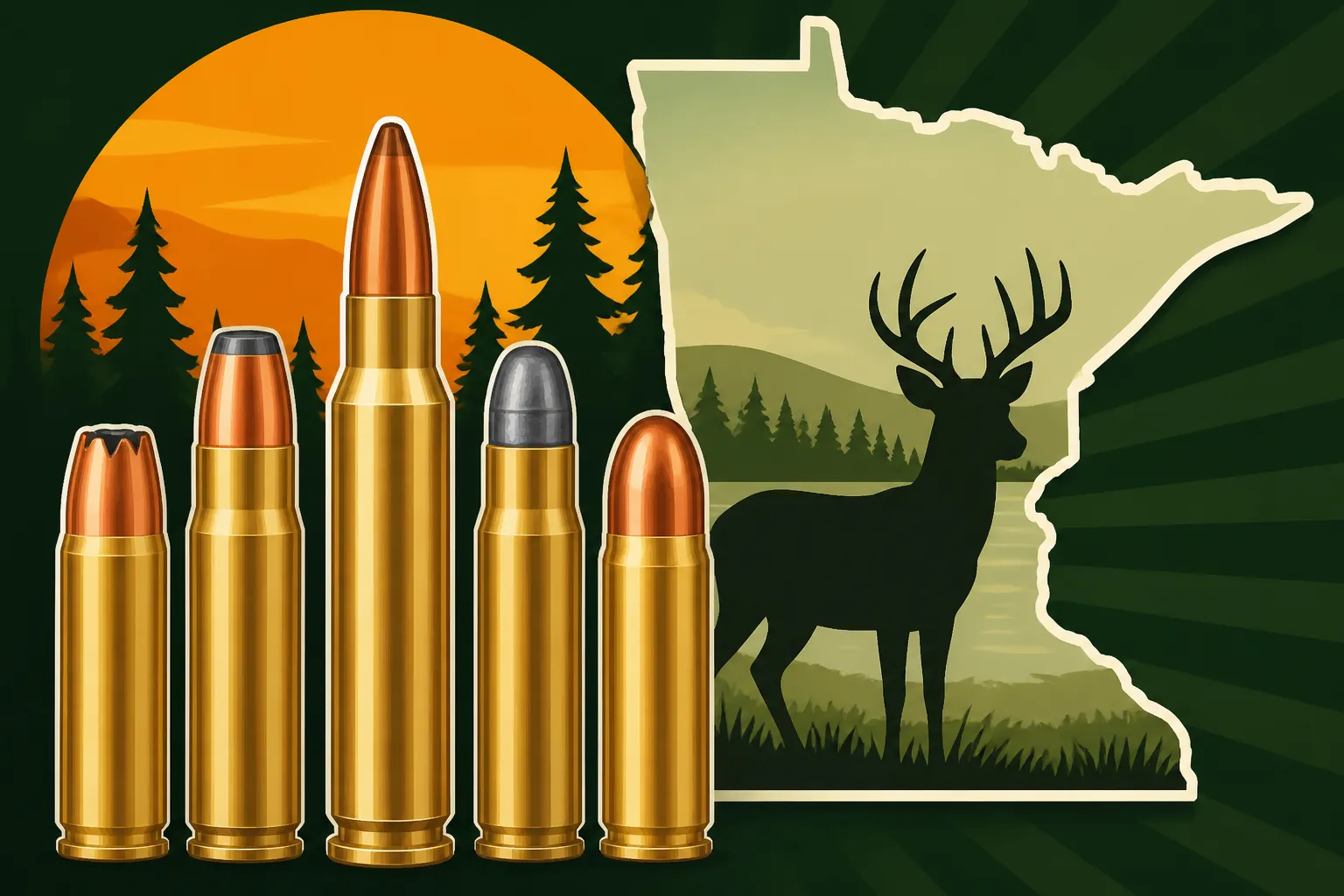
So, what exactly is a straight-wall cartridge? Simply put, it's a cartridge case where the diameter of the case body is essentially uniform from the rim to the mouth, or only tapers very slightly. Unlike a traditional "bottlenecked" rifle cartridge (like a .30-06 or a .270), which has a distinct shoulder where the case narrows down to hold a smaller-diameter bullet, a straight-wall case does not. This design typically limits the amount of powder a case can hold, which in turn limits the velocity and, often, the effective range of the bullet compared to its bottlenecked counterparts.
In Minnesota, for deer hunting, the law specifies a few key criteria for legal straight-wall cartridges: they must have a minimum bullet diameter of .30 caliber and a maximum case length of 1.80 inches. These specific measurements are critical. Cartridges like the popular .45-70 Government, for example, meet the straight-wall and diameter requirements, but its case length often exceeds 1.80 inches, making some loads specifically designed for it fall outside the legal parameters in Minnesota. Always double-check the exact specifications of the ammunition you intend to use against the current state regulations to ensure compliance. You certainly don't want any surprises when you're out in the field.
Popular Straight-Wall Cartridges and Their Performance
With the statewide legalization of straight-wall cartridges, a few options have really risen to prominence among Minnesota deer hunters. Each has its own characteristics, and understanding these can help you decide which one might be best suited for your personal hunting style and the specific terrain you'll be navigating.
The .450 Bushmaster
Ah, the .450 Bushmaster. This round immediately became a favorite for many, particularly those transitioning from slug guns. It packs a serious punch, firing a large, heavy bullet (often in the 250-grain range) at respectable velocities. Its energy transfer upon impact is substantial, making it highly effective on deer. Many hunters report excellent knockdown power, which is always a confidence booster, especially when tracking can be tough in thick Minnesota cover.
However, with that power comes a noticeable recoil. It's not unmanageable, especially in a rifle designed to soak up some of that energy, but it's something to consider for smaller-framed shooters or those who are recoil-sensitive. On the range, you'll feel it, and it might affect your ability to get off quick follow-up shots if needed. The effective range for ethical deer hunting with the .450 Bushmaster is generally considered to be around 200-250 yards, though with practice and proper bullet selection, some skilled shooters may stretch that a bit further. For the dense woods of northern Minnesota or the agricultural fields where shots are often 100-150 yards, it's more than sufficient.
The .350 Legend
The .350 Legend emerged as a strong contender, often marketed as a lower-recoil, high-performance straight-wall option. And it delivers on that promise. Firing a lighter, faster bullet (typically 150-180 grains), it offers flatter trajectories and reduced recoil compared to the .450 Bushmaster. This makes it a very appealing choice for new hunters, youth hunters, or anyone looking for a more comfortable shooting experience without sacrificing effectiveness.
Don't let the lighter recoil fool you; the .350 Legend is still deadly on deer. Its flatter trajectory can be a real advantage in more open terrain, like the edge of a cornfield or a sprawling pasture, where knowing your holdover at various distances is crucial. Many hunters find its effective range to be similar to the .450 Bushmaster, around 200-250 yards, with some pushing it to 300 under ideal conditions. Ammunition for the .350 Legend has become widely available, and its popularity continues to grow, making it an accessible and practical choice for many Minnesotans.
The .44 Magnum and .45 Colt (Revolver/Lever Action)
Before the .450 Bushmaster and .350 Legend entered the scene, many hunters in restricted zones found their rifle-like solution in lever-action rifles chambered in traditional handgun calibers like .44 Magnum or .45 Colt. These cartridges have long been popular for their versatility, being used in both revolvers and classic lever-action carbines. While they generally offer less raw power and a more pronounced rainbow-like trajectory than the newer straight-walls, they are incredibly effective at closer ranges.
A lever-action .44 Magnum, for instance, shooting a 240-grain bullet, is a superb choice for thick timber or brushy creek bottoms where shots are typically under 100 yards. Recoil is usually quite manageable in a rifle, and the quick-handling nature of a lever gun is a joy in tight quarters. The .45 Colt, while often considered a bit lighter in performance, still gets the job done at similar close ranges. These calibers also have the benefit of being legal for handgun hunting in Minnesota, offering additional flexibility for some hunters. If you're hunting classic northern Minnesota woods or small plots of private land where distances are short, these old-school calibers are definitely worth considering, especially if you already own one.
Comparing Straight-Wall Options
To give you a clearer picture, here's a quick comparison of some popular straight-wall options for deer hunting in Minnesota. Remember, performance can vary based on bullet type, barrel length, and individual rifle setup, but this table provides a general overview.
| Cartridge | Typical Bullet Weight (gr) | Muzzle Velocity (fps) | Effective Deer Range (yards) | Recoil Perception | Common Platform |
|---|---|---|---|---|---|
| .450 Bushmaster | 250 – 300 | 2100 – 2200 | 200 – 250 | Moderate to Heavy | AR-style, Bolt Action |
| .350 Legend | 150 – 180 | 2300 – 2400 | 200 – 300 | Light to Moderate | AR-style, Bolt Action |
| .44 Magnum | 240 – 300 | 1700 – 1850 | 100 – 150 | Light to Moderate | Lever Action, Revolver |
| .45 Colt | 200 – 255 | 1300 – 1500 | 75 – 125 | Light | Lever Action, Revolver |
| 12 Gauge Slug | 385 – 500 | 1500 – 1900 | 100 – 150 | Heavy | Shotgun |
This table helps illustrate the trade-offs in power, range, and recoil. While 12 gauge slugs are included for comparison, remember that traditional shotguns might still be the best choice in Hunting the Thirteen Remaining Shotgun-Only Counties.
Advantages of Hunting with Straight-Wall Cartridges
The introduction and widespread acceptance of straight-wall cartridges have brought several distinct advantages to Minnesota deer hunters. For many, it's about finding a balance between performance, comfort, and compliance with regulations.
Recoil Management
One of the biggest selling points for straight-wall cartridges, particularly the .350 Legend, is reduced recoil compared to traditional shotgun slugs. If you've spent any time at the range patterning a slug gun, you know that 12-gauge slugs can be downright punishing. That heavy thump can lead to flinching, poor shooting habits, and a general reluctance to practice as much as you should.
Straight-wall rifle cartridges, even the mighty .450 Bushmaster, generally offer a more manageable recoil impulse. This isn't just about comfort; it translates directly to better accuracy. When you're not anticipating a painful kick, you're more likely to maintain proper form, execute a clean trigger break, and stay on target. This improved confidence and willingness to practice can make a significant difference in the field, helping you make that crucial, ethical shot when it counts. For new hunters or those who've struggled with heavier recoil, this can be a real game-changer, making the hunting experience more enjoyable and successful.
Improved Accuracy and Effective Range
Compared to most shotgun slug setups, straight-wall rifles typically offer significantly better accuracy and a longer effective range. While modern rifled slug barrels and specialized ammunition have certainly improved slug performance, a dedicated straight-wall rifle, especially a bolt-action, is generally designed from the ground up for precision. This means tighter groups on the target range and greater confidence in shot placement out to 200-250 yards, sometimes even further depending on the cartridge and shooter.
For hunters who frequently find themselves in situations with shots extending beyond 75-100 yards, such as across wider clearings, field edges, or longer lanes in more open timber, this extended effective range is a huge advantage. It minimizes the guesswork of bullet drop and wind drift that can be more pronounced with slugs. This increased capability means you might be able to take shots that you would have previously passed on with a shotgun, opening up more opportunities during the season. It’s also important to properly sight in your rifle, especially when moving between different terrains; check out Sighting In a Rifle for Minnesota Woods Ranges for some valuable tips.
Expanded Hunting Opportunities
The most obvious advantage of straight-wall cartridges is the expansion of hunting opportunities they provide. For hunters in areas that were previously shotgun-only, you now have a rifle option that offers better ballistics and handling. This has made hunting more accessible and enjoyable for many who felt underserved by previous regulations.
This doesn't mean you have to abandon your trusty shotgun if you still love it, but it gives you a choice. Whether you're hunting the open farm country of southern Minnesota or the more mixed cover further north, a straight-wall rifle provides a versatile tool. It bridges the gap between traditional slug guns and bottlenecked rifles, making it a legal and effective choice across most of the state. This flexibility allows hunters to choose a firearm that truly suits their preferences and the specific conditions of their hunting grounds. Plus, with platforms like AR-style rifles being chambered for straight-walls, hunters can utilize familiar modern sporting rifle ergonomics in the deer woods.
Disadvantages and Limitations
While straight-wall cartridges offer many benefits, it's crucial to approach them with a realistic understanding of their limitations. No cartridge is perfect for every situation, and knowing where straight-walls might fall short can help you make an informed decision and avoid frustration in the field.
Limited Effective Range Compared to Bottlenecked Rifles
One of the primary trade-offs with straight-wall cartridges is their more limited effective range when compared to traditional bottlenecked rifle cartridges like the .308 Winchester or .30-06 Springfield. Because straight-walls generally push larger, heavier bullets at lower velocities, they experience more bullet drop and wind drift at longer distances.
While a .450 Bushmaster or .350 Legend can be effective out to 200-250 yards for deer, attempting shots much beyond that typically requires a very precise understanding of your bullet's trajectory, careful range estimation, and exceptional shooting skill. In contrast, a modern bottlenecked rifle can often hold much flatter and be ethically effective out to 300, 400 yards, or even further for experienced marksmen. If your hunting involves frequent long-range shots across vast fields or clear-cuts, a straight-wall might feel limiting. It's about knowing your personal limits and the limits of your chosen cartridge. Practical Range in Minnesota Big Woods discusses how far you should really be shooting in various Minnesota terrains.
Trajectory Concerns and Bullet Drop
Related to the effective range, straight-wall cartridges often exhibit a more pronounced parabolic trajectory, meaning the bullet drops more significantly over distance than many bottlenecked rifle rounds. This isn't necessarily a deal-breaker, but it does mean that accurate range estimation becomes even more critical.
If you zero your straight-wall rifle at 100 yards, you'll need to know your holdover (how much higher to aim) at 150, 200, and 250 yards. In the heat of the moment, under hunting pressure, misjudging that distance by even 25 yards can mean the difference between an ethical kill and a missed or, worse, wounded animal. Practicing at various distances and understanding your specific cartridge's ballistics chart is absolutely essential. Don't just zero at 50 or 100 yards and assume you're good to go for any distance you might encounter. This is where a good rangefinder becomes an indispensable piece of gear.
Ammunition Cost and Availability
Because straight-wall rifle cartridges are relatively newer to the mainstream hunting market compared to established rounds like the .30-06 or .308, ammunition can sometimes be a bit pricier and, at times, harder to find. While their popularity is growing, especially the .350 Legend, you might not always find as wide a selection of bullet types or brands as you would for more common calibers.
This can be a frustration for hunters who like to try different loads to see what performs best in their rifle, or for those who simply want to stock up on practice ammo without breaking the bank. Always check local sporting goods stores or online retailers well in advance of the season, especially before opening day when demand surges. Tools like GoHunt can sometimes offer insights or community forums where hunters discuss ammo availability, but direct checking with retailers is key. Ammunition Availability Before Opening Day is a must-read to avoid last-minute scrambles.
Choosing the Right Straight-Wall for Your Hunt
Deciding on the perfect straight-wall cartridge involves more than just looking at a ballistics chart. It's about personal comfort, the type of game you're after, and the specific environments you'll be hunting in throughout Minnesota.
Matching Caliber to Game
While this article primarily focuses on deer, it's worth considering other potential game if you're looking for a truly versatile straight-wall. For white-tailed deer, both the .450 Bushmaster and .350 Legend are excellent choices, offering plenty of energy and bullet construction for ethical kills. The .44 Magnum and .45 Colt are also perfectly adequate for deer, especially at closer ranges.
However, if there's even a remote chance you might be pursuing something larger—say, a black bear during Minnesota's bear season, depending on permit areas—the heavier bullets and greater energy of the .450 Bushmaster might offer an edge in confidence and stopping power. While the .350 Legend can take a bear with proper bullet selection and shot placement, the .450 Bushmaster is often seen as having a bit more reserve power. Consider the biggest animal you might realistically encounter with your chosen straight-wall, and select a cartridge that gives you ample power for that animal.
Public vs. Private Land Needs
The type of land you hunt can also influence your choice. On expansive private agricultural lands, where you might have permission to hunt large fields or open pastures, the flatter trajectory and slightly longer reach of the .350 Legend could be a distinct advantage. Being able to confidently take a 200-yard shot across a bean field without excessive holdover makes for a more relaxed and effective hunt.
Conversely, if you primarily hunt smaller parcels of public land, perhaps heavily wooded WMAs or state forests, where shots are almost always under 100 yards and often much closer, the raw power of the .450 Bushmaster or the quick handling of a lever-action .44 Magnum might be preferable. In these environments, bullet drop isn't as critical, and the ability to punch through light brush (within reason) and deliver immediate knockdown can be highly valued. When exploring these public lands, a tool like GoHunt can help you visualize the terrain and anticipate shot distances, which in turn helps you pick the right cartridge.
Personal Preference and Comfort
Ultimately, one of the most important factors is how you feel shooting the cartridge. A rifle that's uncomfortable to shoot or instills recoil anticipation will inevitably lead to flinching and poorer accuracy. If you flinch, you're not going to hit your target cleanly, regardless of how powerful the cartridge is on paper.
Spend time at the range with different options if possible. Shoot a .350 Legend, a .450 Bushmaster, and perhaps a .44 Magnum lever gun. Pay attention to the recoil, the report, and how easily you can stay on target. Does one feel more natural to you? Do you recover from recoil quickly enough for a follow-up shot if necessary? Remember, ethical hunting demands accurate shot placement above all else. Choose the cartridge and rifle combination that allows you to shoot your best, consistently and confidently. Rifle Setups for Minnesota Deer Hunting offers more insights into choosing the right firearm for your style.
Practical Considerations and Setup Tips
Once you've decided on a straight-wall cartridge, the next step is setting up your rifle properly and preparing for the field. The right optics, a well-practiced zero, and smart handling can make all the difference in your hunting success.
Optic Selection for Straight-Wall Rifles
For straight-wall cartridges, given their effective range, a high-magnification scope isn't usually necessary, and in fact, can sometimes be a hindrance in the close-quarters of Minnesota timber. Most hunters find that a variable power scope in the 1-4x, 2-7x, or 3-9x range is ideal. This offers enough magnification for those 150-200 yard shots across a field, but can be dialed down for fast target acquisition in thick woods.
Look for scopes with good low-light gathering capabilities, as deer often move at dawn and dusk. A simple duplex reticle is often all you need, but some hunters appreciate a BDC (Bullet Drop Compensating) reticle if it's calibrated for their specific straight-wall cartridge, which can help with holdover at longer ranges. Before settling on a scope, consider Rifle Scopes for Low-Light Timber if you're hunting dense areas. A sturdy mounting system is also crucial to ensure your zero holds, especially with the recoil of cartridges like the .450 Bushmaster.
Sighting In for Shorter Ranges
Unlike traditional bottlenecked rifles that might be zeroed for 200 yards, a straight-wall rifle often benefits from a slightly shorter zero. For most straight-walls, a 100-yard zero is a solid starting point. This ensures that your bullet won't be excessively high at closer ranges and allows for manageable holdover out to your maximum ethical distance.
Once you've achieved a good 100-yard zero, it's absolutely vital to then shoot your rifle at 50, 150, and 200 yards (or whatever your maximum comfortable hunting range will be). This will give you a real-world understanding of your bullet's trajectory and holdover. Don't just rely on ballistic charts; every rifle and ammunition combination is unique. Take notes on your drops and practice shooting from various field positions. A minute spent practicing at the range can prevent a lifetime of regret in the woods. For more on this, check out Zeroing at 100 Yards for Timber Hunting.
Carrying and Handling in the Field
Straight-wall rifles, whether AR-style or bolt-action, tend to be a bit heavier than some traditional lever-action carbines, but they offer excellent balance and ergonomics. If you're going to be still-hunting or walking long distances on public land, a comfortable sling is a must-have. You'll want something wide enough to distribute the weight and grippy enough not to slip off your shoulder.
Consider the length of your rifle, too. If you're navigating dense alder thickets or climbing into a treestand, a shorter barrel might be more maneuverable. For AR-style straight-walls, collapsing stocks can aid in transport and movement. Always ensure your rifle is carried safely, muzzle pointed in a safe direction, and that the safety is engaged until you're ready to shoot. Practice shouldering your rifle quickly and smoothly, getting a sight picture, and finding your target. The more familiar you are with your firearm, the more confident and effective you'll be when that deer steps out.
Disclaimer
This article is for general informational purposes only and does not constitute professional advice. Laws, prices and regulations vary by location and change over time. Consult a qualified professional for guidance on your specific situation.