Opening Weekend Crowds on Minnesota Public Land
It's a scene many of us have faced: you've been counting down the days to opening weekend, only to arrive at your favorite public land spot and find a dozen other trucks already parked along the road. The dream of a solitary hunt quickly dissipates into the reality of crowded woods. This guide is all about understanding why Minnesota's public lands get so busy and, more importantly, equipping you with strategies and tactics to find quieter, more productive hunting experiences even when everyone else is out there.
The Reality of Opening Weekend Crowds
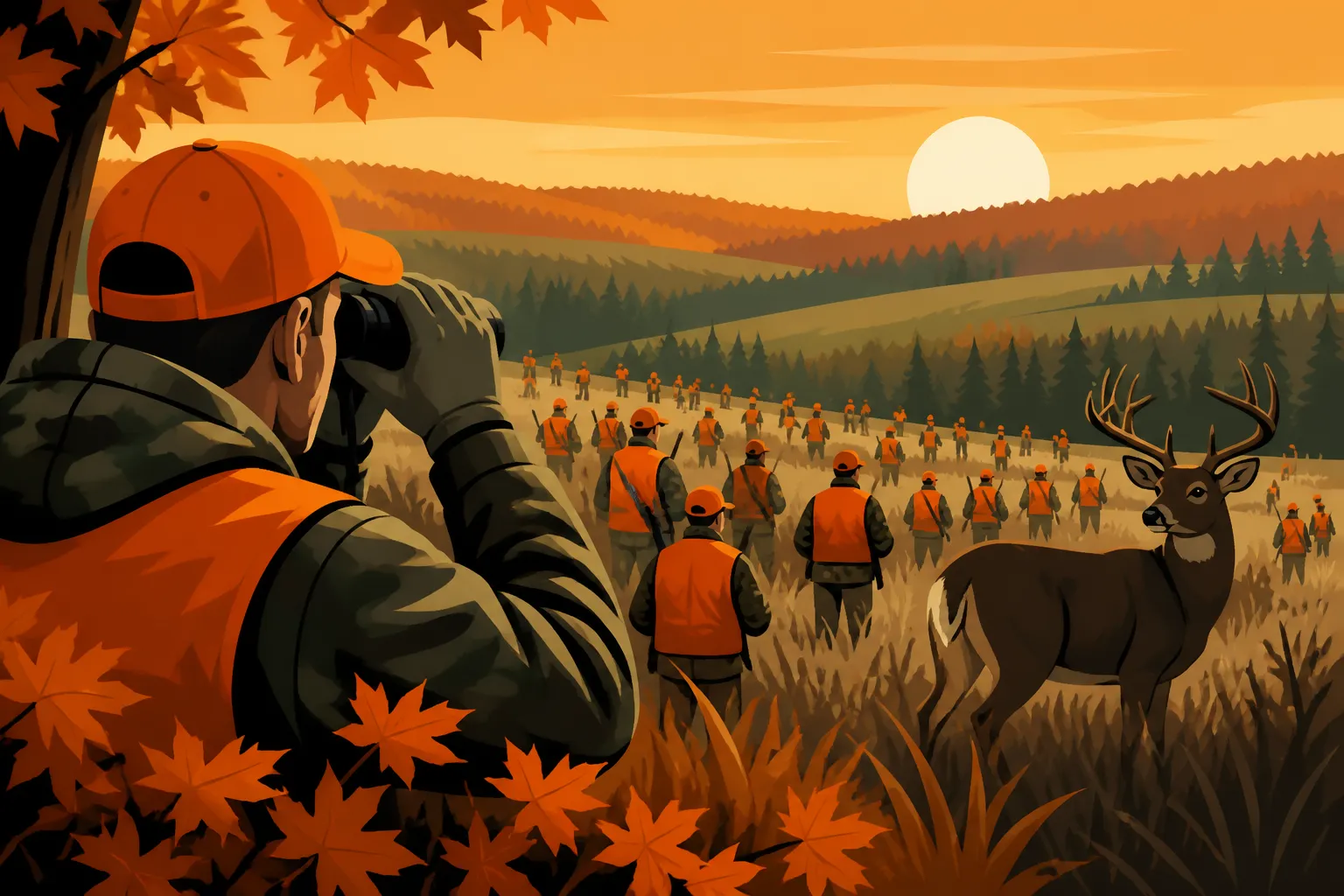
There's no sugarcoating it: opening weekend on Minnesota's public lands can feel less like a wilderness adventure and more like a high-stakes game of hide-and-seek with other hunters. It’s a collective annual pilgrimage, and while the camaraderie can be a fun aspect of deer camp, it often means sacrificing solitude and dealing with increased pressure on game animals.
Why Public Land Becomes a Hot Spot
The simple truth is, public land is accessible land. For many hunters, it's the only option they have to pursue game, especially if they don't own private property or have connections to secure a hunting lease. This accessibility, combined with the sheer excitement and tradition of opening day, naturally funnels a large concentration of people into shared spaces. Hunters who might typically spread out on private land during the week often hit public ground on the first weekend, exacerbating the congestion.
Furthermore, some public areas are just plain good hunting spots, and word gets around. A WMA known for decent deer numbers or a state forest with good grouse cover will inevitably draw more attention. Add to this the sometimes-limited amount of genuinely good hunting habitat within a larger public block, and you end up with hunters concentrating in specific, desirable zones, even on vast tracts. Everyone's doing their homework, often looking at the same aerial maps and reading the same scouting reports, leading to similar conclusions about where the best opportunities might lie.
The Impact on Hunter Experience
Beyond the obvious lack of quiet solitude, crowded public land significantly alters the hunting experience. Deer, turkeys, and other game animals quickly become educated to human presence. What might have been a predictable travel corridor or bedding area during pre-season scouting can become a flurry of movement and vocalizations from other hunters. This means deer may go nocturnal almost immediately, change their patterns drastically, or simply vacate areas with heavy pressure.
For hunters, this can lead to frustration, feelings of encroachment, and a reduced sense of wilderness immersion. You might hear more shots than you'd like, bump into other hunters more frequently, or even find yourself in an ethical dilemma regarding proximity to another hunter's setup. It's not uncommon to hike a mile or two into what you thought was a secluded spot, only to find another hunter's treestand already there, or hear their dog running nearby. This increased pressure often pushes animals into less desirable, thicker cover, making them harder to find and stalk.
Strategies for Navigating the Bustle
So, how do you deal with the inevitable crowds? It takes a shift in mindset, a bit more effort, and a willingness to be unconventional. The goal isn't necessarily to avoid every single person, but to find pockets of solitude where game animals feel less pressured and you can enjoy your hunt.
Pre-Season Scouting to Beat the Rush
The absolute best defense against opening weekend crowds is thorough pre-season scouting. Don't wait until a week before the season to hit the woods. Start months in advance, learning the terrain, identifying pinch points, bedding areas, and overlooked cover. The more intimately you know a piece of public land, the better equipped you'll be to find areas that other hunters might bypass. Look for terrain features that naturally deter people, like thick brush, swamps, or steep ridges. Scouting Minnesota Public Land Before Season is crucial.
During your scouting, pay attention to potential access points that are less obvious. While everyone might be parking at the main trailhead, there might be a forgotten two-track or an old logging road a mile down the highway that offers a more discreet entry. Use digital tools like onX Hunt or GoHunt to analyze aerial imagery for these hidden access points and to identify remote corners of public land. Look for areas that require a bit more effort to reach—crossing a creek, navigating a dense stand of tag alders, or pushing through a cattail slough. These are the places most casual hunters will avoid, giving you an edge.
Going Deeper Than the Road Hunters
The vast majority of hunters on public land, especially on opening weekend, are "road hunters" or "fringe hunters." They rarely venture more than a quarter to a half-mile from their vehicle. This isn't a criticism, just a reality we can exploit. If you're willing to put in the miles and carry a pack, you can often find unpressured game by simply walking further. Make a plan to hike at least a mile, preferably two or more, beyond the obvious access points.
Think about how deer move under pressure. They don't just disappear; they shift to the thickest, nastiest cover they can find. This could be a dense stand of young popple, a tangled cedar swamp, or a deep cattail marsh. These areas are often adjacent to more open woods but are rarely explored by hunters unwilling to get wet or dirty. Learn to read aerial photos for features that indicate these dense spots. Reading Aerial Photos for Big Woods Deer can help identify these pockets. Often, these deep, thick areas offer a safe haven for pressured deer, and if you're willing to go in after them, you might find some real success.
Timing Your Hunt for Solitude
Opening weekend doesn't mean you have to hunt during peak daylight hours with everyone else. Consider hunting during less popular times. Many hunters are out first thing in the morning, back at camp for lunch, and then out again for the evening hunt. What about the mid-day lull? While deer activity might slow, it's often a time when other hunters are less active, and you can potentially make quiet moves without bumping into others. This can be an excellent time to still-hunt or make a slow, methodical push through thick cover.
If your schedule allows, consider hunting on a weekday instead of the weekend. The difference in pressure can be astounding. A Monday or Tuesday, even during opening week, will typically see significantly fewer hunters than Saturday or Sunday. If you can only hunt weekends, prioritize the late afternoon and early evening hours, or focus on a strategic morning hunt followed by a deep midday push. Sometimes, even sitting tight through the mid-morning when others are moving can pay off, as deer bumped by other hunters might filter into your area looking for sanctuary.
Leveraging Technology for Seclusion
In today's hunting world, technology isn't just a convenience; it's a critical tool for success, especially when trying to avoid crowds on public land. It allows you to gain an intimate understanding of the landscape without even setting foot in the woods, helping you find those hidden gems.
Digital Mapping Tools as Your Ally
Mapping applications like onX Hunt have revolutionized how we approach public land hunting. They allow you to instantly identify public/private land boundaries, access points, and critical terrain features right from your phone or tablet. Before you even leave home, you can scout dozens of potential areas, marking waypoints for promising bedding thickets, food sources, or overlooked travel corridors. You can determine distances, elevation changes, and even the type of vegetation based on satellite imagery. This level of detail helps you identify areas that are difficult to access or far from established trails, which are exactly the places other hunters might ignore. onX Layers for Minnesota Land Status can show you which parcel is public and which isn't, preventing accidental trespass and guiding you to viable ground.
Another fantastic feature of these apps is the ability to download maps for offline use. When you're deep in a state forest or WMA, cell service often vanishes. Having pre-downloaded maps ensures you can still navigate, track your movements, and find those marked waypoints without interruption. This is incredibly important for confidence when venturing far from known roads and trails. Using Recreation Compass Without Cell Service is a similar strategy for state-provided resources. By utilizing these tools, you can pinpoint that remote finger of public land jutting into private ground or that isolated island of timber within a large marsh, places less digitally savvy hunters might never find.
Utilizing Satellite Imagery for Hidden Gems
Beyond basic boundary lines, the high-resolution satellite imagery available on platforms like onX Hunt and GoHunt offers a bird's-eye view of the landscape, revealing subtle features that can be crucial for finding unpressured game. Look for variations in canopy cover that indicate thicker undergrowth, often where deer will bed to escape pressure. Identify subtle draws, drainages, or swamp edges that create natural funnels, especially if they lead away from main roads or popular trails.
Pay close attention to changes in vegetation. A dark green patch surrounded by lighter shades might indicate a conifer stand, offering thermal cover in cold weather. Conversely, a clear-cut area, even if small, can provide excellent browse and thick bedding. These details, visible from above, can guide you to areas that might look unremarkable from the ground but are actually prime locations for deer, especially when they're pushed by hunting pressure. Use these images to plan your entry routes to be as quiet and unnoticeable as possible, avoiding obvious trails that other hunters might be using.
Finding Untapped Opportunities
Even with crowds, Minnesota's public lands offer abundant opportunities if you know where and how to look. It's often about thinking outside the box and embracing areas that might not fit the conventional idea of "good hunting ground."
Overlooked Habitat Types
When most hunters think of deer habitat, they often picture classic hardwoods or agricultural field edges. While these areas are certainly productive, they also tend to draw the most attention. To find seclusion on public land, consider targeting overlooked habitat types that most hunters shy away from. Think about dense cattail sloughs, especially those that are large and difficult to navigate. Deer will often bed down deep inside these, seeking refuge from pressure and enjoying the thermal cover. Hunting Minnesota Cattail Sloughs for Deer can be incredibly effective, but it requires effort.
Similarly, dense cedar swamps, often found in northern Minnesota, can be magnets for deer seeking cover and browse, particularly during late season. Steep, rugged bluff country in southeast Minnesota, though physically demanding, can hold deer that rarely see human presence. Even thick, brushy clear-cuts that are a few years old can be absolute deer havens, despite being tough to walk through. These "nasty" areas, as many hunters call them, are precisely where you'll find animals trying to escape the opening weekend rush.
Smaller, Less Obvious Public Tracts
While the big state forests and WMAs attract the bulk of the crowds, Minnesota also has countless smaller public land parcels scattered across the state. These might be small county forest lands, isolated DNR tracts, or even small, unnamed wildlife management units. Many hunters overlook these smaller parcels, believing they can't hold significant game or are too small to justify the effort. This is often a mistake.
A 40-acre piece of public land surrounded by private farmland can act as a crucial bedding area or travel corridor for deer moving between agricultural fields. Similarly, a small 80-acre WMA might get less attention than a 10,000-acre state forest, yet still hold a resident population of deer or pheasants. Use your mapping apps to seek out these smaller, often forgotten pieces of public ground. They might require a bit more legwork in terms of researching regulations or ensuring legal access, but the reward of finding unpressured game on opening weekend can be well worth the effort. Finding Ground Others Walk Past is a principle that applies perfectly to these overlooked smaller tracts.
| Strategy Type | Approach | Benefit on Opening Weekend | Effort Level |
|---|---|---|---|
| Pre-Season Scouting | Identify remote access points, difficult terrain | Finds less pressured areas, builds confidence | High |
| Deep Penetration | Hike 1-2+ miles from access, target thick cover | Reaches unpressured game, escapes road hunters | Medium-High |
| Timing | Hunt mid-day, weekdays, or specific hours | Avoids peak hunter activity | Medium |
| Tech Use | onX Hunt/GoHunt for boundaries, satellite imagery | Pinpoints hidden spots, aids navigation | Low-Medium |
| Habitat Focus | Target swamps, cedars, clear-cuts | Finds game in less desirable hunter areas | Medium |
| Small Tracts | Research and hunt overlooked smaller public parcels | Finds local, unpressured game | Medium-High |
Ultimately, navigating opening weekend crowds on Minnesota's public land comes down to strategy and persistence. Don't be discouraged by a full parking lot. Instead, see it as an opportunity to apply smart tactics, go where others won't, and use the tools at your disposal to create your own secluded hunting experience.
Disclaimer
This article is for general informational purposes only and does not constitute professional advice. Laws, prices and regulations vary by location and change over time. Consult a qualified professional for guidance on your specific situation.